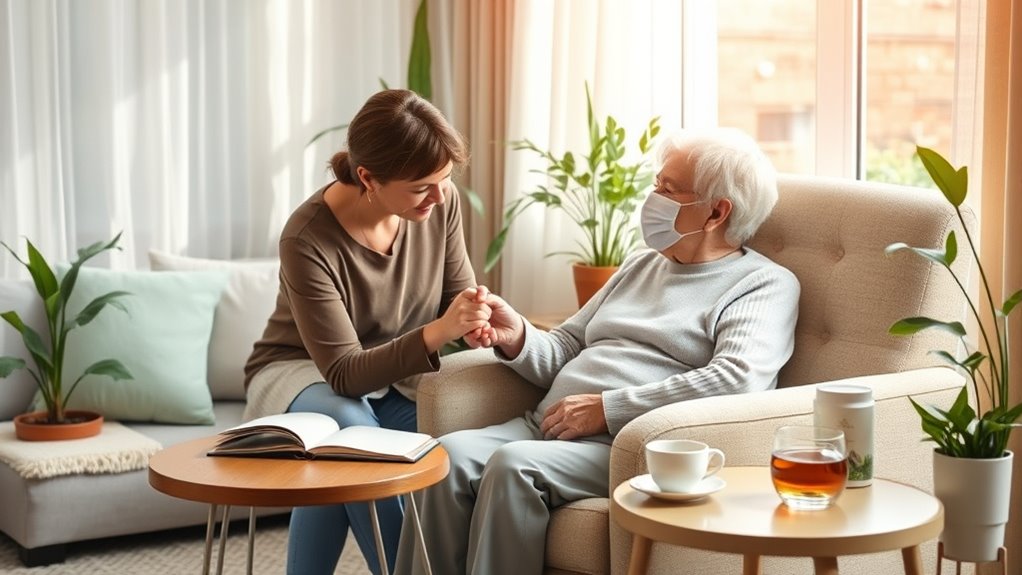

To deal with post-stroke depression, building emotional resilience and connecting with peer support can make a big difference. Share experiences with others who understand your struggles, as this reduces isolation and offers motivation. Practice activities like mindfulness or journaling to manage stress and foster hope. Ongoing support networks help you stay strong and develop a positive outlook. If you’re curious about more strategies, explore ways to strengthen your emotional recovery and find lasting hope.
Key Takeaways
- Engage in peer support groups to share experiences, reduce isolation, and gain emotional encouragement.
- Practice mindfulness and journaling to manage stress and process emotional challenges.
- Cultivate emotional resilience through intentional effort, support, and activities that promote a positive outlook.
- Seek ongoing social connections to foster a sense of community, belonging, and motivation during recovery.
- Incorporate complementary activities like gentle exercise and relaxation techniques to enhance emotional wellbeing.

Have you ever wondered why some stroke survivors struggle more than others with emotional recovery? The answer often lies in your emotional resilience—the ability to bounce back from setbacks and maintain a positive outlook despite difficulties. Building emotional resilience isn’t something that happens overnight; it requires intentional effort and support. One of the most effective ways to strengthen this resilience is through peer support. Connecting with others who have experienced similar challenges can help you feel less isolated and more understood, which is essential when facing post-stroke depression. When you share your feelings with peers, you realize that you’re not alone and that others have navigated similar emotional hurdles successfully.
Peer support provides a safe space where you can openly express your fears and frustrations without judgment. Talking to someone who truly understands your experience can validate your feelings and offer practical coping strategies. These conversations often reveal that emotional struggles are common, and seeing others manage their recovery can inspire you to develop your own emotional resilience. You may find that hearing stories of perseverance and adaptation helps you reframe your outlook and fosters hope, even on tough days. Support groups, whether in person or online, are excellent avenues to meet peers who are walking a similar path. They can provide ongoing encouragement and practical advice that bolsters your confidence to face emotional challenges head-on.
In addition to peer support, engaging in activities that promote emotional resilience is essential. Practices like mindfulness, journaling, or gentle physical activity can help you stay grounded and manage stress. But the most influential tool often remains the connection with others. Emotional resilience isn’t about avoiding difficult feelings; it’s about learning how to cope with them effectively. When you participate in peer support networks, you develop a sense of community and belonging that reinforces your emotional strength. Over time, these relationships can become a fundamental part of your recovery journey, reminding you that you’re not battling depression alone.
Ultimately, strengthening your emotional resilience through peer support can dramatically improve your emotional recovery. It helps you develop a more balanced perspective, fosters a sense of hope, and provides the practical encouragement you need during challenging times. Remember, reaching out and sharing your experiences isn’t a sign of weakness; it’s a powerful step toward healing. Building resilience isn’t just about bouncing back but also about moving forward with confidence, knowing you have a support system to lean on when needed.

MAHOMICO Power Lift Recliner Chair for Elderly with Vibration Massage and Lumbar Heating, Electric Lift Recliner Single Sofa with Side Pocket, Two Cup Holders and USB Charge Port for Living Room
𝗣𝗼𝘄𝗲𝗿 𝗟𝗶𝗳𝘁 𝗥𝗲𝗰𝗹𝗶𝗻𝗲𝗿 𝗖𝗵𝗮𝗶𝗿: Elevate your relaxation with the MAHOMICO power recliner chair. This advanced lift chair recliner...
As an affiliate, we earn on qualifying purchases.
Frequently Asked Questions
Can Post-Stroke Depression Be Completely Cured?
Post-stroke depression can improve considerably, but it might not be completely cured for everyone. Your emotional resilience and social support play essential roles in recovery. By actively engaging in therapy, staying connected with loved ones, and practicing resilience techniques, you can manage symptoms effectively. While some may experience full recovery, others find ongoing support helps them lead fulfilling lives despite persistent depression.
Are Medications Always Necessary for Post-Stroke Depression?
Medications aren’t always necessary for post-stroke depression, as you can explore medication alternatives like therapy options. Many find relief through counseling, cognitive-behavioral therapy, or support groups, which help address emotional challenges without drugs. It’s important to work closely with your healthcare provider to determine the best approach. Sometimes, a combination of therapy and lifestyle changes can effectively manage depression, reducing the need for medication.
How Long Does Post-Stroke Depression Typically Last?
Post-stroke depression can last anywhere from weeks to years, depending on individual differences and timing variability. It might feel like an eternity, but recovery varies widely—you could bounce back in a few months or need longer. Your emotional journey is unique, so stay patient and seek support. With proper care and coping strategies, many people find relief and regain their emotional strength over time.
What Lifestyle Changes Can Help Manage Depression Symptoms?
You can manage depression symptoms by adopting a healthier lifestyle. Practice mindfulness techniques daily to reduce stress and improve your mood. Stay socially engaged by connecting with friends or support groups, which can boost your emotional well-being. Incorporate regular physical activity suited to your abilities, and maintain a balanced diet. These changes help lift your spirits, foster resilience, and support your recovery journey after a stroke.
Is Post-Stroke Depression Different From General Depression?
Yes, post-stroke depression is different from general depression because it often results from brain changes caused by the stroke. You may experience emotional resilience challenges and a sudden loss of social connections, which can intensify feelings of sadness or hopelessness. Recognizing these differences helps you seek targeted support and therapy, strengthening your emotional resilience and rebuilding social connections, which are crucial for recovery and mental well-being after a stroke.

CANMOV Large Power Lift Recliner with Massage and Heat for Elderly, Heavy Duty Lift Recliner for Seniors with USB Port, 2 Hidden Cup Holders (Camel Brown)
8-Point Massage & Lumbar Heating: The electric lift recliners offers an advanced 8-point massage system with 2 different...
As an affiliate, we earn on qualifying purchases.
Conclusion
Remember, you hold the power to turn your post-stroke journey around. With the right support and strategies, you can conquer depression that feels like an unstoppable storm. Don’t underestimate your strength—you’re stronger than you think, capable of brighter days ahead. Reach out, stay connected, and keep pushing forward. Every small step is a giant leap toward reclaiming your happiness. Your resilience can light up even the darkest moments—believe it, because your future is waiting to shine.
Amazon Product B0DNZ5RVZP
As an affiliate, we earn on qualifying purchases.

Pride Mobility S74 Go-Go Sport 4-Wheel Electric Mobility Scooter for Adults with Free Challenger Mobility Accessory
Front frame-mounted seat post offers maximum stability
As an affiliate, we earn on qualifying purchases.