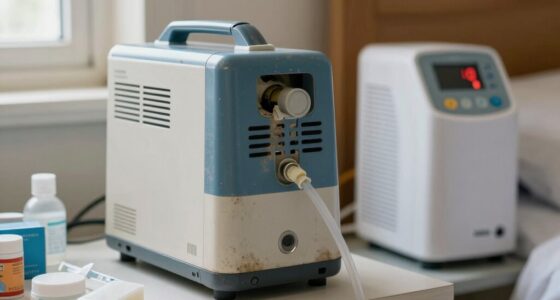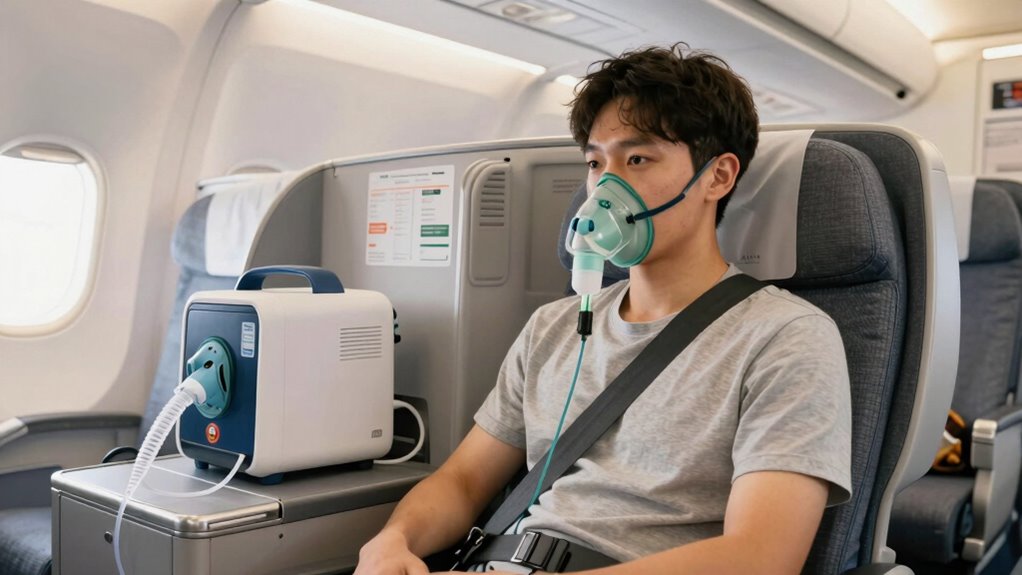

To travel safely with oxygen on a plane, you should check airline policies early and get medical clearance with proper documentation. Choose portable, airline-approved oxygen devices and guarantee they meet safety standards. Pack your equipment properly in carry-on luggage, carry extra batteries, and inform the crew about your needs. Follow safety tips during the flight, and make certain all paperwork is handy. For detailed steps on preparing for your journey, continue exploring helpful tips and best practices.
Key Takeaways
- Notify the airline at least 48-72 hours before travel and confirm their specific oxygen requirements and documentation.
- Use approved, lightweight portable oxygen devices that meet airline and safety standards.
- Carry all necessary medical and insurance documentation, including prescriptions and certification from your healthcare provider.
- Pack oxygen equipment in carry-on luggage, ensuring easy access and compliance with airline policies.
- Inform flight crew about your oxygen needs, secure your device during the flight, and follow all safety instructions.
What Do I Need to Know Before Flying With Oxygen?
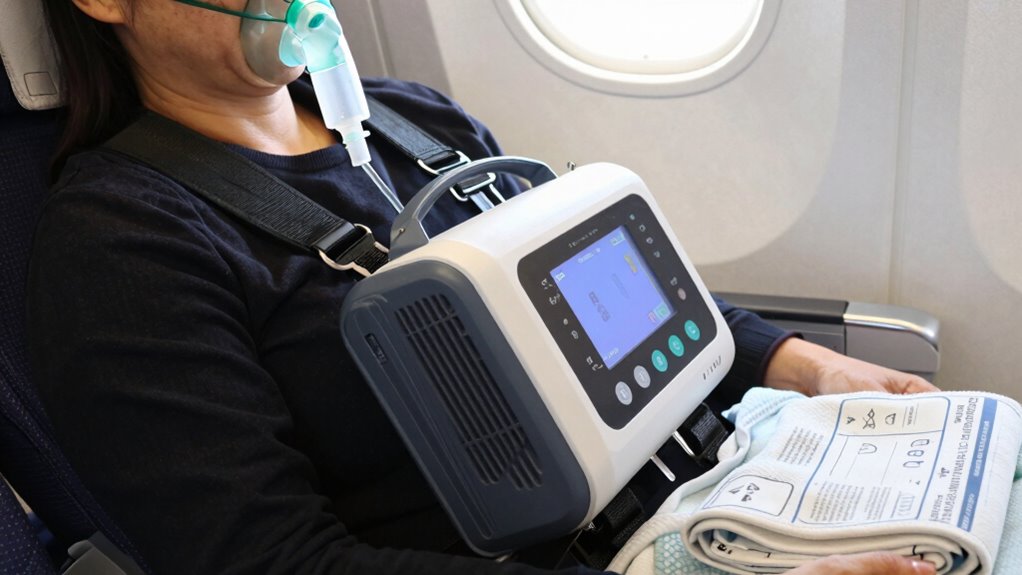
Before flying with oxygen, understanding the airline’s policies and your specific oxygen needs is vital. This is key to guaranteeing oxygen safety during your trip. Start your travel preparations early by consulting your healthcare provider and your airline. Confirm what types of oxygen equipment are permitted and whether you need a medical clearance or special documentation. Knowing the airline’s rules helps you avoid surprises at the airport and ensures your equipment meets safety standards. Be clear about your oxygen flow rate and device type, so you’re prepared for any questions. Proper travel preparations reduce stress and help maintain your oxygen safety throughout the flight. Ensuring your equipment has the appropriate contrast ratio can improve visibility and safety during the journey. Additionally, understanding the free floating nature of some oxygen devices can help you select equipment that is both safe and compatible with airline regulations. Being informed ensures a smoother journey and minimizes potential complications related to oxygen use on the plane. It’s also helpful to familiarize yourself with oxygen device regulations to ensure compliance and safety. Moreover, reviewing oxygen safety standards can help you choose the most reliable and compliant equipment for air travel. Being aware of oxygen delivery methods can further enhance your safety and comfort during the flight.
What Airline Policies Should I Check When Traveling With Oxygen?
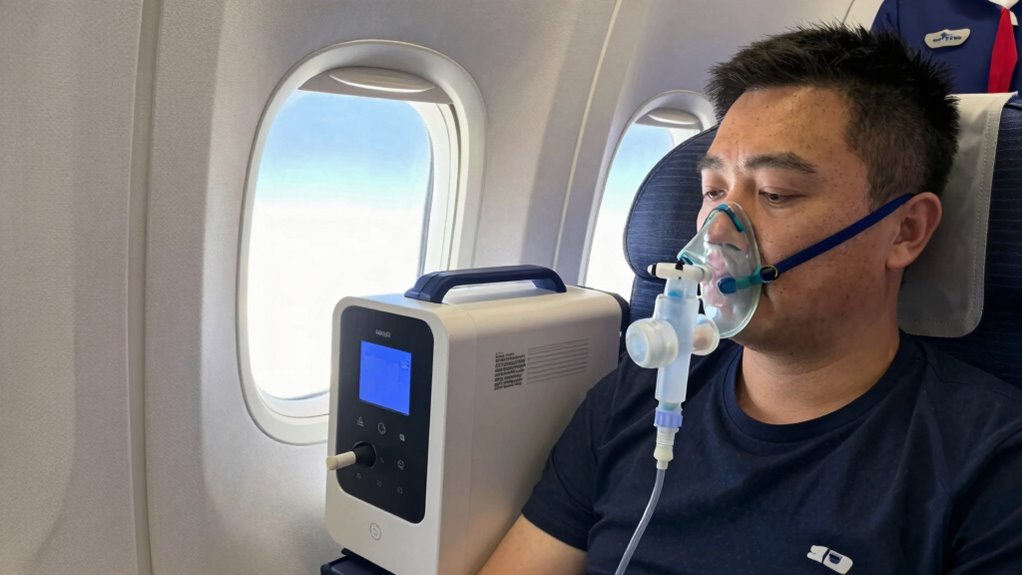
When traveling with oxygen, it is vital to review the airline’s specific policies well in advance, as regulations can vary widely between carriers. Check if the airline permits your oxygen delivery system, whether it’s compressed gas, liquid oxygen, or portable tanks. Some airlines require advance notice or special documentation, so confirm their procedures early. Understand their policies on device compatibility, battery restrictions, and storage requirements. Familiarize yourself with emergency procedures related to oxygen use onboard, including how crew members assist in case of equipment failure. Knowing these policies helps guarantee a smooth trip and avoids surprises at check-in or boarding. Additionally, understanding vetted policies ensures you are compliant with safety standards and reduces the risk of delays or issues during your journey. It is also helpful to confirm if the airline has specific requirements for oxygen concentrators or other devices to prevent any inconvenience during your flight. Moreover, verifying if the airline adheres to international safety standards can provide extra assurance of safe travel with oxygen equipment. Being aware of airline safety protocols related to medical devices further enhances your preparedness for traveling with oxygen.
How Do I Get the Medical Clearance and Documentation?
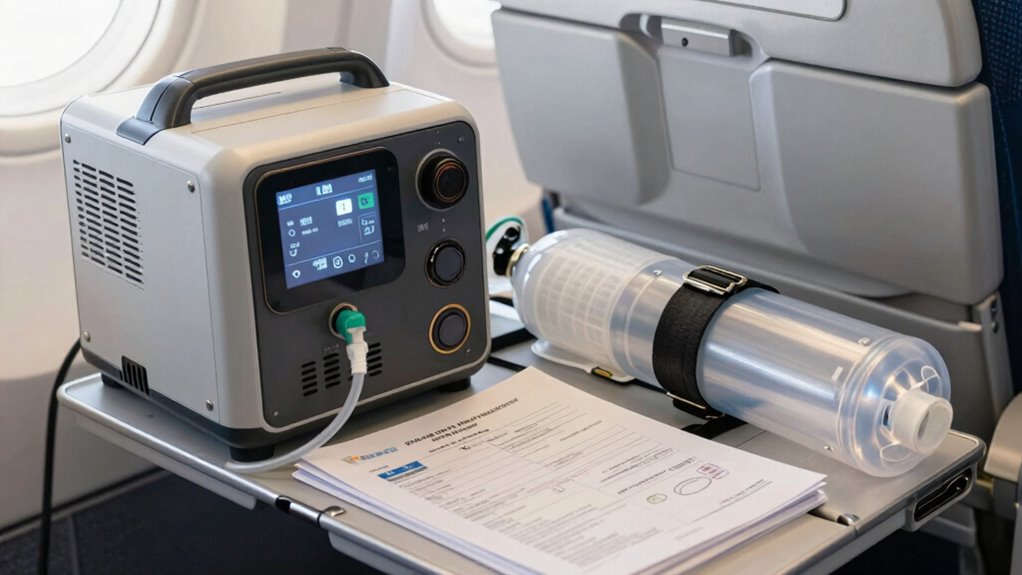
To travel with oxygen, you need to get medical clearance well in advance. Make sure to gather all required documentation, like a doctor’s certification, early in the planning process. It’s also important to review your airline’s specific policies to guarantee smooth approval.
Obtain Medical Certification Early
Securing medical certification early guarantees you have the necessary documentation to travel comfortably and safely with oxygen. Contact your healthcare provider well in advance to obtain a detailed medical certification that clearly states your oxygen needs and confirms your ability to fly. This documentation is essential for airline approval and helps streamline the boarding process. Make sure your medical certification includes specifics about your oxygen equipment and emergency procedures, so airline staff and flight attendants are prepared to assist if needed. Getting this paperwork early reduces last-minute stress and ensures you’re fully prepared for your trip. Having your medical certification in hand also allows you to address any questions or concerns airlines might have, ensuring a smoother, safer journey.
Gather Necessary Documentation
Before your flight, you need to obtain the proper medical clearance and documentation to confirm your oxygen needs. This paperwork guarantees airline approval and helps streamline security. To gather everything needed, consider these steps:
- Get a recent medical certification from your doctor stating your oxygen needs and fitness to fly.
- Prepare proof of insurance coverage or travel insurance that covers oxygen equipment and related medical expenses.
- Request a detailed prescription for your portable oxygen concentrator or cylinders.
- Carry any forms or documentation required by the airline, such as medical clearance forms or emergency contact info.
- Ensure your documentation includes medical device compatibility information, so airline staff can assist with the appropriate accommodations. Additionally, verifying that your oxygen delivery method complies with airline policies can prevent complications during boarding. Having all these documents ready minimizes delays and ensures your safety. Confirm that your insurance or travel insurance covers oxygen services, preventing unexpected costs during your trip.
Consult Airline Policies
Understanding your airline’s specific policies is key to a smooth travel experience with oxygen. Airlines vary in their requirements for medical clearance and documentation, so it’s crucial to confirm these details early. Contact the airline well in advance to understand their oxygen safety protocols and necessary paperwork. Prepare any medical documents, including prescriptions and physician’s letters, that may be required. This proactive travel planning helps prevent delays or misunderstandings at the airport. Use the table below to identify common airline policies:
| Airline Policy Aspect | Documentation Needed | Notice Period |
|---|---|---|
| Oxygen Equipment | Medical clearance form | 48 hours |
| In-Flight Oxygen | Physician’s note | 72 hours |
| Airline Notification | Advance notice | 48 hours |
Additionally, understanding the connected equipment and how it integrates with your wellness routine can help ensure a comfortable journey. Being aware of the oxygen safety protocols of the airline can also contribute to a safer flight experience. It’s helpful to familiarize yourself with medical clearance requirements early on to ensure all necessary paperwork is in order. Reviewing vetted resources such as airline websites or medical professionals can provide additional guidance. Also, knowing how to properly dilute your oxygen supplies can make the trip more comfortable and safe.
How Can I Choose the Right Oxygen Equipment for Flying?
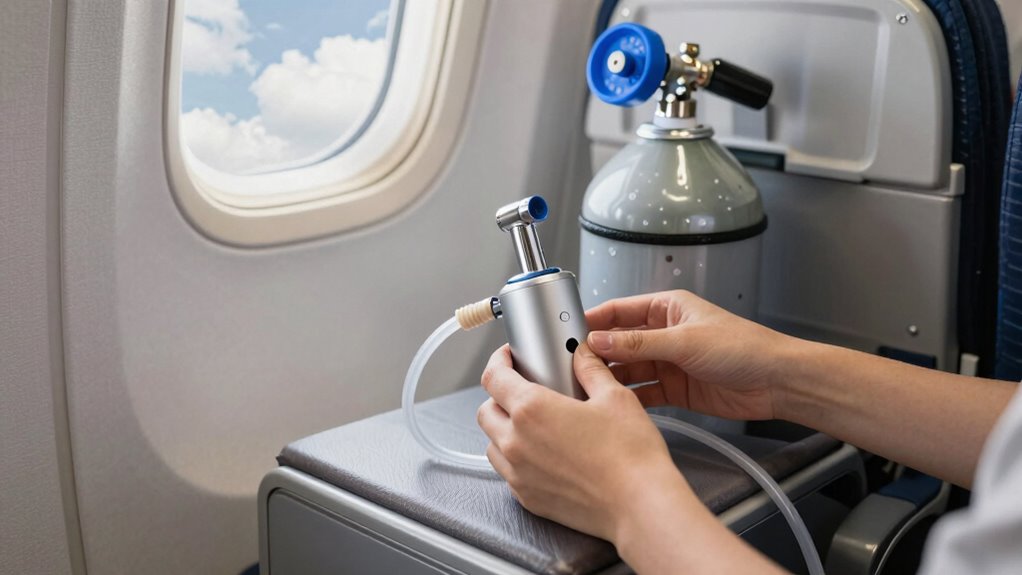
When choosing oxygen equipment for flying, you need to take into account its compatibility with airline regulations to avoid issues during your trip. You should also look for options that are portable and easy to carry, so travel remains convenient. Additionally, check the power source and battery life to ensure your oxygen supply lasts throughout the flight without interruptions. To ensure safety and reliability, consider whole‑home backup power options that include safety guidelines and transfer switch checklists, which can help you select the most dependable equipment for your needs. Understanding electrical safety standards can further assist in choosing equipment that meets industry requirements and ensures safe operation during travel and at home. Being aware of medical device regulations can also help you navigate the necessary approvals and certifications for portable oxygen units. Moreover, researching portable oxygen device certifications can provide added assurance of compliance with safety standards and airline policies. Consulting with healthcare professionals about oxygen equipment suitability can also ensure you select the most appropriate device for your specific travel needs.
Compatibility With Aircraft Regulations
Choosing the right oxygen equipment for flying requires careful attention to aircraft regulations, which vary between airlines and countries. Ensuring oxygen compatibility with airline policies is essential for smooth travel. Here’s what to contemplate:
- Verify if your airline allows portable oxygen concentrators or requires specific models.
- Confirm if your oxygen device meets FAA or international standards.
- Check whether the equipment needs approval or certification from relevant authorities.
- Understand if the airline has restrictions on oxygen tank size or type.
Portability and Size Options
Selecting oxygen equipment that fits your travel needs starts with considering how portable and compact it is. An oxygen concentrator designed for travel is typically lightweight and small enough to carry easily through airports and onto planes. Look for models labeled as portable, with features like wheels or shoulder straps for convenience. Portable tanks are another option; they are compact, refillable, and fit easily in carry-on luggage. When choosing between an oxygen concentrator and tanks, think about your oxygen flow requirements and how much mobility you need during travel. Both options should comply with airline regulations and be easy to transport. Prioritize equipment that offers a good balance of size, weight, and functionality to ensure a smooth and comfortable journey.
Power Source and Battery Life
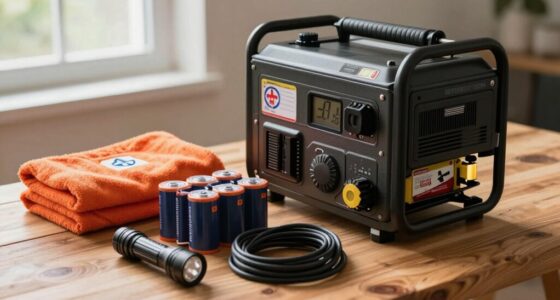
To guarantee your oxygen equipment keeps up throughout your flight, it’s essential to pay close attention to its power source and battery life. Proper battery management ensures you stay safe without interruptions. First, check if your device uses rechargeable or replaceable batteries. Second, verify the battery capacity—higher capacity means longer use. Third, confirm if your equipment has an indicator for remaining battery life to prevent surprises. Fourth, always carry spare batteries or power sources approved for air travel. This way, you avoid running out of power mid-flight. Selecting devices with reliable power sources and efficient battery management helps you maintain oxygen flow seamlessly. Staying prepared with the right power options keeps your journey safe and stress-free.
How Do I Pack and Prepare My Oxygen Devices for the Flight?

Before your flight, it’s essential to carefully pack and prepare your oxygen devices to guarantee safety and compliance with airline regulations. Start by ensuring your device is in good condition through proper device maintenance—check for any damage or leaks, and verify that all parts are functioning correctly. Pack your oxygen equipment in a sturdy, accessible bag, and bring extra supplies like batteries, tubing, and filters. Keep your device’s user manual handy in case airline staff need to review operating instructions. Remember to carry your device as carry-on luggage, so you can monitor it throughout the flight. Prioritize oxygen safety by following the manufacturer’s guidelines for packing and use, avoiding any modifications that could compromise device performance during travel. Additionally, device maintenance can help you monitor your device remotely and ensure it remains operational during your trip, especially through regular checks to prevent unexpected issues. Ensuring your device is compliant with airline policies and oxygen device regulations can help avoid delays or problems during boarding. Staying informed about oxygen safety protocols helps ensure your travel experience remains smooth and secure.
What Safety Tips Should Oxygen Users Follow During the Flight?

When flying with oxygen, safety during the flight depends on following specific guidelines to protect yourself and others. First, always inform the flight crew about your oxygen needs and carry your travel insurance details in case of emergencies. Second, keep your oxygen device secure and within reach, avoiding any interference with cabin staff. Third, have a list of emergency contacts accessible, including your healthcare provider and local contacts at your destination. Fourth, stay calm and alert to any issues with your oxygen equipment, reporting problems immediately. Remember, following airline rules and communicating clearly with crew members help ensure a safe flight. These safety tips help you manage your oxygen appropriately and respond swiftly if an emergency arises.
Frequently Asked Questions
Can I Bring Extra Oxygen Supplies in My Carry-On Luggage?
Yes, you can bring extra oxygen supplies in your carry-on luggage, but you need to adhere to oxygen cylinder regulations and portable oxygen guidelines. Contact your airline beforehand to confirm their policies and make certain your supplies meet safety standards. Pack your extra oxygen in approved containers, and carry necessary documentation. Always inform the airline staff about your oxygen needs to guarantee a smooth and safe travel experience.
Are There Specific Oxygen Device Restrictions for International Flights?
Worried about oxygen device restrictions for international flights? Don’t fret—airlines follow specific oxygen device regulations aligned with international flight guidelines. You can usually bring your portable oxygen concentrator (POC), but it must meet size, battery, and operation standards. Always check with your airline beforehand, as some may have additional requirements. Being prepared guarantees smooth travel, so review the policies well in advance and carry all necessary documentation.
How Early Should I Arrive at the Airport for Oxygen-Equipped Travel?
You should arrive at the airport at least 2 to 3 hours early for oxygen-equipped travel. This allows ample time for airport security, which requires extra screening for oxygen devices. Proper travel planning is essential, so confirm airline policies and oxygen device restrictions beforehand. Arriving early helps you navigate security smoothly, guarantees your equipment is properly inspected, and gives you peace of mind for a stress-free journey.
What Should I Do if My Oxygen Device Malfunctions During the Flight?
Oh, perfect timing for your oxygen device to malfunction, right? Stay calm and alert. Immediately inform the flight attendants about the oxygen device malfunction, and follow their instructions for emergency oxygen procedures. They’re trained to handle it, so trust them. Don’t try to fix anything yourself. Keep your mask on if needed, breathe normally, and stay seated. Your safety’s their priority, even when technology decides to misbehave.
Are There Special Procedures for Connecting Oxygen to In-Flight Entertainment Systems?
You won’t need special procedures to connect oxygen to in-flight entertainment systems, as these systems aren’t compatible with oxygen devices. Instead, verify your oxygen device is approved for airline travel and compatible with your portable oxygen concentrator. Before your flight, confirm your device connection with airline staff and check that your oxygen equipment meets the airline’s oxygen compatibility standards. This way, you stay safe and comfortable throughout your journey.
Conclusion
Traveling with oxygen is like steering a delicate bridge—trusting your preparation and awareness keeps you steady. By understanding policies, securing proper documentation, and choosing the right equipment, you build a strong foundation. Remember to pack carefully and follow safety tips, acting as your own guiding star. When you prioritize safety, you illuminate the path ahead, turning your journey into a symbol of resilience and independence—proof that even in challenges, you can soar freely.