

To provide a gentle, comforting bath for someone with advanced Alzheimer’s, create a calm environment with soft lighting and minimal clutter. Use familiar routines, gentle prompts, and a soothing voice to instill trust. Incorporate sensory elements like calming music, fragrant soaps, and textured towels to enhance relaxation. Make certain water is warm but not hot, and stay patient throughout the process. If you keep these tips in mind, you’ll discover more ways to make bath time safer and more nurturing.

Turn quiet afternoons into listening time
- Thousands of audiobooks, podcasts and originals
- Listen on your phone, tablet or Echo — also offline
- Cancel anytime
Key Takeaways
- Create a calm, clutter-free environment with familiar routines to reduce confusion and promote relaxation during bath time.
- Use soothing music, gentle prompts, and sensory stimuli like scented soaps to ease agitation and enhance comfort.
- Ensure water temperature is warm but not hot, and use textured towels to stimulate touch and promote sensory engagement.
- Approach bath time patiently with reassurance, maintaining a calm demeanor to build trust and reduce anxiety.
- Personalize the routine to individual preferences, incorporating familiar cues and sensory elements for a soothing experience.
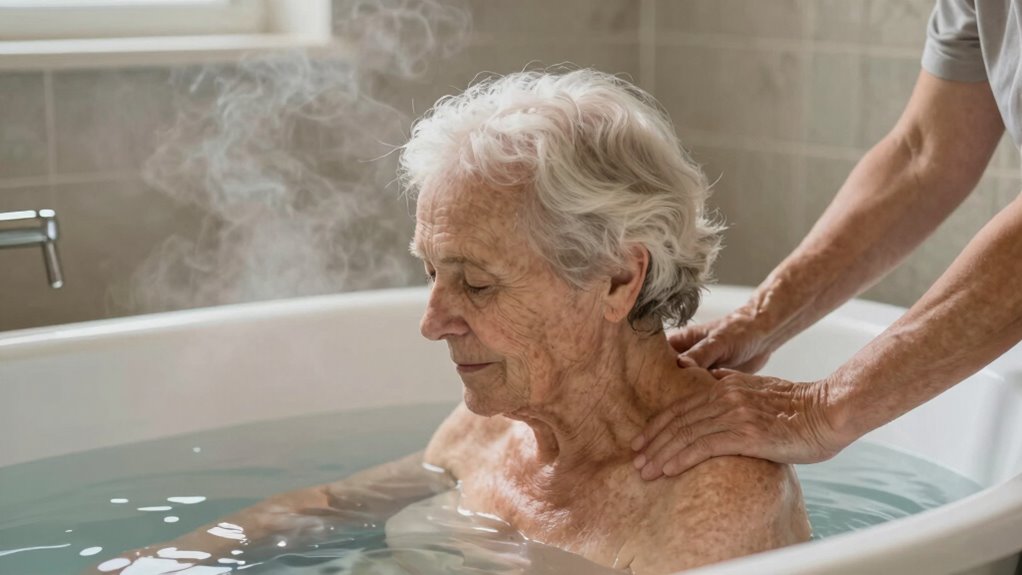
Caring for someone with Alzheimer’s can make bath time challenging, but creating a comfortable bathing experience is essential for their well-being. One effective way to do this is by incorporating music therapy and sensory stimulation into the routine. Gentle, calming music can distract and soothe your loved one, reducing anxiety and making the process more manageable. Play soft melodies or familiar tunes at a low volume, and observe how your loved one responds. Music acts as a comforting background, calming agitation and providing a sense of familiarity, especially if they recognize the tunes. It can also serve as a distraction from any discomfort they might feel, helping them stay calmer throughout the bath.
Sensory stimulation plays a key role in comfort bathing, especially for those with advanced Alzheimer’s. You can enhance their experience by engaging multiple senses in gentle, non-overwhelming ways. Use fragrant, calming oils or scented soaps that appeal to their sense of smell, but be cautious of strong or unfamiliar scents that might cause discomfort. Soft, textured towels and washcloths can stimulate touch and provide reassurance through gentle, familiar sensations. Warm water is also essential—ensure it’s comfortably warm, not hot, to avoid startling or causing discomfort. Incorporating multisensory approaches can further deepen the calming effect and create a more holistic experience. You might also consider playing nature sounds or gentle music during the bath to deepen sensory engagement, helping your loved one stay relaxed. Additionally, understanding the importance of individual preferences can help tailor the experience to better suit your loved one’s comfort. Recognizing the significance of environmental factors can also ensure the bathing space remains soothing and free of unnecessary stressors. Creating a calm, clutter-free environment can significantly contribute to the overall comfort and reduce potential anxieties during bath time. Incorporating appropriate air quality measures, such as good ventilation and non-irritating scents, can further contribute to a calming environment.
Throughout the process, pay close attention to their cues. Watch for signs of overstimulation or distress, and be ready to adjust the environment accordingly. Keep the bath simple and predictable—using familiar routines and gentle prompts can help reduce confusion. Maintaining a calm, patient demeanor is key; your reassuring presence can greatly influence their comfort level. Make the experience as gentle and sensory-rich as possible by integrating these elements thoughtfully. Remember, the goal isn’t just cleanliness but also providing a moment of peace and security. When you combine soothing music, sensory stimulation, and a gentle approach, bath time becomes less stressful and more nurturing for your loved one, fostering trust and comfort during a vulnerable activity.
Alzheimer's gentle bath products
As an affiliate, we earn on qualifying purchases.
As an affiliate, we earn on qualifying purchases.
Frequently Asked Questions
How Often Should Comfort Bathing Be Recommended for Alzheimer’s Patients?
You should recommend comfort bathing based on the individual’s personal hygiene needs and comfort, typically every 2 to 3 days. Regular bathing routines help maintain cleanliness and prevent infections, but it’s important to be flexible and attentive to their preferences. Pay attention to signs of dirt or odor, and adapt the frequency accordingly. Consistent, gentle bathing promotes dignity while ensuring their hygiene stays intact.
Are There Specific Products That Enhance Comfort During Bathing?
Yes, certain products can make bathing more comfortable for your loved one. You might use aromatherapy oils to create a calming atmosphere, helping them relax. Soft washcloths are gentle on sensitive skin and reduce discomfort during cleansing. These items not only enhance relaxation but also promote a soothing experience, making bath time less stressful. Incorporating these products shows your care and helps maintain dignity and comfort for someone with advanced Alzheimer’s.
How Can Caregivers Manage Resistance to Bathing?
You can manage resistance by using sensory stimulation and soothing techniques to create a calming environment. Speak softly, maintain eye contact, and use gentle touch to reassure your loved one. Play calming music or use aromatherapy to promote relaxation. Keep the water warm but not hot, and make certain the room is comfortable. Patience and gentle reassurance help reduce anxiety, making bath time a more positive experience for both of you.
What Are Signs of Discomfort or Distress During a Bath?
During a bath, you’ll notice signs of discomfort or distress like skin sensitivity reactions, such as redness or agitation, and emotional cues like crying, grimacing, or trying to pull away. Pay close attention to these signals, as they indicate your loved one isn’t comfortable. Respond gently, adjust water temperature, and speak soothingly to help ease their distress. Recognizing these cues allows you to create a more comforting bathing experience.
Can Comfort Bathing Be Adapted for Severe Alzheimer’s Stages?
You can adapt comfort bathing for severe Alzheimer’s stages by creating personalized routines that suit their needs. Focus on environmental modifications such as dim lighting, minimal noise, and a warm, comfortable space to ease anxiety. Use gentle, consistent approaches, and stay patient—sometimes, it’s about going the extra mile to make them feel safe and secure. This tailored approach helps make bath time more manageable and less stressful for both of you.
Conclusion
Remember, gentle, comforting bathing can make a world of difference for someone with Alzheimer’s. Like Mrs. Johnson, who used soothing words and soft towels, her daily bath became a calming ritual instead of a stressful chore. When you approach bathing with patience and kindness, you create a safe space that nurtures trust and dignity. Your gentle touch and understanding can turn a difficult task into a moment of peace and connection for both of you.
Cold & flu season Picks
humidifiers
As an affiliate, we earn on qualifying purchases.