

Dressing time is frustrating in Parkinson’s because your motor skills and muscle control are affected, making tasks like buttoning, zipping, or pulling on clothes much harder and slower. Small fasteners and stiff fabrics add to the challenge, often leading to feelings of embarrassment, anger, or exhaustion. These struggles can make you feel like you’re losing independence. But understanding these challenges can help you find better solutions—keep going to discover ways to make dressing easier.

Turn quiet afternoons into listening time
- Thousands of audiobooks, podcasts and originals
- Listen on your phone, tablet or Echo — also offline
- Cancel anytime
Key Takeaways
- Fine motor skill impairments make manipulating buttons, zippers, and clothing fasteners difficult.
- Stiff muscles and decreased muscle control hinder smooth and coordinated dressing movements.
- Repeated struggles can cause emotional frustration, shame, and feelings of loss of independence.
- Traditional clothing features may require precise movements that are challenging for Parkinson’s patients.
- Dressing becomes overwhelming, leading to rushing or avoidance, which increases frustration and emotional strain.
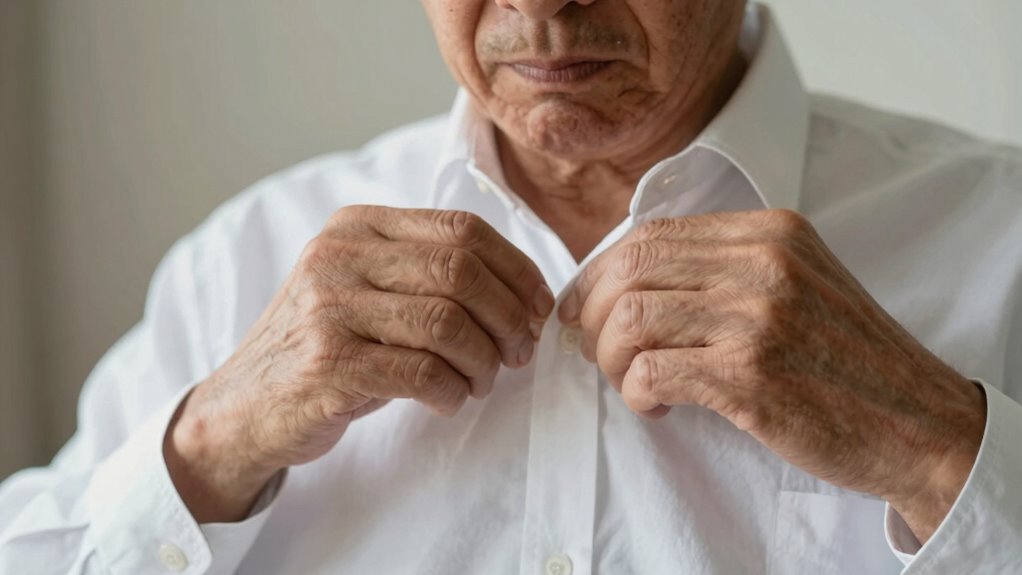
Dressing can be one of the most frustrating daily tasks for people with Parkinson’s, as the condition often affects fine motor skills and muscle control. Small buttons, tight zippers, and stiff fabrics become obstacles that seem insurmountable at times. It’s not just about the physical challenge; it’s also about the emotional toll that comes with repeated struggles. When you’re unable to dress quickly or smoothly, you might feel a sense of loss—losing independence, feeling embarrassed, or even frustrated with yourself. The emotional impact can be heavy, making what once was a routine task feel like an overwhelming hurdle. That’s where adaptive clothing can make a significant difference, designed specifically to ease these struggles and boost your confidence.
Adaptive clothing features design elements that address the challenges of Parkinson’s. For example, clothes with magnetic closures instead of buttons or zippers reduce the dexterity required to dress. Elastic waistbands and stretch fabrics make pulling on garments easier, minimizing the need for precise movements. When you choose clothing that’s easier to handle, you regain a sense of control and independence, which can drastically improve your emotional well-being. Knowing that your clothing is designed with your needs in mind can lessen anxiety each morning, transforming dressing from a source of frustration into a manageable, even empowering task. Design innovations specifically tailored for ease of use can further enhance comfort and independence. Additionally, understanding fine motor skills and their impact can help you select the most effective solutions for your needs. Recognizing how muscle control influences dressing can guide you toward more suitable clothing choices. Developing an awareness of motor skill deficits can also inform your approach to managing daily tasks and exploring adaptive solutions.
Adaptive clothing with magnetic closures and stretch fabrics restores independence and reduces morning anxiety.
Despite these practical solutions, the emotional impact of dressing struggles isn’t always visible. You might find yourself avoiding certain outfits or rushing through dressing just to finish faster, which can lead to feelings of resentment or shame. The frustration can sometimes compound, making you feel as if your body is betraying you. This emotional strain can influence your entire day, affecting your mood and interactions with others. However, embracing adaptive clothing can help break this cycle. It’s about more than just comfort—it’s about restoring dignity and reducing the emotional weight that often accompanies physical difficulties. Recognizing the importance of mobility and fine motor skills can help you choose solutions that truly support your daily needs. Adapting your wardrobe with these considerations in mind can also promote a more positive outlook and encourage self-compassion.
Ultimately, understanding that dressing difficulties are common among people with Parkinson’s helps you accept your experience without judgment. Incorporating adaptive clothing into your routine isn’t a sign of weakness but a smart adaptation to maintain your independence and emotional health. By choosing garments that are easier to put on and take off, you’re taking active steps to lessen frustration and foster a more positive outlook. Remember, every small change can make a big difference in how you approach your daily routine, helping you feel more confident and in control each day.
adaptive clothing with magnetic closures
As an affiliate, we earn on qualifying purchases.
As an affiliate, we earn on qualifying purchases.
Frequently Asked Questions
How Can Caregivers Assist Without Causing Frustration?
You can assist without causing frustration by offering emotional support and practicing patience strategies. Stay calm, speak gently, and give your loved one ample time to dress at their pace. Encourage independence when possible, and softly guide them through each step. Your understanding and steady presence boost confidence, reducing frustration. Remember, your patience and emotional support create a reassuring environment, making dressing easier and less stressful for both of you.
Are There Specific Clothing Types That Help Ease Dressing?
You should consider clothing adaptations like elastic waistbands and magnetic closures to make dressing easier. Opt for fabric choices that are soft, breathable, and stretchy, such as cotton blends or modal fabrics, which reduce discomfort and restrictiveness. These adjustments can help minimize frustration, making dressing quicker and more comfortable. Selecting clothing designed for ease of use allows you to maintain independence and feel more confident during dressing routines.
Does Dressing Difficulty Vary With Parkinson’s Progression?
Yes, dressing difficulty varies with Parkinson’s progression. As symptoms worsen, you may find clothing textures more challenging, especially with fabrics that are stiff or itchy. Your dressing routines might become more frustrating over time, requiring you to adapt clothing choices and strategies. Choosing softer, easier-to-manage clothing textures and simplifying routines can help you maintain independence and reduce frustration, even as your condition progresses.
Can Exercise Improve Dressing Ease Over Time?
Yes, exercise can improve dressing ease over time. Regular physical activity helps strengthen muscles, increase flexibility, and improve coordination, making dressing routines easier. Incorporate adaptive clothing to reduce frustration and streamline dressing. As you stay active, you’ll likely notice greater independence and confidence, easing the emotional burden of dressing difficulties. Consistent exercise and adaptive clothing work together to make dressing less stressful and more manageable over time.
Are There Adaptive Tools to Simplify Dressing Tasks?
Yes, adaptive clothing and dressing aids can make dressing easier for you. These tools are designed specifically to reduce frustration by simplifying tasks like buttoning, zipping, or pulling on clothes. You might find magnetic closures, elastic waistbands, or Velcro fasteners very helpful. Using these adaptive solutions allows you to dress more independently, decreases frustration, and helps you feel more confident during daily routines.
Conclusion
Dressing frustrations in Parkinson’s can feel like trying to untangle a knot that keeps tightening. But remember, patience is your greatest ally. With gentle persistence and the right strategies, you can transform this daily challenge into a smoother, more manageable task. Think of each small victory as a stepping stone across a river—gradually building confidence and easing the flow of your mornings. Keep going; brighter days are just ahead on this journey.
Halloween Picks
halloween
As an affiliate, we earn on qualifying purchases.