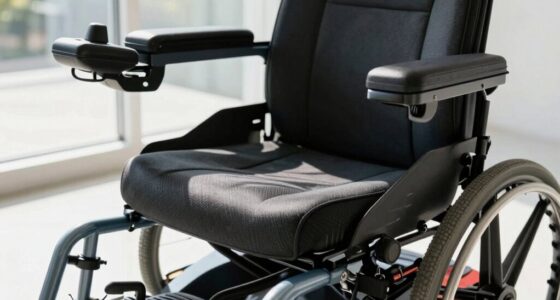
Helping your loved ones adjust to power mobility aids involves recognizing emotional and physical challenges, providing patience, and offering emotional support. Start by familiarizing them with the device, encouraging safe practice in low-stress environments, and celebrating small successes to boost confidence. Address concerns gradually and foster open communication. Ensuring comfort and safety promotes independence. If you continue exploring, you’ll discover effective strategies to create a supportive environment that empowers your loved one to adapt comfortably and confidently.
Key Takeaways
- Foster open communication to address emotional and physical challenges during device adaptation.
- Gradually introduce device use with short, supervised practice sessions to build confidence.
- Customize device settings for comfort and safety, emphasizing proper controls and navigation techniques.
- Celebrate small successes to motivate continued use and reinforce positive experiences.
- Provide ongoing emotional support, patience, and reassurance to help loved ones feel empowered and independent.
Recognizing Emotional and Physical Challenges When Adapting to Power Mobility Aids

Adapting to a power mobility aid can be a challenging shift, often accompanied by a mix of emotional and physical hurdles. You may notice feelings of frustration, sadness, or loss as your loved one adjusts to new limitations. Emotional adjustment can take time, and patience is essential. Physically, they might face coordination issues, fatigue, or discomfort as they learn to operate their device. Recognizing these challenges early helps you provide the right support. Be attentive to signs of emotional distress, such as withdrawal or mood swings, and encourage open conversations. Address physical challenges with patience, offering assistance when needed. Understanding that both emotional and physical hurdles are normal steps in the adaptation process allows you to better support your loved one through this transition. Additionally, understanding the importance of emotional resilience can empower both caregivers and users to navigate this period more effectively. Building confidence in using the device can also significantly improve their comfort and independence during this time. Incorporating proper training and education can further ease the adjustment process, fostering a smoother transition. Recognizing the emotional and physical aspects of adaptation emphasizes the need for a comprehensive approach to support.
Furthermore, providing access to comprehensive information about device operation and safety can help reduce anxiety and promote smoother adaptation.
How to Choose the Right Power Wheelchair or Scooter for Your Loved One

Choosing the right power wheelchair or scooter begins with understanding your loved one’s mobility needs and daily routines. Then, compare the features and costs to find options that fit both their lifestyle and your budget. Making an informed choice guarantees they get the support they need for independence and comfort. Incorporating smart design principles can also enhance their overall living experience by making their environment more accessible and welcoming.
Assess Mobility Needs and Lifestyle
Understanding your loved one’s specific mobility needs and daily routines is essential for selecting the right power wheelchair or scooter. Start with a thorough mobility assessment to identify their physical capabilities, balance, and endurance. Consider their lifestyle considerations—do they need a device for indoor use, outdoor outings, or both? Will they navigate narrow hallways or uneven terrain? Think about how much space they have at home and in public areas. Also, evaluate their daily activities and how mobility aids fit into those routines. This helps determine whether a more compact, lightweight model or a rugged, all-terrain scooter is appropriate. Additionally, assessing accessibility requirements can ensure the device supports independence, safety, and comfort tailored specifically to your loved one’s lifestyle needs, ensuring their mobility device enhances overall quality of life.
Compare Features and Costs
Once you’ve identified your loved one’s specific mobility needs and how they plan to use their device, it’s time to compare features and costs to find the best fit. Focus on battery life, as longer-lasting batteries reduce the need for frequent charging and improve independence. Check the customization options available, such as adjustable seating, armrests, and control settings, to ensure comfort and usability. Consider the overall cost, including maintenance and accessories, to avoid surprises later. Some models might be more affordable upfront but cost more over time, while others offer better durability or advanced features. Weigh these factors carefully to select a device that balances functionality, comfort, and budget, ensuring your loved one feels confident and supported in their new mobility aid. Additionally, understanding the reliability and safety of different models can help prevent unexpected breakdowns and ensure consistent support. Incorporating sauna and cold-plunge knowledge can also be beneficial for overall wellness and recovery. Moreover, reviewing quality and durability ensures the device will withstand daily use and provide long-term value.
Preparing Your Loved One for Using a Power Wheelchair or Scooter

To help your loved one feel confident using their new power mobility device, start by familiarizing them with its features. Practice safe navigation skills together, gradually increasing usage to build comfort. Encouraging small steps will make the changeover smoother and more manageable. Additionally, consider using training techniques that promote independence and ensure proper handling of the device. Incorporating patient education can further enhance their understanding and comfort with the equipment. Regular practice sessions can also help reinforce skills and boost confidence over time. Understanding assistive technology principles can optimize their adaptation process and promote safer use. Recognizing the importance of user-centered design can help tailor the device to your loved one’s specific needs, making the transition easier.
Familiarize With Equipment Features
Getting familiar with the features of your loved one’s power mobility aid is essential for their confidence and safety. Take time to explore customizing features, such as adjusting seat height, tilt, and speed settings, to ensure comfort and control. Understanding how technology integration works, like joystick controls, signal indicators, and safety alarms, helps your loved one operate the device confidently. Encourage them to read the user manual and ask questions about each feature. Knowing how to access and modify settings empowers your loved one to tailor the device to their needs. Acquaintance with these features reduces frustration and promotes independence, making everyday use smoother and safer. Exploring home charging options and maintenance routines ensures the device remains reliable and safe for daily use. Learning about device troubleshooting can help address minor issues promptly, minimizing downtime and frustration. Becoming familiar with vetted vacuum features and maintenance routines can inspire confidence in handling other household equipment as well. Developing a basic understanding of safety protocols related to mobility devices further enhances confidence and ensures safe operation. Additionally, practicing proper device handling techniques can improve overall safety and ease of use. By mastering the equipment’s capabilities, you support your loved one’s transition to confident, autonomous mobility.
Practice Safe Navigation Skills
Practicing safe navigation is indispensable for your loved one’s confidence and independence when using a power wheelchair or scooter. Start by familiarizing them with the assistive technology features designed to enhance safety, like obstacle detection and braking systems. Encourage them to practice maneuvering in low-traffic, controlled environments to build skills gradually. Your social support plays a crucial role; offer encouragement and reassurance as they learn to navigate different surfaces and spaces. Teach them to check their surroundings, use mirrors if available, and go at a comfortable pace. Reinforcing these skills helps prevent accidents and boosts their confidence. Additionally, understanding Free Floating concepts in mobility aids can help them adapt to different environments more effectively. Consistent practice, combined with positive reinforcement, ensures they develop the skills needed for safe, independent mobility.
Encourage Gradual Usage
Encouraging your loved one to use their power mobility device gradually helps build confidence and comfort. Start with short, manageable sessions to ease their emotional adjustment and assure physical comfort. This slow approach allows them to become familiar with controls and navigate safely. Monitor their comfort level, and praise their progress to boost confidence. You can use the table below to plan the gradual transition:
| Stage | Focus | Duration |
|---|---|---|
| Introduction | Emotional adjustment | 10-15 mins |
| Practice | Physical comfort | 20-30 mins |
| Exploration | Confidence building | Varies |
| Regular Use | Independence | As tolerated |
Implementing proper training and guidance during each stage can further enhance their adaptation process. Prioritizing emotional support throughout the process helps your loved one feel more secure and motivated to adapt. This method promotes a positive experience, reduces frustration, and helps your loved one adapt smoothly.
Teaching Safe and Confident Operation of Power Mobility Devices

Teaching safe and confident operation of power mobility devices is essential to guarantee your loved one can navigate their environment securely. You’ll want to focus on building their emotional resilience and ensuring they feel comfortable using the device. Start with these key steps:
- Demonstrate proper controls, emphasizing smooth acceleration and turning techniques to prevent accidents.
- Practice in accessible areas, gradually increasing complexity to boost confidence and adaptability.
- Reinforce safety rules, such as checking surroundings and avoiding obstacles, to promote independence and reduce anxiety.
Managing Anxiety and Resistance During the Transition

When your loved one starts using a power mobility device, it’s common for them to feel anxious or resistant to the change. To alleviate these feelings, focus on providing emotional support and guaranteeing their physical comfort. Encourage open communication and listen to their concerns without judgment. Help them gradually build confidence through small successes. Use this table to identify strategies:
| Strategy | How to Implement | Benefits |
|---|---|---|
| Offer reassurance | Remind them of their capabilities | Reduces anxiety |
| Ensure physical comfort | Adjust seat and controls for ease | Promotes confidence |
| Provide emotional support | Be patient, show understanding | Builds trust |
| Celebrate progress | Acknowledge small achievements | Fosters motivation |
Additionally, understanding the importance of filtration systems can help caregivers ensure the environment remains comfortable and safe during the transition. Maintaining a clean environment can also reduce allergy risks that may affect sensitive individuals.
Creating a Supportive Environment to Promote Independence

Supporting your loved one in creating a positive environment can considerably boost their confidence and independence. To do this, focus on emotional support and fostering peer networks. These elements help them feel connected and understood, reducing feelings of isolation.
Consider these steps:
- Encourage open conversations about their feelings and experiences to promote emotional support.
- Connect them with peer networks, such as support groups or community activities, where they can share advice and encouragement.
- Arrange accessible spaces that accommodate their mobility aid, making daily activities easier and more enjoyable.
Troubleshooting Common Problems and Knowing When to Seek Help

While power mobility aids can greatly enhance independence, users may encounter common issues that require troubleshooting. Regular device maintenance is key to preventing problems and ensuring safe operation. If your loved one notices the wheelchair isn’t charging properly, the battery may need replacing or recharging. If the device isn’t responding or moves unpredictably, check for loose wires or damaged components. Strange noises or uneven movement can signal mechanical issues requiring professional attention. Knowing when to seek help is essential; if troubleshooting common issues doesn’t resolve the problem, contact the manufacturer or a qualified technician. Don’t attempt complex repairs yourself, as improper handling can cause further damage or safety risks. Staying proactive with device maintenance and recognizing warning signs helps keep the power mobility aid functioning smoothly.
Helping Your Loved One Stay Confident and Independent Over Time

Maintaining your loved one’s confidence and independence over time requires ongoing encouragement and support. Emotional support reassures them that they’re capable and valued, helping to boost their self-esteem. Peer encouragement plays a key role by connecting your loved one with others who understand their experience, inspiring motivation and resilience. To foster this, consider these approaches:
Ongoing encouragement and peer support boost confidence and foster independence for your loved one.
- Encourage participation in support groups or community activities where they can share experiences and gain confidence.
- Celebrate small victories to reinforce their progress and independence.
- Regularly check in to listen and provide reassurance, emphasizing their strengths and abilities.
Frequently Asked Questions
How Can I Encourage My Loved One to Embrace Their New Mobility Device?
To encourage your loved one to embrace their new mobility device, use motivational strategies like highlighting how it improves their independence and quality of life. Share success stories or involve peer encouragement by connecting them with others who comfortably use similar devices. Show patience, offer positive reinforcement, and celebrate small victories. Your support and understanding can boost their confidence and help them see their mobility aid as a helpful tool rather than a limitation.
What Are Signs My Loved One Is Struggling Emotionally With the Transition?
You might notice emotional signs like withdrawal, irritability, or sadness indicating your loved one struggles emotionally with the shift. They may seem less engaged or express feelings of frustration. Encourage open conversations and offer coping strategies like counseling or support groups to help them process these feelings. Showing patience and understanding can make a significant difference as they adapt to their new mobility device.
How Do I Handle Resistance or Refusal to Use the Power Wheelchair?
When your loved one resists using the power wheelchair, try peer support by connecting them with others who’ve had similar experiences. Use motivational strategies like positive reinforcement and emphasizing independence benefits. Show patience, listen to their concerns, and offer reassurance. Avoid forcing them; instead, gently encourage and celebrate small successes. Over time, this approach helps build confidence and eases resistance, making them more comfortable with using the wheelchair.
What Community Resources Are Available for Additional Support?
Imagine a lighthouse guiding ships safely—community resources do the same for you. Local support groups and organizations offer community support and peer mentorship, giving you guidance and encouragement. For example, some groups host workshops or connect you with others who’ve navigated similar challenges. These resources can provide practical advice, emotional support, and a sense of belonging, making the adjustment process smoother and less isolating.
How Can I Maintain My Loved One’s Dignity During the Adjustment Process?
You can maintain your loved one’s dignity during the adjustment process by practicing respectful communication and involving them in decisions. Show patience and understanding, listen carefully to their concerns, and avoid making them feel rushed or embarrassed. Offer reassurance and emphasize their capabilities, not limitations. By respecting their feelings and preferences, you help preserve their dignity and foster a positive attitude toward using the new mobility aid.
Conclusion
As you guide your loved one through this new chapter, remember you’re lighting the path like a steady lighthouse in a storm. Patience and support are the anchors that keep them grounded, turning challenges into stepping stones. With your encouragement, they’ll navigate their mobility device with confidence, transforming hurdles into horizons. Together, you’re crafting a journey of independence—one filled with hope, resilience, and a future where they can truly soar.