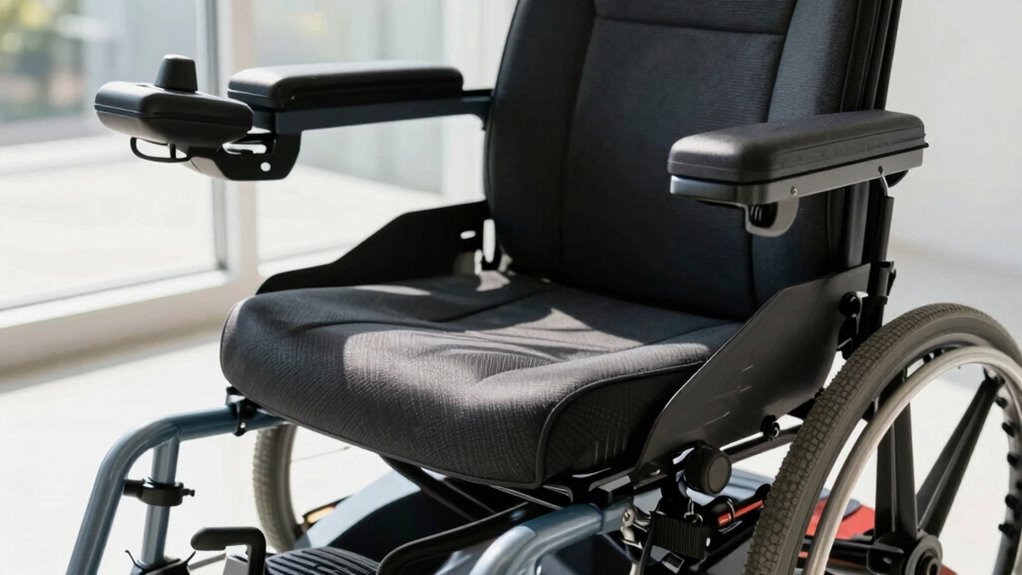

To size and fit a power wheelchair for maximum comfort, start by measuring your body—hip width, seat height, and arm length—to make certain of proper support. Consider your mobility needs and environment to select features like suspension or outdoor tires. Adjust the footplates, armrests, and seat support so everything feels natural and relaxed. Test the fit during a trial, and watch for signs you need a professional refit or customization. Keep exploring for more tips to stay comfortable.
Key Takeaways
- Measure body dimensions such as seat height, width, depth, and torso length to select appropriately sized wheelchair components.
- Assess daily activities and environmental needs to determine suitable features like terrain durability and maneuverability.
- Adjust seat and backrest angles, armrests, and footplates during trial fits to optimize comfort and posture.
- Choose supportive cushions, lumbar support, and upholstery based on body shape and pressure relief needs.
- Regularly evaluate fit over time and schedule refits or adjustments to maintain maximum comfort and safety.
Why Proper Power Wheelchair Sizing Matters for Comfort

Choosing the right size for your power wheelchair is essential because an ill-fitting chair can cause discomfort and even lead to posture problems over time. An ergonomic design guarantees that your chair supports your body properly, reducing strain and preventing pain. When your wheelchair fits well, it improves your overall comfort and allows for better mobility. Additionally, a properly sized chair enhances its aesthetic appeal, helping you feel more confident and satisfied with your equipment. A good fit means your controls are easily accessible, and your seating supports proper alignment. Investing time in selecting the correct size ensures you won’t have to compromise on comfort or style, making your daily mobility experience much more enjoyable and sustainable. Proper sizing also involves matching the chair to your weight and size, which is crucial for maintaining safety and stability during use. Understanding wave and wind factors can help you choose a wheelchair that remains stable and comfortable in varying outdoor conditions, especially in outdoor environments affected by outdoor weather conditions. Considering adjustability features can further enhance your comfort by allowing modifications as your needs change over time. Moreover, selecting a chair with appropriate cushioning and support can help prevent pressure sores and improve long-term comfort during extended use.
How to Evaluate Your Mobility Needs Before Choosing a Wheelchair
Before choosing a wheelchair, you need to evaluate your mobility needs carefully. Think about your limitations, the activities you do daily, and the environments you’ll navigate. This helps guarantee you select a wheelchair that fits your lifestyle and terrain. Additionally, considering family and elderly support can ensure you get the appropriate assistance and resources for your specific situation. Recognizing your adaptive equipment requirements can also aid in selecting a model that enhances your comfort and independence. Incorporating ergonomic design principles into your assessment can further improve overall comfort and usability. Understanding customization options available can help tailor the wheelchair to better suit your unique needs and preferences. Being aware of mobility assessments can provide valuable insights to optimize your choice.
Assess Mobility Limitations
Understanding your mobility limitations is a crucial first step in selecting the right power wheelchair. Assess how far and quickly you can move, and identify any areas where balance or strength may be compromised. Consider your need for ergonomic cushions to prevent pressure sores and improve comfort during extended use. Think about specific tasks you perform daily, like transferring in and out of the chair or reaching for objects. This helps determine if additional wheelchair accessories, such as armrest supports or footrests, are necessary. Accurate mobility assessment techniques can help you identify subtle support requirements that might otherwise be overlooked, ensuring a better overall fit. Incorporating a comprehensive evaluation can further refine your understanding of your support needs. Being aware of your functional mobility skills can also assist in choosing the most suitable wheelchair features for your lifestyle. Properly assessing your needs allows for customized support that enhances comfort and independence.
Consider Daily Activities
Evaluating how your daily activities are affected by your mobility helps you identify the features your wheelchair needs to support. Consider whether you frequently transfer between rooms, need to access high or low surfaces, or require specific wheelchair accessories like cup holders or storage compartments. Think about your typical routines—do you shop, visit friends, or work outside your home? These activities influence the type of power wheelchair that fits your lifestyle. Additionally, factor in maintenance needs; a model with easy-to-service components can save you time and effort. To make an informed choice, understanding mobility needs and limitations and how they relate to home safety and accessibility can help you select a wheelchair that offers ideal comfort, functionality, and convenience, ensuring it seamlessly integrates into your routine and enhances your independence. Considering options with reliable customer support can also help address any future issues quickly, maintaining your confidence in your mobility device. Moreover, researching emerging technologies in power wheelchairs can provide options that adapt better to evolving needs. Staying informed about electric wheelchair features can further assist in customizing your device for maximum comfort and usability.
Evaluate Environmental Terrain
How well your wheelchair navigates different outdoor and indoor environments directly impacts your mobility choices. Conducting a terrain assessment helps you identify environmental factors that could influence performance, such as uneven surfaces, thick carpets, or gravel paths. Consider the types of terrain you encounter daily and how challenging they might be for different wheelchair types. Outdoor environments may require features like high clearance, rugged tires, or adjustable suspension, while indoor spaces demand maneuverability on smooth floors and tight corners. Evaluating these factors ensures your wheelchair can handle your typical routes comfortably and safely. Understanding the supernatural environment you frequently navigate can also inform choices about durability and adaptability. Incorporating knowledge about piercing care and hygiene can be helpful if your environment exposes you to bacteria or irritants that could affect your mobility aids or accessories. Additionally, considering the smart home technology available, such as automated door openers or voice-activated controls, can enhance your independence in various settings. By understanding environmental factors, you can select a wheelchair that adapts well to your surroundings, providing you with maximum independence and confidence in every setting. Being aware of terrain-specific features can further guide you in choosing the most suitable mobility device for your needs. Recognizing environmental hazards like wet surfaces or obstructions can also improve your safety and comfort during daily activities.
How to Measure Your Body for the Perfect Power Wheelchair Fit

To guarantee your power wheelchair fits comfortably and functions properly, start by taking accurate measurements of your body. Begin with your seat height, measuring from your heel to the back of your knee, ensuring enough clearance for ease of movement. Next, determine your seat width by measuring the widest part of your hips or thighs, adding a little extra for comfort. Consider your preferred seat padding—thicker padding may require slight adjustments to dimensions for added support. When measuring for your frame, note your torso length from your hips to your shoulders and your arm length for proper control placement. Keep in mind that frame materials influence weight and durability, so choose a frame size that matches your measurements for ideal support and comfort. Additionally, selecting Suprem fabric for your wheelchair upholstery can enhance comfort and sustainability.
Choosing the Right Seat Size and Support Features

Choosing the right seat size and support features is essential to guarantee comfort and proper posture while using your power wheelchair. Your seat cushion should fit snugly without restricting movement, providing enough padding for comfort and pressure relief. Avoid seats that are too narrow or too wide, as this can cause discomfort and poor alignment. Lumbar support is vital for maintaining proper spinal posture and reducing fatigue, so select a wheelchair with adjustable lumbar support if possible. Proper support helps prevent slouching and distributes your weight evenly. Consider your body shape and size when choosing the seat, ensuring it offers adequate support and stability. The right combination of seat cushion and lumbar support makes a significant difference in long-term comfort and overall health during wheelchair use.
How to Adjust Footplates and Armrests for Maximum Comfort

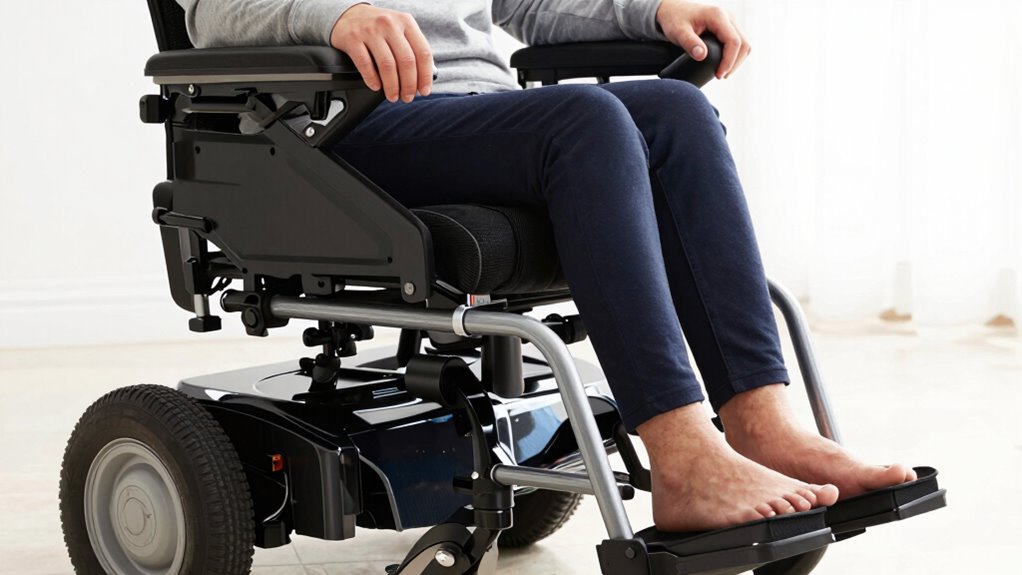
Adjusting your footplates and armrests properly can considerably enhance your comfort and posture during wheelchair use. Proper footplate adjustments ensure your feet rest flat, reducing fatigue and pressure points. For armrest positioning, set them so your shoulders stay relaxed and your arms rest comfortably without lifting or straining. Use this table to guide your adjustments:
| Component | Adjustment Tip | Benefits |
|---|---|---|
| Footplates | Set height so feet are flat and knees are at 90° | Prevents foot drop and improves circulation |
| Armrest height | Adjust so shoulders are relaxed, elbows at 90° | Reduces strain, improves posture |
| Armrest width | Position so arms rest comfortably without side pressure | Enhances stability and comfort |
Regularly check these settings to maintain maximum comfort and posture support.
How to Test Your Wheelchair Fit During a Trial Ride

During your trial ride, focus on adjusting your seating position to guarantee you’re comfortable and well-supported. Pay attention to how easily you can maneuver the wheelchair and whether it responds smoothly to your commands. Evaluate both comfort and control to find the best fit for your needs.
Adjust Seating Position
When you take a power wheelchair for a trial ride, it’s vital to evaluate your seating position to guarantee comfort and proper support. Adjust your seat cushion to ensure even pressure distribution and stability, preventing soreness during longer rides. Check if your hips are positioned comfortably and maintain good posture. Next, focus on headrest positioning; it should support the back of your head without forcing you forward or tilting your neck. Make small adjustments to the seat and backrest angles as needed, ensuring you can sit upright without strain. Your feet should rest flat on the footplates, and your arms should comfortably reach the joystick and armrests. Proper seating alignment enhances control, reduces fatigue, and boosts overall comfort during extended use.
Evaluate Maneuverability and Comfort
How can you determine if a power wheelchair feels right for you? During your trial ride, focus on maneuverability and comfort. Test how easily you can navigate tight spaces and turn corners, ensuring the wheelchair’s size and shape suit your environment. Pay attention to wheelchair aesthetics—does it look appealing and match your style? Check the battery life by taking a few rides to see if it lasts through your typical day. Notice if the seat remains comfortable over time and if adjustments are needed. Evaluate how responsive the controls are and if you feel secure. Remember, a well-fitting wheelchair should feel natural, encouraging confidence and ease in your movements.
Signs Your Power Wheelchair Needs Refit or Customization
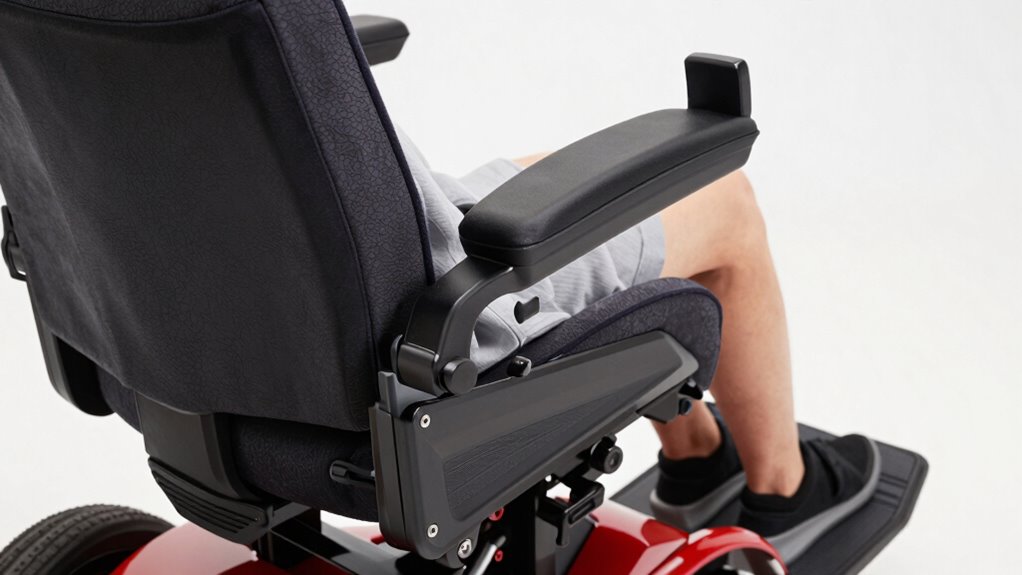
If your power wheelchair no longer feels comfortable or responsive, it’s a clear sign you might need a refit or customization. Persistent discomfort, pressure sores, or frequent adjustments indicate your current setup isn’t fitting properly. You might also notice poor posture or increased fatigue after rides, suggesting the need for custom cushion options to improve support and pressure distribution. Additionally, if you find yourself constantly adjusting wheelchair accessories or struggling with controls, it’s time to contemplate a professional assessment. A proper fit ensures ideal comfort and safety. Don’t ignore these signs, as they can lead to discomfort or health issues. Reassessing your wheelchair’s fit helps you enjoy maximum mobility, comfort, and independence.
Tips to Maintain Your Wheelchair’s Fit Over Time
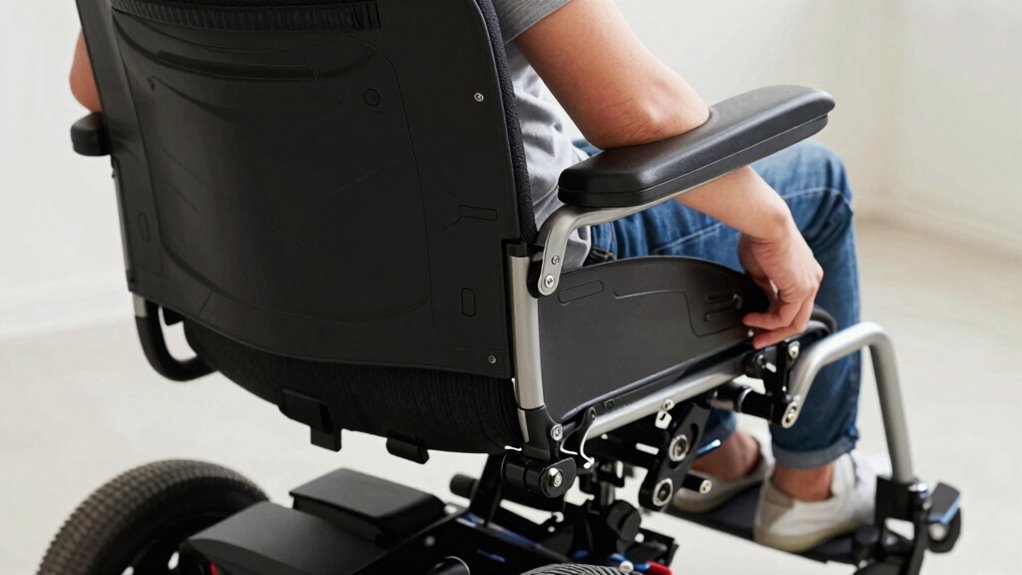
To keep your wheelchair fitting comfortably over time, regular adjustments and inspections are essential. Consistently check your seating and footrest positions to ensure they remain aligned with your body’s needs. Incorporate routine maintenance routines, including inspecting and tightening wheelchair accessories like armrests, cushions, and leg supports. Pay attention to any signs of wear or looseness that could affect your comfort or safety. Regularly clean and adjust your seat belt and headrest for a secure fit. Keep an eye on the condition of your tires and brakes, as they directly impact stability. Schedule periodic professional evaluations to fine-tune your fit and address any evolving needs. Staying proactive with these tips helps preserve excellent comfort and prevents costly repairs down the line.
Frequently Asked Questions
How Often Should I Reassess My Wheelchair Fit?
You should reassess your wheelchair fit at least once a year or whenever you notice discomfort, changes in your condition, or after significant weight fluctuations. Regular wheelchair maintenance and mobility assessments help guarantee ideal comfort and safety. If you experience pain, pressure sores, or difficulty operating your chair, schedule an evaluation sooner. Staying proactive guarantees your power wheelchair continues to meet your needs effectively and comfortably.
Can Custom Cushions Improve Overall Comfort?
Think of a custom cushion as a tailored suit for your body, enhancing your comfort and support. Yes, custom cushions can substantially improve your overall comfort by using ideal cushion materials and ergonomic design that match your unique shape. They help distribute pressure evenly, prevent sores, and provide better posture. Investing in a personalized cushion means you’re prioritizing your well-being, making every ride smoother and more comfortable.
What Are Common Signs of an Ill-Fitting Wheelchair?
You might notice discomfort, poor posture alignment, or pressure sores, which are signs of an ill-fitting wheelchair. If you feel your posture isn’t supported properly or your cushion selection isn’t right, these issues can develop. Also, if you experience fatigue or pain after using your wheelchair, it’s time to reassess sizing and fit. Ensuring proper posture alignment and choosing the right cushion are key to avoiding these problems.
How Does Weight Distribution Affect Wheelchair Fit?
Did you know that improper weight distribution can cause discomfort in over 60% of wheelchair users? It directly impacts pressure points and posture alignment, making your ride less comfortable. When your weight isn’t evenly distributed, certain areas experience excessive pressure, leading to soreness and poor posture. To prevent this, guarantee your wheelchair supports your weight evenly, reducing pressure points and promoting proper posture alignment for maximum comfort and safety.
Are There Ergonomic Options for Better Long-Term Comfort?
Yes, ergonomic accessories and posture support options can greatly improve your long-term comfort. You should look for adjustable cushions, lumbar support, and armrests that suit your needs. These features help maintain proper alignment, reduce pressure points, and prevent fatigue. By customizing your power wheelchair with ergonomic accessories, you guarantee better posture support, which leads to increased comfort and reduces the risk of pain or injury during extended use.
Conclusion
Getting your power wheelchair just right is like tuning a fine instrument—you’ll feel the harmony of comfort and support. When you prioritize proper sizing and adjustments, you guarantee every ride is smooth sailing, not a bumpy road. Keep listening to your body’s signals and maintain your setup over time. With the right fit, your wheelchair becomes an extension of you—gliding effortlessly through life’s journey with confidence and ease.