To guarantee safety at home if you have osteoporosis, install grab bars, non-slip mats, and good lighting in key areas like bathrooms and stairs. Keep pathways clear, use sturdy handrails, and secure assistive devices regularly. Wear suitable footwear, and avoid clutter or loose rugs that could cause falls. Maintaining your home and staying aware of fall prevention tips can make a big difference. Continue exploring for a detailed checklist tailored to your needs.
Key Takeaways
- Install sturdy grab bars and handrails in bathrooms, stairways, and key areas to prevent falls.
- Keep pathways clear of clutter, cords, and loose rugs to reduce tripping hazards.
- Ensure good lighting with bright, even illumination and nightlights in bedrooms and bathrooms.
- Use non-slip mats on stairs, in showers, and on slippery surfaces for added stability.
- Regularly check and maintain assistive devices, emergency plans, and home environment safety measures.
Living with osteoporosis means taking extra precautions at home to prevent falls and fractures. You want to create a safe environment that minimizes risks and gives you confidence to move around comfortably. One key step is ensuring you have the right assistive devices, such as grab bars, handrails, and walking aids, strategically placed where you need them most. These devices can provide stability and support, helping you maintain your balance when getting in and out of bed, using the bathroom, or steering through stairs. Installing grab bars in the shower and near the toilet is especially important, as these areas are common spots for falls. Make sure your assistive devices are sturdy and securely anchored to handle daily use, giving you peace of mind.
Ensure sturdy grab bars and handrails are securely installed to support safe movement at home with osteoporosis.
Another critical aspect is emergency preparedness. You should have a plan in place in case of falls or other emergencies. Keep a phone within reach at all times, ideally in multiple locations, so you can quickly call for help if needed. Consider wearing a medical alert device or a smartwatch with emergency features, so you can summon assistance even if you’re unable to reach the phone. Make sure your home is easy to traverse, with clear pathways free of clutter, cords, or loose rugs that could cause tripping. Knowing how to quickly access emergency contacts and having important medical information readily available can make a significant difference in urgent situations. Additionally, understanding UV radiation risks associated with indoor tanning can help you make informed decisions about skin health and safety.
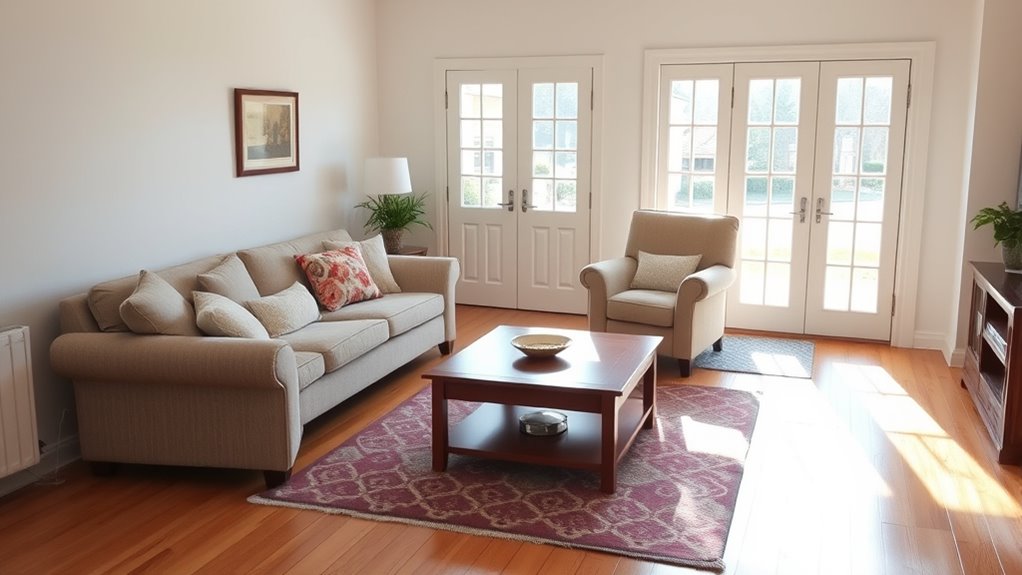
Ensuring good lighting throughout your home is essential. Install bright, even lighting in hallways, staircases, and dark corners to prevent shadows that might obscure hazards. Use nightlights in bedrooms and bathrooms to avoid stumbling in the dark. Keep stairs well-maintained, with sturdy handrails on both sides, and consider adding non-slip treads or mats to reduce the risk of slipping. Furniture should be arranged to allow ample space to move freely, and avoid placing furniture in walkways that could cause you to trip.
Regularly review and update your safety measures, especially as your needs change. Keep pathways clear, check that assistive devices are in good condition, and revisit your emergency plan periodically. Educate yourself on how to fall safely, and consider balance or strength exercises recommended by your healthcare provider to boost stability. By taking these steps, you’re actively reducing the risk of falls and fractures, making your home a safer place to live with osteoporosis.
Frequently Asked Questions
How Often Should I Review My Home Safety Measures?
You should review your home safety measures at least every six months, or sooner if you experience any falls or injuries. Regular home assessments help identify hazards and guarantee safety updates are current. Keep an eye on changes in your health or environment, and don’t hesitate to update safety features as needed. Staying proactive with routine checks can considerably reduce risks and keep you safe at home.
Are There Specific Lighting Recommendations for Seniors With Osteoporosis?
You should focus on lighting design that provides bright, even illumination to reduce shadows and improve visibility. Use task lighting in key areas like the bathroom and kitchen, and incorporate visual cues such as contrasting colors or textured surfaces to highlight hazards. Keep light switches accessible, and opt for fixtures with adjustable brightness. Proper lighting helps minimize falls and boosts confidence, making your home safer and easier to navigate.
What Mobility Aids Are Best for Osteoporosis-Related Balance Issues?
Did you know that falls are the leading cause of injury among seniors with osteoporosis? To improve your balance and prevent falls, consider using mobility aids like canes or walkers. Assistive devices and stability aids provide extra support, helping you move safely around your home. Choose lightweight, ergonomic options that suit your needs, and guarantee proper fitting to maximize safety and confidence in your daily activities.
How Can I Modify Outdoor Spaces to Prevent Falls?
You can prevent falls outdoors by ensuring garden pathways are even, wide, and free of obstacles. Add sturdy handrails along walkways and steps for support. Improve outdoor lighting to illuminate pathways clearly at night, reducing trip hazards. Keep pathways clear of clutter, and consider installing non-slip surfaces. Regularly check for loose stones or uneven spots, and trim bushes or trees that might block light or create tripping hazards.
Are There Emergency Alert Systems Suitable for Osteoporosis Patients?
Did you know that fall-related injuries are a leading cause of hospitalization among seniors with osteoporosis? Emergency alerts and fall prevention technology can help you stay safe. These systems, like wearable alarms or sensor-based devices, automatically notify caregivers if a fall occurs. They provide quick assistance, reducing serious injuries. Choosing a reliable emergency alert system tailored for osteoporosis patients guarantees prompt help, giving you peace of mind and enhanced safety at home.
Conclusion
By taking these simple safety steps, you’re setting yourself up for a smoother, safer everyday life. Remember, an ounce of prevention is worth a pound of cure—staying proactive now can prevent future falls and fractures. Don’t wait for trouble to knock; be prepared and keep your home a secure sanctuary. With a little effort, you can enjoy your independence with confidence, knowing you’ve done everything to protect yourself from potential hazards.