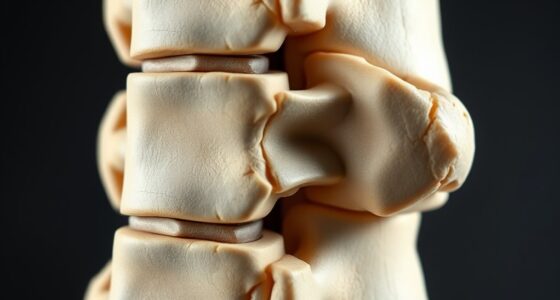

Physical therapy plays a vital role in managing osteoporosis by guiding you through exercises that improve your posture, strengthen bones, and boost your balance. These targeted activities help reduce your risk of falls and fractures while supporting overall mobility and confidence. A physical therapist can personalize your program to match your needs, ensuring safe progress over time. Keep exploring to discover how tailored strategies can make a meaningful difference in your bone health journey.
Key Takeaways
- Physical therapy guides targeted exercises to improve strength, posture, and balance, reducing fracture risk in osteoporosis patients.
- It develops personalized programs that incorporate weight-bearing, balance, and posture correction activities for bone health.
- Physical therapists help prevent falls by enhancing stability and coordination through tailored balance exercises.
- They focus on pain management and maintaining mobility, supporting independence and quality of life.
- Early intervention by physical therapy promotes long-term skeletal support and reduces osteoporosis-related complications.

Have you ever wondered how physical therapy can help manage osteoporosis? If you’re dealing with this condition, you know it’s about strengthening your bones and preventing fractures. But what might surprise you is how much your posture and balance play a role in your overall health. Your physical therapist can guide you through targeted exercises that address these areas, making a real difference in your daily life.
One of the key strategies in osteoporosis management is posture correction. Poor posture can put unnecessary strain on your spine and bones, increasing the risk of fractures. During your therapy sessions, you’ll learn how to stand and sit properly, aligning your spine correctly and avoiding habits that may worsen your condition. These adjustments aren’t just about looking better—they’re about reducing pain and strengthening your skeletal support. Your therapist might teach you specific exercises to reinforce good posture habits, helping you maintain proper alignment throughout your activities. Over time, this can lead to improved balance and decreased risk of falls, which are especially dangerous for those with osteoporosis. Incorporating balance exercises into your routine can further enhance your stability and confidence in movement.
Posture correction reduces pain, strengthens bones, and lowers fall risk in osteoporosis management.
Balance exercises are another essential component of your physical therapy plan. As osteoporosis weakens your bones, your risk of falls and fractures increases. Balance training helps you develop stability and coordination, so you feel more confident moving around. These exercises might include simple activities like standing on one leg, heel-to-toe walking, or using balance boards. The goal is to challenge your stability safely, gradually increasing difficulty as your strength and confidence grow. Better balance not only lowers your fall risk but also enhances your overall mobility, making everyday tasks easier and safer. These exercises are often tailored to your current fitness level and specific needs, ensuring you’re challenging yourself without risking injury.
Incorporating posture correction and balance exercises into your routine isn’t just about immediate improvements; it’s about building a foundation for long-term health. Your physical therapist will likely combine these with strength training and weight-bearing activities to optimize bone health. The personalized approach means you get strategies that fit your lifestyle, making it easier to stick with them. With consistent effort, you can better manage your osteoporosis, reduce discomfort, and enjoy greater independence. Remember, early intervention and targeted exercises can make a significant difference, helping you stay active and healthy despite your diagnosis.
Frequently Asked Questions
Can Physical Therapy Reverse Osteoporosis?
Physical therapy can’t reverse osteoporosis, but it considerably helps with bone strengthening and fall prevention. Through targeted exercises, you can improve your bone density and strengthen muscles, reducing fracture risk. A physical therapist guides you in safe movement techniques and balance training, making everyday activities safer. While it doesn’t cure osteoporosis, consistent therapy helps you maintain independence and improves your quality of life.
How Soon Can I See Improvements With Therapy?
You might notice improvements in your strength and balance within 4 to 6 weeks of therapy. Regular exercise timing is key; consistent sessions maximize therapy benefits. While some changes happen quickly, building bone density takes longer. Stay committed, and you’ll likely see progress sooner, especially in reduced fall risk and increased mobility. Remember, personalized therapy plans help you achieve the best results faster.
Are There Specific Exercises for Different Osteoporosis Stages?
Yes, there are specific exercises tailored to your osteoporosis stage. For early stages, weight-bearing exercises like walking or low-impact activities strengthen bones, while posture correction exercises help prevent fractures. As your condition progresses, your therapist adjusts these routines to guarantee safety and effectiveness. Always follow your physical therapist’s guidance to avoid injury and optimize benefits, ensuring your exercise plan aligns with your current osteoporosis stage.
Is Physical Therapy Suitable for All Osteoporosis Patients?
Yes, physical therapy is suitable for most osteoporosis patients, but you should always consider your bone density and exercise safety. A trained physical therapist assesses your condition and designs a personalized plan that enhances bone strength while minimizing fracture risk. They guide you through safe exercises tailored to your stage of osteoporosis, ensuring you get the benefits of improved mobility and bone health without overexertion or injury.
How Does Physical Therapy Compare to Medication?
Think of physical therapy as a gentle but steady tide, gradually strengthening your bones. Compared to medication, exercise benefits from improving balance, posture, and muscle strength, reducing fall risk, and promoting bone health naturally. While medication can quickly slow bone loss, physical therapy offers a sustainable, holistic approach that enhances your overall function and quality of life. Combining both often yields the best results in managing osteoporosis effectively.
Conclusion
Incorporate informed interventions to improve your integrity and independence. By embracing tailored techniques, you can strengthen structures, support stability, and stave off setbacks. Physical therapy promotes progress, prevents problems, and paves the path toward a healthier, more hopeful horizon. With consistent commitment and careful coaching, you can conquer challenges, cultivate confidence, and create a confident, resilient core. Take charge, stay committed, and let physical therapy be your powerful partner in overcoming osteoporosis.