TL;DR

Get comfort and care essentials delivered free — and shop member deals
- Fast, free delivery on millions of items
- Access to Prime Big Deal Days deals on October 6–7
- Prime Video, Amazon Music and more included
Instructor Lotty Campbell Bird recommends barre as a bodyweight way to challenge muscles without dumbbells, bands or specialist equipment. Fit&Well’s six-exercise routine is designed to take about 15 to 20 minutes once through; the material does not include research comparing barre with other strength workouts.
Fit&Well has published a six-move barre workout that instructor Lotty Campbell Bird says can build strength using bodyweight resistance, without dumbbells, bands or specialist equipment. The routine is designed to take about 15 to 20 minutes when completed once, offering a short at-home option for people seeking a strength-focused session without weights.
Campbell Bird, founder of Collective Fitness, describes barre as one of her preferred ways to work on strength. She says its use of bodyweight can make the exercises challenging without added resistance. That is an instructor’s assessment in the report, rather than a comparative research finding establishing barre as one of the best workouts.
The routine includes curtsy lunges, wide second pliés, single-leg work on all fours, slow-motion mountain climbers, tabletop toe taps and alternating leg extensions. It combines standing, plank, hands-and-knees and lying positions, with repetitions or timed holds specified for each exercise.
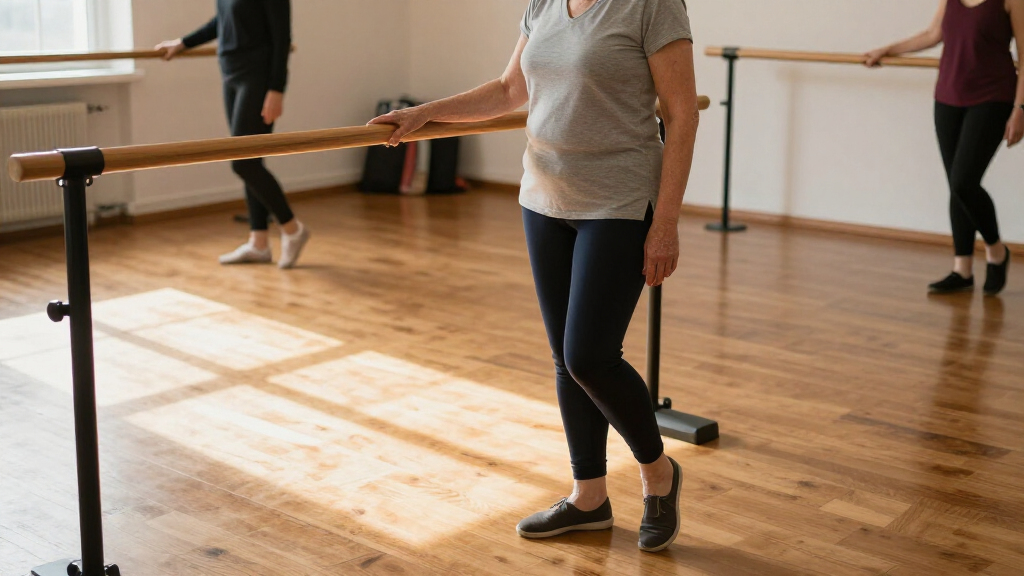
Fit&Well says the sequence takes 15 to 20 minutes once through. It can be repeated two or three times for a longer session, according to the report. No ballet barre is required: Campbell Bird says people who want balance support can use a sturdy chair, kitchen worktop or wall.
A Short Routine Without Weights
The routine presents a low-equipment option for people who want to exercise at home or do not have access to weights. The instructor’s advice also points to an important distinction: the session relies on controlled bodyweight movements, not on external resistance. That makes it possible to try the listed exercises without buying specialist gear, although a stable support may help with balance.
The program may be useful to readers looking for a defined session rather than a general description of barre. It provides specific movements, repetitions and holds, along with cues about posture and pacing. But the supplied report does not include trials, strength measurements or comparisons with weight training, so its description of barre as among the “best” options should be understood as the instructor’s view, not a verified ranking.
For anyone trying the exercises, the report’s repeated emphasis is on control: move slowly, keep the hips stable where instructed, and work within a range that allows the body to maintain position. The article does not offer individualized guidance for people with injuries or other health concerns.
As an affiliate, we earn on qualifying purchases.
How Barre Uses Bodyweight
Barre takes inspiration from ballet positions, but Campbell Bird says the workout in practice has similarities to Pilates. Its name can give the impression that a ballet barre is necessary; the instructor says it is not. A household surface can provide optional support for balance during standing exercises.
The six exercises move from lower-body work to core-focused movements. Curtsy lunges and pliés involve bending the knees while maintaining an upright torso. The floor sequence includes controlled leg lifts and plank-based knee drives, followed by toe taps and leg extensions performed on the back. The report gives target repetitions for each movement, rather than presenting the routine as a personalized training plan.
“Barre is one of my favourite ways to build strength because it uses your own bodyweight for resistance.”
— Lotty Campbell Bird, instructor and founder of Collective Fitness
Evidence Behind the Strength Claim
The supplied report does not cite studies or provide measurements showing how much strength participants might gain from the routine. It also does not compare barre with weight training or other bodyweight workouts. The claim that barre is “one of the best” ways to build strength is attributed to Campbell Bird and is not established as a scientific ranking in the material provided.
The report does not specify how often to repeat the workout each week, how to increase difficulty over time, or whether the sequence is appropriate for every fitness level. It also gives no modifications for readers who find particular movements uncomfortable. Those details remain outside the information supplied.
Trying the Routine at Home
The immediate next step described in the report is to complete the six exercises once for a 15-to-20-minute session, or repeat the sequence two or three times for a longer workout. Campbell Bird’s cues call for slow repetitions, steady posture and controlled ranges of motion; optional support can come from a sturdy chair, counter or wall.
No follow-up study, expert review or further development is identified in the supplied material. Readers seeking individualized exercise guidance, including people managing an injury or health condition, may want to consult a qualified fitness or health professional before starting a new routine.
Key Questions
Does this barre routine require a ballet barre?
No. Campbell Bird says no ballet barre is needed. For balance support during standing movements, the report suggests a sturdy chair, kitchen worktop or wall.
How long does the workout take?
Fit&Well says completing all six exercises once takes about 15 to 20 minutes. The report says the sequence can be repeated two or three times for a longer session.
What exercises are included?
The routine includes curtsy lunges, wide second pliés, all-fours single-leg lifts, slow-motion mountain climbers, tabletop toe taps and alternating leg extensions.
Is barre proven to be one of the best strength workouts?
The supplied report presents that wording as Campbell Bird’s opinion. It does not cite comparative research or evidence establishing barre’s rank against other strength workouts.
Can the routine be done without equipment?
Yes. The exercises use bodyweight rather than weights or bands. A stable household surface is suggested only as optional balance support.
Source: rss
Cold & flu season Picks
humidifiers
As an affiliate, we earn on qualifying purchases.