
TL;DR

Get comfort and care essentials delivered free — and shop member deals
- Fast, free delivery on millions of items
- Access to Prime Big Deal Days deals on October 6–7
- Prime Video, Amazon Music and more included
A Sixty and Me report by sports scientist and trainer Patricia Siegel argues that women over 60 should combine endurance exercise with strength training rather than choose one over the other. Its suggested weekly plan is expert guidance, not a clinical trial result or a one-size-fits-all prescription.
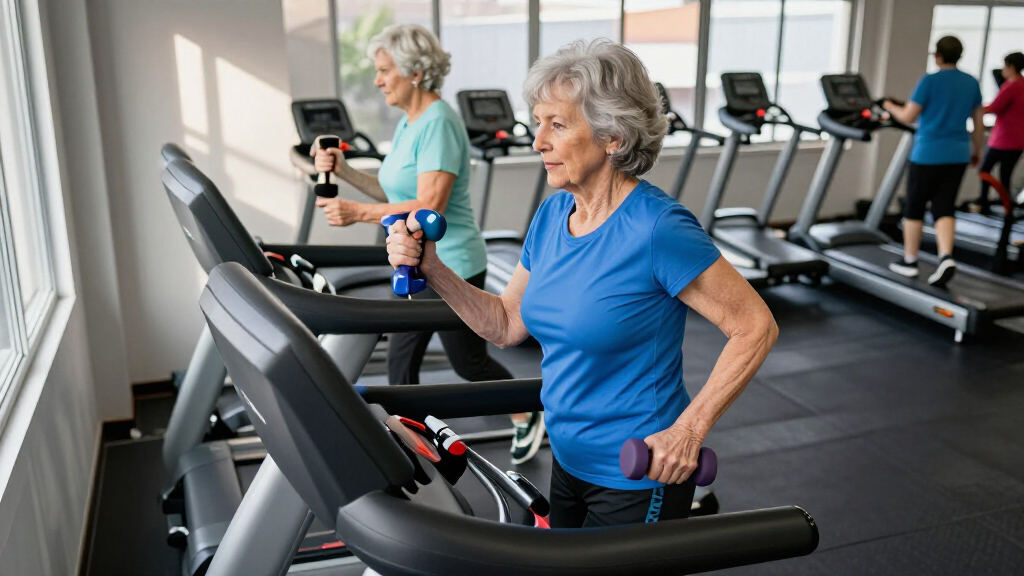
Women over 60 should not have to choose between cardio and strength training, sports scientist and personal trainer Patricia Siegel argues in a report published by Sixty and Me. She recommends combining endurance exercise with resistance training, and adding suitable impact movements for bone health, while presenting a sample plan rather than research establishing a single required routine.
Siegel’s proposed endurance work includes Zone 2 exercise twice a week for about 35 to 45 minutes. She describes this as a conversational pace: a person should be able to speak a few sentences but not sing. Walking can be a starting point, she says, with pace, terrain or activity adjusted as fitness changes. Her suggested plan also includes interval training once or twice weekly, alternating harder efforts with recovery.
For strength, Siegel recommends three sessions per week, either as full-body workouts or divided between upper- and lower-body training. She suggests three to four sets of 10 to 12 repetitions, using a load that leaves about two more repetitions possible. The report describes progressive overload—gradually changing weight, repetitions, sets or movement tempo—as a way to keep challenging muscles.
Siegel says strength work can support muscle and bone, and recommends adding impact exercises such as heel drops, hops or jumps when they can be done safely. Her sample week alternates lower-body strength, upper-body strength, Zone 2 sessions and intervals, with one rest day. The article does not establish that this schedule is suitable for every reader or provide individualized medical guidance.
Why Combine Endurance and Strength
The report addresses a practical exercise question for older women: whether to prioritize cardiovascular activity or resistance work. Its answer is to include both forms of training, with impact exercise as an additional option, rather than treating one as a substitute for the other. The distinction matters because the activities place different demands on the body and serve different fitness aims.
The article cites U.S. figures to underline the gap between recommendations and reported activity. It says that in 2022, 13.9% of Americans aged 65 and older met both aerobic and muscle-strengthening guidelines during leisure time. That share varied by age group: 16.8% among people 65 to 74, 12.3% at 75 to 84, and 6.2% among those 85 and older. These figures describe activity levels, not the effects of Siegel’s proposed program.
senior resistance training equipment
As an affiliate, we earn on qualifying purchases.
As an affiliate, we earn on qualifying purchases.
The Report’s Exercise Framework
Siegel frames her recommendations around cardiovascular fitness, muscle maintenance and bone health after 60. The article cites the U.S. Centers for Disease Control and Prevention’s activity statistics and says cardiovascular disease kills more women in the United States than all forms of cancer combined. It also states that about one in two women over 50 will break a bone because of osteoporosis; the report does not provide a specific citation alongside that figure.
For endurance intensity, the report gives a heart-rate estimate of 60% to 70% of maximum for Zone 2, while emphasizing the talk test as a practical guide. For intervals, it offers beginners an example of 30 seconds of hard effort followed by about a minute of easy effort, repeated four or five times. These details are Siegel’s training suggestions, not findings from a study described in the article.
“Women over 60 need both strength and endurance training to protect heart, bones, muscle and with it: metabolism.”
— Patricia Siegel, as quoted in Sixty and Me
Limits of the Suggested Plan
The Sixty and Me article is an expert-authored report, not a clinical trial or formal guideline. It does not explain how its exercise recommendations were evaluated, or show that the sample schedule produces particular health outcomes. The source also does not give a publication date, and it does not specify how readers with chronic conditions, injuries, balance concerns or different training histories should modify the plan.
Siegel describes impact work as an addition for bone stimulus but does not set out screening criteria or detailed safety instructions. The report’s general figures and recommendations cannot establish an individual reader’s capacity or exercise needs. Anyone considering substantial changes to activity—particularly with health conditions or concerns about safe movement—may need advice from a qualified health professional.
How Readers Can Apply the Advice
The article offers a sample week rather than announcing a formal program or a forthcoming study. Siegel’s next step for readers is to consider what currently fills their week and whether they can organize time for endurance and strength sessions. She also says walking may need to become faster or more challenging over time as the body adapts, while the report gives no universal timetable for making those changes.
Readers should treat the schedule as a general framework, not a requirement. Whether to add intervals, heavier resistance or impact movements depends on individual ability and circumstances. The source does not announce further evidence or a follow-up development; the immediate question is how its recommendations can be adapted safely to different people.
Key Questions
Does the report recommend cardio or strength training?
Both. Siegel’s Sixty and Me report recommends combining endurance exercise with strength training rather than choosing only one.
How much Zone 2 exercise does the article suggest?
It suggests two sessions a week of about 35 to 45 minutes, at a pace where speaking a few sentences is possible but singing is not. This is the author’s guidance, not a universal prescription.
How often does it suggest strength training?
The report proposes three strength sessions per week, organized as full-body workouts or a split between upper- and lower-body sessions.
Does the article say walking is enough?
It describes walking as a useful entry point for endurance exercise, but Siegel says people may need to adjust pace, terrain or activity as their bodies adapt. The report does not establish a fixed point at which walking stops being sufficient for a particular person.
Are the suggested intervals and jumps appropriate for everyone?
The report does not say they are. It gives intervals and impact movements as examples, but does not provide individualized safety screening. People with health concerns or difficulty exercising safely should seek guidance from a qualified professional.
Source: rss
Fall Picks
fall essentials
As an affiliate, we earn on qualifying purchases.