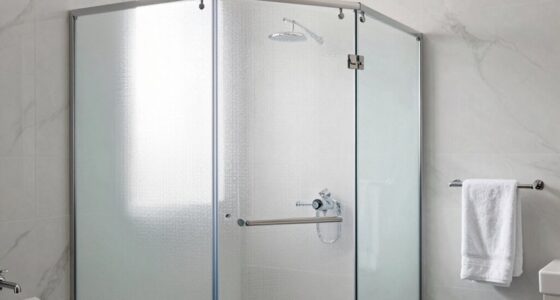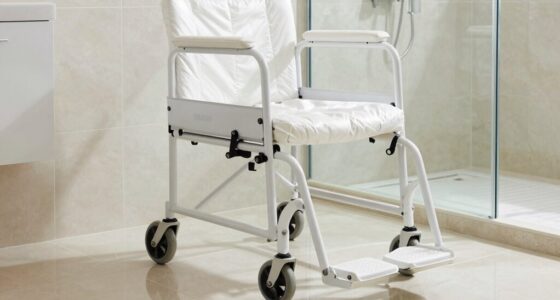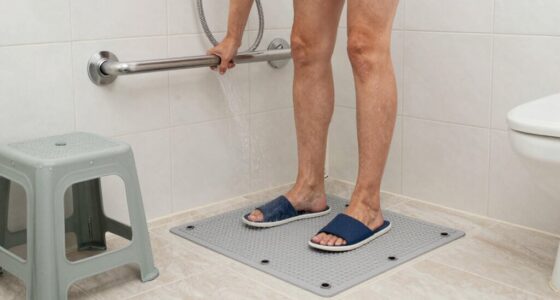
Before buying mobility gear, you’ll want to measure your bathroom carefully. Focus on the size of your bathtub, door clearance, and overall space to guarantee equipment fits comfortably and safely. Check the height of fixtures like sinks and toilets. Accurate measurements help you select gear that works well without overcrowding or hazards. Keep in mind, these details are essential for a safe, independent bathroom experience—continue to learn how to get it just right.

Turn quiet afternoons into listening time
- Thousands of audiobooks, podcasts and originals
- Listen on your phone, tablet or Echo — also offline
- Cancel anytime
Key Takeaways
- Measure bathtub length, width, and interior space to select appropriately sized accessories and ensure comfort.
- Check door clearance to confirm enough space for easy entry and exit with mobility aids.
- Assess overall bathroom dimensions for sufficient maneuvering room and safe fixture placement.
- Know standard sizes of mobility equipment for proper fit and compatibility within available space.
- Evaluate fixture heights and layout to optimize safety, accessibility, and efficient use of space.
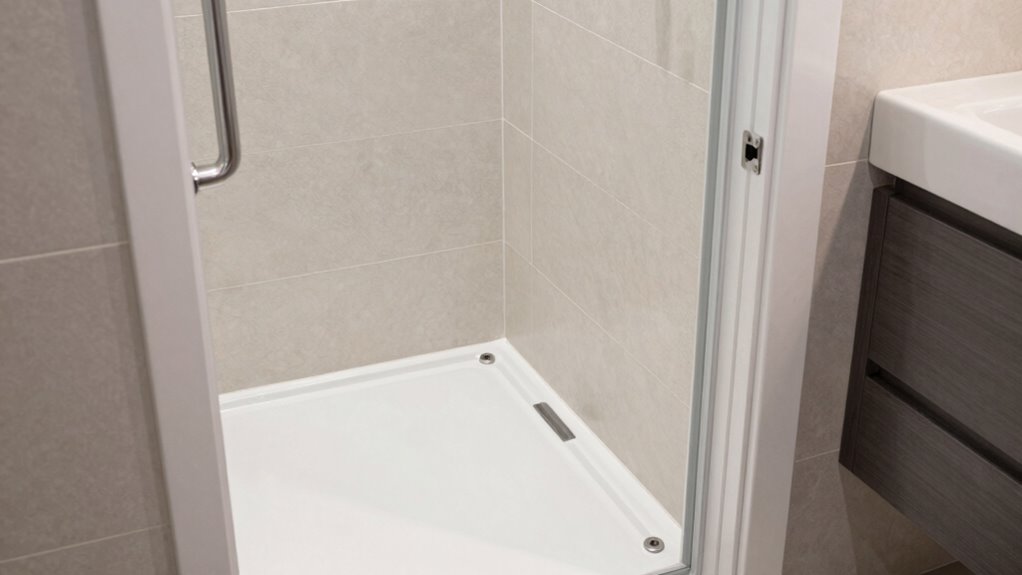
Before purchasing mobility gear for your bathroom, knowing the essential measurements can make all the difference in guaranteeing a proper fit and safe use. One of the most critical measurements is the bathtub dimensions. You need to know the length, width, and height of your existing tub or the space where you plan to install a new one. This guarantees that any accessories, like grab bars or seat attachments, fit comfortably without overcrowding the space. For example, if you’re considering a walk-in tub or a shower seat, having accurate measurements helps you select products that provide enough room for safe maneuvering and comfort. Don’t forget to measure the interior dimensions if you’re replacing a tub; this will help you choose the right size and avoid purchasing equipment that’s either too large or too small. Accurately measuring bathroom layout ensures that your mobility gear integrates smoothly into your space. Additionally, considering the standard dimensions of common mobility accessories can help you choose items that fit perfectly without requiring modifications. Being aware of space constraints can also prevent the frustration of purchasing incompatible equipment later. Proper planning and precise measurements can significantly enhance safety and usability, making your bathroom more accessible.
Another vital measurement is door clearance. This refers to the space available for the door to open and close freely without hitting walls, furniture, or fixtures. If your bathroom door swings inward, you need to measure the distance from the door frame to any obstructions that might prevent it from opening fully. For wheelchair-accessible doors, the standard clearance is at least 32 inches when the door is open, but you should verify your specific needs. Guaranteeing proper door clearance allows for easy entry and exit, especially when using mobility aids like wheelchairs or walkers. If your door doesn’t have enough clearance, consider replacing it with a wider, sliding, or bi-fold door to maximize space and accessibility. Ensuring correct door measurements is crucial for maintaining smooth accessibility and safety in confined spaces. Beyond the door clearance, pay attention to the overall bathroom layout. Measure the width and length of the room to confirm that there’s enough space to comfortably maneuver mobility equipment. Check the height of fixtures such as sinks and toilets to make sure they’re accessible. If your bathroom layout is tight, you might need to opt for compact or wall-mounted fixtures to free up space. Remember, the goal is to create an environment where you can move confidently and safely. Taking accurate measurements before buying any gear ensures you select solutions that fit seamlessly into your space, reducing the risk of accidents and making daily routines easier.
As an affiliate, we earn on qualifying purchases.
Frequently Asked Questions
How Do I Measure for a Wheelchair Clearance in the Bathroom?
To measure for wheelchair clearance in the bathroom, start by checking the toilet height to make sure it’s accessible. Measure the width of the shower space, making certain there’s enough room for turning and maneuvering. Also, consider door widths and any obstacles. Use a tape measure to get accurate dimensions, and aim for at least 60 inches of turning radius, so you can comfortably navigate with your wheelchair.
What Is the Ideal Height for Grab Bars?
A stitch in time saves nine, so getting grab bars right is essential. The ideal height for grab bars is typically 33-36 inches from the floor, ensuring they provide proper support. For toilet height, a comfort height toilet is around 17-19 inches, improving toilet accessibility. Proper placement enhances safety, especially in shower areas. Measure carefully to match these standards, making daily routines safer and more manageable.
How Do Bathroom Door Widths Affect Mobility Gear?
Bathroom door widths directly impact your ability to use mobility gear comfortably. If the door is too narrow, it may restrict wheelchairs or walkers, making entry difficult. For ideal access, make sure your bathroom door is at least 32 inches wide, which accommodates most mobility gear. This allows you to move freely and safely, preventing the need for constant adjustments or modifications when installing or using mobility equipment.
Can I Modify Existing Bathroom Fixtures for Better Accessibility?
You can indeed enhance your bathroom aesthetics with subtle plumbing modifications, making fixtures more accessible. Small tweaks, like replacing handles or widening doorways, often blend seamlessly into your existing space. Consulting a professional ensures modifications are both functional and discreet, giving you improved accessibility without sacrificing style. These thoughtful changes can considerably boost comfort, allowing you to navigate your bathroom with ease while maintaining its visual appeal.
What Safety Features Should I Consider for Small Bathrooms?
In small bathrooms, prioritize safety by choosing a toilet with an appropriate height, making transfers easier and reducing fall risks. Make sure the shower is accessible, with a low or no-threshold entry and grab bars installed nearby. Keep the space clutter-free, use non-slip mats, and add adequate lighting. These features help prevent accidents, offering a safer environment for mobility needs while maximizing limited space efficiency.
Conclusion
So, remember, measuring your bathroom isn’t just a boring chore—it’s your ticket to avoiding a costly, awkward purchase or worse, a life of accidental acrobatics. Skip the tape measure, and you might as well buy a wheelchair that doubles as a canoe. Take the time now, and your future self will thank you—probably with a well-placed cup of coffee, not a frantic rescue. Because in the end, it’s all about making your bathroom a sanctuary, not a circus.
Columbus Day / Indigenous Peoples' Day Picks
long weekend sales
As an affiliate, we earn on qualifying purchases.