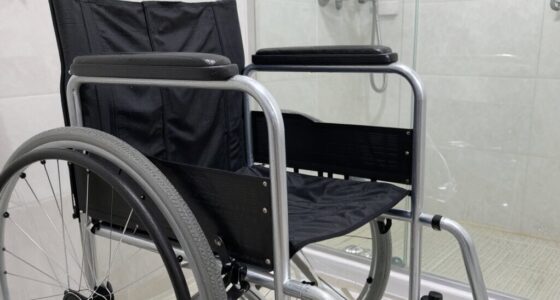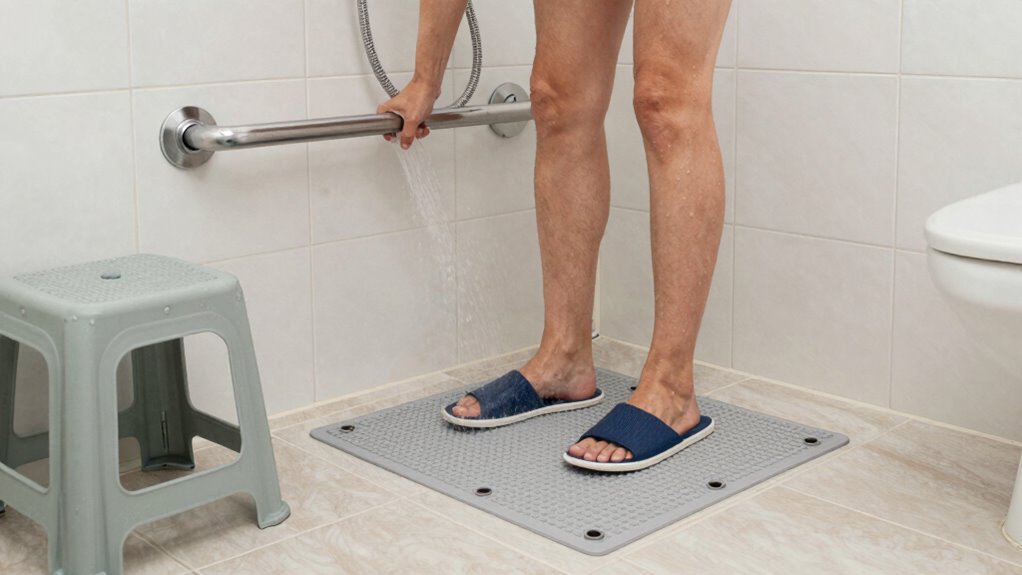

To reduce slip risks during shower transfers, guarantee your bathroom has bright, waterproof lighting to improve visibility. Wear non-slip shoes or slippers, and use non-slip mats or stickers inside the shower. Install grab bars in convenient spots to provide stability, and keep the area clutter-free. Regularly check and maintain fixtures to prevent hazards. Proper safety measures like these create a secure environment, and you’ll discover more tips to make your transfers even safer.

Turn quiet afternoons into listening time
- Thousands of audiobooks, podcasts and originals
- Listen on your phone, tablet or Echo — also offline
- Cancel anytime
Key Takeaways
- Install grab bars within easy reach to provide stable support during transfers.
- Use non-slip mats or stickers inside the shower to enhance floor traction.
- Wear non-slip shower shoes or slippers for better grip on wet surfaces.
- Ensure the bathroom is well-lit to improve visibility and reduce missteps.
- Keep the area free of clutter and regularly maintain fixtures for safety.
Shower transfers can be risky, especially if proper precautions aren’t taken, leading to slips and falls that can cause serious injuries. One of the most important steps you can take is ensuring your bathroom lighting is adequate. Good lighting helps you see clearly, reduce shadows, and identify potential hazards in the shower area. Bright, evenly distributed light minimizes the chances of missteps caused by poor visibility. Consider installing waterproof, non-glare fixtures that provide consistent illumination without flickering. If your bathroom has windows, use natural light during the day, but supplement with artificial lighting to maintain visibility at all times. Proper shower safety measures, such as these, can significantly reduce the risk of accidents. Additionally, ensuring your bathroom environment is free of obstacles and clutter is an important part of creating a safe space. Regular inspection and maintenance of bathroom fixtures can help identify potential hazards early and prevent accidents caused by deterioration or damage. Keeping your bathroom environment clean and organized not only promotes hygiene but also minimizes the chances of tripping over misplaced items.
Ensure your bathroom lighting is bright, even, and waterproof to prevent slips and improve safety during shower transfers.
Footwear safety is equally crucial in preventing slips during shower transfers. Never step into the shower barefoot or with smooth-soled shoes that lack traction. Instead, opt for non-slip shower shoes or slippers designed to grip wet surfaces securely. These shoes reduce the risk of slipping by providing better stability on wet surfaces. Keep your footwear in good condition—replace worn-out or damaged shoes promptly—and always wear them when entering or exiting the shower area. This small step can significantly lower your risk of falling.
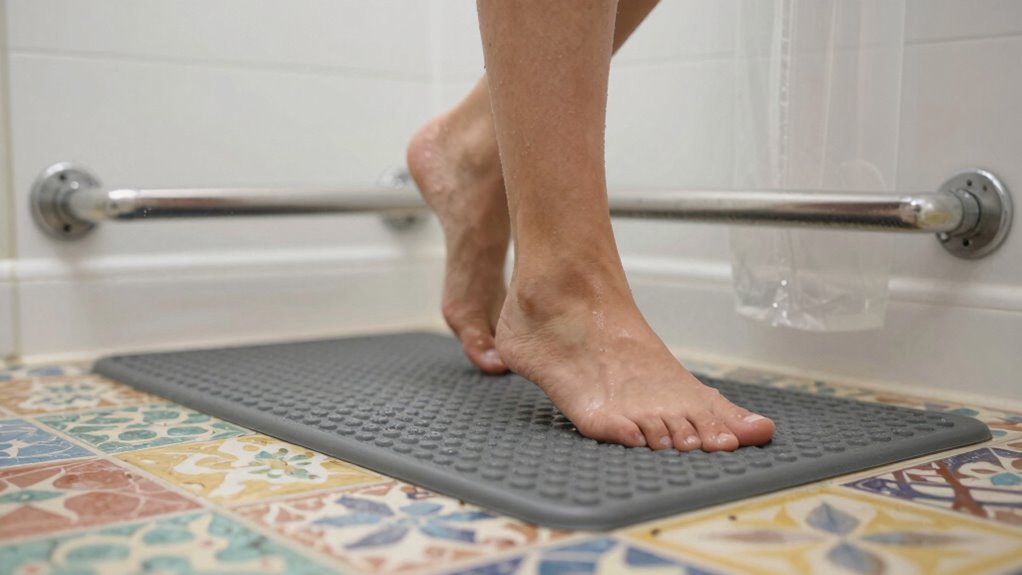
In addition to good lighting and proper footwear, consider installing grab bars and non-slip mats. Grab bars give you something sturdy to hold onto, offering stability as you transfer in and out of the shower. Position them within easy reach so you can hold onto them without stretching or losing your balance. Non-slip mats or stickers inside the shower add extra grip to the floor, making it less likely you’ll slip on wet surfaces. Make sure these mats are securely in place and cleaned regularly to prevent mold and soap buildup, which can make them slippery. Regularly maintaining bathroom fixtures can also help prevent hazards caused by damage or deterioration. Ensuring your bathroom is well-maintained and free of clutter creates a safer environment overall.
As an affiliate, we earn on qualifying purchases.
Frequently Asked Questions
What Footwear Is Safest for Shower Transfers?
You should wear non-slip footwear or waterproof shoes during shower transfers. These shoes provide better grip and stability on wet surfaces, reducing the risk of slipping. Look for shoes with textured soles designed specifically for wet environments. Avoid smooth-soled shoes or sandals without grip, as they can increase your chances of falling. Investing in appropriate footwear guarantees safer transfers and helps prevent accidents in slippery shower conditions.
How Often Should Shower Mats Be Replaced?
You should replace shower mats at least every six months to guarantee slip prevention and proper mat maintenance. Over time, mats can wear out, develop mold, or lose their non-slip backing, increasing the risk of slips. Regularly inspecting your mat, cleaning it thoroughly, and replacing it when worn or damaged helps maintain safety. Consistent maintenance ensures your shower remains a secure environment, reducing slip risks effectively.
Are There Specific Shower Seat Types Recommended?
You should choose shower seat types that prioritize stability and comfort for ideal transfer safety. Fixed, wall-mounted seats offer stability, while fold-down seats save space and are easy to use. Portable or adjustable seats provide flexibility for different needs. Always guarantee the seat has a non-slip surface and secure installation. Selecting the right shower seat type enhances safety, boosts confidence, and makes transfers more secure and comfortable during shower routines.
Can Medications Affect Balance During Transfers?
Imagine a gentle breeze unexpectedly stirring your balance—that’s what medication side effects can do, causing dizziness during transfers. You might feel unsteady, as if the ground shifts beneath you. Certain medications, especially those affecting the nervous system, can impair your coordination, making transfers riskier. To stay safe, always check with your healthcare provider about potential side effects, and take extra precautions when moving to prevent slips or falls.
How to Assist Someone With Mobility Limitations?
To assist someone with mobility limitations, you should use assistive devices like grab bars or walkers to support their movement. Communicate clearly and calmly, explaining each step to guarantee they feel safe and understood. Maintain eye contact, listen actively, and encourage their independence where possible. Always assess their specific needs and adjust your support accordingly, making sure to create a safe environment to prevent slips and falls during transfers.
Conclusion
By taking simple precautions, you can turn your shower into a safe haven rather than a treacherous obstacle. Imagine the reassuring grip of a sturdy grab bar guiding you smoothly, or the gentle, non-slip surface beneath your feet offering unwavering support. With each mindful step, you create a sanctuary where slips and falls are nothing more than distant shadows. Keep safety at the forefront, and your shower becomes a place of comfort, confidence, and peace of mind.
Fall Picks
fall essentials
As an affiliate, we earn on qualifying purchases.