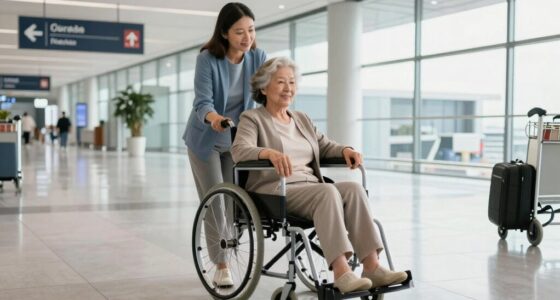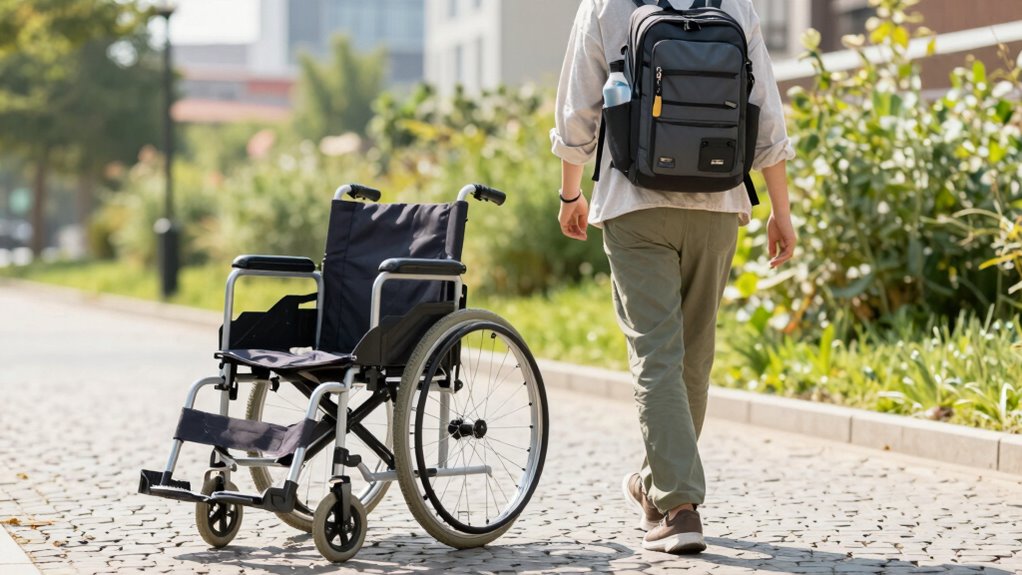

Portability for caregiving trips means having lightweight, compact, and accessible items that let you manage medical needs easily. It involves ensuring devices work well in travel, with the right adapters and batteries, so you avoid disruptions. Portable supplies and emergency kits should be organized and suited for the environment, making navigation simpler and reducing stress. If you want to learn how to plan effectively and keep everyone safe, keep exploring these essential tips.

Turn quiet afternoons into listening time
- Thousands of audiobooks, podcasts and originals
- Listen on your phone, tablet or Echo — also offline
- Cancel anytime
Key Takeaways
- Ensuring medical devices are lightweight, compact, and compatible with travel routines for ease and safety.
- Packing organized, quick-access emergency supplies tailored to individual needs.
- Choosing portable gear that minimizes physical strain and simplifies navigation through transit environments.
- Verifying device compatibility with travel plans to prevent disruptions and safety issues.
- Prioritizing ease of security checks and boarding to reduce stress and enhance overall travel experience.
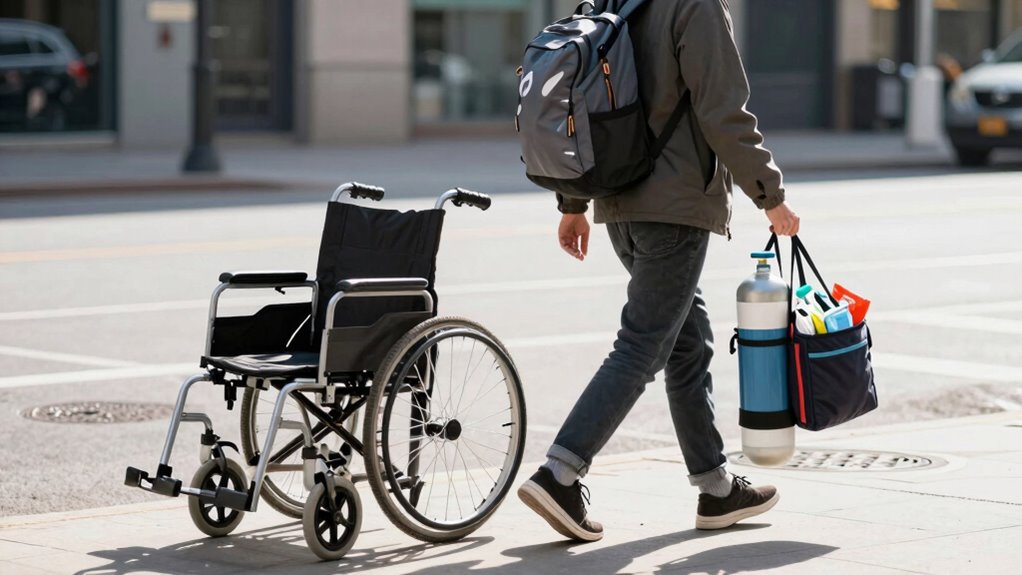
When you’re planning caregiving trips, portability becomes essential for ensuring smooth and stress-free travel. It’s not just about packing light; it’s about making sure everything your loved one needs is easy to carry, accessible, and reliable wherever you go. Medical device compatibility plays a crucial role here. You want to be certain that the devices your loved one depends on—whether it’s a mobility aid, oxygen concentrator, or monitoring system—can easily fit into your travel plans. Some devices are designed with portability in mind, offering lightweight, compact options that don’t compromise functionality. Others might require special adapters or specific batteries, so checking compatibility beforehand ensures you won’t face surprises at the airport or in transit. When your loved one relies on medical devices, their portability directly impacts their safety and comfort during travel. Additionally, choosing tools and equipment specifically optimized for portability can significantly ease your journey.
Emergency preparedness is another vital aspect of portability. Being ready for unexpected situations involves having essential supplies and equipment on hand that are easy to access and carry. A well-packed, portable emergency kit tailored to your loved one’s needs can make a big difference if sudden health issues arise. Think about including medications, backup power sources for medical devices, and quick-access contact information. The compatibility of these supplies with your travel environment and devices ensures seamless use in emergencies. Proper planning also involves understanding how to keep these supplies organized and lightweight, enhancing overall efficiency during your trip. Creating a comprehensive approach to emergency readiness can help you respond swiftly and confidently in stressful moments. The goal is to minimize the hassle during stressful moments by having everything you need consolidated in a portable, organized manner. This way, if an emergency occurs—be it a health crisis or unforeseen travel delays—you’re prepared to respond promptly without rummaging through bags or risking missing critical items. Being aware of medical device compatibility ensures you can troubleshoot or adapt equipment quickly if needed.
Furthermore, portability influences how you navigate transportation. Whether traveling by plane, train, or car, lightweight and compact gear reduces physical strain on you and your loved one. It also simplifies security checks and boarding procedures. Choosing portable medical devices and supplies ensures you stay agile, avoiding bulky equipment that might slow you down or create logistical challenges. When everything is designed for portability, you’re more confident moving through busy airports, crowded stations, or narrow hotel corridors.
Ultimately, understanding what portability means for caregiving trips goes beyond just packing essentials. It involves thoughtful planning around medical device compatibility, emergency preparedness, and transportation convenience. When you prioritize these elements, you create a travel environment that’s safer, more manageable, and less stressful for everyone involved. You’ll feel more in control, knowing your loved one’s needs are met without unnecessary obstacles, allowing you to focus on the purpose of your trip—caring, connecting, and creating meaningful experiences together.
As an affiliate, we earn on qualifying purchases.
Frequently Asked Questions
How Do I Determine if My Caregiving Equipment Is Truly Portable?
To determine if your caregiving equipment is truly portable, check for a lightweight design that makes carrying easier without sacrificing function. Test its durability to guarantee it withstands travel and daily use. Look for features like compact size and easy folding or assembly. If it’s lightweight and has undergone durability testing, it’s likely portable enough for caregiving trips, giving you peace of mind and convenience on the go.
What Are the Best Travel Accessories for Caregiving on the Go?
You should bring lightweight, portable equipment designed for quick setup, like foldable walkers or compact wheelchairs, to guarantee travel comfort. Consider travel accessories such as padded cushions, portable chargers, and easy-to-carry medical kits to make caregiving on the go smoother. These items help you manage caregiving tasks efficiently while maintaining comfort and convenience during your trips. Prioritize gear that’s easy to pack, carry, and use wherever you go.
How Can I Ensure Medication Safety During Portable Caregiving Trips?
You can’t forget that medication safety during trips is essential—because who doesn’t want a perfectly timed dose when it’s most needed? Use secure medication storage containers to prevent spills, mix up your dosage management plan, and keep a detailed medication list handy. Irony hits when we realize that the very act of portability demands extra vigilance, reminding you that safety doesn’t take a vacation, even when you do.
Are There Specific Travel Insurance Considerations for Caregivers?
Yes, you should look for travel insurance with specialized coverage tailored for caregivers. Make sure the policy covers medical emergencies related to caregiving duties and check for any policy exclusions that might limit coverage during trips. Some policies might exclude pre-existing conditions or certain activities, so read the fine print carefully. Having the right insurance gives you peace of mind, knowing you’re protected if unexpected issues arise while caring for someone away from home.
How Do I Manage Emergencies While on a Portable Caregiving Trip?
When managing emergencies during a caregiving trip, prioritize emergency preparedness by carrying a well-stocked kit and having a clear plan. Use effective communication strategies, like keeping your phone charged and sharing your itinerary with someone trusted. Stay calm, assess the situation quickly, and contact local emergency services if needed. Regularly update your emergency contacts and keep important medical information accessible, ensuring you’re ready to handle unexpected situations efficiently.
Conclusion
When it comes to caregiving trips, embracing portability means you’re always ready to navigate life’s gentle turns. It’s about packing light, but carrying a world of support and comfort with you. With thoughtful planning, you’ll find that even the most delicate moments are easier to handle, allowing connection and care to flow seamlessly. In those quiet, unspoken ways, portability helps you nurture bonds, making every journey a little more manageable, and a lot more meaningful.
Halloween Picks
halloween
As an affiliate, we earn on qualifying purchases.