Choosing the best home AED device for family caregivers involves balancing ease of use, reliability, and affordability. The Philips HeartStart Home AED stands out as the top overall choice thanks to its user-friendly design and proven safety features. For those seeking budget-friendly options, the AED Defibrillator Home Portable Emergency Equipment offers solid performance at a lower price point. Meanwhile, the Zoll AED Plus is favored for its comprehensive features and real-time coaching. These choices reflect common tradeoffs: simplicity versus advanced features, affordability versus added capabilities. Continue reading for an in-depth look at each option and what makes them suitable for family caregiving needs.
Key Takeaways
- Ease of use and clear voice prompts are critical for non-medical family caregivers to respond confidently during emergencies.
- Durability and long-term maintenance influence the value and reliability of a home AED device over time.
- Training and accessories, such as CPR kits and simulation trainers, enhance preparedness and confidence in emergency situations.
- Top models balance affordability with essential safety features, but premium options offer added guidance and durability.
- Storage solutions like wall cabinets can improve accessibility but add to initial costs; consider your space and safety needs.
| AED Defibrillator Home Portable Emergency Equipment Automatic External Defibrillator |  | Best Overall for Home Emergency Readiness | Type: Automatic External Defibrillator | Use: Home/Portable Emergency | Operation: Automatic | VIEW LATEST PRICE | See Our Full Breakdown |
| XFT AED Trainer Kit – CPR and First Aid Defibrillator Simulator (2024 New Version) |  | Best for CPR and First Aid Training | Modes: Semi/Full Auto, Scenario, Metronome, CPR Mode, Adult/Pediatric Switch | Battery: Removable rechargeable lithium battery, up to 12 hours | Languages: English, Italian, French, Chinese | VIEW LATEST PRICE | See Our Full Breakdown |
| AED Automatic External Defibrillator Portable Emergency Device for Home, Gym, Subway, and Workplace |  | Best for Multi-Location Emergency Readiness | Type: Automatic External Defibrillator | Intended Use: Emergency life-saving device | Suitable For: Home, gyms, subways, companies | VIEW LATEST PRICE | See Our Full Breakdown |
| XFT AED Trainer & AED Simulator for Home and First Aid Practice |  | Best for First Aid and CPR Training | Configuration Saving Function: Yes | Voice Prompting: Yes | Training Modes: Semi/Full Auto, Scenario, Metronome, CPR Mode, Language, Volume | VIEW LATEST PRICE | See Our Full Breakdown |
| WNL Products WL320ES-4 AED Practi-Trainer Mini Training Kit (4 Pack) |  | Best for Group AED Training | Product Dimensions: 10 x 9.5 x 7.25 inches | Item Weight: 1.5 pounds | Batteries: AAA (included) | VIEW LATEST PRICE | See Our Full Breakdown |
| WNL Products WL120ES10 Practi-Trainer Essentials AED Training Kit | 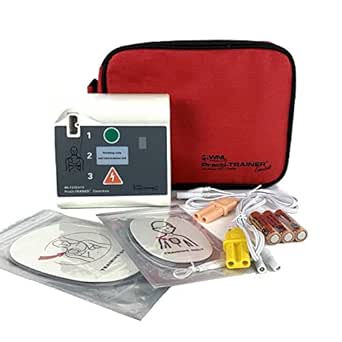 | Best for Training and Education | Product Dimensions: 10.2 x 3.2 x 7.5 inches | Item Weight: 1.37 pounds | Batteries: 3 AA batteries required | VIEW LATEST PRICE | See Our Full Breakdown |
| Zoll AED Plus |  | Best for Ease of Use and Real-Time Feedback | Electrode Shelf Life: 5 years | Battery Life: 5 years | Ingress Protection: IP55 | VIEW LATEST PRICE | See Our Full Breakdown |
| Prestan AED UltraTrainer – CPR & AED Training Device, Bilingual, Portable |  | Best for Multilingual and Versatile Training | Weight: 2.2 lbs | Training Scenarios: 5 | Language Options: English and Spanish, re-programmable | VIEW LATEST PRICE | See Our Full Breakdown |
| XFT AED Trainer Device for First Aid Classes with 5 Training Modes and Voice Prompts |  | Best for Multi-Mode AED Practice | Training Modes: 5 | Languages: English, French, Italian, Spanish | CPR Frequencies: 100/110/120 CPM | VIEW LATEST PRICE | See Our Full Breakdown |
| AED Response Kit |  | Best for Quick Deployment and Emergency Preparedness | Contents: Not specified | Design: Portable bright red bag | Intended Use: Emergency response readiness | VIEW LATEST PRICE | See Our Full Breakdown |
| Philips HeartStart Home and OnSite AED Defibrillator Trainer with Zippered Carry Case |  | Best Training Device for Family Caregivers | Model: M5085A | Includes: AED Trainer, Adult SMART Training Pads, Zippered Carry Case, Instructions, Quick Reference Guide, External Manikin Adapter | Scenarios: 8 preconfigured scenarios including adult and child/infant CPR | VIEW LATEST PRICE | See Our Full Breakdown |
| Philips HeartStart AED Defibrillator Premium Wall Cabinet, 16″ W x 22.5″ H x 6″ D, Beige (AED Sold Separately) |  | Best Secure Wall-Mounted AED Storage Solution | Dimensions: 16″ W x 22.5″ H x 6″ D | Material: Heavy-gauge steel | Color: Beige | VIEW LATEST PRICE | See Our Full Breakdown |
| Wall Mount AED Cabinet – Steel Defibrillator Storage Case with Snap Lock, Universal Compatibility, 14.2″ W x 7.9″ D x 15.7″ H |  | Best Universal Wall-Mounted AED Storage | Material: Steel | Dimensions: 14.2″ W x 7.9″ D x 15.7″ H | Mounting: Wall-mounted | VIEW LATEST PRICE | See Our Full Breakdown |
| AED First Response Kit with CPR Mask, Gloves, Razor, Scissors, Gauze Pads, and Cleansing Wipes |  | Best Comprehensive Emergency Response Kit | CPR Mask: With one-way valve | Includes: Gloves, scissors, razor, gauze pads, cleansing wipes | Color: Red | VIEW LATEST PRICE | See Our Full Breakdown |
More Details on Our Top Picks
AED Defibrillator Home Portable Emergency Equipment Automatic External Defibrillator
This AED stands out for its simplicity and focus on home safety, making it ideal for family caregivers with minimal medical training. Compared to the WNL Products WL320ES-4 training kits, it offers real-life defibrillation rather than just practice, but it requires careful handling to prevent damage and strict adherence to safety warnings. Its automatic operation ensures quick response during emergencies, which is critical for family settings. While it lacks detailed specifications, its clear instructions help reduce user error in stressful moments. However, it’s not designed for repeated training or professional use, and users must be cautious about storage and maintenance. This device is best suited for families seeking a straightforward, ready-to-use AED for home emergencies.
Pros:- Portable and easy to operate in emergencies
- Designed specifically for home safety
- Clear safety and maintenance instructions
Cons:- Requires careful handling to avoid damage
- Limited detailed specifications included
- Must strictly follow safety warnings
Best for: Families who want a simple, ready-to-use AED for home emergencies with minimal training
Not ideal for: Individuals seeking a device primarily for CPR training or frequent practice, as it’s not a training device
- Type:Automatic External Defibrillator
- Use:Home/Portable Emergency
- Operation:Automatic
Bottom line: This AED is perfect for families wanting a straightforward device for quick emergency response at home.
XFT AED Trainer Kit – CPR and First Aid Defibrillator Simulator (2024 New Version)
This training kit excels in teaching proper AED use with its realistic scenarios and voice prompts, making it ideal for family caregivers who want hands-on practice before actual emergencies. Unlike the WNL Products WL320ES-4 trainers, it offers multiple training modes, including scenarios and CPR feedback, which enhance learning but do not simulate real defibrillation. Its rechargeable battery provides long-lasting practice sessions, and multilingual support broadens accessibility. However, the snug connector for electrode pads can be frustrating, and since it’s strictly a training device, it cannot be used for real defibrillation. This pick is best for families who want comprehensive AED training to build confidence and competence.
Pros:- Realistic scenarios with voice prompts
- Long-lasting rechargeable battery
- Multiple language options for diverse users
Cons:- Snug connector for electrode pads may be tricky
- Designed only for training, not for real defibrillation
Best for: Family caregivers seeking effective AED training to improve emergency preparedness
Not ideal for: Those looking for a real AED device for actual emergency use, as this is solely a training tool
- Modes:Semi/Full Auto, Scenario, Metronome, CPR Mode, Adult/Pediatric Switch
- Battery:Removable rechargeable lithium battery, up to 12 hours
- Languages:English, Italian, French, Chinese
- Training Scenarios:8 basic modes, 8 realistic scenarios
Bottom line: Ideal for family members wanting thorough AED practice to boost emergency response skills.
AED Automatic External Defibrillator Portable Emergency Device for Home, Gym, Subway, and Workplace
This AED offers exceptional versatility for various environments, including home, gyms, and workplaces, making it suitable for family caregivers who want a device capable of handling different emergency scenarios. Unlike the dedicated home AED B0FL7D9MML, it’s designed for quick deployment in public and semi-public settings, with portability a key feature. Its straightforward operation enables rapid response, but limited info on battery life and maintenance could be a concern for consistent readiness. Handling precautions are necessary to prevent damage, especially in diverse environments. This device suits families looking for a flexible AED that can serve both home and other public areas.
Pros:- Portable and easy to carry
- Suitable for various public and private settings
- Designed for quick, effective use in emergencies
Cons:- Requires careful handling to avoid liquid exposure
- Needs regular inspection and maintenance
- Limited operational details available
Best for: Families needing an AED that can be used at home and in multiple public or high-traffic settings
Not ideal for: Individuals seeking a device solely for home use, given its broader application scope and less detailed specs
- Type:Automatic External Defibrillator
- Intended Use:Emergency life-saving device
- Suitable For:Home, gyms, subways, companies
Bottom line: Best for families wanting a flexible AED capable of handling emergencies in multiple environments.
XFT AED Trainer & AED Simulator for Home and First Aid Practice
This lightweight AED trainer emphasizes realistic practice with multiple modes, scenarios, and voice prompts, making it an excellent choice for family caregivers who want to build confidence before facing real emergencies. Compared to the WNL Products WL120ES10 kits, it offers more languages and adjustable CPR frequencies, accommodating diverse learners. Its adult/pediatric modes support versatile training, and it adheres to latest AHA guidelines, but it cannot be used on actual patients or for real defibrillation. The focus on training means it’s not suitable as an emergency device but perfect for education purposes. This trainer makes sense for families prioritizing CPR and AED familiarity over actual device deployment.
Pros:- Realistic training scenarios with voice prompts
- Multiple languages and adjustable CPR frequencies
- Switchable adult/pediatric modes
Cons:- Limited to training scenarios, no real defibrillation
- Cannot be used on actual patients
Best for: Families seeking comprehensive AED and CPR training to prepare for emergencies
Not ideal for: Those needing a real AED device for actual emergency situations, as this is solely for practice
- Configuration Saving Function:Yes
- Voice Prompting:Yes
- Training Modes:Semi/Full Auto, Scenario, Metronome, CPR Mode, Language, Volume
- Real-time CPR Feedback:Yes
- Guidelines Compliance:Latest AHA
- Scenarios:5 basic + 5 realistic
Bottom line: Great for families aiming to master CPR and AED skills in a safe, controlled environment.
WNL Products WL320ES-4 AED Practi-Trainer Mini Training Kit (4 Pack)
This compact set includes four mini AED trainers ideal for classroom or group practice, making it perfect for family groups or community training sessions. Its bilingual voice prompts and LED indicators mimic real AED operation, but like other trainers, it cannot defibrillate or be used in actual emergencies. Compared to the XFT AED Trainer & AED Simulator, it emphasizes group training with multiple units, though it’s limited strictly to AED practice scenarios. Its portability and reusable pads make ongoing training cost-effective, but the training-only nature means it’s not suitable for actual rescue situations. This kit fits best for families or groups prioritizing AED familiarity through repeated practice sessions.
Pros:- Compact and lightweight for portability
- Bilingual voice prompts enhance usability
- Includes multiple trainers for group training
Cons:- Designed solely for training, no defibrillation capability
- Limited to AED practice scenarios only
Best for: Family members or community groups conducting AED training in classrooms or homes
Not ideal for: Individuals seeking a real AED or device for emergency use, as these are only trainers
- Product Dimensions:10 x 9.5 x 7.25 inches
- Item Weight:1.5 pounds
- Batteries:AAA (included)
- Training Pads:Reusable adult/child pads
Bottom line: Ideal for families or groups wanting multiple AED practice units for group training sessions.
WNL Products WL120ES10 Practi-Trainer Essentials AED Training Kit
This training kit stands out for its realistic simulation capabilities, including voice prompts and reusable pads, making it an ideal tool for family caregivers who want to learn AED operation without the need for actual emergency use. Compared to the Prestan AED UltraTrainer, it offers a more comprehensive set of accessories and is specifically designed for instructing multiple users, though it cannot be used on real patients. Its portability and detailed instructor manual make it perfect for home or community classes. The main tradeoff is that it’s solely for practice, so it offers no real defibrillation function. If your goal is to familiarize yourself with AED procedures and teach others, this kit provides high-value, hands-on training that closely mimics real scenarios.
Pros:- Realistic AED simulation with voice prompts
- Reusable training pads reduce ongoing costs
- Includes comprehensive accessories for effective training
- Compact and portable for easy transport
Cons:- Cannot deliver actual shocks, only simulates scenarios
- Requires batteries for operation, adding ongoing maintenance
- Limited to training purposes only
Best for: Family caregivers seeking realistic AED training to build confidence in emergency response
Not ideal for: Those looking for a device for actual AED practice or emergency use, as this is only a training tool
- Product Dimensions:10.2 x 3.2 x 7.5 inches
- Item Weight:1.37 pounds
- Batteries:3 AA batteries required
- Includes:Trainer, reusable pads, connectors, manual
- Simulation Features:Voice prompts, multiple scenarios
- Intended Use:Training only
Bottom line: Best suited for families wanting realistic, cost-effective AED training without real emergency capabilities.
Zoll AED Plus
The Zoll AED Plus makes rescue straightforward with clear audio and visual prompts, combined with real-time CPR feedback that guides even novice responders through each step. Its rugged IP55-rated durability means it can withstand harsh environments, making it suitable for home or outdoor settings where families might keep an AED. Compared to the Prestan AED UltraTrainer, which is solely for training, the Zoll AED Plus is designed for actual emergency deployment, providing both adult and pediatric shock capabilities. Its longer battery life and sturdy build make it a reliable choice, though its bulkier size and higher price point could be drawbacks for those needing a more discreet device. If safety, durability, and real-world readiness are priorities, this device offers peace of mind for family use.
Pros:- User-friendly with step-by-step prompts
- Real-time CPR feedback enhances rescue quality
- Rugged, durable design suitable for various environments
- Automatic shock delivery for safety
Cons:- Relies on batteries that need replacement every 5 years
- Bulkier and heavier than portable models
- Higher cost compared to basic AEDs
Best for: Families wanting a durable, easy-to-operate AED for home emergencies with real-time feedback
Not ideal for: Those needing a lightweight, portable AED primarily for occasional use or transport
- Electrode Shelf Life:5 years
- Battery Life:5 years
- Ingress Protection:IP55
- Automatic Shock:Yes
- Pediatric Capability:Yes
- Carry Case:Soft case included
Bottom line: Ideal for families seeking a robust, easy-to-use AED that provides detailed rescue guidance in real emergencies.
Prestan AED UltraTrainer – CPR & AED Training Device, Bilingual, Portable
This AED trainer excels at providing realistic, bilingual training scenarios with multiple practice modes, making it ideal for diverse family learning environments. Its lightweight design (2.2 lbs) and scenario variety make it suitable for multiple training sessions, especially in multicultural households or community classes. Compared to the XFT AED Trainer Device, it offers bilingual functionality and a durable build that withstands frequent use. However, the need for batteries (not included) and its exclusive training focus mean it’s not for actual emergency use. Some users may find the setup slightly complex, but for those prioritizing inclusive, flexible practice, this device offers high value.
Pros:- Realistic simulation with voice prompts
- Bilingual guidance enhances inclusivity
- Compact, portable design for easy transport
- Durable construction for repeated use
Cons:- Batteries not included, requiring additional purchase
- Limited to training, no real AED functionality
- Setup may be complex for some users
Best for: Family caregivers or community groups needing bilingual AED training tools for diverse learners
Not ideal for: Individuals seeking a device for actual AED deployment or emergency response, as this is solely for training
- Weight:2.2 lbs
- Training Scenarios:5
- Language Options:English and Spanish, re-programmable
- Pad Reuse:25-30 times
- Batteries Required:Yes (not included)
- Durability:Designed for frequent training
Bottom line: Best suited for families or organizations needing versatile, bilingual AED training devices for ongoing education.
XFT AED Trainer Device for First Aid Classes with 5 Training Modes and Voice Prompts
This trainer offers a range of training modes and multilingual voice prompts, making it a flexible choice for varied CPR and AED practice sessions. Its ability to switch between adult and pediatric settings easily enhances its utility for family caregivers learning to handle different age groups. Compared with the WNL Practi-Trainer, it provides multiple training modes and language options, though detailed technical specs like battery life are less clear. It’s ideal for structured classes or personal practice, but cannot be used on real patients. The limited information on durability and power requirements means users should verify its long-term reliability before extended use. For multi-lingual, adaptable training, this device is a strong contender.
Pros:- Multiple training modes and CPR frequencies
- Easy mode switching between adult and pediatric
- Voice prompts in multiple languages
- Remembers last settings for convenience
Cons:- Only for training, not real AED use
- Limited info on battery life and durability
- Some may find setup or mode switching complex
Best for: Families or training groups seeking versatile, multi-mode AED practice devices with language options
Not ideal for: Caregivers needing a device for actual emergency defibrillation, as this is purely for training
- Training Modes:5
- Languages:English, French, Italian, Spanish
- CPR Frequencies:100/110/120 CPM
- CPR Modes:30:2, 15:2, Compression Only
- Power:Battery operated (not specified)
- Includes:Electrode pads, wire connector, quick start guide
Bottom line: Best for families seeking a versatile, multi-lingual AED training device for comprehensive practice sessions.
AED Response Kit
The AED Response Kit provides a compact, all-in-one package designed for rapid AED deployment, making it ideal for families who keep an AED in accessible locations like cars or home cabinets. Its bright red bag with clear AED symbols ensures quick recognition during emergencies. Compared with the training-focused products, this kit emphasizes readiness rather than practice, making it suitable for real-world response. However, limited information about the specific contents and its size may concern users seeking detailed clarity before purchase. If you need a straightforward, portable solution for immediate AED access, this kit offers convenience and visibility, though it lacks detailed content descriptions.
Pros:- Highly portable and easy to carry
- Includes all necessary AED setup components
- Bright red bag with clear AED symbols for visibility
Cons:- Limited information on specific contents
- No detailed specifications or item list
- No customer reviews or ratings available
Best for: Families wanting a portable, ready-to-go AED setup for quick emergency access
Not ideal for: Individuals looking for a training device or comprehensive AED system, as this is solely a response kit
- Contents:Not specified
- Design:Portable bright red bag
- Intended Use:Emergency response readiness
Bottom line: Ideal for families needing a simple, portable emergency AED kit ready for quick deployment in any setting.
Philips HeartStart Home and OnSite AED Defibrillator Trainer with Zippered Carry Case
This training-focused device stands out for its realistic simulation of AED operation, complete with voice prompts and multiple scenarios, making it ideal for caregivers who want confidence in responding to emergencies. Compared with actual AED units like the Philips HeartStart AED, this trainer is limited to practice and cannot be used in real emergencies, which is a key tradeoff. However, its comprehensive accessories and instructional materials help build familiarity with AED procedures without the cost or liability of a real device. It’s best suited for families who prioritize hands-on practice and ongoing training, rather than immediate emergency deployment. The main drawback is that it’s purely a training tool, so it offers no real-life rescue capability. Additionally, training pads and child accessories are sold separately, which can add to costs over time. Overall, this makes the most sense for households committed to regular CPR and AED practice, especially those with children or multiple responders.Pros:- Realistic simulation with voice prompts and multiple scenarios
- Includes comprehensive accessories and a sturdy carry case
- Designed specifically for CPR and AED responder training
Cons:- Cannot be used in actual emergencies, only for practice
- Pads and child-specific accessories must be purchased separately
- Limited to training scenarios, no rescue functionality
Best for: Families seeking realistic AED training to boost confidence and preparedness.
Not ideal for: Households needing a real AED for emergency use or quick deployment, as this device is solely for training.
- Model:M5085A
- Includes:AED Trainer, Adult SMART Training Pads, Zippered Carry Case, Instructions, Quick Reference Guide, External Manikin Adapter
- Scenarios:8 preconfigured scenarios including adult and child/infant CPR
- Use:Training only, not for real-life emergency use
- Warranty:Pads warrantied until expiration, 1-year warranty on accessories
Bottom line: This trainer is ideal for families focused on learning and practicing AED use safely and affordably.
Philips HeartStart AED Defibrillator Premium Wall Cabinet, 16″ W x 22.5″ H x 6″ D, Beige (AED Sold Separately)
This sturdy wall-mounted cabinet offers a reliable solution for safeguarding your AED, making it easy to access during emergencies, especially when paired with the Philips HeartStart AED or similar units like the Zoll AED Plus. Unlike open mounts, the secure lock and alarm system provide peace of mind against theft or tampering, which is essential for busy family environments. Its large size allows for additional medical supplies, adding to its versatility. However, it does not include the AED itself, which means additional purchase and installation costs. The heavy-gauge steel construction and security features make it suitable for both indoor and outdoor use, but professional installation may be necessary, especially if integrating with existing security systems. This cabinet is best for families wanting a high-security, durable storage solution that prioritizes quick access and theft deterrence.Pros:- Heavy-gauge steel construction ensures durability
- Alarm and flashing light deter theft and alert responders
- Can connect to security systems for coordinated response
- Provides additional storage space for supplies
Cons:- AED unit sold separately, adding to overall cost
- Requires professional installation for security system integration
- Heavy weight may complicate mounting process
Best for: Households with a dedicated AED and a need for secure, visible storage.
Not ideal for: Families on a tight budget or those with limited space, due to the additional cost and installation requirements.
- Dimensions:16″ W x 22.5″ H x 6″ D
- Material:Heavy-gauge steel
- Color:Beige
- Weight:20 pounds
- Manufacturer:Philips Healthcare
Bottom line: This cabinet is perfect for families seeking a secure, robust storage solution with integrated security features.
Wall Mount AED Cabinet – Steel Defibrillator Storage Case with Snap Lock, Universal Compatibility, 14.2″ W x 7.9″ D x 15.7″ H
This universal steel cabinet provides a versatile, corrosion-resistant option that fits all AED brands, making it suitable for homes or public spaces where multiple devices might be stored. Its clear window ensures quick identification, crucial during emergencies, and the secure snap lock balances accessibility with safety. Compared to larger models like the Philips Premium Wall Cabinet, this unit is more compact, ideal for areas with limited space. However, its smaller size may restrict storage of additional supplies or larger AED models, and it requires wall mounting, which might be challenging in certain locations. Overall, this cabinet makes the most sense for families wanting a reliable, straightforward storage solution that doesn’t depend on brand-specific designs.Pros:- Corrosion-resistant steel construction ensures longevity
- Clear window for quick AED visibility
- Secure snap lock for safe access
- Universal compatibility with all AED brands
Cons:- Requires wall mounting space and installation
- Limited size may restrict storage of extra supplies
- Not suitable for free-standing placement
Best for: Families seeking a universal, space-efficient AED storage option with easy access.
Not ideal for: Households with multiple AEDs needing larger storage or those unable to mount on walls easily.
- Material:Steel
- Dimensions:14.2″ W x 7.9″ D x 15.7″ H
- Mounting:Wall-mounted
- Lock:Snap lock
- Compatibility:Universal AED
Bottom line: This cabinet is a practical choice for families needing a reliable, universal storage solution that fits various AED models.
AED First Response Kit with CPR Mask, Gloves, Razor, Scissors, Gauze Pads, and Cleansing Wipes
This all-in-one response kit makes it easier for family caregivers to act quickly and effectively during AED emergencies. Its complete set of supplies—CPR mask, gloves, scissors, gauze, and wipes—cover key needs beyond just the AED, unlike basic kits. The portable red bag enhances accessibility, especially in homes or cars where quick grab-and-go readiness matters. Compared with simpler kits, this one provides more tools for managing the scene, but it lacks detailed instructions, which could hinder new responders. It’s best for families who want a comprehensive emergency package that’s ready to deploy immediately, rather than those expecting detailed guidance or minimal setups. The limited information on usage instructions means it’s less ideal for absolute beginners.Pros:- Includes essential supplies for AED scene management
- Portable and easy to store in a dedicated kit
- Latex-free, safe for all patients
- Suitable for both adult and pediatric emergencies
Cons:- No detailed instructions included, may be confusing for first-timers
- Limited to emergency response supplies, not a training device
- Does not include AED itself, only response accessories
Best for: Families wanting a complete, portable emergency kit for AED response and scene management.
Not ideal for: Households with no prior first aid training or those needing detailed guidance, as instructions are minimal.
- CPR Mask:With one-way valve
- Includes:Gloves, scissors, razor, gauze pads, cleansing wipes
- Color:Red
- Material:Latex-free
- Suitable for:Adult & pediatric patients
- Storage:Portable bag
Bottom line: This kit is best for families seeking a complete, portable emergency response package for quick AED-related actions.
How We Picked
Products were selected based on a combination of performance, user-friendliness, build quality, maintenance requirements, and overall value. We prioritized devices that are specifically designed for home use by non-professionals, emphasizing features like clear voice prompts, intuitive operation, and robust safety standards. Additional considerations included the availability of training accessories, storage options, and customer reviews. Devices with proven reliability and positive user feedback ranked higher, while those with complex interfaces or questionable durability were rated lower. This approach ensures caregivers can confidently choose a device that suits their skill level and household needs.Factors to Consider When Choosing Best Home AED Devices For Family Caregivers
When selecting a home AED for family caregiving, understanding key factors beyond just price and brand is essential. Your main goal is to find a device that is reliable, easy to operate, and suited to your living environment. Balancing advanced features with simplicity can be tricky, but focusing on core safety attributes will help you make a confident choice. Carefully consider your household’s space, your ability to maintain the device, and your preparedness for emergencies to find the best fit.Ease of Use and Voice Prompts
For family caregivers without medical training, an AED with clear, calm voice prompts and visual indicators can make the difference between a confident response and hesitation. Look for devices that guide you step-by-step, especially in high-stress situations. Simple interfaces reduce the risk of misuse and improve response times, which are critical factors during cardiac emergencies. Avoid overly complicated models that require extensive training or interpretation.
Durability and Maintenance
Home AEDs should withstand regular use and occasional handling without concern. Consider models with durable casings and reliable battery life, along with straightforward maintenance routines like regular pads and battery checks. Devices with low-maintenance requirements save you time and reduce the chance of failure during an emergency. Keep in mind that some devices need professional servicing or replacement parts over time, which can add to ongoing costs.
Training and Accessories
Equipping yourself with training tools such as CPR dummies, practice pads, and clear instruction kits enhances your confidence and effectiveness. Some AED models come with built-in training modes or bundled kits that simulate real scenarios. While training doesn’t replace actual emergency response, it significantly improves your readiness, especially for family members unfamiliar with medical devices. Investing in these accessories can be worthwhile if you want to be prepared for real-life situations.
Storage and Accessibility
Proper storage solutions, like wall-mounted cabinets, ensure fast retrieval during emergencies. However, these add initial costs and require space planning. Consider your household’s layout—if space is limited, portable or countertop models might be more practical. Accessibility also means keeping the device visible and easy to reach, so avoid hiding it in places that might be hard to access quickly. Balancing security and accessibility is key to effective emergency response.
Cost and Long-term Value
While budget options can provide basic safety, investing in a slightly higher-priced device may offer extended durability, better features, and higher confidence in critical moments. Beware of models with short battery lives or costly replacement pads. Sometimes, paying more upfront reduces the risk of failure and ongoing expenses, making it a smarter long-term investment for household safety. Always compare warranty coverage and customer support as part of your decision.
Frequently Asked Questions
How often should I replace the pads and batteries in a home AED?
Most home AED devices recommend replacing pads every 2 to 5 years, depending on the model and usage. Batteries typically last 4 to 7 years but should be checked regularly, especially if the device has indicators for low power. Regularly inspecting your AED and following manufacturer guidelines ensures it remains ready for use when needed. Some devices have alerts that notify you when maintenance is due, reducing the risk of a device failing during an emergency.
Is training necessary if I buy an AED for home use?
While training isn’t mandatory for operating an AED, it significantly improves your confidence and effectiveness during a real emergency. Many models include voice prompts that guide you step-by-step, but understanding basic CPR and AED operation makes a critical difference. Practicing with training kits or attending a CPR class can prepare you to respond swiftly and correctly. This preparation can be the difference between saving a life and facing hesitation under pressure.
Can I keep my AED in a closet or hidden away?
Storing your AED in a closet or out of sight can delay response times during an emergency. Ideally, the device should be stored in a visible, easily accessible location, such as a wall cabinet near common areas. If security or safety concerns exist, a lockable cabinet designed for AEDs can provide protection without sacrificing quick access. The key is balancing safety with the need for immediate retrieval during critical moments.
What features should I prioritize for a home AED intended for family members?
Prioritize devices with clear voice prompts, simple operation, and visual instructions. Durability and low maintenance are also important for long-term reliability. Additional features like pediatric pads or customizable settings can be beneficial if children are present. Consider whether the device comes with training accessories or support, as these can boost your confidence in using it effectively. Overall, ease of use and dependability should guide your choice.
Are wall-mounted cabinets necessary for a home AED?
Wall-mounted cabinets improve accessibility and safety by keeping the AED visible and protected from damage or tampering. They are especially useful in larger homes or shared spaces where quick access is critical. However, they do add to initial costs and require proper placement planning. If space is limited or aesthetics matter, portable storage options can work, provided the device remains easy to locate and reach in an emergency. The decision depends on your household layout and safety priorities.
Conclusion
The best overall choice for most families is the Philips HeartStart Home AED, thanks to its user-friendly design and proven safety features. If budget is a primary concern, the AED Defibrillator Home Portable Emergency Equipment offers reliable protection at a lower cost. For those looking for durability and comprehensive features, the Zoll AED Plus stands out as a premium option. Beginners and less tech-savvy users will benefit most from models with clear voice prompts and simple interfaces, while households with children might prioritize models with pediatric options. Ultimately, selecting the right AED depends on your household’s specific needs and your comfort level with emergency preparedness.