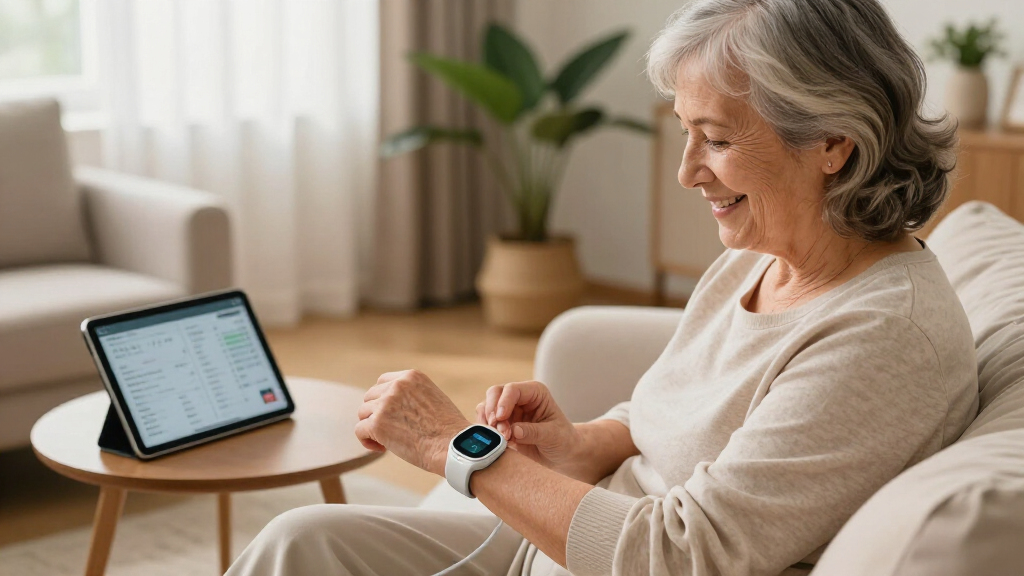

Senior care monitoring devices range from simple bed sensors to GPS-equipped pendants connected to 24/7 emergency centers, and the right choice depends on whether your priority is wandering protection, fall response, or nighttime supervision. The SecuLife Medical Alert Pendant earns my best overall pick because it combines automatic fall detection, GPS tracking, and nationwide cellular coverage in a single wearable, covering the widest range of scenarios. For families who want hands-on oversight, the Connected Caregiver Safety+ 4G system stands out for its mobile app that lets you check status and location without calling a monitoring center. If your main concern is a dementia patient getting out of bed at night, the Upgraded Bed Sensor Alarm is a low-cost alternative that skips monthly fees entirely. The biggest tradeoff in this category is subscription-based emergency monitoring versus fee-free local alerts — keep reading for the full breakdown.

Turn quiet afternoons into listening time
- Thousands of audiobooks, podcasts and originals
- Listen on your phone, tablet or Echo — also offline
- Cancel anytime
Complete the kit


Key Takeaways
- Five of the six devices include automatic fall detection, but only three pair it with GPS tracking, which matters if the senior leaves the house alone.
- The two Safety+ home-style systems split the lineup by audience: the watch-style unit suits active seniors, while the base-station model suits homebound users who dislike wearables.
- The bed sensor alarm is the only pick with no subscription and no emergency call center — it alerts a caregiver pager instead, trading professional backup for zero ongoing cost.
- The Connected Caregiver system is the only option whose mobile app gives family members direct visibility, making it the strongest choice when multiple relatives share caregiving duties.
- Fall detection is a sensor-based feature that can produce false alarms from quick movements, so seniors with very active routines may prefer systems with easy cancel windows.
| SecuLife Medical Alert Pendant for Seniors with Fall Detection and GPS Tracking |  | Best Overall | Brand: SecuLife | Device Type: Wearable pendant | Fall Detection: Automatic | VIEW LATEST PRICE | See Our Full Breakdown |
| Safety+ 4G Medical Alert System for Seniors: Watch-Style with Fall Detection and 24/7 Monitoring |  | Best for Wearability | Device Type: Medical alert watch | Connectivity: 4G LTE | Fall Detection: Yes | VIEW LATEST PRICE | See Our Full Breakdown |
| Safety+ 4G Medical Alert System with Fall Detection and GPS |  | Best for Wearing Flexibility | Coverage: Nationwide 4G | Fall Detection: Yes | Location Tracking: GPS | VIEW LATEST PRICE | See Our Full Breakdown |
| Connected Caregiver Safety+ 4G Medical Alert System for Seniors with Fall Detection and Mobile App |  | Best for Family Caregivers | Coverage: Nationwide 4G | Monitoring: 24/7 emergency monitoring | Fall Detection: Included at no extra charge | VIEW LATEST PRICE | See Our Full Breakdown |
| Upgraded Bed Sensor Alarm and Fall Prevention System for Elderly and Dementia Patients |  | Best Subscription-Free Option | Device Type: Wireless bed/room motion sensor with pager | Sensor Technology: Contact sensor | Maximum Range: 182 meters | VIEW LATEST PRICE | See Our Full Breakdown |
| StackCare Medical Alert System with Fall Detection for Seniors |  | Best Passive In-Home Monitoring | Monitoring Type: Passive in-home sensors (no camera, no wearable) | Fall Detection: AI-powered fall and activity detection | Sensor Technology: Motion sensor, contact sensor | VIEW LATEST PRICE | See Our Full Breakdown |
| senior care monitoring device | Fall Detection | Location Tracking | Water Resistance | Device Type |
|---|---|---|---|---|
| SecuLife Medical Alert Pendant | Automatic | GPS with geo-fence zones | IP67 waterproof | Wearable pendant |
| Safety+ 4G Medical Alert Syste | Yes | GPS | Water-resistant | Medical alert watch |
| Safety+ 4G Medical Alert Syste | Yes | GPS | Yes | — |
| Connected Caregiver Safety+ 4G | Included at no extra charge | GPS via mobile app | Water-resistant | — |
| Upgraded Bed Sensor Alarm and | — | — | — | Wireless bed/room motion sensor with pager |
| StackCare Medical Alert System | AI-powered fall and activity detection | — | — | — |
More Details on Our Top Picks
SecuLife Medical Alert Pendant for Seniors with Fall Detection and GPS Tracking
SecuLife earns the top spot because it combines the three features that matter most in senior monitoring — automatic fall detection, GPS tracking, and two-way calling — in a wearable that doesn’t demand constant charging. The up-to-6-day battery outpaces the Safety+ watch’s all-day rating, which translates to fewer charging routines for a senior to forget. Its IP67 waterproof rating is also more definitive than the generic water resistance on the Safety+ 4G pendant, making it a safer bet for shower wear, where many falls happen. Geo-fence zones add a layer of wander protection that none of the other devices in this lineup match as directly. The tradeoff is the $20 monthly subscription — cheaper than Safety+’s $40, but still an ongoing cost, and details on customer support responsiveness are thin.
Pros:- Automatic fall detection works without pressing a button
- GPS tracking with geo-fence zones for wander alerts
- IP67 waterproof rating survives shower and rain exposure
- Up to 6 days of battery life reduces charging burden
Cons:- Requires a $20 monthly subscription to operate
- Customer support responsiveness is poorly documented
Best for: Families of active seniors who leave the house alone and need GPS wander protection plus shower-safe wear
Not ideal for: Budget-conscious buyers unwilling to commit to any monthly subscription, since the device requires one to function
- Brand:SecuLife
- Device Type:Wearable pendant
- Fall Detection:Automatic
- Location Tracking:GPS with geo-fence zones
- Communication:Two-way calling
- Water Resistance:IP67 waterproof
- Battery Life:Up to 6 days
- Subscription:Required, $20/month
- Includes:Charging cable, SIM card, user manual
Our verdict“The most complete protection package here — pick it if your priority is an active senior who needs location tracking and true waterproofing.”
Safety+ 4G Medical Alert System for Seniors: Watch-Style with Fall Detection and 24/7 Monitoring
The standout quality of this Safety+ model is discretion. Unlike the pendant-style SecuLife or Safety+ 4G lanyard system, this watch-style form factor looks like ordinary everyday wear, which matters enormously for seniors who resist anything that marks them as vulnerable. It also adds step tracking, giving it a wellness angle the pendants lack. Setup requires no smartphone or network configuration from the senior, and the caregiver app lets family monitor remotely. The honest tradeoff: at $40 per month, it’s double the SecuLife subscription, and the “all-day and beyond” battery is noticeably shorter than the 6-day claims elsewhere in this roundup, meaning it must go on the charger nightly like a smartwatch. There’s also no mention of customizable alert settings.
Pros:- Discreet watch design seniors actually want to wear
- Fall detection plus 24/7 emergency monitoring included
- Caregiver app provides real-time alerts and location
- No smartphone or network setup required for the senior
Cons:- $40 monthly fee is the highest ongoing cost in this lineup
- All-day battery demands nightly charging
- No documented customizable alert settings
Best for: Seniors who refuse obvious medical devices and will only wear something that looks like a normal watch
Not ideal for: Households on tight budgets or in rural areas with weak 4G coverage, given the $40 monthly fee and cellular dependence
- Device Type:Medical alert watch
- Connectivity:4G LTE
- Fall Detection:Yes
- Location Tracking:GPS
- Other Features:SOS button, step tracking
- Water Resistance:Water-resistant
- Battery Life:All-day and beyond
- Setup:No smartphone required
Our verdict“Worth the premium subscription only if getting a resistant senior to actually wear the device is your biggest hurdle.”
Safety+ 4G Medical Alert System with Fall Detection and GPS
What separates this Safety+ system from its watch-style sibling is how it’s worn. Shipping with a lanyard and belt clip, it lets the user switch between neck wear and clip-on depending on clothing and comfort — a small detail that drives daily compliance. The up-to-6-day battery also beats the watch version’s all-day rating, putting it in SecuLife territory for charging frequency. Compared with the Connected Caregiver model, this one covers the same 24/7 monitoring and GPS basics but emphasizes hardware versatility over app depth. The drawback is cost structure: after the first month, you’re paying $40/month, which adds up to nearly $480 a year — twice the SecuLife subscription for similar core protection.
Pros:- Both lanyard and belt clip included for flexible wear
- Up to 6 days of battery life between charges
- 24/7 nationwide monitoring with fall detection and GPS
- Water-resistant for everyday use
Cons:- $40/month subscription after the first month
- Lacks advanced smartphone-dependent features
Best for: Seniors who switch between neck and belt wear depending on the day and dislike being locked into one carrying style
Not ideal for: Long-term budget planners, since the $40/month fee compounds to roughly double what the SecuLife pendant costs annually
- Coverage:Nationwide 4G
- Fall Detection:Yes
- Location Tracking:GPS
- Monitoring:24/7 emergency monitoring
- Battery Life:Up to 6 days
- Water Resistance:Yes
- Wearing Options:Lanyard and belt clip
- Includes:Device, charging dock, lanyard, belt clip, caregiver app access
Our verdict“A solid pick if wearing options matter more to your loved one than minimizing the monthly bill.”
Connected Caregiver Safety+ 4G Medical Alert System for Seniors with Fall Detection and Mobile App
This model is built around the person watching, not just the person wearing it. The mobile app with location and activity tracking gives adult children a live window into a parent’s day — something the SecuLife pendant treats as secondary. Notably, fall detection comes at no extra charge, whereas some competitors treat it as a premium add-on tier, and the first free month lets families trial the service before committing. Compared with the Safety+ 4G lanyard system, it trades wearing flexibility for deeper app connectivity, which makes sense for families managing care from a distance. The caveats are real though: response times depend on network conditions, and the whole system goes dark without mobile coverage, a risk worth weighing for rural households.
Pros:- Fall detection included at no additional charge
- First month free for low-risk trialing
- Caregiver app with location and activity tracking
- Easy activation and water-resistant design
Cons:- Monthly subscription applies after the free month
- Emergency response time varies with network conditions
- Full functionality requires reliable mobile coverage
Best for: Long-distance family caregivers who want app-based visibility into a parent’s location and daily activity
Not ideal for: Rural residents with spotty cellular coverage, since full functionality depends on the mobile network
- Coverage:Nationwide 4G
- Monitoring:24/7 emergency monitoring
- Fall Detection:Included at no extra charge
- Location Tracking:GPS via mobile app
- Caregiver Features:Location and activity tracking
- Battery:Long-lasting, rechargeable
- Water Resistance:Water-resistant
- Activation:Easy activation, first month free
Our verdict“The right choice when family oversight from afar matters as much as the emergency response itself.”
Upgraded Bed Sensor Alarm and Fall Prevention System for Elderly and Dementia Patients
This bed sensor system solves a completely different problem from the wearable devices above, and that’s exactly its value. No subscription, no cellular network, no monthly fee — just a one-time purchase of motion sensors and a caregiver pager. For dementia care and fall prevention at night, it alerts a caregiver the moment a loved one gets out of bed or leaves a room, catching the exact moments wearables often miss. With a 182-meter wireless range, the pager works across a large home. The tradeoffs are structural: unlike the SecuLife or Safety+ devices, there’s no emergency monitoring center and no GPS — someone must be within pager range to respond. It also runs on AAA batteries and needs placement testing to dial in reliable detection.
Pros:- No subscription or cellular service required
- Instant alerts when a patient exits bed or a room
- 182-meter wireless range covers large homes
- Dual LED and sound alerts with adjustable volume
Cons:- Requires a caregiver within pager range — no monitoring center backup
- Battery powered, so cells need periodic replacement
- Sensor placement requires testing to achieve reliable detection
Best for: In-home caregivers of dementia patients who need night-time wandering alerts without any monthly fees
Not ideal for: Seniors living alone, since the pager requires a caregiver physically nearby to receive and act on alerts
- Device Type:Wireless bed/room motion sensor with pager
- Sensor Technology:Contact sensor
- Maximum Range:182 meters
- Alert Types:LED light and sound, adjustable volume
- Power Source:Battery powered (3 AAA included)
- Control Method:App, touch
- Mounting:Door mount
- Includes:Caregiver pager, motion sensor, micro USB, tape, screws
Our verdict“A smart complement to — not replacement for — a wearable alert system, ideal for supervised dementia care at zero ongoing cost.”
StackCare Medical Alert System with Fall Detection for Seniors
Most options in this roundup, like the SecuLife Medical Alert Pendant, depend on a senior actually wearing — and pressing — a device. The StackCare system takes the opposite approach: passive sensors track motion and contact throughout the home, with AI-powered fall detection that flags unusual behavior without any cameras or wearables. For seniors who resist wearing a pendant or forget to charge a watch, this solves a real problem that wearable-based systems simply can’t. Compared with the Bed Sensor Alarm, which covers one room, StackCare monitors the whole home and adds daily activity summaries through its smartphone app. The tradeoff is ongoing cost: a subscription is required for the monitoring service, and it only works indoors — there’s no GPS protection outside the home like the 4G mobile systems offer.
Pros:- No camera or wearable required, so privacy-conscious seniors actually accept it
- AI analyzes activity patterns to catch falls and unusual behavior automatically
- Whole-home coverage rather than a single room or entry point
- Automatic daily summaries keep remote family informed without check-in calls
Cons:- Ongoing subscription fee adds up over the long term compared with one-time-cost systems like the Bed Sensor Alarm
- Requires a smartphone and app, which may challenge less tech-savvy caregivers
- In-home only — no protection during walks, errands, or travel
Best for: Seniors who refuse or forget to wear a pendant, and families who want discreet whole-home monitoring without cameras
Not ideal for: Active seniors who leave the house often — there’s no GPS or cellular coverage outside the home
- Monitoring Type:Passive in-home sensors (no camera, no wearable)
- Fall Detection:AI-powered fall and activity detection
- Sensor Technology:Motion sensor, contact sensor
- Compatible Devices:iOS, Android
- Control Method:Smartphone app
- Coverage:In-home only (no GPS or cellular outside home)
- Setup:DIY installation with app-guided setup
- Subscription:Required for 24/7 monitoring service
Our verdict“This pick makes the most sense for families whose loved one won’t wear a device, as long as they stay primarily at home and the household can absorb the monthly fee.”
How We Picked
I judged each device against the four factors that actually determine whether a senior gets help in an emergency: response reliability (cellular connectivity, backup battery, fall detection accuracy), ease of daily use (charging burden, comfort, whether a confused senior can operate it), ongoing cost structure (subscription-based monitoring versus one-time hardware), and coverage of real caregiving scenarios including falls at home, wandering outdoors, and unsupervised nighttime movement. Products that combined fall detection with GPS ranked higher because wandering plus falls is the most dangerous combination for independent seniors.
The ranking also reflects a hierarchy of use cases. Devices backed by professional monitoring centers sit above local-only alerts, since an unresponsive senior cannot press a button or cancel a false alarm themselves. Within the monitored group, I favored wearables over base stations for mobile seniors, and base stations for homebound users, then placed the bed sensor last for general use while acknowledging it is the best value for a specific scenario: dementia patients and fall risk at night.
| senior care monitoring device | Device Type | Fall Detection | Location Tracking | Water Resistance |
|---|---|---|---|---|
| SecuLife Medical Alert Pendant | Wearable pendant | Automatic | GPS with geo-fence zones | IP67 waterproof |
| Safety+ 4G Medical Alert Syste | Medical alert watch | Yes | GPS | Water-resistant |
| Safety+ 4G Medical Alert Syste | — | Yes | GPS | Yes |
| Connected Caregiver Safety+ 4G | — | Included at no extra charge | GPS via mobile app | Water-resistant |
| Upgraded Bed Sensor Alarm and | Wireless bed/room motion sensor with pager | — | — | — |
| StackCare Medical Alert System | — | AI-powered fall and activity detection | — | — |
Factors to Consider When Choosing Senior Care Monitoring Devices
Before choosing a device, it helps to understand the category’s broader landscape — the differences between monitoring models, who actually pays for the subscription, and where buyers most often go wrong.Professional Monitoring Versus Local Alerts
The single biggest decision is whether the device connects to a 24/7 monitoring center or only alerts people nearby. Monitored systems like the SecuLife pendant and the Safety+ lineup summon trained operators who can dispatch emergency services and access your medical profile, which is what you want if the senior lives alone. Local systems, like the bed sensor with a caregiver pager, depend entirely on someone being within range to respond — fine for a live-in caregiver, useless for a senior on their own. The mistake I see most often is buying a pager-based product for someone who spends hours unaccompanied, leaving a dangerous gap in coverage. Match the alert model to the actual supervision schedule, not the ideal one.
Wearable Versus Fixed Placement
Wearables only work if they are worn, which sounds obvious until you meet seniors who find pendants annoying or forget to put a watch back on after charging. A watch-style device like the Safety+ 4G watch tends to stay on better because it feels like ordinary clothing, while pendants can be removed at night — precisely when falls are common. Fixed devices, such as base stations and bed sensors, never get forgotten but only protect one location. If the senior has dementia, a fixed bed sensor may outperform any wearable because compliance is automatic. Weigh honestly whether the person will tolerate wearing a device every day before paying for features they won’t use.
Fall Detection: Capabilities and Limits
Automatic fall detection is the feature most worth paying for, because a knocked-unconscious senior cannot press a help button. But it is a sensor-based estimate, not a guarantee — sudden sits into a chair, biking, or vigorous arm movements can trigger false alarms, and slow slides to the floor can be missed entirely. Better systems include a cancel window of a few seconds so the wearer can stop a false alert before the center is contacted. If your relative is highly active, false alarms become a real annoyance that can lead to the device being abandoned; in that case a manually triggered system with a large, easy button may actually get used more consistently.
GPS and Cellular Coverage
GPS tracking matters in one specific situation: the senior leaves the house alone, whether on walks, to run errands, or because of wandering behavior. Devices with built-in 4G cellular, like the SecuLife pendant, work anywhere with a signal and don’t rely on the home’s Wi-Fi or a landline. Wi-Fi-only or base-station systems are cheaper but stop protecting the moment the wearer walks past the driveway. Also check whether cellular service is bundled into the subscription — some devices require you to arrange your own SIM, which adds a setup step many families don’t expect. A related mistake: assuming GPS means real-time tracking everywhere; some systems only transmit location during an emergency.
Total Cost of Ownership
The sticker price is only part of the math. Monitored systems carry a monthly or annual subscription, and over three years that recurring cost typically exceeds the hardware price several times over. Compare whether the subscription covers multiple family contacts, fall detection, and cellular data, or whether those are upsells. Fee-free options like the bed sensor alarm cost once and never bill again, which is why care facilities use them in volume. My advice: budget the subscription as a line item in the overall care plan, and verify cancellation terms before signing up, since some services lock you into contracts that outlast the need.
Battery Life and Charging Burden
A dead device is no device, and charging is the quiet failure point of the whole category. Watches need near-daily charging, which demands both a routine and the memory to keep it — a genuine problem for users with cognitive decline. Pendants and base stations with multi-day batteries are more forgiving, and models with backup battery during power outages protect against a different failure mode entirely. Ask how the device warns you about low battery: a silent die-off discovered days later defeats the purpose. For dementia patients especially, choose the option with the least frequent charging, not the most features.
Frequently Asked Questions
Do these devices require a landline or home internet?
Most of the picks here use built-in 4G cellular, so they work without a landline or home Wi-Fi — that includes the SecuLife pendant, all three Safety+ systems, and the StackCare unit. This matters because many seniors still have outdated landline-based systems that fail silently when phone service changes. The tradeoff is that cellular-based devices carry a subscription that covers the data connection, so you’re paying monthly for that independence from home infrastructure. The one exception is the bed sensor alarm, which communicates directly with a pager over its own wireless link and needs no connectivity at all, but it also can’t reach anyone outside pager range. If the senior ever relocates or travels, cellular models move with them while landline systems do not.
What happens if fall detection triggers a false alarm?
Devices with automatic fall detection give the wearer a short cancel window — usually 10 to 30 seconds — to press a button and stop the alert before the monitoring center is called. If the wearer doesn’t cancel, an operator will attempt voice contact before dispatching help, which catches most false positives where the person is conscious and unharmed. False alarms cluster around specific movements: quickly sitting down, bending to pick something up, or riding over bumps in a wheelchair or car. If false alerts happen more than occasionally, families can often ask the provider to adjust sensitivity or disable auto-detection and rely on manual buttons instead. The goal is a device the senior keeps wearing, so persistent annoyance is a signal to reconfigure rather than ignore.
Can multiple family members be notified when an alert goes out?
With monitored systems, yes — you typically list emergency contacts during setup, and the monitoring center calls them in order after assessing the situation. The Connected Caregiver system goes further by letting family members see device status and location through a shared mobile app, which reduces the need for check-in calls and lets everyone stay informed without calling the center. With the bed sensor alarm, notification is physical: only whoever holds the caregiver pager knows movement was detected, so it works best when one primary caregiver is nearby. For spread-out families coordinating care for a parent, app visibility tends to reduce friction and arguments over who’s watching what. Decide upfront who the primary contact is, because unclear contact chains delay response in real emergencies.
Is a wearable or a base-station system better for someone with dementia?
For dementia patients, the deciding factor is compliance — a device only works if it’s worn or positioned correctly, and memory impairment breaks that chain. A wearable with GPS is valuable for wandering, but only if the person consistently keeps it on, so watch-style devices that feel like normal clothing tend to outperform pendants that get removed and misplaced. For nighttime wandering, the bed sensor alarm is often the more reliable choice because it requires nothing from the senior at all — it simply alerts the caregiver when they get up. Many families end up layering both: a wearable for daytime and a bed sensor for night. Start with the time of day when supervision is thinnest and the fall risk is highest.
Are subscription-free options actually safe enough on their own?
A subscription-free device like the bed sensor is safe only when a capable caregiver is consistently within responding distance — its protection ends at the pager’s range. For a senior living alone, that gap is the entire risk: if the caregiver is asleep in another wing of the house or steps out, no one is notified. Subscription-free devices shine in supervised settings such as live-in caregiving, assisted living rooms, or overnight shifts, where the goal is faster human response rather than summoning outside help. The honest framing is that you’re not choosing between safe and unsafe; you’re choosing who responds. If the answer is “a professional operator,” you need a monitored system; if it’s “my mother in the next room,” the fee-free sensor does that job well.
Conclusion
For most families, the SecuLife Medical Alert Pendant is the best overall choice — it pairs fall detection with GPS and cellular coverage, protecting seniors both at home and out in the world. The Safety+ 4G Medical Alert System with Fall Detection and GPS earns best value among monitored systems by delivering the core protection for a lower commitment, and it suits seniors who prefer a base station to a wearable. For a premium wearable experience, the Safety+ 4G watch-style system feels like a normal watch, so it stays on the wrist and gets used. The Connected Caregiver system is my pick for families, since its mobile app gives multiple relatives real visibility into status and location. Beginners and dementia caregivers should start with the Upgraded Bed Sensor Alarm — it’s the easiest system to set up, carries no subscription, and directly addresses nighttime fall risk. Finally, the StackCare Medical Alert System fits buyers who want monitored fall detection in a compact, low-maintenance package for a mostly homebound senior. Match the device to the supervision gap you’re actually trying to close, and the right choice becomes obvious.
Halloween Picks
halloween
As an affiliate, we earn on qualifying purchases.