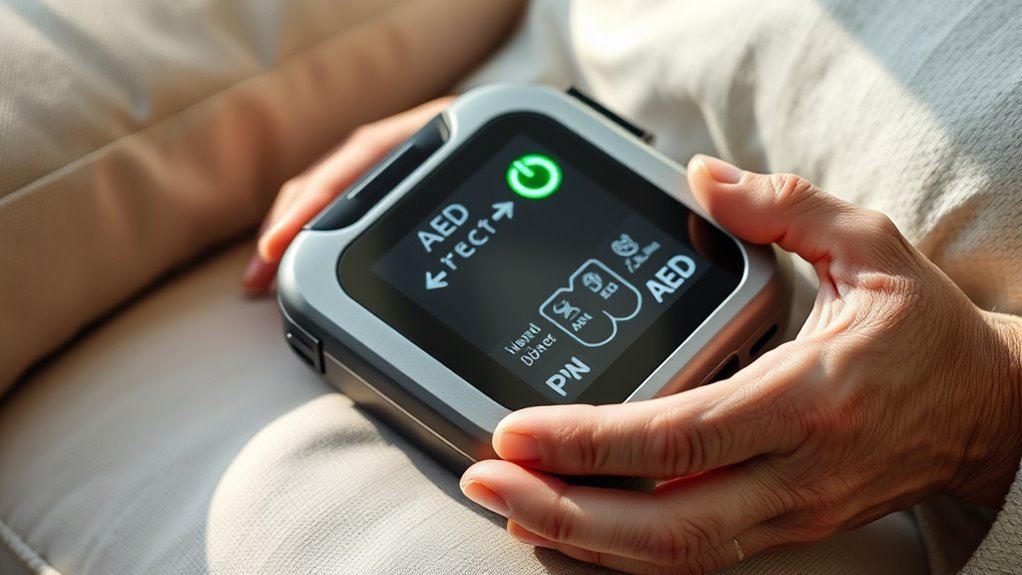

Choosing the right AED for seniors involves prioritizing ease of use, reliability, and safety features. The HeartStart Philips OnSite AED Defibrillator Business Package stands out for its user-friendly design and clear voice prompts, making it suitable for environments with minimal trained personnel. Meanwhile, the Nomo Medical Alert System with Fall Detection offers comprehensive at-home monitoring, perfect for seniors living independently but requiring emergency alerts beyond cardiac care. For those wanting a portable, straightforward AED, the Philips HeartStart OnSite AED Defibrillator Value Package balances affordability with essential features. Each of these picks involves tradeoffs: some require additional accessories, and others depend on ongoing maintenance or subscriptions. This guide helps clarify which model best fits different senior needs, balancing usability, safety, and cost.

Turn quiet afternoons into listening time
- Thousands of audiobooks, podcasts and originals
- Listen on your phone, tablet or Echo — also offline
- Cancel anytime
Complete the kit


Key Takeaways
- Ease of operation and clear voice prompts are critical for seniors with limited mobility or cognitive challenges.
- At-home monitoring systems like fall detection enhance safety but require ongoing subscriptions and WiFi dependency.
- Portability and quick access are vital for public environments, but bulkier models may reduce convenience.
- Regular maintenance and updates are necessary to keep AEDs ready, especially in public or high-traffic areas.
- Tradeoffs often involve balancing cost, features, and ease of use—choosing the right AED depends on the senior’s environment and health status.
| HeartStart Philips OnSite AED Defibrillator Business Package |  | Best Overall Public Environment AED | Model: M5066A-C02BPB | Warranty: 8 years for AED, 4 years for battery | Includes: Defibrillator, pre-installed battery, SMART Pads Cartridge, carry case, wall sign, quick set-up guide, maintenance booklet, quick reference guide, owner’s manual | VIEW ON AMAZON | See Our Full Breakdown |
| Nomo Medical Alert System with Fall Detection for Seniors at Home |  | Best For At-Home Senior Monitoring | Power Source: AC Power with battery backup | Compatible Devices: Smartphone, Tablet | Connectivity Technology: Wireless | VIEW ON AMAZON | See Our Full Breakdown |
| Philips HeartStart OnSite AED Defibrillator Business Package | | Best User-Friendly Public AED | Model: M5066A-R01BPB | Warranty: 8 years for AED, 4 years for battery | Includes: Carry case, SMART Pads Cartridge, wall sign, response kit, basic cabinet, battery, manuals | VIEW ON AMAZON | See Our Full Breakdown |
| Philips HeartStart AED Defibrillator Value Package |  | Best for Home Use Budget | Model: M5066A-R01VPB | Warranty: 8 years for AED, 4 years for battery | Includes: Defibrillator, carry case, spare pads, wall mount, quick set-up guide, maintenance booklet, owner’s manual | VIEW ON AMAZON | See Our Full Breakdown |
| Philips HeartStart OnSite AED with Slim Carry Case | 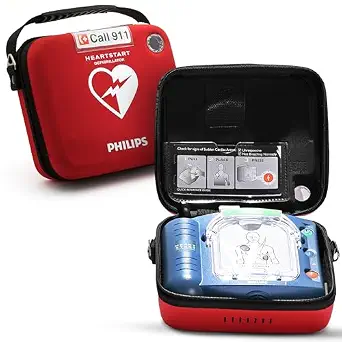 | Best Portable Slim Design | Model: M5066A-C02 | Warranty: 8 years for AED, 4 years for battery | Includes: Defibrillator, pre-installed battery, SMART Pads Cartridge, carry case, manuals | VIEW ON AMAZON | See Our Full Breakdown |
| aeds for senior | Model | Warranty | Includes | Self-test |
|---|---|---|---|---|
| HeartStart Philips OnSite AED | M5066A-C02BPB | 8 years for AED, 4 years for battery | Defibrillator, pre-installed battery, SMART Pads Cartridge, carry case, wall sign, quick set-up guide, maintenance booklet, quick reference guide, owner’s manual | Daily, weekly, monthly |
| Nomo Medical Alert System with | — | — | — | — |
| Philips HeartStart OnSite AED | M5066A-R01BPB | 8 years for AED, 4 years for battery | Carry case, SMART Pads Cartridge, wall sign, response kit, basic cabinet, battery, manuals | Daily, weekly, monthly |
| Philips HeartStart AED Defibri | M5066A-R01VPB | 8 years for AED, 4 years for battery | Defibrillator, carry case, spare pads, wall mount, quick set-up guide, maintenance booklet, owner’s manual | — |
| Philips HeartStart OnSite AED | M5066A-C02 | 8 years for AED, 4 years for battery | Defibrillator, pre-installed battery, SMART Pads Cartridge, carry case, manuals | Daily, weekly, monthly |
More Details on Our Top Picks
HeartStart Philips OnSite AED Defibrillator Business Package
This model excels in public settings where quick, intuitive operation is critical. Its real-time CPR instructions and voice prompts make it accessible even for those with no prior training. Compared to other AEDs, it offers comprehensive self-testing features, ensuring readiness, and comes with essential accessories like a carry case and wall sign. However, its reliance on separate training pads for AED training conversion and need for regular maintenance are notable tradeoffs. Its portability and clear instructions make it the top choice for public spaces such as restaurants or gyms.
Pros:- Easy to operate with voice prompts and real-time instructions
- Self-testing ensures device readiness
- Portable with carry case and accessories included
Cons:- Training pads sold separately for AED training conversion
- Limited to AED use, not manual defibrillation
- Requires regular maintenance and battery replacement
Best for: Public spaces requiring reliable, easy-to-operate AEDs
Not ideal for: Home use or environments where frequent training conversions are needed
- Model:M5066A-C02BPB
- Warranty:8 years for AED, 4 years for battery
- Includes:Defibrillator, pre-installed battery, SMART Pads Cartridge, carry case, wall sign, quick set-up guide, maintenance booklet, quick reference guide, owner’s manual
- Self-test:Daily, weekly, monthly
- Conversion:Can be converted to AED trainer with training pads (sold separately)
Our verdict“A highly reliable, user-friendly AED ideal for public environments with minimal training requirements.”
Nomo Medical Alert System with Fall Detection for Seniors at Home
The Nomo Medical Alert System stands out for its comprehensive approach to senior safety, combining fall detection, emergency alerts, and two-way voice communication. It’s designed for seniors living independently, providing peace of mind through WiFi connectivity and caregiver notifications. Compared with AEDs, which focus on cardiac emergencies, this system offers broader protection but depends heavily on a stable WiFi connection and ongoing subscription fees. Its plug-and-play installation makes it accessible for seniors and caregivers alike, though limited battery backup details and WiFi dependency are notable limitations.
Pros:- Easy plug-and-play setup with no wiring needed
- Includes fall detection and emergency alerts
- Two-way voice communication for instant contact
Cons:- Requires monthly subscription after trial
- Limited details on battery backup duration
- Dependent on WiFi for operation
Best for: Seniors aging in place needing fall detection and emergency alerts
Not ideal for: Homes with unreliable WiFi or seniors not comfortable with app-based controls
- Power Source:AC Power with battery backup
- Compatible Devices:Smartphone, Tablet
- Connectivity Technology:Wireless
- Alert Type:fall
- Control Method:App
- Item Dimensions:10.6 x 4.75 x 7.1 inches
- Item Weight:1.24 kg
Our verdict“A robust monitoring system ideal for independent seniors who benefit from fall detection and caregiver notifications.”
Philips HeartStart OnSite AED Defibrillator Business Package
Designed for quick deployment in emergencies, the Philips HeartStart OnSite AED offers real-time CPR guidance and voice prompts that are straightforward for laypersons. Compared with similar models, it provides a comprehensive package with accessories, ensuring readiness. Its self-testing features reduce the risk of malfunction, but its bulkier size might limit portability in some environments. It’s best suited for businesses or venues where ease of use and reliability are priorities.
Pros:- User-friendly with real-time instructions and voice prompts
- Self-testing ensures device readiness
- Includes comprehensive accessories and warranty
Cons:- Requires separate purchase for training pads if needed
- Bulkier design may limit portability
Best for: Public venues needing reliable, easy-to-use AEDs
Not ideal for: Home settings or environments requiring lightweight, compact devices
- Model:M5066A-R01BPB
- Warranty:8 years for AED, 4 years for battery
- Includes:Carry case, SMART Pads Cartridge, wall sign, response kit, basic cabinet, battery, manuals
- Self-test:Daily, weekly, monthly
- Conversion:Can be converted to AED trainer with training pads (sold separately)
Our verdict“A dependable, easy-to-operate AED suited for public environments needing quick response capabilities.”
Philips HeartStart AED Defibrillator Value Package
This AED offers essential features at a more accessible price point, ideal for home use. Its automatic self-tests and voice prompts make it simple for seniors or family members to operate during emergencies. Compared with more advanced models, it offers fewer accessories and slightly less comprehensive training options, but it remains highly dependable for private residence safety. Its portability and straightforward setup make it a practical choice for those prioritizing ease and affordability.
Pros:- Easy to use with voice prompts and real-time instructions
- Automatic self-tests ensure device readiness
- Portable and suitable for home use
Cons:- Training pads sold separately for training purposes
- Limited accessories and advanced features
Best for: Seniors and families seeking an affordable home AED
Not ideal for: Public or commercial environments requiring more rugged, feature-rich devices
- Model:M5066A-R01VPB
- Warranty:8 years for AED, 4 years for battery
- Includes:Defibrillator, carry case, spare pads, wall mount, quick set-up guide, maintenance booklet, owner’s manual
- Battery:Pre-installed, 1 included
- Pads:Pre-installed, spare included
Our verdict“A practical, budget-friendly AED designed for reliable emergency response in residential settings.”
Philips HeartStart OnSite AED with Slim Carry Case
This AED combines portability with ease of operation, making it ideal for environments where space and quick access matter. Its lightweight, slim carry case ensures it can be stored discreetly yet accessed swiftly in emergencies. Compared to bulkier models, it offers less in terms of accessories but excels in quick deployment and regular self-tests. It’s well-suited for public venues needing a compact, reliable AED that can be stored out of sight but ready to go at a moment’s notice.
Pros:- Easy to operate with step-by-step voice prompts
- Lightweight and slim for portability
- Performs regular self-tests to ensure readiness
Cons:- Training pads sold separately for training mode
- Limited information on battery life duration
Best for: Public spaces or mobile setups requiring compact AEDs
Not ideal for: Homes or settings where extensive accessories or training conversions are needed
- Model:M5066A-C02
- Warranty:8 years for AED, 4 years for battery
- Includes:Defibrillator, pre-installed battery, SMART Pads Cartridge, carry case, manuals
- Self-Test:Daily, weekly, monthly
- Conversion:Supports AED training with optional pads
Our verdict“A sleek, portable AED perfect for quick deployment in space-constrained environments.”

How We Picked
Our selection process focused on devices designed for ease of use, reliability, and safety tailored specifically for seniors. We prioritized models with clear voice prompts, minimal setup, and features like automatic self-tests to reduce user error. Devices suitable for at-home use and public environments were included, with an emphasis on portability and accessibility. We considered product reviews, manufacturer warranties, and accessory options, balancing cost against essential features. Devices requiring ongoing subscriptions or complex maintenance were scrutinized for practicality in senior care, ensuring that each pick offers a meaningful advantage for its intended setting.
| aeds for senior | Model | Includes | Conversion |
|---|---|---|---|
| HeartStart Philips OnSite AED | M5066A-C02BPB | Defibrillator, pre-installed battery, SMART Pads Cartridge, carry case, wall sign, quick set-up guide, maintenance booklet, quick reference guide, owner’s manual | Can be converted to AED trainer with training pads (sold separately) |
| Nomo Medical Alert System with | — | — | — |
| Philips HeartStart OnSite AED | M5066A-R01BPB | Carry case, SMART Pads Cartridge, wall sign, response kit, basic cabinet, battery, manuals | Can be converted to AED trainer with training pads (sold separately) |
| Philips HeartStart AED Defibri | M5066A-R01VPB | Defibrillator, carry case, spare pads, wall mount, quick set-up guide, maintenance booklet, owner’s manual | — |
| Philips HeartStart OnSite AED | M5066A-C02 | Defibrillator, pre-installed battery, SMART Pads Cartridge, carry case, manuals | Supports AED training with optional pads |
Factors to Consider When Choosing Aeds For Seniors
When selecting an AED for seniors, several factors come into play. Ease of use is paramount; devices with clear voice prompts and minimal setup reduce hesitation during emergencies. Reliability through self-tests and maintenance features ensures the device is always ready when needed. Portability matters, especially for public environments or mobile settings, while at-home options benefit from integrated monitoring features like fall detection. Cost and accessory availability also influence the best fit, with tradeoffs between affordability and advanced functionalities.
Ease of Use and Training
For seniors, especially those with limited mobility or cognitive challenges, an AED with voice prompts, clear instructions, and minimal complexity makes all the difference. Devices that include step-by-step guidance reduce errors and increase confidence. Consider whether additional training pads or accessories are necessary and if the device can be converted for training purposes without too much hassle.
Reliability and Maintenance
Devices with frequent self-tests and straightforward maintenance routines are critical for ensuring readiness during emergencies. Look for AEDs with long warranties and easy replacement parts. For public settings, robustness and durability are key, but for home use, automatic checks and simple upkeep might suffice.
Portability and Environment
In public venues, a slim, lightweight AED that can be mounted discreetly is preferable. For homes or caregivers, portability ensures quick access wherever needed, and integrated features like fall detection or caregiver alerts enhance safety. Balance size, weight, and ease of access based on where the device will be stored and used.
Cost and Accessories
Budget constraints can influence your choice, but factor in ongoing costs such as replacement pads or subscription fees. Some devices come with comprehensive packages, while others require extra purchases for training or extended accessories. Weigh these costs against the device’s features to determine the best value for your specific needs.
Frequently Asked Questions
How easy is it for seniors to operate an AED?
Most modern AEDs designed for public use feature voice prompts, visual instructions, and simple step-by-step guidance, making them accessible for seniors with limited mobility or cognitive challenges. Devices like the Philips HeartStart series are specifically engineered to be straightforward, reducing the likelihood of user error during stressful situations.
What features should I look for in an AED for at-home use?
For home use, focus on AEDs with automatic self-tests, clear voice prompts, and portability. Devices that include features such as battery life indicators and easy replacement pads help ensure readiness. Additionally, some models offer integrated monitoring like fall detection systems, which can add an extra layer of safety for seniors living alone.
Are AEDs suitable for seniors with mobility issues?
Yes, as long as the AED is placed within easy reach and is lightweight or mounted at accessible heights. Devices with portable designs, like the Philips HeartStart OnSite with Slim Carry Case, facilitate quick access without physical strain. However, for those with severe mobility limitations, emergency services or caregiver intervention might be more appropriate alongside AED deployment.
Do AEDs require regular maintenance?
Yes, most AEDs perform automatic self-tests to ensure readiness, but maintenance routines such as replacing pads, batteries, and checking for damage are necessary. Devices with detailed maintenance guides and warranties simplify this process, ensuring the AED remains functional when needed. Neglecting maintenance can compromise device performance during emergencies.
Is professional training needed to operate an AED?
In most cases, no professional training is required, as AEDs are designed for layperson use. Devices with voice prompts and visual cues guide users through each step, making it accessible even for those unfamiliar with medical devices. However, basic familiarization or brief instruction can boost confidence and response times during actual emergencies.
Conclusion
For seniors living independently or in environments with limited trained personnel, devices like the HeartStart Philips OnSite AED Defibrillator series offer ease of use and reliability. Those prioritizing at-home safety should consider the Philips HeartStart AED Value Pack for affordability and straightforward operation. Public venues or organizations requiring quick response with minimal training should opt for the Philips HeartStart OnSite AED Business Package or the Public AED with Slim Carry Case. Ultimately, the best choice depends on the senior’s environment, mobility, and whether emergency monitoring beyond cardiac care is desired.
Cold & flu season Picks
humidifiers
As an affiliate, we earn on qualifying purchases.