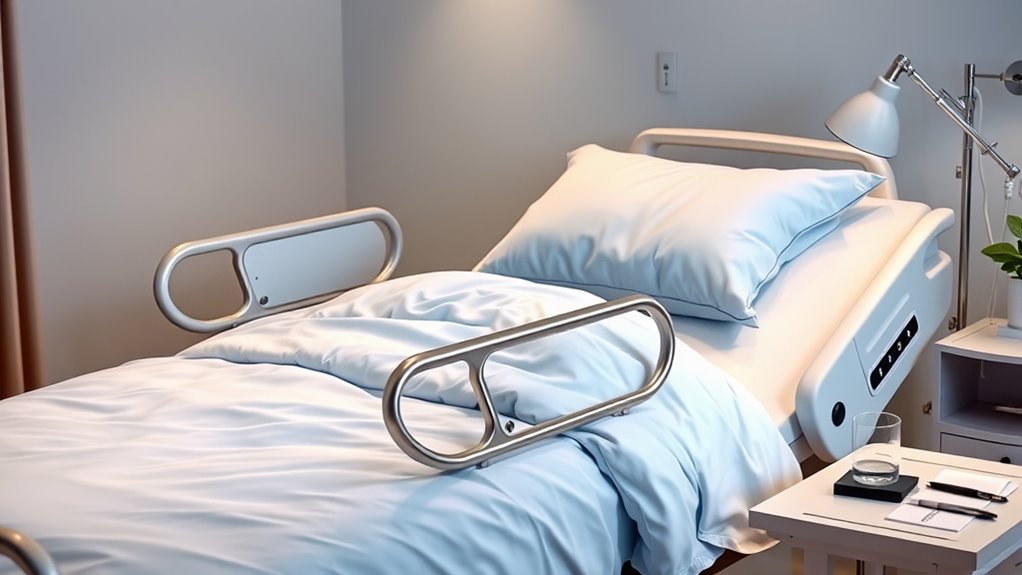

When someone is confined to bed for weeks or months, the bed stops being furniture and becomes the centerpiece of their care. The right one can prevent pressure sores, reduce caregiver back injuries, and restore a bit of dignity to daily routines like eating and getting up. The wrong one turns every repositioning into a two-person ordeal. After comparing the leading full-electric home hospital beds available in 2026, two stood out to me. The Fuzren Full Electric Hospital Bed is my top overall pick because it bundles a complete care kit — mattress, tray, IV pole, sheets, and drainage hooks — around a motorized frame with genuine clinical adjustability. For families worried specifically about bedsores, the Full Electric Bed with Auto Side Tilt is the standout, with an automatic left-right turning system that repositions the patient on a timed cycle without anyone lifting a finger. If your priority is getting a bedridden person safely in and out of bed, the rotating models from Real Relax and Pltvsegl solve that problem directly. The main tradeoffs you’ll be weighing: bundle completeness versus mattress quality, footprint versus function, and the fact that most of these beds are new to market with thin review histories. I break all of that down below.

Turn quiet afternoons into listening time
- Thousands of audiobooks, podcasts and originals
- Listen on your phone, tablet or Echo — also offline
- Cancel anytime
Complete the kit


Key Takeaways
- The Fuzren bed wins on overall value because it includes mattress, tray, IV pole, drainage hooks, and two sheets — accessories that cost $150+ separately on other beds.
- Only the B0H15JH8QD bed offers automatic timed side-tilt turning (30/45-minute cycles), which is the single most important feature for bedsore prevention in fully bedridden patients.
- Both rotating beds (Real Relax and Pltvsegl) require significant side clearance — the Pltvsegl needs 50cm on both sides — so measure your room before choosing one.
- The 4-Function bed’s 600 lb capacity and 3-year motor warranty make it the safest choice for bariatric patients and the only pick with a meaningful warranty.
- Mattress quality varies widely: 3 inches on the auto-tilt bed versus 4.7 inches on the Fuzren — long-term patients will likely need an upgrade on the thinner options.
| Fuzren Full Electric Hospital Bed with 4.7″ Foam Mattress, Tray, and Bed Sheets (2-Pack) |  | Best Overall | Brand: Fuzren | Mattress Thickness: 4.7 inches | Sleeping Surface: 78.7 x 33.5 in | VIEW ON AMAZON | See Our Full Breakdown |
| Full Electric Hospital Bed for Home Use with Auto Side Tilt, 10 Functions, Mattress & Accessories Included |  | Best for Bedsore Prevention | Type: Full electric, 10 functions | Auto Turning: 0–45° lateral, 30/45-minute cycles | Backrest / Knee / Leg: 0–85° / 0–35° / 0–65° | VIEW ON AMAZON | See Our Full Breakdown |
| Real Relax Rotating Multi-Functional Electric Hospital Bed, 530 lb Capacity |  | Best for Safe Bed Exits | Brand: Real Relax | Rotation: 90° flat to upright seated | Back / Knee Elevation: 0–70° / 0–40° | VIEW ON AMAZON | See Our Full Breakdown |
| 4-Function Full Electric Hospital Bed for Home Use with Mattress, IV Pole, 600 lb Capacity |  | Best for Bariatric Care | Weight Capacity: 600 lbs | Motors: 4 quiet electric motors | Adjustments: Backrest, legrest, height, tilt | VIEW ON AMAZON | See Our Full Breakdown |
| Pltvsegl Full Electric Rotating Hospital Bed with Lateral Tilt for Home Care |  | Best Design and Comfort | Brand: Pltvsegl | Backrest / Leg Adjustment: 0–80° / 0–35° | Lateral Tilt: 0–20° left/right | VIEW ON AMAZON | See Our Full Breakdown |
| beds for bedridden patient | Weight Capacity | Brand | Height Range | Frame |
|---|---|---|---|---|
| Fuzren Full Electric Hospital | 530 lbs | Fuzren | 16.14–29.13 in | Powder-coated steel |
| Full Electric Hospital Bed for | 550 lbs | — | 18–29 in | — |
| Real Relax Rotating Multi-Func | 530 lbs | Real Relax | 21.2–31.1 in | — |
| 4-Function Full Electric Hospi | 600 lbs | — | — | High-grade steel |
| Pltvsegl Full Electric Rotatin | 550 lbs | Pltvsegl | — | Steel with lockable casters and safety rails |
More Details on Our Top Picks
Fuzren Full Electric Hospital Bed with 4.7″ Foam Mattress, Tray, and Bed Sheets (2-Pack)
This pick makes the most sense for most families because it solves the two biggest problems at once: full motorized adjustability and a genuinely complete accessory bundle. The backrest reaches 80°, the leg rest hits 45°, and the bed height spans 16.14 to 29.13 inches — that low minimum height matters for fall-risk patients who might try to climb out, while the high setting saves a caregiver’s back during transfers and cleaning. Compared with the 4-Function bed, which has a similar motor layout, the Fuzren includes more in the box: an IV pole, four drainage hooks, a retractable tray, and two fitted sheets on top of the mattress and rails.
The 4.7-inch mattress with a water-resistant Oxford cover is the thickest mattress in this lineup, beating the 3-inch pad included with the auto-tilt bed. That said, 4.7 inches of medium-density foam is still not a true pressure-redistribution mattress, so a patient with existing skin breakdown may need a dedicated overlay. The 530 lb steel frame matches the Real Relax bed, though it trails the 600 lb rating of the 4-Function model. My honest reservation is reliability: with only a handful of customer reviews, there’s no long-term track record, and unlike the 4-Function bed, no multi-year motor warranty is advertised. Assembly is partial but manageable for two people.
Pros:- Fully electric backrest (80°), leg rest (45°), and height adjustment (16–29 in) via bedside panel
- Most complete bundle in the lineup: mattress, tray, IV pole, drainage hooks, rails, and two sheets
- Thickest included mattress (4.7 in) with a washable, water-resistant cover
- 530 lb capacity on a powder-coated steel frame with four locking casters
Cons:- Only a handful of customer reviews, so long-term motor reliability is unverified
- Requires some assembly despite partial pre-assembly
- No advertised multi-year motor warranty, unlike the 4-Function bed
Best for: Families setting up long-term home care who want everything included in one delivery and don’t want to source accessories separately.
Not ideal for: Buyers who want a proven track record or a strong warranty, and bariatric patients over 500 lbs who should lean toward the 600 lb model.
- Brand:Fuzren
- Mattress Thickness:4.7 inches
- Sleeping Surface:78.7 x 33.5 in
- Height Range:16.14–29.13 in
- Backrest / Leg Rest:Up to 80° / up to 45°
- Weight Capacity:530 lbs
- Frame:Powder-coated steel
- Included:Mattress, tray, 2 sheets, IV pole, 4 drainage hooks
Our verdict“The most complete out-of-the-box home care package here, ideal for families who want one delivery to cover everything.”
Full Electric Hospital Bed for Home Use with Auto Side Tilt, 10 Functions, Mattress & Accessories Included
For a fully bedridden patient, this is the most clinically serious bed in the lineup. Its defining feature is the automatic left-right turning system — a 0–45° lateral rotation that cycles every 30 or 45 minutes, continuously shifting pressure off the shoulders, hips, and sacrum. This is the same principle behind hospital-grade low-air-loss and lateral-rotation beds, and no other model here matches it. The Real Relax and Pltvsegl beds rotate the whole bed 90° to help the patient exit; this bed tilts side to side to protect the skin of someone who never gets up. That distinction defines who each bed is for.
The ten-function adjustment range is also the widest here: backrest to 85°, knee section to 35°, and an unusually deep 65° leg section that aids circulation. Add a CPR flat position and a built-in commode opening, and this bed handles toileting scenarios that would otherwise require full patient transfers. The tradeoff is real, though. The included mattress is only 3 inches thick — the thinnest in this comparison — and anyone on an auto-turning bed round the clock will almost certainly need a pressure-redistribution mattress or overlay added. The footprint is also large, and like the others, review history is thin. Still, for bedsore prevention specifically, nothing else here competes.
Pros:- Automatic timed side-tilt turning (0–45°, 30/45-min cycles) — the strongest bedsore prevention feature in this lineup
- Ten electric functions including 85° backrest and 65° leg section
- Built-in commode opening eliminates some transfers for toileting
- 550 lb capacity plus a huge accessory bundle: IV pole, dining table, rehab frame, shampoo basin, sheets
Cons:- Only a 3-inch mattress — the thinnest here, and a likely upgrade for long-term patients
- Large footprint that may not fit smaller bedrooms
- Some assembly of headboard, footboard, rails, and casters still required
Best for: Fully immobile patients at high risk of pressure injuries, and caregivers who cannot physically reposition someone every two hours.
Not ideal for: Patients who still transfer out of bed regularly, or anyone in a tight room — this bed is large and its strengths go unused if the patient is mobile.
- Type:Full electric, 10 functions
- Auto Turning:0–45° lateral, 30/45-minute cycles
- Backrest / Knee / Leg:0–85° / 0–35° / 0–65°
- Height Range:18–29 in
- Weight Capacity:550 lbs
- Mattress:3-inch foam
- Special Features:CPR flat position, built-in commode opening, dual safety rails
Our verdict“If preventing pressure sores is the number one concern, this auto-turning bed is the clear choice despite its thin mattress.”
Real Relax Rotating Multi-Functional Electric Hospital Bed, 530 lb Capacity
This model is built around a single brilliant motion: the entire bed rotates 90° from flat to an upright seated position, so a bedridden patient can go from lying down to standing at the bedside with minimal assistance. For patients with partial strength — someone recovering from a stroke, for example — this transforms bed exits from a dangerous two-person lift into a controlled, dignified process. Compared with the Pltvsegl, which also rotates 90°, the Real Relax offers a taller height range (up to 31.1 inches), which better matches wheelchair and standing transfer heights.
Where it falls short of the auto-tilt bed is skin protection: there’s no lateral rotation, so pressure-injury prevention still depends on manual repositioning. The handheld remote is a plus over the Fuzren’s fixed bedside panel, letting the patient adjust themselves without reaching. Its rank of #41 in the Hospital Beds category suggests steady sales, but with only three reviews, I’d treat long-term durability as an open question. Assembly of headboards, footboards, and guardrails is required, so plan for an hour with two people. The waterproof, fast-rebounding foam mattress is serviceable but basic — comparable to the Fuzren’s in feel, though thickness isn’t specified as generously.
Pros:- 90° electric rotation from lying to upright seated for safe, low-strain bed exits
- Motorized back (0–70°), knee (0–40°), and height (21.2–31.1 in) adjustment via handheld remote
- 530 lb capacity on a sturdy frame
- Lockable 360° silent swivel casters for quiet repositioning
Cons:- No lateral tilt or auto-turning, so pressure-injury prevention is fully manual
- Assembly required for headboards, footboards, and guardrails
- Very few reviews, so long-term reliability is unproven
Best for: Patients with partial mobility — stroke recovery, post-surgery rehabilitation — who need help getting out of bed safely but can bear some weight.
Not ideal for: Completely immobile patients, who get more benefit from the auto-tilt bed’s continuous repositioning than from a bed-exit feature they can’t use.
- Brand:Real Relax
- Rotation:90° flat to upright seated
- Back / Knee Elevation:0–70° / 0–40°
- Height Range:21.2–31.1 in
- Weight Capacity:530 lbs
- Mattress:Waterproof fast-rebound foam
- Casters:Lockable 360° swivel, silent
Our verdict“The best choice here for patients who still stand or transfer, thanks to its upright-rotation bed exit.”
4-Function Full Electric Hospital Bed for Home Use with Mattress, IV Pole, 600 lb Capacity
Three things separate this bed from the rest, and they all matter for heavier patients: a 600 lb weight capacity — the highest in this lineup — a reinforced high-grade steel frame driven by four quiet independent motors, and the only meaningful warranty here, with three years of motor coverage. When a bed is tilting, lifting, and articulating a heavy patient dozens of times a day, motor failure is the realistic long-term risk, and this is the only manufacturer willing to put a multi-year guarantee behind it. The Fuzren matches its four-function adjustability but caps out at 530 lbs with no advertised warranty.
The four functions cover backrest, legrest, height, and tilt — notably including whole-bed tilt, which the Fuzren lacks, and which helps with circulation and reflux management. It arrives roughly 95% pre-assembled, making it the fastest to set up alongside the auto-tilt bed. The bundle is decent (IV pole, detachable dining table, mattress) but thinner than the Fuzren’s or the auto-tilt bed’s — no sheets, tray, or rehab accessories. The mattress is described as basic high-density foam, so budget for an upgrade for long-term use, and note the warranty excludes human-caused damage. As a pure platform for heavy-duty daily care, though, this is the one I’d trust most.
Pros:- Highest weight capacity in this lineup at 600 lbs
- 3-year motor warranty plus 24/7 customer support — the strongest coverage here
- Four independent quiet motors including whole-bed tilt for circulation and reflux
- 95% pre-assembled for fast setup
Cons:- Accessory bundle is thinner than the Fuzren or auto-tilt beds — no sheets, tray, or rehab frame
- Mattress is basic high-density foam that will need upgrading for long-term patients
- Warranty excludes human-caused damage
Best for: Patients between 500 and 600 lbs, and any buyer who values warranty backing and minimal assembly.
Not ideal for: Buyers wanting a complete care bundle on day one, and lighter patients who could save money elsewhere without sacrificing anything they need.
- Weight Capacity:600 lbs
- Motors:4 quiet electric motors
- Adjustments:Backrest, legrest, height, tilt
- Frame:High-grade steel
- Included:Mattress, adjustable IV pole, detachable dining table
- Assembly:Approx. 95% pre-assembled
- Warranty:3-year motor, 1-year other components
Our verdict“The most dependable heavy-duty platform here, with the best capacity and the only real warranty.”
Pltvsegl Full Electric Rotating Hospital Bed with Lateral Tilt for Home Care
This bed takes a different philosophy from the others: it tries to look like bedroom furniture while functioning as a care bed. The modern, non-clinical design is a genuine quality-of-life feature for a patient who spends all day in one room — dignity matters, and a bed that doesn’t scream hospital changes how a space feels. It’s also the only model that combines two different rotations: a one-button 90° rotation with sit-to-stand for exits (like the Real Relax) plus a 0–20° lateral tilt for pressure relief and comfortable sleeping angles (a lighter version of the auto-tilt bed’s 45° system).
That combination makes it the most versatile all-rounder for a patient with partial mobility, but the lateral tilt is too shallow and manual to substitute for the auto-tilt bed’s timed turning in a fully immobile patient. Its mattress is a highlight: 8 cm of high-elastic foam with a removable, washable cover — more comfortable and more hygienic than the 3-inch pad on the auto-tilt bed. The 550 lb capacity sits near the top of the group. The catch is placement: the rotation function needs 50 cm of clearance on both sides, which rules out tight rooms and wall-hugging layouts. With essentially no review history, you’re buying on specs and design promise rather than proven reliability.
Pros:- One-button 90° rotation with sit-to-stand reduces fall risk and caregiver strain
- Also offers 0–20° lateral tilt — a comfort feature no other rotating bed here includes
- Best mattress of the group: 8 cm high-elastic foam with removable, washable cover
- Home-friendly modern design that doesn’t look clinical
Cons:- Requires 50 cm clearance on both sides for rotation — a real constraint in small rooms
- Essentially no review history (a single review at time of writing)
- Lateral tilt is too shallow to replace a true auto-turning system for immobile patients
Best for: Patients who want a bed that blends into a home bedroom, with partial mobility and families who value comfort and washability.
Not ideal for: Small rooms without 50 cm clearance on both sides, and fully immobile patients who need true auto-turning.
- Brand:Pltvsegl
- Backrest / Leg Adjustment:0–80° / 0–35°
- Lateral Tilt:0–20° left/right
- Rotation:90° electric with sit-to-stand
- Weight Capacity:550 lbs
- Mattress:8 cm high-elastic foam, removable washable cover
- Frame:Steel with lockable casters and safety rails
Our verdict“The most comfortable and best-looking option, pairing bed-exit rotation with mild lateral tilt in a design that belongs in a home.”
How We Picked
Because a bedridden patient depends on their bed for nearly everything, I judged each model against the demands of long-term immobile care rather than general comfort or convenience. The first criterion was pressure-injury prevention: does the bed offer lateral tilt, auto-turning, or enough articulation points to allow frequent repositioning? Beds with timed automatic turning scored highest because manual repositioning every two hours is exhausting for family caregivers. The second criterion was caregiver ergonomics — height adjustment range, electric controls, and rotation features that reduce lifting all matter enormously when one person is doing most of the care. Third, I weighed what’s included in the box. A bed arriving without a mattress or rails isn’t a bargain once you price those separately, so bundles earned real credit. Fourth, I looked at weight capacity and frame durability, since bedridden patients are transferred, tilted, and repositioned constantly. Finally, I factored in assembly burden, room footprint, and warranty coverage. I did not test these beds hands-on; my rankings are based on specifications, included accessories, manufacturer support terms, and how each design addresses the specific failure points of home bedridden care.
| beds for bedridden patient | Brand | Frame |
|---|---|---|
| Fuzren Full Electric Hospital | Fuzren | Powder-coated steel |
| Full Electric Hospital Bed for | — | — |
| Real Relax Rotating Multi-Func | Real Relax | — |
| 4-Function Full Electric Hospi | — | High-grade steel |
| Pltvsegl Full Electric Rotatin | Pltvsegl | Steel with lockable casters and safety rails |
Factors to Consider When Choosing Beds For Bedridden Patients
A bed for a bedridden patient is a medical purchase disguised as a furniture purchase. Before comparing features, get clear on these five questions.How immobile is the patient, really?
This is the single biggest deciding factor. A fully immobile patient needs pressure-injury prevention above all — look for lateral tilt or automatic turning, and accept nothing less than a quality pressure-redistribution mattress. A partially mobile patient — someone recovering from surgery or stroke who can bear weight — benefits more from a 90° rotating bed that enables safe exits. Buying a rotation bed for a patient who can’t stand, or a basic articulating bed for someone who never moves, wastes money on the wrong problem.
Weight capacity and motor durability
Choose a capacity with a comfortable margin — a patient near the limit stresses the motors every time the bed tilts or lifts. The beds here range from 530 to 600 lbs. Also look at motor warranty coverage: electric beds fail at the motors, and only one model in this comparison offers multi-year motor protection. With most of these beds having thin review histories, warranty terms are your best proxy for manufacturer confidence.
What’s actually in the box
Bundles vary enormously. Some beds arrive with a mattress, rails, IV pole, dining tray, sheets, and rehab accessories; others ship with a bare frame and a basic pad. Pricing a mattress, rails, and overbed table separately can easily add $200–400, so a higher-priced bundle is often the better value. Check mattress thickness and cover material especially — thin included mattresses are the most common hidden upgrade cost.
Room size and clearance
Hospital beds are longer and wider than standard twins, and rotating models need free space on both sides — up to 50 cm each — for the rotation to function. Measure the room, including space for a caregiver to move around the bed, a wheelchair for transfers, and clearance for doors and closets. A bed that rotates is useless if it’s wedged against a wall.
Caregiver ergonomics
If a family member provides most of the care, prioritize electric height adjustment with a wide range (low for patient safety, high for caregiving), handheld remotes the patient can operate themselves, and features that reduce lifting — rotation, auto-tilt, and trendelenburg-style whole-bed tilt. Every transfer you can eliminate protects both the patient and the caregiver’s back.
Frequently Asked Questions
What type of bed is best for preventing bedsores in bedridden patients?
The best beds for pressure-injury prevention offer either automatic lateral rotation or generous articulation that makes frequent repositioning easy. In this lineup, the auto-tilt bed is the standout because it rotates the patient side to side on a timed 30- or 45-minute cycle without caregiver involvement, continuously redistributing pressure off the bony areas where sores form — the tailbone, hips, heels, and shoulders. No mattress alone can match that. If an auto-turning bed is beyond your budget, the next best approach is a bed with easy electric positioning combined with a dedicated pressure-redistribution mattress or overlay, plus a committed manual repositioning schedule of roughly every two hours.
Is a rotating hospital bed worth the extra cost?
It depends entirely on the patient’s mobility. If the patient has partial strength — can sit up with support or bear some weight on their legs — a rotating bed is often transformative, converting a risky two-person transfer into a safe, dignified one-button motion, and dramatically reducing caregiver back strain. But if the patient cannot stand or support themselves at all, the rotation feature goes unused, and your money is better spent on lateral tilt, auto-turning, and a better mattress. I’d only pay the premium for rotation when the patient will realistically use the sit-to-stand or seated-exit function during recovery or daily routines.
Can I use a regular mattress on a hospital bed?
No — a standard home mattress is too rigid to flex with an articulating frame, and it will damage both the mattress and the bed’s mechanics. Hospital beds require mattresses designed to bend at the hinge points, typically foam, innerspring hybrid, or air mattresses built for articulation. Beyond fit, mattress choice is a clinical decision for a bedridden patient: thin standard foam (like the 3-inch pads some beds include) is fine for short-term use, but a patient confined to bed long-term generally needs a pressure-redistribution or alternating-pressure mattress. Treat any included mattress as a starting point and budget for an upgrade if the patient will be in the bed for more than a few weeks.
How much space do I need for a hospital bed at home?
Plan for more room than you think. The beds in this comparison have overall footprints around 83–86 inches long and 36–38 inches wide — larger than a standard twin — and you need clearance on at least one side for caregiving, ideally both. Rotating models demand the most space: the Pltvsegl, for instance, needs about 50 cm (roughly 20 inches) free on both sides for the bed to rotate fully. Add room for a wheelchair during transfers, walker access, and open door swings. Before ordering, tape out the bed’s dimensions on your floor and walk around it — if the path feels tight on day one, it will feel impossible during nighttime care.
Will insurance or Medicare cover a home hospital bed?
Possibly, but usually only for basic equipment. Medicare Part B covers a hospital bed as durable medical equipment when a doctor documents medical necessity — such as a need for positioning for a condition, or immediate caregiver access — but coverage generally extends to a semi-electric bed, not premium features like auto-turning or 90° rotation. That means the advanced beds in this roundup are typically paid out of pocket. If cost is a constraint, it’s worth asking the supplier about documentation requirements first, and checking whether a semi-electric covered bed plus a separately purchased pressure-redistribution mattress gets you most of the clinical benefit for less money.
Conclusion
Matching the bed to the patient’s situation matters more than any spec sheet. For most families setting up long-term home care, the Fuzren is my top pick — it delivers full electric adjustability with the most complete accessory bundle, so one purchase covers the mattress, rails, tray, IV pole, and sheets. If the patient is fully immobile and at risk of pressure sores, choose the auto-tilt bed without hesitation; its timed lateral turning does the repositioning work no caregiver can sustain around the clock, and just budget for a better mattress. For patients over 500 lbs, the 4-Function bed is the only choice, combining the highest capacity with the lone multi-year motor warranty. If the patient has partial mobility and needs safe bed exits, the Real Relax rotation bed handles that transition better than anything else here. And for the buyer who wants a care bed that still feels like a bedroom, the Pltvsegl offers comfort, washability, and dignity in a non-clinical design. Whatever you choose, measure your room first, plan for a mattress upgrade if the stay is long, and involve the patient’s doctor or physical therapist in the decision — they know the patient’s pressure risks and transfer needs better than any product listing can.
Cold & flu season Picks
humidifiers
As an affiliate, we earn on qualifying purchases.