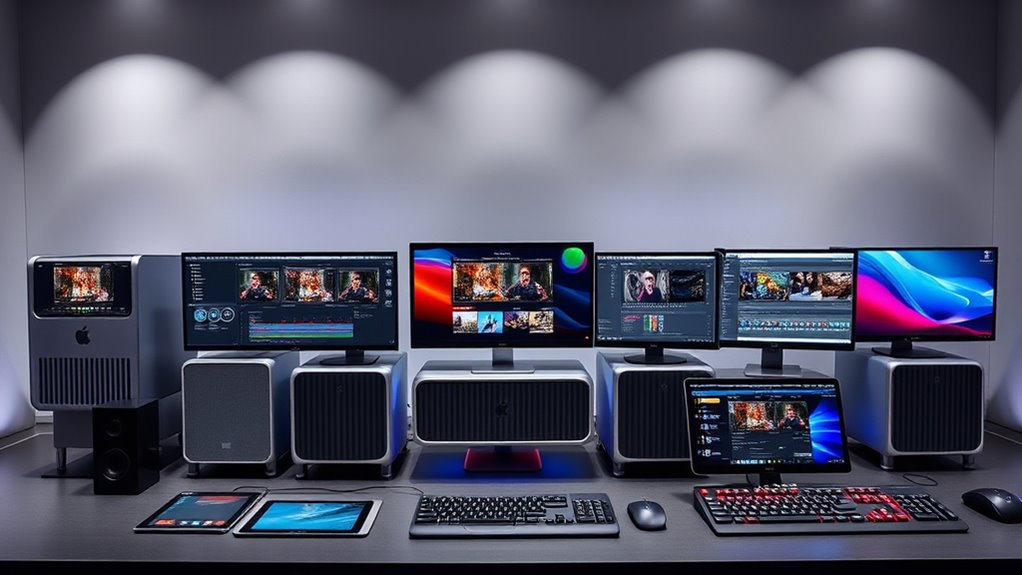

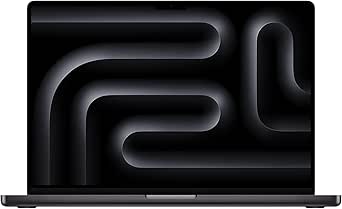
For professional video post, my best overall pick is the 16-inch MacBook Pro with M5 Max, 64GB memory, and 2TB SSD: it balances a large editing display, strong graphics resources, and practical capacity without stepping straight to the highest-memory configurations. The Mac Studio with M5 Max is a standout for a fixed, monitor-based suite, while the 128GB MacBook Pro models suit demanding timelines and memory-heavy workflows. The key tradeoffs are desktop performance and expandability versus laptop flexibility, and paying for extra memory or internal storage versus using fast external media. Read on for the full breakdown of how each configuration fits different post-production needs.

Turn quiet afternoons into listening time
- Thousands of audiobooks, podcasts and originals
- Listen on your phone, tablet or Echo — also offline
- Cancel anytime
Complete the kit


Key Takeaways
The 16-inch M5 Max with 64GB and 2TB is the most balanced laptop choice in this lineup, combining a spacious built-in display with capable memory and storage for varied post work.
The Mac Studio and MacBook Pro serve different workspaces: choose the Studio for a stationary edit suite with an external display, and a laptop when editing needs to travel between locations.
128GB memory is a workflow-specific upgrade, best justified by large projects, heavy multitasking, or demanding effects rather than by the word “professional” alone.
Two 14-inch M5 Max listings share the same core configuration; the listed color differs, so display size and desk setup matter more than choosing between those two entries.
The M5 Pro and renewed M3 Pro are narrower picks: they can suit less GPU-intensive work or tighter budgets, but they are not the strongest matches here for consistently demanding, effects-heavy post.




| mac pro for professional video post | Ports | Display | Memory | Storage |
|---|---|---|---|---|
| Apple Mac Studio Desktop Compu | Four Thunderbolt 5, two USB-C, two USB-A, HDMI, SDXC card slot, headphone jack | — | — | — |
| Apple MacBook Pro 14.2-inch wi | Three Thunderbolt 5, MagSafe 3, SDXC, HDMI, headphone jack | 14.2-inch Liquid Retina XDR | 64GB unified memory | 2TB SSD |
| Apple MacBook Pro Laptop with | Three Thunderbolt 5, MagSafe 3, SDXC, HDMI, headphone jack | 16.2-inch Liquid Retina XDR | 128GB unified memory | 2TB SSD |
| Apple 16.2-inch MacBook Pro wi | Three Thunderbolt 5, MagSafe 3, SDXC, HDMI, headphone jack | 16.2-inch Liquid Retina XDR | 48GB unified memory | 1TB SSD |
| Apple MacBook Pro with M3 Pro | Thunderbolt 4, HDMI, MagSafe 3, SDXC slot | 16-inch Liquid Retina XDR, 3456 x 2234 | 36GB | 512GB SSD; product data also lists 256GB hard drive size |
| Apple MacBook Pro 16.2-inch wi | 3 Thunderbolt 5, MagSafe 3, SDXC, HDMI, headphone jack | 16.2-inch Liquid Retina XDR | 128GB unified memory | 4TB SSD |
| Apple 2026 MacBook Pro Laptop | Three Thunderbolt 5, MagSafe 3, SDXC, HDMI, headphone jack | 16.2-inch Liquid Retina XDR | 36GB unified memory | 2TB SSD |
| Apple MacBook Pro 16.2-inch wi | Three Thunderbolt 5, MagSafe 3, SDXC, HDMI, headphone jack | 16.2-inch Liquid Retina XDR with Nano-Texture Glass | 64GB unified memory | 2TB SSD |
| Apple MacBook Pro 14.2-inch wi | Three Thunderbolt 5, MagSafe 3, SDXC card slot, HDMI, headphone jack | 14.2-inch Liquid Retina XDR | 64GB unified memory | 2TB SSD |
More Details on Our Top Picks
Apple Mac Studio Desktop Computer with M5 Max
For a post-production desk built around external monitors and fast media workflows, I rank the Mac Studio with M5 Max ahead of the portable MacBook options. Its compact enclosure, up to 128GB of unified memory, and memory bandwidth up to 614GB/s suit demanding editing, effects, and AI-assisted work without taking up much desk space. Four Thunderbolt 5 ports, USB-A, HDMI, and an SDXC slot also make it easier to connect displays, drives, and camera media directly. Compared with the 16.2-inch MacBook Pro with M5 Max and 128GB memory, this is the more desk-focused choice, while that laptop adds an integrated screen and battery operation. The tradeoff is clear: the Mac Studio is not portable, and the supplied product data does not specify its storage configuration, so I would check that before planning a media library.
Pros:- M5 Max platform is aimed at demanding creative and AI workloads
- Up to 128GB unified memory and up to 614GB/s memory bandwidth
- Broad port selection includes Thunderbolt 5, HDMI, USB-A, and SDXC
- Compact desktop supports up to five external displays
Cons:- Requires a separate display, keyboard, and pointing device
- Not suited to on-location editing without a separate portable computer
- The listed configuration does not specify memory or storage capacity
Best for: Video editors with a permanent studio desk, external display setup, and memory-intensive timelines or effects work.
Not ideal for: Editors who need to work on location or want a built-in display, battery, and specified internal storage in one system.
- Chip:Apple M5 Max
- Maximum unified memory:Up to 128GB
- Memory bandwidth:Up to 614GB/s
- Ports:Four Thunderbolt 5, two USB-C, two USB-A, HDMI, SDXC card slot, headphone jack
- External display support:Up to five displays
- Wireless:Wi-Fi 7, Bluetooth 6
- Dimensions:7.76 x 7.76 x 3.74 inches
- Weight:5.94 pounds
Our verdict“Choose the Mac Studio if your video-post workflow stays at a fixed desk and you want a compact M5 Max desktop with extensive display and peripheral support.”
Apple MacBook Pro 14.2-inch with M5 Max, 18-core CPU, 40-core GPU, 64GB Memory, 2TB SSD, Silver
I’d pick this 14.2-inch MacBook Pro with M5 Max for editors who need a high-performance system they can carry between a suite, set, and client review. The 18-core CPU, 40-core GPU, 64GB unified memory, and 2TB SSD make it a more fully specified mobile editing package than the desktop Mac Studio, which leaves storage configuration unspecified and requires a separate display. Its Liquid Retina XDR screen, HDMI, SDXC, and three Thunderbolt 5 ports help keep a compact workflow self-contained. The compromise is workspace: the 14.2-inch panel gives less room for a timeline and scopes than the 16.2-inch MacBook Pro with M5 Max and 128GB memory. That larger model also offers twice the listed memory. I’d choose this one for mobility, not for the biggest built-in canvas or the most memory headroom.
Pros:- M5 Max with an 18-core CPU and 40-core GPU
- 64GB unified memory and a specified 2TB SSD
- Liquid Retina XDR display in a more compact laptop format
- Thunderbolt 5, HDMI, and SDXC support for common post-production connections
Cons:- 14.2-inch screen offers less timeline and panel space than the 16.2-inch MacBook Pro models
- At 5.5 pounds, it is not especially light for frequent travel
- Listed memory is lower than the 128GB configuration available in this roundup
Best for: Editors who move between locations and need an M5 Max laptop with a defined 2TB internal SSD and 64GB memory.
Not ideal for: Colorists or editors who want a larger built-in viewing area, or workflows that benefit from the 128GB memory listed on the 16.2-inch M5 Max model.
- Chip:Apple M5 Max
- CPU:18-core
- GPU:40-core
- Display:14.2-inch Liquid Retina XDR
- Memory:64GB unified memory
- Storage:2TB SSD
- Ports:Three Thunderbolt 5, MagSafe 3, SDXC, HDMI, headphone jack
- External display support:Up to four displays
Our verdict“Choose this 14.2-inch M5 Max when you need a specified 2TB SSD and strong editing hardware in a laptop-sized setup, and can accept a smaller screen.”
Apple MacBook Pro Laptop with M5 Max, 16.2-inch Display, 128GB Memory, 2TB SSD, Space Black
When large projects and multiple demanding apps are the priority, I’d put this 16.2-inch MacBook Pro with 128GB unified memory ahead of the 64GB M5 Max laptop in this batch. That extra listed memory gives a mobile workstation more room for complex timelines and layered creative workloads, while the 2TB SSD provides defined internal space for active media and applications. Its 18-core CPU and 40-core GPU pair with a Liquid Retina XDR display, HDMI, SDXC, and Thunderbolt 5, so it can serve both as a portable edit station and a desk system. Compared with the Mac Studio with M5 Max, it costs you no separate monitor to get started and can move with you; the Studio, however, supports up to five external displays. The laptop’s larger body and unspecified battery-life details in the supplied specs make portability less effortless than the name suggests.
Pros:- 128GB unified memory, the largest listed laptop configuration in this batch
- M5 Max with an 18-core CPU and 40-core GPU
- 2TB SSD provides specified internal storage for active projects
- 16.2-inch Liquid Retina XDR display and built-in HDMI and SDXC
Cons:- Large 16.2-inch chassis is less convenient for frequent travel than the 14.2-inch M5 Max model
- The listed configuration tops out at 128GB of memory
- Supplied product data does not specify a battery-life figure
Best for: Editors who need a laptop for memory-heavy timelines, large creative projects, and work across studio and remote locations.
Not ideal for: Buyers who mainly edit at a permanent multi-display desk, or who need more than 128GB of unified memory.
- Processor:Apple M5 Max, 18-core CPU
- GPU:40-core GPU
- Display:16.2-inch Liquid Retina XDR
- Memory:128GB unified memory
- Storage:2TB SSD
- Ports:Three Thunderbolt 5, MagSafe 3, SDXC, HDMI, headphone jack
- Wireless:Wi-Fi 7, Bluetooth 6
- Camera:12MP Center Stage
Our verdict“Choose this model if you need the strongest listed memory headroom in a portable M5 Max editing system and can live with a large laptop.”
Apple 16.2-inch MacBook Pro with M5 Pro, 18-core CPU, 20-core GPU, 48GB Memory, and 1TB SSD (Space Black)
This 16.2-inch MacBook Pro with M5 Pro is the balanced pick for editors who want a large built-in XDR screen and substantial memory without moving to the M5 Max configurations. Its 48GB unified memory and 18-core CPU give a professional workflow more headroom than a basic portable setup, while the 20-core GPU is a step down from the 40-core GPU in both M5 Max MacBook Pros here. That difference makes it a less compelling fit for especially GPU-heavy effects work, but it can be a sensible match for editing and finishing workflows that do not need the higher-tier graphics configuration. Compared with the renewed M3 Pro 16-inch model, it offers a newer M5 Pro chip, more listed memory, and Thunderbolt 5 rather than Thunderbolt 4. The 1TB SSD is the main practical limit for local media libraries.
Pros:- 18-core M5 Pro CPU and 48GB unified memory
- 16.2-inch Liquid Retina XDR display gives more workspace than the 14.2-inch model
- Thunderbolt 5, HDMI, and SDXC support for post-production peripherals and media
- All-day battery life is listed in the product description
Cons:- 20-core GPU has fewer cores than the 40-core GPU in the M5 Max laptops
- 1TB SSD may require external or network storage for media-heavy projects
- Listed weight is 4.71 pounds, which may be cumbersome for regular travel
Best for: Professional editors who want a large-screen laptop, 48GB memory, and a newer M5 Pro platform without prioritizing M5 Max graphics.
Not ideal for: Editors working with GPU-intensive effects or large local media libraries who would benefit from an M5 Max GPU or more than 1TB of internal storage.
- Chip:Apple M5 Pro
- CPU:18-core
- GPU:20-core
- Display:16.2-inch Liquid Retina XDR
- Memory:48GB unified memory
- Storage:1TB SSD
- Ports:Three Thunderbolt 5, MagSafe 3, SDXC, HDMI, headphone jack
- Weight:4.71 pounds
Our verdict“Choose the M5 Pro 16-inch MacBook Pro for a large-screen professional laptop with meaningful memory capacity, provided your work does not demand M5 Max-class graphics.”
Apple MacBook Pro with M3 Pro Chip (16-inch, 36GB RAM, 512GB SSD) – Silver (Renewed)
Among these five options, the renewed 16-inch MacBook Pro with M3 Pro is the previous-generation route into a large-screen editing laptop. Its 36GB of unified memory, 18-core GPU, and Liquid Retina XDR display can suit professional post work, while Thunderbolt 4, HDMI, MagSafe 3, and SDXC cover common studio connections. Against the 16.2-inch MacBook Pro with M5 Pro and 48GB memory, this model has less listed memory and an older chip generation; its 512GB SSD also leaves less room for active footage than the newer model’s 1TB drive. I’d treat it as a fit for editors whose projects and storage plan match those limits, not as an equivalent to the M5 Max systems for the heaviest workloads. The renewed condition and conflicting storage details in the supplied data call for careful configuration verification before purchase.
Pros:- 16-inch Liquid Retina XDR display with 3456 x 2234 resolution
- 36GB unified memory and 18-core GPU
- HDMI, SDXC, MagSafe 3, and Thunderbolt 4 connectivity
- Large battery capacity is listed at 99.6 watt-hours
Cons:- M3 Pro is an older generation than the M5 Pro and M5 Max systems in this roundup
- 512GB SSD is limited for keeping active video projects locally
- Product data also lists a 256GB hard drive size, so the storage configuration needs verification
Best for: Editors seeking a renewed 16-inch MacBook Pro for moderate professional workloads, with external storage planned for media.
Not ideal for: Editors who need the latest chip generation, large internal project storage, or a clearly verified storage configuration for a production system.
- Processor:Apple M3 Pro, 12-core
- Graphics:18-core GPU
- Display:16-inch Liquid Retina XDR, 3456 x 2234
- Memory:36GB
- Storage:512GB SSD; product data also lists 256GB hard drive size
- Connectivity:Wi-Fi 6E, Bluetooth 5.3
- Ports:Thunderbolt 4, HDMI, MagSafe 3, SDXC slot
- Weight:4.7 pounds
Our verdict“Choose this renewed M3 Pro only if its verified configuration fits your workload and you are prepared to rely on external storage.”
Apple MacBook Pro 16.2-inch with M5 Max, 18-core CPU, 40-core GPU, 128GB Memory, 4TB SSD, Space Black
For post teams carrying large timelines, layered effects, and high-resolution source media between locations, this configuration pairs the M5 Max 40-core GPU with 128GB unified memory and a 4TB SSD. That memory and local capacity give demanding projects more room before workflows have to depend on external storage or compromises in active media. Compared with the 64GB, 2TB 16-inch M5 Max, this model is the stronger fit for unusually memory-hungry sessions, though both list the same CPU and GPU core counts. The 16.2-inch Liquid Retina XDR display and ports including HDMI, SDXC, and three Thunderbolt 5 connections also suit a mobile edit station. The tradeoff is its listed 8.2-pound weight; editors who move around often may prefer the lighter 14-inch option.
Pros:- 128GB unified memory offers substantial headroom for demanding multitasking and large creative sessions.
- 4TB SSD provides more built-in workspace for active project media than the 2TB configurations.
- M5 Max with an 18-core CPU and 40-core GPU is suited to intensive video and graphics workloads.
- Liquid Retina XDR display and HDMI, SDXC, and Thunderbolt 5 ports support a capable mobile editing setup.
Cons:- Listed weight of 8.2 pounds makes it a cumbersome choice for frequent travel.
- Its memory and storage advantages may be unnecessary for editors with modest timelines or established external-storage workflows.
- The 16.2-inch chassis is less compact than the 14.2-inch M5 Max alternative.
Best for: Professional editors who keep complex, high-resolution projects and substantial media libraries on their laptop and need generous unified memory for active post-production work.
Not ideal for: Editors who prioritize a lightweight daily carry or whose projects fit comfortably within 64GB of memory and 2TB of storage.
- Processor:Apple M5 Max, 18-core CPU
- Graphics:40-core GPU
- Display:16.2-inch Liquid Retina XDR
- Memory:128GB unified memory
- Storage:4TB SSD
- Weight:8.2 pounds
- Ports:3 Thunderbolt 5, MagSafe 3, SDXC, HDMI, headphone jack
- Wireless:Wi-Fi 7, Bluetooth 6
Our verdict“Choose this 16-inch configuration if maximum built-in memory and storage matter more to your post workflow than carrying weight.”
Apple 2026 MacBook Pro Laptop with M5 Max Chip, 16.2-inch Liquid Retina XDR Display, 36GB RAM, 2TB SSD, Space Black
This 16-inch model keeps the M5 Max 18-core CPU and a 32-core GPU, but its 36GB of unified memory is a more modest match for professional post than the 64GB and 128GB options in this group. That makes it a fit for editors who want M5 Max-class processing and a large XDR workspace without needing the highest listed memory capacity. Compared with the 40-core GPU models, it has fewer GPU cores, so those seeking more graphics headroom may prefer the 64GB 16-inch configuration or the 14-inch 40-core option. The 2TB SSD and familiar SDXC, HDMI, and Thunderbolt 5 selection help with active editing and media ingest. Its listed 4.73-pound weight is lighter than the other 16-inch entries here, but it remains a sizable laptop, and release availability is listed as limited.
Pros:- M5 Max 18-core CPU provides a strong processing foundation for professional creative work.
- 16.2-inch Liquid Retina XDR display offers a generous on-laptop editing workspace.
- 2TB SSD provides built-in storage for active project files and media.
- Thunderbolt 5, HDMI, and SDXC connections support common editing and ingest setups.
Cons:- 36GB unified memory is less headroom than the 64GB and 128GB models in this roundup.
- 32-core GPU has fewer cores than the 40-core M5 Max configurations listed here.
- Limited availability and a 2026 release listing may complicate purchase planning.
Best for: Editors seeking a 16-inch M5 Max laptop for professional projects that do not require the 64GB-or-higher memory configurations in this roundup.
Not ideal for: Editors working with very large, memory-heavy timelines or intensive GPU effects who would benefit from the 40-core GPU and higher memory options available in the other M5 Max models.
- Processor:Apple M5 Max, 18-core CPU
- Graphics:32-core M5 Max GPU
- Display:16.2-inch Liquid Retina XDR
- Memory:36GB unified memory
- Storage:2TB SSD
- Battery life:All-day
- Ports:Three Thunderbolt 5, MagSafe 3, SDXC, HDMI, headphone jack
- Wireless:Wi-Fi 7, Bluetooth 6
Our verdict“Choose this model for a 16-inch M5 Max editing laptop if your projects do not call for the higher memory and GPU specifications of the other configurations.”
Apple MacBook Pro 16.2-inch with M5 Max, 18-core CPU, 40-core GPU, 64GB Memory, 2TB SSD, Nano-Texture Glass, Space Black
This 16-inch MacBook Pro combines the M5 Max 40-core GPU with 64GB of unified memory, making it a balanced choice for demanding video post when 128GB and 4TB would be more capacity than the job requires. Its distinguishing feature is the Nano-Texture Glass display: it is the option to examine if reflections are a recurring distraction in your editing space. Compared with the 128GB, 4TB 16-inch model, it gives up memory and storage while retaining the same listed CPU and GPU core counts. Compared with the 14-inch 40-core model, it offers a larger screen, but the listed 7.4-pound weight makes it less appealing for frequent travel. Thunderbolt 5, HDMI, and SDXC support a practical workstation setup, while the screen treatment and lower capacity are the key reasons to choose this configuration.
Pros:- Nano-Texture Glass is a distinguishing display option for workspaces where reflections are a concern.
- M5 Max with a 40-core GPU supports demanding graphics and video workloads.
- 64GB unified memory and a 2TB SSD provide substantial resources for many professional projects.
- 16.2-inch Liquid Retina XDR display and broad port selection suit a desk-based mobile workstation.
Cons:- Listed weight of 7.4 pounds makes frequent carrying less convenient than the 14-inch alternative.
- 64GB memory and 2TB storage offer less capacity than the 128GB, 4TB configuration.
- The larger display and Nano-Texture option may be less useful to editors who primarily work with an external reference monitor.
Best for: Editors who want a large-screen M5 Max workstation and often work where display reflections interfere with reviewing footage.
Not ideal for: Mobile editors who need a lighter machine, or post professionals whose projects call for more than 64GB memory or 2TB of internal storage.
- Processor:Apple M5 Max, 18-core CPU
- Graphics:40-core GPU
- Display:16.2-inch Liquid Retina XDR with Nano-Texture Glass
- Memory:64GB unified memory
- Storage:2TB SSD
- Weight:7.4 pounds
- Ports:Three Thunderbolt 5, MagSafe 3, SDXC, HDMI, headphone jack
- Camera:12MP Center Stage
Our verdict“Pick this configuration if you want a 16-inch M5 Max editing machine and the Nano-Texture display suits your working environment.”
Apple MacBook Pro 14.2-inch with M5 Max, 18-Core CPU, 40-Core GPU, 64GB Memory, 2TB SSD, Space Black
For editors who need M5 Max performance in a smaller display footprint, this 14.2-inch model pairs an 18-core CPU and 40-core GPU with 64GB of unified memory and a 2TB SSD. It keeps the same listed chip core counts and memory as the 16.2-inch 64GB M5 Max, so the choice is less about processing specifications and more about screen area and portability. The smaller built-in display can make detailed timeline work and side-by-side panels feel tighter; the 16-inch Nano-Texture model is a better fit when workspace matters more than size. This configuration still provides HDMI, SDXC, and three Thunderbolt 5 ports for an external editing setup. The listed 7-pound weight is a notable drawback for a compact-class laptop, so buyers should compare actual carrying needs rather than assume the smaller screen means a light bag.
Pros:- M5 Max 18-core CPU and 40-core GPU match the listed core counts of the 16-inch 64GB alternative.
- 64GB unified memory and 2TB SSD suit substantial professional projects.
- 14.2-inch display occupies less desk space than the 16.2-inch models.
- HDMI, SDXC, and three Thunderbolt 5 ports support media ingest and external displays.
Cons:- Smaller display provides less room for timelines, scopes, and panels than the 16.2-inch models.
- Listed weight of 7 pounds is substantial for a compact-screen laptop.
- Offers no memory or storage advantage over the 16-inch 64GB, 2TB configuration.
Best for: Editors who need an M5 Max laptop with a smaller screen footprint for tight workspaces or mixed mobile and external-monitor setups.
Not ideal for: Editors who rely on a spacious built-in timeline and frequent panel arrangement, or buyers prioritizing the lightest travel system.
- Chip:Apple M5 Max
- CPU:18-core
- GPU:40-core
- Display:14.2-inch Liquid Retina XDR
- Memory:64GB unified memory
- Storage:2TB SSD
- Weight:7 pounds
- Ports:Three Thunderbolt 5, MagSafe 3, SDXC card slot, HDMI, headphone jack
Our verdict“Choose this 14-inch M5 Max when the smaller screen footprint matters more than having the wider built-in editing workspace of the 16-inch models.”

How We Picked
I ranked these nine Apple configurations for professional video post by weighing the demands that shape real editing decisions: chip tier, memory capacity, internal storage, screen size, and whether the machine is a desktop or portable system. I favored configurations that offer a useful balance for editing, color work, effects, and multitasking rather than treating the largest specification as an automatic winner. A larger built-in display can help when working away from a reference monitor, while more memory matters most when projects and applications create sustained pressure on system resources.
The ranking also reflects fit and tradeoffs. The 16-inch M5 Max models rise for combining a substantial screen with powerful graphics options; the Mac Studio ranks highly for a dedicated suite but gives up portability. I placed M5 Pro and renewed M3 Pro configurations lower for this demanding use case, while recognizing that they may make sense for lighter post work. Product names and configurations are judged as listed; I do not assume unprovided details such as ports, thermal performance, or benchmark results.
| mac pro for professional video post | Processor |
|---|---|
| Apple Mac Studio Desktop Compu | — |
| Apple MacBook Pro 14.2-inch wi | — |
| Apple MacBook Pro Laptop with | Apple M5 Max, 18-core CPU |
| Apple 16.2-inch MacBook Pro wi | — |
| Apple MacBook Pro with M3 Pro | Apple M3 Pro, 12-core |
| Apple MacBook Pro 16.2-inch wi | Apple M5 Max, 18-core CPU |
| Apple 2026 MacBook Pro Laptop | Apple M5 Max, 18-core CPU |
| Apple MacBook Pro 16.2-inch wi | Apple M5 Max, 18-core CPU |
| Apple MacBook Pro 14.2-inch wi | — |
Factors to Consider When Choosing Mac Pro For Professional Video Post
Choosing a Mac for post-production is less about buying the biggest specification and more about matching the system to your footage, software, working habits, and storage plan. These broader checks can help avoid spending on capacity your workflow will not use—or running short where it matters.
Match Memory to the Whole Project
Memory demand comes from more than the video editor: compositing tools, audio software, browser tabs, and background renders all compete for working space. The 64GB configurations in this lineup offer a substantial starting point for many professional workflows, while 128GB is more defensible for complex projects, large assets, or frequent multitasking across demanding apps. Do not choose a high-memory model solely because a project is high resolution; codec, effects, timeline complexity, and application behavior also affect resource use. If your current system regularly stalls when several tools are open, memory may be a more meaningful upgrade than extra internal storage. Check the requirements of your actual software and the nature of your typical projects before moving up a tier.
Plan Storage Around Active Media
Internal SSD capacity affects how much active work, cache, and application data can live on the machine, but it does not have to hold an entire archive. A 1TB configuration can require a disciplined external-drive workflow, while 2TB or 4TB provides more room for active projects and working files. Fast external storage can be a practical way to separate media from the computer, but it adds another device to manage and can complicate travel or shared-suite handoffs. Keep backups distinct from working media; a larger internal drive is not a backup strategy. Estimate the size of current projects, proxies, caches, and deliverables before deciding which capacity is worth paying for.
Choose the Right Screen and Workstation Layout
A 16-inch MacBook Pro gives more built-in room for a timeline, scopes, and panels than a 14-inch model, which can reduce cramped layouts when you edit away from a desk. A 14-inch system is easier to carry and can still work well when paired with an external display at the main workstation. The Mac Studio makes the most sense when your workflow already centers on a separate monitor, keyboard, and fixed editing space. For color-critical work, think beyond screen size: viewing conditions, calibration, and a suitable reference display can matter more than the laptop panel alone. Avoid paying for portability you rarely use, or buying a desktop that does not fit a mobile workflow.
Buy for the Workload, Not the Job Title
“Professional video” covers a wide range, from straightforward editorial and delivery to layered effects work and complex finishing. The M5 Max options are the strongest fit in this group for graphics-heavy demands, while the M5 Pro model may be a better match for editors whose projects place less emphasis on GPU-intensive work. A renewed M3 Pro can also make sense if the workload is lighter and the buyer accepts the condition and support questions that come with a renewed product. Avoid assuming every codec or export task scales in the same way with a higher chip tier. Use your application mix and the most demanding projects you regularly handle as the basis for the purchase.
Decide Whether Portability Pays for Itself
A laptop costs you less in setup friction when work moves between a studio, client site, and home, and its built-in display offers a self-contained editing station. A desktop can be a better fit when the machine stays in one place and the workflow uses a larger external display and fixed peripherals. The tradeoff is not simply laptop versus desktop performance: it includes how often you travel, whether you need to review work on location, and how your team shares media. A portable system can become the primary workstation when docked, but that convenience does not remove the need for external storage or a proper display in a fixed suite. Choose the form factor that supports your actual schedule rather than a hypothetical one.
Treat Renewed Condition as a Separate Decision
A renewed computer should be evaluated on its specific condition, seller terms, included accessories, and available support—not just its chip name. The M3 Pro listing may appeal to buyers whose post workload is moderate, but a newer M5 configuration offers a different performance tier and a longer runway for demanding work. Before buying renewed, confirm what condition description means, what return options apply, and whether the device has been checked for issues that affect daily editing. Also account for battery condition on a laptop and the cost of any storage or memory limitations you cannot change later. A lower initial outlay is only useful if the machine fits the project demands and support expectations.
Frequently Asked Questions
Is the Mac Studio a better choice than a MacBook Pro for a fixed editing suite?
The Mac Studio is the more natural fit if the computer will stay at a desk and you already use an external display, keyboard, and other peripherals. It avoids paying for a built-in laptop screen and battery that may go unused. A MacBook Pro remains appealing if you sometimes edit on location or want one computer for both desk and travel work. Your monitor and storage setup matter too, since neither form factor replaces a sound media and backup plan. Pick the Studio for a settled workspace; choose the laptop if mobility is part of the job.
Should I choose 64GB or 128GB of memory for professional editing?
For many editing workflows, 64GB is the more balanced choice in this lineup, particularly when projects are moderate in complexity and applications are not all running at once. The 128GB configurations make more sense when large projects, demanding compositing, or heavy multitasking regularly strain available memory. Higher capacity is not a substitute for a suitable GPU, fast media storage, or efficient project management. Review your current workflow for memory pressure rather than assuming that every professional needs the maximum configuration. If you cannot identify recurring memory limits, the lower capacity may leave more room in your budget for storage or displays.
Is the 14-inch M5 Max enough for editing, or should I get a 16-inch model?
The 14-inch M5 Max configurations listed here pair the same stated 64GB memory and 2TB SSD with a smaller display than the 16-inch options. They can suit editors who prioritize carrying a compact workstation and often connect to a larger monitor. The 16-inch models provide more built-in screen area for timelines, panels, and review when working away from a desk. The right choice depends more on how you edit than on the chip tier alone. If the laptop screen is your main workspace, the larger model is likely the more comfortable fit; if you dock often, the smaller one may be easier to carry.
Can a 1TB or 512GB MacBook Pro handle a professional video workflow?
It can, but a smaller internal SSD calls for a more deliberate storage setup. External project drives can hold active media, while the internal drive remains available for the operating system, applications, caches, and selected working files. This arrangement adds a device to carry and requires consistent file management, especially when moving between locations or handing projects to others. The 2TB and 4TB configurations offer more breathing room for local work, but they do not remove the need for backups. Choose capacity based on active project size and how reliably your workflow supports external media.
Does the renewed M3 Pro make sense for paid post-production work?
It may suit paid work when projects are less demanding and the buyer values a lower-tier configuration over the latest M5 Max systems. It is a weaker match for sustained, graphics-heavy post work than the M5 Max options in this roundup, so project complexity should drive the decision. Check the renewed unit’s condition details, return terms, and support coverage before relying on it for client deadlines. Also account for the listed 36GB memory and 512GB SSD, which may call for tighter application and storage management. For a primary workstation handling demanding jobs, a newer and better-specified option is the safer fit.
Conclusion
For most editors seeking one powerful, portable workstation, I recommend the 16-inch M5 Max MacBook Pro with 64GB memory and 2TB SSD as the best overall balance in this group. The Mac Studio with M5 Max is my best value for a fixed, monitor-based suite when portability is unnecessary, while the 16-inch M5 Max with 128GB memory and 4TB SSD is the best premium choice for large projects and demanding multitasking. Beginners stepping into professional post can start with the 16-inch M5 Pro if their workload is not heavily GPU-dependent; the renewed M3 Pro is a more cautious fit for lighter work when its condition and support terms check out. For specific needs, choose the 14-inch M5 Max for a more portable high-performance setup, or the nano-texture 16-inch model if its display finish suits your workspace. Match memory and storage to actual projects, then choose the form factor that fits where you edit.
Halloween Picks
halloween
As an affiliate, we earn on qualifying purchases.