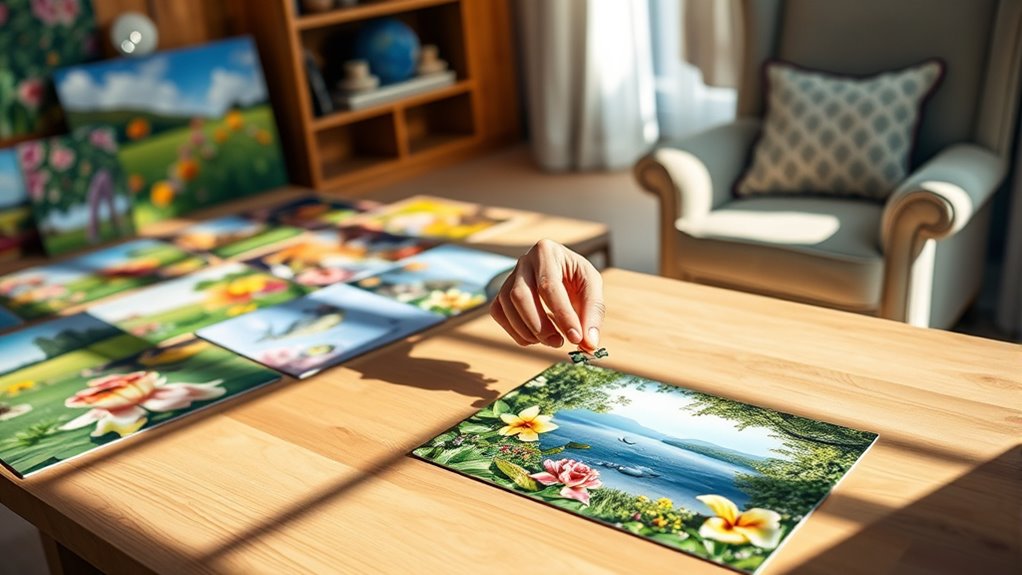

If you’re looking for the best puzzles for seniors with dementia, I’ve found some excellent options that really stimulate the mind and memory. Many of these puzzles feature large, easy-to-handle pieces with vibrant images and themes that promote recognition. You can choose from multi-pack sets, geometric puzzles, or engaging memory activity books tailored for cognitive engagement. Stick around, and I’ll share my top 15 picks that can make a difference for your loved one.
Key Takeaways
- Choose puzzles with large, easy-to-handle pieces and high-contrast images to enhance visual interest and accessibility for seniors with limited dexterity.
- Look for themed puzzles featuring familiar objects and scenes to stimulate memory recall and encourage reminiscence therapy.
- Opt for multi-pack sets that provide variety, promoting extended engagement and cognitive stimulation through diverse puzzle types.
- Select puzzles made from durable, non-toxic materials, ensuring safety and longevity for repeated use.
- Consider cognitive complexity to match the user’s skill level, preventing frustration while fostering a sense of achievement.
4-Pack Large Piece Puzzles for Seniors and Kids
When I think about the best puzzles for seniors with dementia, the 4-Pack Large Piece Puzzles stand out due to their vibrant colors and big, thick pieces that are easy to grip. This set includes four seasonal themes, making it visually engaging and enjoyable for everyone. The large pieces are perfect for those with limited dexterity, helping to improve cognitive functions and hand-eye coordination. Plus, the letter markings on the back assist beginners, making it a great tool for family bonding. I love how these puzzles foster interaction, providing a screen-free activity that’s both fun and therapeutic for all ages.
Best For: Seniors with dementia and children aged 4-10 looking for engaging and therapeutic puzzle activities.
Pros:
- Vibrant colors and large, thick pieces make the puzzles easy to grip, enhancing accessibility for seniors and children.
- Includes letter markings on the back to aid beginners, fostering a supportive learning environment.
- Encourages family bonding and provides a screen-free activity that promotes cognitive development and interaction.
Cons:
- Limited to 100 pieces, which may be too easy for older children or advanced puzzlers seeking a greater challenge.
- Seasonal themes may not appeal to everyone year-round, potentially limiting usage.
- Some users may prefer more complex puzzle options, which this set does not offer.
6 Pack Large Piece Puzzles for Seniors
Pack large piece puzzles are an excellent choice for seniors, especially those in the early to mid-stages of dementia. I love how these puzzles come in a set of six, each measuring 15 x 10 inches, perfect for visual engagement. The large pieces are easy to handle, with a unique texture that makes assembly simple for those with limited dexterity. The vibrant colors and intricate designs truly capture attention. Plus, the eco-friendly materials guarantee durability for repeated use. With clear instructions and supportive customer service, these puzzles provide both joy and cognitive stimulation, making them a wonderful gift for loved ones.
Best For: Seniors, especially those in the early to mid-stages of dementia, who are seeking engaging and stimulating activities.
Pros:
- Large pieces make handling easy for seniors with limited dexterity.
- Vibrant colors and intricate designs stimulate visual senses and promote engagement.
- Eco-friendly materials ensure durability and safety for repeated use.
Cons:
- Limited complexity may not challenge seniors who enjoy more intricate puzzles.
- Size limitations of 15 x 10 inches may not appeal to those preferring larger puzzles.
- Not suitable for advanced stages of dementia, as they may require more cognitive engagement.
6 Pack Large Piece Puzzles for Seniors
Large piece puzzles are an excellent choice for seniors in the early to mid-stages of dementia, as they offer both engagement and enjoyment without overwhelming complexity. I find these 6 pack large piece puzzles particularly beneficial. Each puzzle features 16 large, easy-to-handle pieces, making them perfect for unsteady hands. The unique embossing enhances grip, ensuring a comfortable experience. Plus, the included storage bags keep everything organized. These puzzles not only stimulate cognitive activity but also foster a sense of accomplishment. With a 3-year service guarantee, I feel confident that support is available whenever needed.
Best For: Seniors in the early to mid-stages of dementia looking for engaging and enjoyable cognitive activities.
Pros:
- Large, easy-to-handle pieces designed for seniors with unsteady hands.
- Unique embossing enhances grip, providing a comfortable puzzling experience.
- Includes storage bags and reference cards for organization and clarity.
Cons:
- Limited complexity may not challenge more advanced puzzlers.
- Puzzles may not appeal to those who prefer traditional smaller piece puzzles.
- Discreet packaging may not clearly convey the product’s purpose to some buyers.
6 Pack Large Piece Jigsaw Puzzles for Seniors
Designed specifically for seniors, the 6 Pack of Large Piece Jigsaw Puzzles offers an excellent choice for those living with dementia or Alzheimer’s. Each puzzle features 48 large, thick pieces, making them easy to grip and assemble. The vibrant patterns, like flowers and beaches, spark joy while promoting concentration and cognitive skills. I love that they come in a sturdy storage box, making them perfect for gifting. Plus, I can work on these puzzles with family, fostering connection and fun. With a high customer rating, it’s easy to see why these puzzles are so popular among seniors and caregivers alike.
Best For: Seniors, elderly individuals, and caregivers looking for engaging and easy-to-assemble puzzles to promote cognitive skills and social interaction.
Pros:
- Large, thick pieces make it easy for seniors to grip and assemble, enhancing dexterity.
- Vibrant patterns provide visual stimulation and enjoyment while completing the puzzles.
- Sturdy storage box makes it convenient for gifting and keeping puzzles organized.
Cons:
- Limited number of pieces (48) may not provide enough challenge for more experienced puzzlers.
- Patterns may not appeal to all seniors, depending on personal preferences.
- No specific branding related to dementia or Alzheimer’s may lead some caregivers to overlook the product for these needs.
Dementia Activities for Seniors – Geometric & Cognitive Training Puzzles
When considering activities for seniors with dementia, geometric and cognitive training puzzles stand out as an excellent choice. These puzzles engage the mind with numbers, shapes, and colors, creating a joyful experience. I love how they come with large, easy-to-handle pieces, making them accessible for everyone. Seniors can match blocks to a numbered base or simply explore colors and shapes. This repetitive play not only stimulates cognitive functions but also enhances motor skills. Whether in nursing homes or as thoughtful gifts for family members, these puzzles offer therapeutic benefits and a sense of accomplishment that’s invaluable.
Best For: Seniors with dementia seeking cognitive engagement and therapeutic activities through enjoyable puzzles.
Pros:
- Large, easy-to-handle pieces make it accessible for seniors with limited dexterity.
- Engages cognitive functions through matching and color exploration, promoting learning and joy.
- Provides a sense of accomplishment and enhances motor skills through repetitive play.
Cons:
- May not provide enough challenge for seniors with mild cognitive impairment.
- Limited variety in puzzle designs could lead to boredom over time.
- Requires supervision to ensure safety and proper engagement for some seniors.
6 Pack Large Jigsaw Puzzle for Seniors
Finding the right puzzle for seniors with dementia can be challenging, but this pack of large jigsaw puzzles stands out thanks to its thoughtful design. With six sets of 36-piece puzzles, each featuring vibrant animal and scenic themes, I know they’ll capture interest and spark joy. The large pieces are easy to handle, making assembly smooth and enjoyable. Plus, the included matching posters and storage bags keep everything organized. Crafted from durable materials, these puzzles promote cognitive health, offering a meaningful activity that exercises memory and engagement. It’s the perfect gift for seniors, especially those with Alzheimer’s, fostering connection and creativity.
Best For: Seniors, particularly those with dementia or Alzheimer’s, looking for engaging and manageable puzzle activities.
Pros:
- Promotes cognitive health and memory exercise through enjoyable activity.
- Large, easy-to-handle pieces designed specifically for seniors with visual considerations.
- Includes matching posters and storage bags for organization and convenience.
Cons:
- Limited to 36 pieces, which may not be challenging enough for some users.
- The specific themes may not appeal to all seniors’ interests.
- Durable materials may come at a higher price point compared to standard puzzles.
Dementia Activities for Seniors Wooden Puzzles and Cognitive Training Games
For seniors struggling with dementia or Alzheimer’s, the 15 Best Puzzles stand out as an ideal choice due to their engaging, shape-based activities that stimulate cognitive function and keep hands busy. I love how these wooden puzzles come with 78 difficulty levels, catering to various abilities while promoting mental interaction. Their colorful designs capture attention and encourage seniors to stay engaged. The simple game rules—placing blocks into a bottom plate—foster cognitive thinking and provide a flexible challenge. Plus, they’re durable and adult-sized, making them perfect for anyone in nursing homes or with cognitive needs.
Best For: Seniors with dementia or Alzheimer’s looking for engaging activities that stimulate cognitive function and keep hands busy.
Pros:
- Promotes mental interaction with 78 difficulty levels suitable for various abilities.
- Colorful design captures attention and encourages ongoing engagement.
- Durable and adult-sized, making them ideal for seniors in nursing homes or with cognitive needs.
Cons:
- May require assistance for some seniors who struggle with motor skills.
- Limited appeal for seniors who prefer more traditional forms of entertainment.
- Size may be cumbersome for those with limited dexterity.
Puzzles Gifts for Dementia and Alzheimer’s Activities for Seniors
Engaging seniors with dementia or Alzheimer’s can be challenging, yet the “15 Best Puzzles for Seniors With Dementia” offer an ideal solution. These wooden puzzles, measuring 5.9 inches by 5.9 inches, feature vibrant designs that attract and maintain interest. They come with varying difficulty levels, making them suitable for everyone. I love how easy they are to use; seniors can fit colorful blocks into matching spaces independently or with help. Not only do these puzzles stimulate cognitive engagement, but they also provide a sense of accomplishment and reduce loneliness. They make perfect gifts, showing love while keeping seniors mentally active.
Best For: Seniors with dementia and Alzheimer’s who need engaging activities to promote cognitive stimulation and reduce feelings of loneliness.
Pros:
- Durable Material: Made from sturdy wood, ensuring longevity and resilience for frequent use.
- Varied Difficulty Levels: Accommodates a range of skill levels, allowing seniors to enjoy the puzzles at their own pace.
- Promotes Interaction: Encourages family members to participate, fostering connection and companionship during activities.
Cons:
- Size Limitation: The 5.9 inches by 5.9 inches size may not be suitable for all seniors, especially those with visual impairments.
- Limited Complexity: Some may find the puzzles too simplistic, potentially leading to boredom over time.
- Dependency on Assistance: Seniors with advanced dementia may require significant help, limiting their independence during the activity.
12 Pcs Reusable Word Search Cards for Dementia Game
The 12 Pcs Reusable Word Search Cards for Dementia Game stand out as an excellent choice for seniors with Alzheimer’s or dementia, offering just the right level of challenge to stimulate their minds without causing frustration. Each card features large, clear print, making it easy for seniors with vision impairments to read. I love that they’re crafted from durable materials, ensuring they’ll last through repeated use. Plus, the themed content keeps things fresh and engaging. These cards aren’t just fun; they’re perfect gifts for special occasions, fostering connection and mental stimulation while enhancing cognitive engagement in a joyful way.
Best For: Seniors with Alzheimer’s or dementia seeking engaging and stimulating activities to enhance cognitive function.
Pros:
- High-quality materials with large, clear print for easy readability, accommodating seniors with vision impairments.
- Reusable design with themed content that provides ongoing mental stimulation and variety.
- Ideal for gifting on special occasions, promoting social interaction and connection among seniors.
Cons:
- May not provide enough challenge for individuals with higher cognitive abilities.
- Limited to word search format, which may not appeal to everyone’s interests.
- Requires additional maintenance (e.g., erasing) to keep cards in pristine condition after use.
Dementia Activities Wooden Matching Puzzle Games for Seniors
Designed specifically for seniors with dementia, the Dementia Activities Wooden Matching Puzzle Games offer a vibrant and stimulating way to enhance mental engagement. With 120 colorful pieces, this activity captivates attention and promotes joy while sharpening cognitive skills. The sturdy wooden grid prevents clutter and sliding, making it easy to handle. I love the variety of 40 templates, which challenge my problem-solving abilities and encourage creativity. This set not only improves fine motor skills but also provides hours of enjoyable entertainment. It’s a fantastic gift for seniors, especially those with Alzheimer’s, supporting their mental well-being in a meaningful way.
Best For: Seniors with dementia or Alzheimer’s looking for engaging activities that promote cognitive skills and mental stimulation.
Pros:
- Promotes cognitive engagement and fine motor skill development through colorful and stimulating activities.
- Includes 40 templates of varying difficulty, encouraging creativity and problem-solving.
- Constructed from durable wood, providing a sturdy and easy-to-handle platform.
Cons:
- The number of pieces (120) might be overwhelming for some seniors with advanced dementia.
- May require supervision to ensure pieces are not misplaced or swallowed.
- Limited appeal for seniors who prefer digital or more modern forms of entertainment.
3 Packs Large Piece Puzzles for Seniors
For seniors with dementia, packs of large piece puzzles offer an excellent way to stimulate the mind while accommodating physical limitations. I love how these three-pack sets come with 48 large, easy-to-handle pieces that are perfect for limited dexterity. The anti-slip, textured design guarantees safe handling, and the vibrant imagery keeps me engaged. Each puzzle measures about 15.8 x 11.8 inches, making it comfortable to work with. Plus, they come with storage bags for easy organization. Assembling these puzzles not only boosts cognitive health but also encourages social interaction. They make thoughtful gifts, promoting both mental activity and bonding.
Best For: Seniors with limited dexterity or vision impairments seeking cognitive engagement and social interaction through puzzles.
Pros:
- Large, easy-to-handle pieces designed for seniors with limited dexterity.
- Vibrant imagery enhances engagement and enjoyment during assembly.
- Encourages social interaction and bonding when completed with family or friends.
Cons:
- Limited to 48 pieces per puzzle, which may not challenge more advanced puzzlers.
- Finished puzzle size may be too large for some seniors with space constraints.
- The textured design may not appeal to all users due to personal preferences.
Brain Games – Scavenger Hunt Puzzles
Looking for a fun way to keep your mind engaged while staying cozy at home? I’ve discovered Brain Games – Scavenger Hunt Puzzles, and it’s a fantastic indoor activity! This book offers 70 engaging puzzles that challenge your observation skills in surreal scenes. You’ll search for 20 to 50 items, like animals or food, with varying difficulty levels that keep you on your toes. Plus, it’s spiral-bound, making it portable and durable. With an answer key in the back, you can easily check your findings. It’s a delightful way to boost cognitive skills while having a blast!
Best For: This book is best for individuals and families looking for a fun and engaging indoor activity that enhances observation and problem-solving skills.
Pros:
- Engages players of all ages with varying difficulty levels, ensuring everyone can participate.
- Compact and spiral-bound design makes it easy to use and transport.
- Includes an answer key for self-verification, promoting a sense of accomplishment.
Cons:
- Some objects may be difficult to find, which could lead to frustration for younger players.
- Limited to visual puzzles, which may not appeal to those who prefer other types of activities.
- Potentially repetitive for individuals who complete puzzles quickly or frequently.
The Easy and Relaxing Memory Activity Book for Adults
Engaging seniors with dementia in enjoyable activities can profoundly enhance their cognitive function and mood, and the “Easy and Relaxing Memory Activity Book for Adults” is a perfect choice. This book offers a variety of memory exercises tailored for different skill levels, making it accessible and fun. I love how it combines short-term activities like Delightful Details and long-term exercises such as Lovely Memories. Plus, classic puzzles like Word Search and Find the Differences keep things interesting. With themed sections that cater to various interests, it truly provides a gentle yet stimulating mental workout, ideal for enhancing both memory and enjoyment.
Best For: Individuals seeking enjoyable and accessible memory activities, particularly seniors and adults looking to enhance cognitive function.
Pros:
- Offers a wide range of memory exercises suitable for various skill levels.
- Combines short-term and long-term memory tasks with classic puzzles for engaging mental workouts.
- Themed sections cater to diverse interests, enhancing user engagement and enjoyment.
Cons:
- May not provide enough challenge for advanced users seeking more complex memory activities.
- Some users might prefer more variety in puzzle styles beyond what’s offered.
- The focus on relaxation may not appeal to those looking for high-intensity brain training.
Large Print Merriam-Webster Puzzles 10 Booklet Set
The Large Print Merriam-Webster Puzzles 10 Booklet Set is an excellent choice for seniors with dementia who need accessible mental challenges. With a variety of word puzzles like crosswords, word searches, and anagrams, it keeps my mind engaged and entertained. Each booklet is lightweight and compact, making it easy to take along wherever I go. The large print design guarantees I can read the clues without straining my eyes, which is a huge benefit. These puzzles not only stimulate my cognitive abilities but also help me enhance my vocabulary, making the experience both fun and educational.
Best For: Those seeking accessible and engaging mental challenges, particularly seniors and individuals with cognitive impairments.
Pros:
- Large print design enhances readability, making puzzles easy to engage with.
- Variety of puzzle types, including crosswords and word searches, caters to diverse interests.
- Lightweight and portable, perfect for on-the-go entertainment.
Cons:
- Limited to word puzzles, which may not appeal to those who prefer different types of games.
- May not provide enough challenge for advanced puzzle solvers.
- Some users might find the 32 pages per booklet insufficient for prolonged engagement.
Large Print Memory Puzzles: 175+ Puzzles and Activities for Adults
For seniors with dementia, finding activities that stimulate the mind while being easy to navigate can be a challenge. That’s why I love the “Large Print Memory Puzzles” collection. With over 175 puzzles, including Sudoku, crosswords, and word searches, it keeps my mind engaged without overwhelming me. The large print makes everything easy to read, reducing eye strain, and the spiral-bound design lets me lay it flat wherever I am. Each clue has a word count, guiding me through the answers. It’s not just fun; it’s a meaningful way to boost my memory and cognitive skills.
Best For: Adults, especially seniors and those with visual challenges, looking for engaging and accessible memory-boosting activities.
Pros:
- Large print enhances readability, making puzzles easier to navigate and reducing eye strain.
- Variety of puzzle types keeps the experience fresh and engaging, catering to different preferences.
- Spiral-bound design allows for easy use anywhere, making it convenient for on-the-go mental exercise.
Cons:
- May not be challenging enough for those seeking advanced puzzle-solving experiences.
- Limited to a specific format of puzzles, which might not appeal to everyone.
- Some users may prefer digital puzzles over physical books for portability and ease of use.
Factors to Consider When Choosing Puzzles for Seniors With Dementia
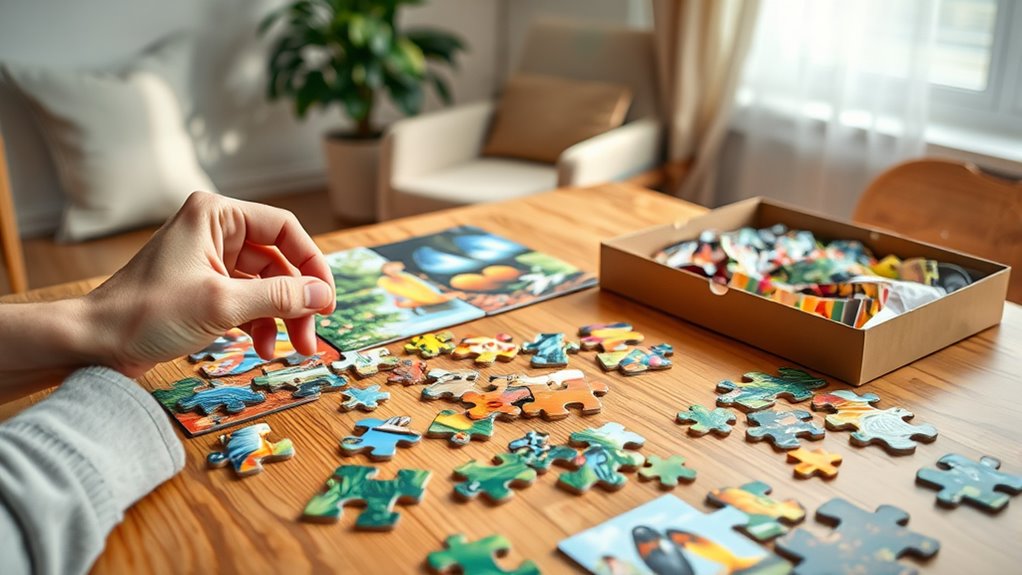
When choosing puzzles for seniors with dementia, I always consider factors like puzzle piece size and image complexity. It’s important to select materials that are durable and themes that resonate with their interests. Plus, I look for puzzles that are easy to handle to ensure a positive experience.
Puzzle Piece Size
Choosing the right puzzle piece size can considerably impact how enjoyable and accessible the experience is for seniors with dementia. I’ve found that larger puzzle pieces, about 0.1 inches thick, are much easier for seniors with limited dexterity to grasp and manipulate. Oversized pieces reduce frustration and minimize the risk of accidental swallowing or choking hazards. Plus, thick and sturdy pieces are more durable, ensuring they withstand repeated use without bending or breaking. I also recommend puzzles with textured or ergonomic designs, as these features improve grip for those with weak or unsteady hands. Appropriately sized pieces allow for independent assembly, fostering confidence while reducing the need for constant assistance. It’s all about making the puzzle experience enjoyable and fulfilling!
Image Complexity
Selecting the right image complexity can make a significant difference in puzzle engagement for seniors with dementia. I’ve found that simpler images with clear, bold shapes are the most effective. These types of images help seniors recognize and match puzzle pieces easily, reducing frustration. Highly detailed or complex scenes can be overwhelming and might lead to confusion, so I steer clear of those. Instead, I look for moderate image complexity that keeps them engaged without causing cognitive overload. Puzzles featuring fewer visual elements and larger, distinct objects improve focus and task completion. Balancing visual interest with simplicity is vital to maintain motivation and ensure a rewarding puzzle experience for seniors with dementia.
Material Quality
Understanding the significance of material quality is essential for ensuring a positive puzzle experience for seniors with dementia. I always look for puzzles made from durable, tear-resistant materials that can withstand repeated handling. Non-toxic, eco-friendly cardboard or wood is critical, especially for those with sensitive skin or allergies. I find that thick puzzle pieces, at least 0.1 inches, provide a better grip, making them easier to handle for seniors with limited dexterity. It’s also essential that pieces interlock precisely and have smooth edges to prevent any potential injuries. Finally, I prefer puzzles with glare-free, matte surfaces, as they reduce eye strain and improve visual clarity, making the assembly process much more enjoyable.
Theme Variety
While exploring puzzles for seniors with dementia, it’s essential to take into account theme variety to keep their interest alive. A diverse range of themes can prevent boredom during repetitive activities, making the experience enjoyable. I’ve found that incorporating themes like nature, animals, seasons, and landmarks stimulates different cognitive pathways and enhances visual recognition skills. This personalization caters to individual preferences, ensuring that seniors remain engaged. Additionally, a broad selection of themes supports conversations and reminiscence therapy, fostering social interaction. By offering multiple themes in a puzzle set, we can ensure ongoing mental stimulation, reducing the risk of cognitive stagnation. It’s all about keeping their minds active while providing a fun and meaningful experience.
Handling Ease
Engaging seniors with dementia in puzzle activities requires careful attention to handling ease. I find that puzzles should have large, thick pieces that are easy to grasp and manipulate. Textured surfaces or embossing greatly improve grip and reduce slipping, making it easier for seniors to handle the pieces confidently. It’s essential to choose designs that are simple and uncluttered, featuring clear, high-contrast images to aid visual recognition and minimize confusion. Additionally, opting for sturdy, durable materials ensures the puzzles withstand repeated handling, reducing breakage over time. Ultimately, consider the overall size and shape of the pieces, ensuring they accommodate limited dexterity and provide comfortable handling for users with unsteady or weakened hands.
Cognitive Engagement
When selecting puzzles for seniors with dementia, it’s crucial to take into account factors that enhance cognitive engagement. I’ve found that puzzles featuring engaging patterns and varying difficulty levels stimulate mental activity effectively. Incorporating familiar themes or images helps with recognition and memory recall, making them more accessible.
It’s important to choose puzzles with large, clear, and high-contrast pieces to accommodate any visual impairments, reducing frustration during assembly. Additionally, puzzles that include educational components, like matching or sequencing tasks, can help maintain and even improve cognitive abilities. Finally, selecting puzzles with a manageable complexity ensures that seniors stay engaged without feeling overwhelmed, providing the sustained mental stimulation they need.
Social Interaction Opportunity
Choosing puzzles that promote social interaction can considerably enhance the experience for seniors with dementia. I’ve found that puzzles encouraging group participation can significantly reduce feelings of loneliness. Collaborative activities help foster communication skills and create shared experiences, boosting emotional well-being. Opting for multi-person puzzles or those designed for team play allows seniors to connect meaningfully with family, friends, or caregivers. Look for puzzles with easy-to-handle pieces and clear imagery so seniors can engage without frustration. Engaging in these activities together not only sparks meaningful conversations but also strengthens social bonds. By selecting puzzles that prioritize social interaction, we can create a supportive environment that enriches the lives of seniors with dementia.
Durability and Reusability
While many factors play a role in selecting puzzles for seniors with dementia, durability and reusability are essential. I always look for puzzles made from high-quality materials like thick cardboard or wood. These withstand repeated handling, which is vital for seniors with limited strength. Reusable puzzles are a must; they resist tearing or bending, maintaining their integrity for multiple sessions. I prefer non-toxic, eco-friendly materials, ensuring safety for seniors who might mouth pieces. Well-designed puzzles feature precise interlocking pieces that fit securely, extending their lifespan. Additionally, easy-to-clean surfaces and resistant finishes help preserve their appearance, making them suitable for long-term use. Choosing durable and reusable puzzles not only enhances the experience but also supports cognitive engagement over time.
Frequently Asked Questions
How Can Puzzles Benefit Seniors With Dementia?
Puzzles can really benefit seniors with dementia by keeping their minds engaged and active. I’ve seen how working on puzzles can spark memories and encourage social interaction, which is so important. They provide a sense of accomplishment and can help improve cognitive skills. Plus, they’re a fun way to pass the time, allowing seniors to focus and relax. I believe incorporating puzzles into daily routines can really enhance their quality of life.
What Types of Puzzles Are Best for Different Dementia Stages?
Think of puzzles as a gentle breeze that refreshes the mind. For early stages of dementia, I find simple jigsaw puzzles with larger pieces work well. As the condition progresses, I lean toward more structured activities, like word searches or matching games, which offer satisfaction without frustration. In advanced stages, large-print and tactile puzzles can engage their senses and spark memories. Tailoring these puzzles to each stage keeps the experience enjoyable and beneficial.
Are There Any Safety Concerns With Puzzle Materials for Seniors?
Yes, there are safety concerns with puzzle materials for seniors. I always check for non-toxic, hypoallergenic materials to avoid any allergic reactions. It’s essential to avoid puzzles with small pieces that could pose a choking hazard. I also look for sturdy, easy-to-grip pieces, as seniors may struggle with fine motor skills. Ensuring the puzzles are well-made helps prevent any accidental injuries. Keeping these factors in mind makes puzzle time safer and more enjoyable.
How Long Should Seniors Engage With Puzzles Each Day?
I think seniors should engage with puzzles for about 15 to 30 minutes each day. This time frame allows for mental stimulation without causing frustration or fatigue. I’ve noticed that breaking it up into shorter sessions works well, too. It’s important to pay attention to their mood and energy levels. If they’re enjoying it, they might want to extend the time, and that’s perfectly fine! Balance is key for keeping it enjoyable.
Can Puzzles Be Used in Group Activities for Seniors?
Absolutely, puzzles can be a wonderful way to gather the flock! Picture a cozy room filled with laughter, as friends tackle a colorful jigsaw together. I’ve seen how these shared moments spark conversations and camaraderie among seniors. It’s like weaving a tapestry of memories, each piece fitting perfectly into the larger picture. Not only do puzzles stimulate minds, but they also create a sense of belonging that warms the heart. Let’s embrace this joyful activity!
Conclusion
In my experience, engaging seniors with dementia in puzzles not only stimulates their minds but also fosters a sense of accomplishment. I’ve seen firsthand how even simple activities can spark memories and joy. While some might think puzzles are just for kids, the right ones can truly benefit seniors. So, don’t underestimate the power of a good puzzle; it might just release a cherished memory or brighten someone’s day in unexpected ways.