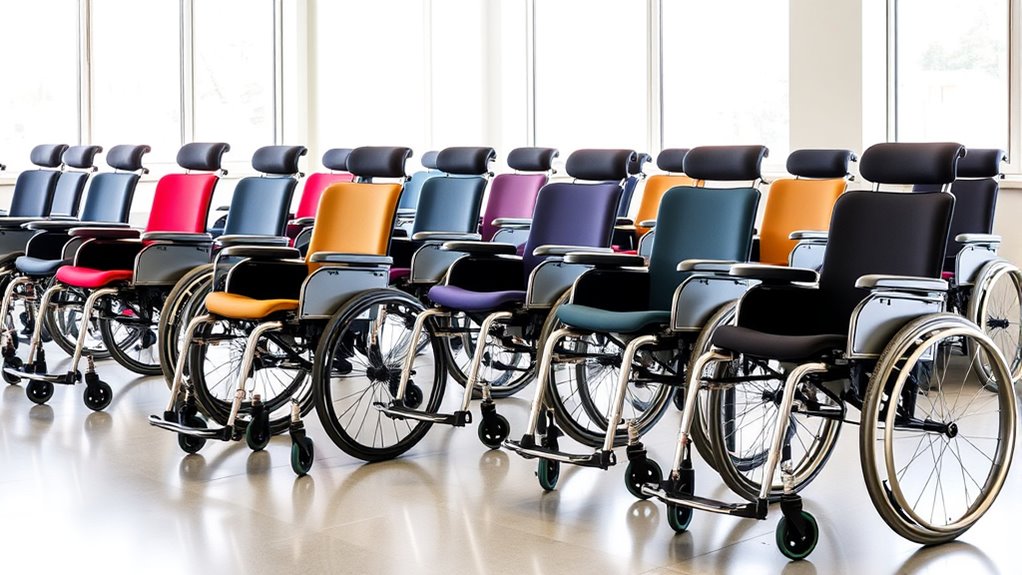
If you’re looking for the best wheelchairs for bariatric patients, I’ve got you covered. These chairs offer extra-wide seats, high weight capacities, and durable construction for comfort and safety. You’ll find features like adjustable components, pressure-relief cushions, and sturdy frames designed for stability and support. They cater to various needs, whether it’s for mobility or hygiene. Stay with me, and I’ll share specific models and factors to contemplate.
Key Takeaways
- Bariatric wheelchairs support higher weight capacities, typically ranging from 300 to 500 lbs, with wide seats for optimal comfort.
- Durable materials like reinforced steel and rust-resistant finishes ensure longevity and stability under heavy loads.
- Adjustable components such as seat height, armrests, and footrests provide personalized comfort and support for users.
- Safety features like wheel locks and anti-tippers enhance stability and user security during use.
- Multi-functional designs allow for use as standard, shower, or commode chairs, catering to diverse healthcare needs.
Medline Excel Extra-Wide Bariatric Wheelchair for Adults and Seniors
If you’re looking for a wheelchair that offers exceptional support for bariatric patients, the Medline Excel Extra-Wide Bariatric Wheelchair is a top choice. With its generous 24-inch wide seat and a capacity of up to 500 lbs, it provides ample space and comfort. I love the durable, rust-resistant chrome frame that stands up to daily use. The removable desk-length arms make side transfers easy, while the swing-away footrests simplify entry and exit. Plus, the adjustable axles let you customize the seat height. When folded, it’s compact for storage, making it a practical option for any user.
Best For: Individuals seeking a reliable and comfortable wheelchair with extra width and high weight capacity for bariatric support.
Pros:
- Durable rust- and chip-resistant chrome frame for long-lasting use.
- Generous seat size and adjustable height for user comfort and customization.
- Removable arms and swing-away footrests for easy transfers and accessibility.
Cons:
- Weighs 60 lbs, which may be heavy for some users to maneuver.
- Limited color options may not appeal to all aesthetics.
- Requires some space for storage when not folded, despite its compact design.
Vive Gait Belt for Patient Assistance
The Vive Gait Belt is an essential tool for caregivers assisting bariatric patients, as it guarantees safe and secure transfers while reducing the risk of injury. Made from durable nylon with reinforced stitching, it supports up to 300 pounds and features an extra-wide, padded design for comfort. I love the seven handles that allow me to provide support from any angle, enhancing balance during mobility. The secure metal buckle ensures safety, while the quick-release latch makes it easy to remove. Plus, it’s FSA/HSA eligible and comes with a 60-day satisfaction guarantee, giving me confidence in its quality and performance.
Best For: Caregivers assisting bariatric, elderly, or physically challenged patients who require safe and secure transfers.
Pros:
- Durable Construction: Made from strong nylon with reinforced stitching, supporting up to 300 pounds.
- Comfortable Design: Extra-wide, padded belt ensures comfort and reduces pressure during transfers.
- Versatile Handles: Seven padded handles allow for support from multiple angles, enhancing stability.
Cons:
- Size Limitations: Adjustable only up to 51 inches, which may not fit all body types comfortably.
- Weight Capacity: Limited to 300 pounds, which may not accommodate heavier patients.
- Learning Curve: Caregivers may need time to learn the best techniques for using the belt effectively.
Dynarex Bari+Max Bariatric Reclining Wheelchair
For those seeking a reliable and comfortable option, the Dynarex Bari+Max Bariatric Reclining Wheelchair stands out with its impressive weight capacity of up to 500 pounds. Its heavy-duty steel frame, reinforced with dual cross braces, provides the durability and stability needed for bariatric patients. I love the hydraulic reclining mechanism, allowing the backrest to recline up to 180° while the elevating leg rests create a comfortable platform. Plus, the padded vinyl upholstery makes long sitting sessions enjoyable. The tool-free adjustments and foldable design also make this wheelchair convenient for transport and storage, ensuring safety with wheel locks and anti-tippers.
Best For: Individuals seeking a reliable, comfortable, and durable wheelchair that supports bariatric needs with a weight capacity of up to 500 pounds.
Pros:
- Heavy-duty steel frame with dual cross braces ensures durability and stability.
- Hydraulic reclining mechanism allows for a full 180° recline, enhancing comfort.
- Tool-free adjustments and foldable design make for easy transport and storage.
Cons:
- The wheelchair may be heavier than standard models, making it less suitable for some users.
- Price point may be higher compared to non-bariatric wheelchairs.
- Limited color options may not appeal to all users.
Everest & Jennings Traveler HD Bariatric Wheelchair
Designed specifically for larger adults and seniors, the Everest & Jennings Traveler HD Bariatric Wheelchair stands out as a top choice among the 15 Best Wheelchairs for Bariatric Patients. This wheelchair features a spacious 20-inch seat and supports up to 500 lbs, ensuring stability and comfort. I love the padded seat, detachable desk-length armrests, and swingaway footrests that enhance ease of use. Plus, it folds easily for transport, making mobility hassle-free. With a legacy of reliability since 1932, Everest & Jennings truly prioritizes user comfort, giving me the confidence to navigate my world with ease and independence.
Best For: The Everest & Jennings Traveler HD Bariatric Wheelchair is best for larger adults and seniors who require extra support, comfort, and mobility in their daily lives.
Pros:
- Spacious 20-inch seat that comfortably accommodates larger users.
- Durable and foldable design allows for easy transport and storage.
- Enhanced comfort features such as a padded seat, detachable armrests, and swingaway footrests.
Cons:
- May be bulkier compared to standard wheelchairs, making it less suitable for tight spaces.
- The weight limit of 500 lbs might not accommodate all bariatric users.
- Limited color options may not appeal to all personal preferences.
Heavy Duty Bariatric Wheelchair with Reclining Back and Cushioned Head Immobilizer
When seeking a wheelchair that accommodates heavier individuals, the Heavy Duty Bariatric Wheelchair with a reclining back and cushioned head immobilizer stands out as an excellent choice. It supports up to 450 lbs and features a hydraulic reclining mechanism for ideal comfort. The padded armrests, calf pads, and head immobilizer enhance support during use. Plus, its compact design makes storage and transport a breeze. I appreciate the durable, maintenance-free steel mag wheels and flat-free casters, ensuring smooth mobility. This wheelchair combines durability, comfort, and convenience, making it perfect for adults needing heavy-duty support. You won’t be disappointed.
Best For: Adults requiring heavy-duty support and comfort in a wheelchair, particularly those needing a reclining feature.
Pros:
- Durable construction with a 450 lb weight capacity and reinforced steel gussets for added strength.
- Comfort-enhancing features including padded armrests, calf pads, and a cushioned head immobilizer.
- Compact and portable design allows for easy storage and transport, making it convenient for users.
Cons:
- Bulkier design compared to standard wheelchairs, which may not be as maneuverable in tight spaces.
- Potentially higher cost due to heavy-duty materials and features compared to regular wheelchairs.
- Limited color options available, which may not appeal to all users seeking customization.
Gait Belt Transfer Belt for Elderly and Disabled
Gait belts are essential tools for caregivers and healthcare professionals who assist elderly or disabled patients with mobility challenges. I’ve found these belts incredibly helpful for transferring patients safely between positions, whether they’re climbing stairs or getting in and out of chairs. With seven padded handles, they offer multiple gripping options, making maneuvering much easier. The adjustable straps guarantee a snug fit for various body types, while the quick-release buckles add convenience. Plus, the durable, washable material and wide padding enhance comfort and safety during transfers, reducing the risk of falls or injuries for both patients and caregivers alike.
Best For: Gait belts are best for caregivers and healthcare professionals assisting elderly or disabled patients with mobility challenges.
Pros:
- Multiple gripping options: The seven padded handles provide various angles for better support and maneuverability.
- Adjustable straps: Designed to fit different waist sizes, ensuring a secure fit for diverse body types.
- Durable and washable material: The tough construction and hygiene-friendly design enhance safety and comfort during transfers.
Cons:
- Size limitations: The adjustable straps may not fit extremely large or small body types adequately.
- Learning curve: Caregivers may require training to use the gait belt effectively for optimal safety.
- Potential discomfort: Some users may find the wide padding bulky or uncomfortable during prolonged use.
Vive Patient Lift Sling with Opening (400lb Capacity)
If you’re caring for a bariatric patient, the Vive Patient Lift Sling with Opening (400lb Capacity) is a fantastic choice. This sling makes transferring patients to beds, wheelchairs, or showers safe and comfortable. I love that it’s made from lightweight, breathable mesh material, which is easy to clean and water-resistant. The design features four reinforced sling points and three handles for easy repositioning from multiple angles. Plus, the opening for toileting enhances hygiene. Supporting up to 400 pounds, it’s perfect for bariatric needs. With a one-year guarantee, you can trust its durability and reliability for daily use.
Best For: Individuals caring for bariatric patients who require safe and comfortable transfers.
Pros:
- Lightweight and breathable mesh material for comfort and easy cleaning.
- Features multiple reinforced sling points and handles for secure repositioning.
- Supports up to 400 pounds, making it suitable for bariatric needs.
Cons:
- May not be suitable for patients who require a full-body support sling.
- Limited color options may not appeal to all users.
- Requires proper training for caregivers to ensure safe usage.
HEALTHLINE Bariatric Wheelchair Seat Cushion (20 x 16 Inch)
The HEALTHLINE Bariatric Wheelchair Seat Cushion is an ideal choice for anyone seeking enhanced comfort and support during extended periods of sitting. Measuring 20 x 16 x 3 inches, it fits most standard chairs and offers exceptional support with its thick, high-density foam. I’ve noticed a significant reduction in discomfort, especially for issues like sciatica and lower back pain. The durable, water-resistant cover is easy to clean and the non-slip bottom keeps the cushion securely in place. Plus, its versatility means I can use it for yoga or concerts too. It’s a smart investment for anyone needing additional comfort.
Best For: Individuals seeking relief from discomfort due to prolonged sitting, such as those with sciatica or lower back pain.
Pros:
- Provides excellent support with 3 inches of high-density foam, enhancing comfort during extended use.
- Water-resistant and washable cover ensures easy maintenance and longevity of the cushion.
- Versatile design suitable for various settings, including wheelchairs, yoga, and concerts.
Cons:
- May not fit all specialty chairs due to its standard dimensions.
- Some users may find it too firm if they prefer softer cushions.
- The non-slip feature may not fully prevent sliding on all chair surfaces.
Skil-Care Wheelchair Nylon Lap Tray (24″-28″)
Finding the right support for bariatric patients can be challenging, but the Skil-Care Wheelchair Nylon Lap Tray (24″-28″) stands out as an ideal solution. This tray enhances body alignment and posture, providing stability during activities like eating or writing. I appreciate its sturdy plywood base and durable foam layer, making it both comfortable and easy to clean. The adjustable straps and hook & loop closures keep the tray securely in place, preventing any sliding. Plus, it comes in various sizes to fit different wheelchairs, ensuring that it meets individual needs. It’s definitely a must-have for enhanced support!
Best For: Individuals requiring additional support for body alignment and stability during seated activities, particularly bariatric patients.
Pros:
- Sturdy construction: Made with a plywood base and foam layer for enhanced durability and comfort.
- Easy to clean: Features a wipe-clean surface with a heat-sealed vinyl or nylon cover, suitable for frequent cleaning.
- Adjustable and secure: Equipped with adjustable straps and hook & loop closures to prevent sliding and ensure a secure fit.
Cons:
- Limited color options: Available only in nylon or vinyl covers, which may not suit all aesthetic preferences.
- Size constraints: While available in multiple sizes, the range may not cover all specific wheelchair models.
- Weight considerations: The sturdy construction may add some weight, making it less portable for some users.
Skil-Care Bariatric Gel-Foam Cushion (28″ Wide)
For bariatric patients seeking enhanced comfort and support during prolonged seating, the Skil-Care Bariatric Gel-Foam Cushion (28″ Wide) stands out as an excellent choice. Its combination of high-density foam and a cooling gel insert provides superior pressure distribution, effectively reducing the risk of skin breakdown and pressure ulcers. The durable, low-shear cover resists moisture and friction, making it easy to clean and perfect for daily use in healthcare settings. Measuring 28 inches wide, this cushion is designed for individuals over 250 lbs, ensuring a secure and comfortable fit that supports long periods of sitting without discomfort.
Best For: Bariatric patients needing enhanced comfort and support during prolonged seating.
Pros:
- Provides superior pressure distribution and relief, reducing the risk of skin breakdown and pressure ulcers.
- Durable, low-shear cover is easy to clean and resists moisture and friction, ideal for daily use.
- Designed specifically for individuals over 250 lbs, ensuring secure and comfortable seating.
Cons:
- May be too large for standard-sized chairs or wheelchairs.
- Higher price point compared to standard cushions may not fit all budgets.
- Requires regular maintenance to ensure the gel and foam maintain their effectiveness over time.
Rhino Valley Gait Belt for Seniors with 7 Handles
When caring for bariatric patients, safety and support are paramount, and the Rhino Valley Gait Belt stands out with its 7 ergonomic handles. These handles are made from soft neoprene, ensuring a secure grip during transfers and walking. The belt extends to 150 cm, providing all-encompassing waist coverage and even weight distribution. Its quick-release buckle makes it easy to use, fitting waist sizes up to 61 inches. This versatile tool is great for homes and care facilities, minimizing fall risks while supporting mobility and balance. It’s a reliable choice for anyone needing assistance in their daily activities.
Best For: Elderly individuals, bariatric patients, and those with mobility issues who require assistance with transfers and walking.
Pros:
- Ergonomic design with 7 soft neoprene handles for enhanced grip and comfort during transfers.
- Adjustable size fitting waists up to 61 inches, accommodating a wide range of users.
- Durable materials and construction, ensuring long-lasting use and safety during mobility assistance.
Cons:
- May be too bulky for some users, depending on individual preferences and body types.
- Limited color options, which may not appeal to all users looking for aesthetic choices.
- Requires proper fitting to ensure maximum effectiveness, which may be challenging for some caregivers.
Skil-Care Comfort Wheelchair Cushion E-Z Rise (707052)
The Skil-Care Comfort Wheelchair Cushion E-Z Rise (707052) stands out for its exceptional pressure relief and support, making it an ideal choice for bariatric patients who need extra comfort during extended use. Measuring 18”W x 16”D x 6”H, this cushion features a vinyl GEL seat that enhances comfort while reducing pressure points. The two-color surface acts as a visual cue for repositioning, and its low-shear cover helps maintain skin health. With a slip-resistant bottom and buckled straps, it stays securely in place, ensuring safety. Plus, it promotes good posture, enhancing spinal alignment and overall seating comfort.
Best For: Individuals with mobility challenges, particularly bariatric patients, seeking enhanced comfort and pressure relief during wheelchair use.
Pros:
- Exceptional Comfort: The vinyl GEL seat cushion provides excellent pressure relief and support for extended use.
- Safety Features: Slip-resistant bottom and buckled straps ensure the cushion remains securely in place during use.
- Posture Enhancement: Designed to promote good posture and spinal alignment, reducing the risk of pressure sores.
Cons:
- Size Limitation: The cushion dimensions may not fit all wheelchair models, potentially limiting its usability.
- Maintenance: While the low-shear cover is wipe-clean, it may require regular cleaning to maintain hygiene.
- Weight: The cushion’s substantial design could add extra weight, making it less portable for some users.
Skil-Care Thin Line Econo-Gel Cushion for Wheelchairs
Finding the right cushion can make a world of difference for those who spend extended periods in a wheelchair, especially for bariatric patients. The Skil-Care Thin Line Econo-Gel Cushion combines a soft gel top layer with a durable foam base, giving you both comfort and support. It’s designed to evenly distribute weight, reducing pressure points and the risk of ulcers. Plus, the moisture-proof cover makes cleaning a breeze, ensuring you maintain proper hygiene. Whether at home or in a healthcare setting, this cushion is perfect for anyone needing reliable seating support and skin protection. Trust me, you won’t be disappointed!
Best For: Individuals who spend extended periods in wheelchairs, particularly bariatric patients needing comfort and pressure relief.
Pros:
- Dual-layer construction offers enhanced comfort with a gel top layer and durable foam base.
- Moisture-proof cover allows for easy cleaning and maintenance, promoting hygiene.
- Pressure relief features help in even weight distribution, reducing the risk of pressure ulcers.
Cons:
- May not provide enough support for individuals with severe pressure issues.
- Limited size options (only available in 16”W x 16”D).
- The gel layer may retain heat, which could be uncomfortable for some users.
4-in-1 Bedside Commode Wheelchair for Seniors and Disabled
Looking for a versatile solution for seniors and disabled individuals? The 4-in-1 Bedside Commode Wheelchair is a game-changer. It serves as a commode chair, shower chair, wheelchair, and bedside commode, making it perfect for home or hospital use. With its removable bucket and ergonomic design, it guarantees comfort and convenience. The sturdy aluminum frame supports up to 300 lbs, while the PU wheels with brakes allow smooth mobility. Plus, the soft, padded seat and backrest provide extra comfort. Whether for daily care or emergencies, this wheelchair’s functionality and safety features make it an invaluable tool for caregiving.
Best For: Seniors, disabled individuals, and pregnant women seeking a multifunctional mobility solution for home and healthcare settings.
Pros:
- 4-in-1 functionality allows for versatile use as a commode chair, shower chair, wheelchair, and bedside commode.
- Comfort-oriented design features a padded seat and backrest for enhanced user comfort.
- Sturdy construction supports up to 300 lbs, ensuring safety and durability for various users.
Cons:
- Limited portability due to its size, which may be cumbersome in tight spaces.
- Requires regular cleaning of the removable bucket to maintain hygiene.
- Initial assembly may be needed, which can be challenging for some users.
HEALTHLINE Heavy Duty Drop Arm Bariatric Commode
For those seeking a reliable solution for bathroom accessibility, the HEALTHLINE Heavy Duty Drop Arm Bariatric Commode stands out with its versatile functionality. I appreciate how it serves as a bedside commode, a toilet safety frame, or even an elevated toilet seat over an existing toilet. With sturdy, powder-coated steel construction, it supports up to 500 lbs, which gives me confidence in its durability. The adjustable seat height is perfect for different needs, and the armrests provide essential comfort and support. Plus, the removable 12-quart bucket makes cleaning a breeze. This commode truly prioritizes user comfort and safety.
Best For: The HEALTHLINE Heavy Duty Drop Arm Bariatric Commode is best for elderly or semi-disabled individuals seeking a reliable and comfortable solution for bathroom accessibility.
Pros:
- Sturdy construction with heavy-duty powder-coated steel supports up to 500 lbs.
- Versatile functionality as a bedside commode, toilet safety frame, or elevated toilet seat.
- Adjustable seat height and armrests enhance comfort and usability.
Cons:
- May take up more space compared to standard commodes.
- Assembly may be required, which could be challenging for some users.
- The removable bucket might need frequent cleaning for optimal hygiene.
Factors to Consider When Choosing Wheelchairs for Bariatric Patients
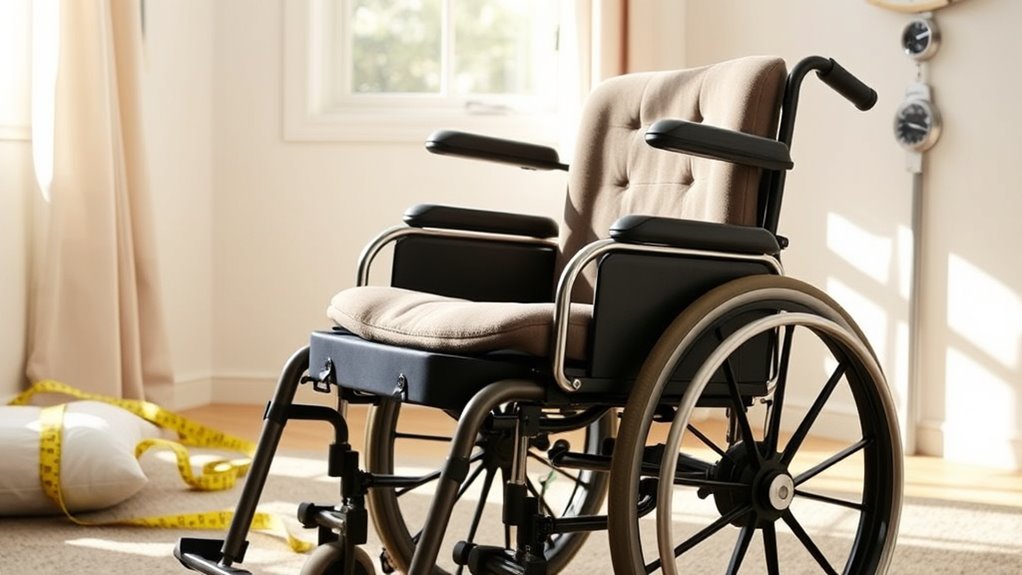
When choosing a wheelchair for bariatric patients, I think it’s vital to take into account several key factors. You’ll want to look closely at weight capacity, seat width, and comfort features to guarantee a good fit. Additionally, durability and ease of mobility can make a big difference in day-to-day use.
Weight Capacity Requirements
Choosing a wheelchair that can adequately support a bariatric patient’s weight is essential for both safety and comfort. I always recommend selecting a wheelchair with a weight capacity that exceeds the patient’s current weight by at least 10-20%. Most bariatric wheelchairs start at 300 pounds, but many can support 500 pounds or more, which is critical for heavier patients. It’s important to verify not just the seat capacity but also the weight limits of the entire frame and supporting components. Additionally, consider the overall weight of the wheelchair for ease of transport. Finally, regularly reassess the patient’s weight to guarantee the wheelchair maintains its structural integrity and safety as their needs evolve.
Seat Width Considerations
After ensuring the weight capacity meets the patient’s needs, the next important factor is seat width. Bariatric wheelchairs typically come with seat widths ranging from 20 to 24 inches. For patients weighing over 250 pounds, I recommend a seat width of at least 24 inches. This helps guarantee a proper fit and reduces the risk of pressure points. It’s vital to avoid choosing a seat that’s too narrow, as this can lead to discomfort, skin breakdown, or circulation issues. To get it right, I suggest measuring the user’s hip width while seated. If possible, opting for adjustable or extra-wide seats can provide tailored comfort and support for bariatric patients, accommodating their unique needs effectively.
Comfort and Support Features
Selecting a wheelchair that prioritizes comfort and support is vital for bariatric patients, as it directly impacts their overall well-being. I recommend choosing models with wider seats, typically 24 inches or more, to guarantee ample space. Padded, supportive cushions are essential too; they help distribute pressure evenly, reducing the risk of pressure sores. Look for ergonomic armrests and adjustable leg supports that allow for personalized comfort. Cushioned, adjustable backrests provide customizable lumbar support, enhancing spinal alignment. Additional features like headrests, immobilizers, and extra padding can considerably improve comfort during prolonged use. Considering these elements will help you find a wheelchair that meets specific needs while promoting a better quality of life for bariatric patients.
Durability and Construction
When it comes to bariatric wheelchairs, durability and construction are crucial factors that can’t be overlooked. I always recommend looking for wheelchairs made from reinforced steel or heavy-duty materials, as they can safely support weights of 400 lbs or more. You’ll want to verify the frames have additional cross-bracing and gussets at weight-bearing points to enhance stability and prevent structural failure. Don’t forget to check for rust- and corrosion-resistant finishes, like powder coating, which are essential for longevity. The wheels should feature sealed bearings and flat-free tires to handle frequent use and rough terrain. Lastly, if you’re considering a foldable design, make sure the joints and locking mechanisms are durable to maintain structural integrity when transporting or storing the wheelchair.
Ease of Mobility
Mobility is a top priority for bariatric patients, and choosing the right wheelchair can make all the difference. I’ve found that a wide seat—22 inches or more—is essential for comfort. Sturdy, reinforced frames that support weights up to 500 pounds ensure safety and durability, which is vital. I also appreciate easy-to-operate brakes and smooth-rolling wheels, as they provide better control on different surfaces. Design features like adjustable or removable footrests and armrests help with transfers and personal comfort. Ultimately, lightweight folding options are a game-changer for transport, making it easier for both caregivers and users. Keeping these factors in mind will help you find a wheelchair that enhances mobility without compromising on comfort.
Frequently Asked Questions
How Do I Measure for the Right Wheelchair Size?
To measure for the right wheelchair size, I start by measuring the seat width, which should allow about an inch of space on either side of my hips. Next, I measure the seat depth from the back of my butt to the back of my knees. Finally, I check the seat height, making certain my feet rest flat on the ground. It’s vital to guarantee a comfortable fit for mobility and support.
What Is the Weight Capacity of a Bariatric Wheelchair?
Most bariatric wheelchairs have a weight capacity ranging from 300 to 1,200 pounds, depending on the model. I’ve found that these chairs not only offer sturdiness but also prioritize comfort and support. When I choose one, I look for features like wider seats and reinforced frames. Knowing the weight capacity helps make sure I select the right chair for safety and durability. It’s essential to find a wheelchair that fits the user’s needs perfectly!
Can Bariatric Wheelchairs Be Customized?
Yes, bariatric wheelchairs can definitely be customized. I’ve seen various options for adjusting seat widths, depths, and back support to suit individual needs. You can also add features like armrests, footrests, and even special upholstery for comfort. When I explored customization, it was empowering to create a chair that truly fit my requirements. Always consult with a healthcare professional to guarantee you’re making the best choices for your comfort and mobility.
Are There Any Insurance Options for Bariatric Wheelchairs?
They say, “A penny saved is a penny earned,” and that’s definitely true when it comes to insurance for bariatric wheelchairs. Yes, there are insurance options available! Many insurance plans, including Medicare, cover a portion of the costs if your doctor prescribes it as medically necessary. I’d recommend checking directly with your insurance provider to understand the specifics and guarantee you get the coverage you need for your wheelchair.
How Often Should I Maintain a Bariatric Wheelchair?
I recommend maintaining your bariatric wheelchair every three to six months, depending on usage. Regularly check the brakes, wheels, and seat for any signs of wear. I also suggest cleaning the chair frequently to keep it in excellent condition. If you notice any issues or unusual noises, address them immediately. Keeping up with maintenance ensures your wheelchair remains safe and comfortable, allowing you to enjoy your independence without worry.
Conclusion
In choosing the right wheelchair for bariatric patients, comfort and support are paramount. Each of the options I’ve shared offers unique features tailored to individual needs, ensuring safety and mobility. Remember, the right wheelchair isn’t just a piece of equipment; it’s a gateway to independence and dignity. With the right choice, you can help someone reclaim their world, one wheel at a time. Your thoughtful selection can truly be a lifeline for those who need it most.