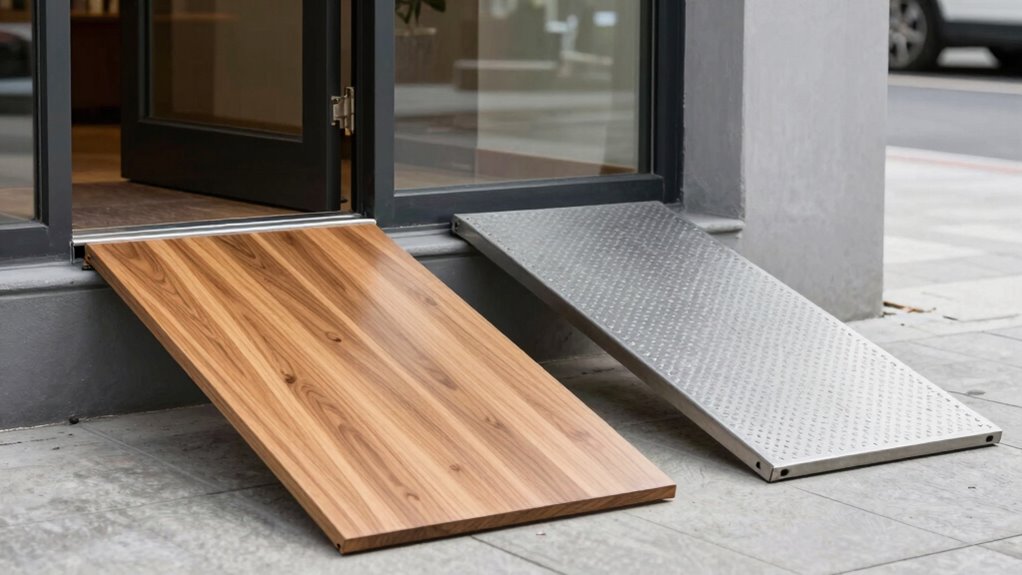

If you’re fixing small height differences like door thresholds, a threshold ramp is ideal because it’s quick to install and designed for short, permanent fixes. For larger elevation changes or longer access routes, a modular ramp offers flexibility and can be customized for outdoor or uneven terrain. Your choice depends on the problem’s size and future needs. Keep exploring to find out which type best suits your situation and how material choices impact durability.

Turn quiet afternoons into listening time
- Thousands of audiobooks, podcasts and originals
- Listen on your phone, tablet or Echo — also offline
- Cancel anytime
Key Takeaways
- Use threshold ramps for small height differences like door lips; choose modular ramps for larger or variable elevations.
- Threshold ramps offer quick, permanent solutions for minor steps; modular ramps provide flexibility for longer or changing layouts.
- Threshold ramps are ideal for indoor, fixed applications, while modular ramps suit outdoor or complex environments.
- Material durability and environmental resistance influence longevity; aluminum and eco-friendly options enhance sustainability.
- Consider future needs and site conditions to determine whether a simple threshold or adaptable modular ramp best solves your problem.

When choosing a ramp to improve accessibility, understanding the differences between a threshold ramp and a modular ramp is vital. Both options serve the purpose of easing movement over entryways, but they do so in different ways, suited for different needs. Accessibility standards play a significant role in determining which type of ramp fits your situation best. Threshold ramps are typically used for small height differences, like doorways that have a slight step or lip. They’re compact, easy to install, and often designed to meet specific accessibility standards, guaranteeing safety and ease of use for wheelchair users or anyone with mobility challenges. Modular ramps, on the other hand, are more versatile and customizable. They can accommodate larger height differences and longer distances, making them suitable for outdoor entrances, commercial buildings, or areas where the terrain isn’t flat. Durability is also a key factor, as the materials used need to withstand environmental stresses and frequent use. Material durability is a vital factor in choosing between these two types. Threshold ramps are usually made from durable materials like rubber, aluminum, or heavy-duty plastic. These materials are selected to withstand regular use and exposure to weather conditions when used outdoors. Their durability guarantees that they remain functional over time, reducing the need for frequent replacement. Modular ramps tend to be constructed from similar robust materials but are often designed to handle higher loads and longer spans. Aluminum is a common choice for modular systems because it’s lightweight yet strong, resistant to corrosion, and easy to maintain. When considering material durability, you want a ramp that can sustain environmental stresses, regular wear and tear, and the weight of users without deteriorating quickly. Additionally, choosing eco-friendly and sustainable materials can contribute to environmentally responsible solutions. Understanding the importance of material selection can help you make more informed decisions regarding longevity and environmental impact. Your choice also depends on the problem you’re solving. If you need a quick, permanent solution for a small step at a door, a threshold ramp is likely sufficient. It’s simple to install and generally meets accessibility standards for small height differences. However, if your goal is to create a more permanent, adaptable, or larger-access solution—such as for a wheelchair ramp that spans a significant height or length—a modular ramp is the better option. Modular systems offer flexibility in design, allowing you to extend or reconfigure the ramp as needed. Considering biodiversity and sustainable living practices can also influence choices in materials and installation methods, promoting environmentally friendly solutions. Incorporating environmentally responsible materials and practices can enhance the overall sustainability of your accessibility project.
As an affiliate, we earn on qualifying purchases.
Frequently Asked Questions
Which Ramp Type Is More Cost-Effective Long-Term?
A threshold ramp is generally more cost-effective long-term because it offers better durability and lower maintenance requirements. Its sturdy construction withstands daily wear and tear, reducing repair costs over time. Modular ramps, while easier to install initially, may need more frequent upkeep due to parts loosening or damage. So, if you’re looking for a long-lasting, budget-friendly solution, a threshold ramp often proves to be the smarter choice.
Can Modular Ramps Be Customized for Unique Spaces?
Yes, modular ramps can be customized for unique spaces thanks to their design flexibility. You can tailor the layout, length, and angles to fit your specific environment. Plus, they’re made from durable materials, ensuring longevity and reliable performance. This combination of customization options and material durability makes modular ramps ideal for overcoming space constraints and unique architectural challenges, providing a seamless, safe, and personalized accessibility solution.
Are Threshold Ramps Suitable for Outdoor Use?
Yes, threshold ramps are suited for outdoor use, acting like sturdy guardians against the elements. Their outdoor durability and weather resistance make them resilient to rain, snow, and sun, ensuring safe passage year-round. Picture them standing firm like loyal sentinels, ready to withstand nature’s challenges. You can rely on these ramps to provide a smooth progression, no matter the weather, keeping accessibility secure and dependable outside your home.
How Easy Is It to Install Each Type?
You’ll find that threshold ramps are generally easier to install because they’re lightweight and require minimal tools, making them suitable for quick setups. Modular ramps might take longer since they involve assembling sections, but they offer better material durability and aesthetic appeal, especially for outdoor use. Both types can be installed with some basic skills, but modular ramps provide more flexibility for customization and long-term stability.
Which Ramp Type Offers Better Safety Features?
You’ll find that modular ramps generally offer better safety features, especially when considering accessibility standards and material durability. They’re designed with slip-resistant surfaces and sturdy construction, providing reliable support. Threshold ramps, while convenient for small height differences, may not always meet strict safety standards or withstand heavy use. For maximum safety, choose a modular ramp that adheres to accessibility guidelines and uses durable materials for long-lasting performance.
Conclusion
Ultimately, choosing between a threshold ramp and a modular ramp depends on your specific needs. Think of it like the saying, “A chain is only as strong as its weakest link.” If your situation demands flexibility and long-term use, a modular ramp might be your best bet. But if affordability and quick installation are priorities, a threshold ramp could do the trick. Know your needs, and select what best supports your journey forward.
Halloween Picks
halloween
As an affiliate, we earn on qualifying purchases.