
To manage arthritis with an anti-inflammatory diet, focus on eating plenty of fresh fruits and vegetables like berries, spinach, and broccoli, which are loaded with antioxidants. Incorporate omega-3-rich foods such as fatty fish, flaxseeds, and walnuts to help lower inflammation. Use herbs like turmeric, ginger, and garlic in your meals for natural relief. Avoid processed foods high in sugars and trans fats, and stay well-hydrated. Keep exploring ways to optimize your diet and lifestyle for better joint health.
Key Takeaways
- Incorporate anti-inflammatory herbs like turmeric, ginger, and garlic into your meals for natural relief.
- Consume omega-3-rich foods such as fatty fish, chia seeds, and walnuts to reduce joint inflammation.
- Focus on whole, unprocessed foods like fruits and vegetables high in antioxidants and phytochemicals.
- Maintain hydration and engage in regular gentle exercises to support joint mobility and reduce stiffness.
- Avoid processed foods with refined sugars and trans fats, and adopt healthy fats like olive oil and avocados.
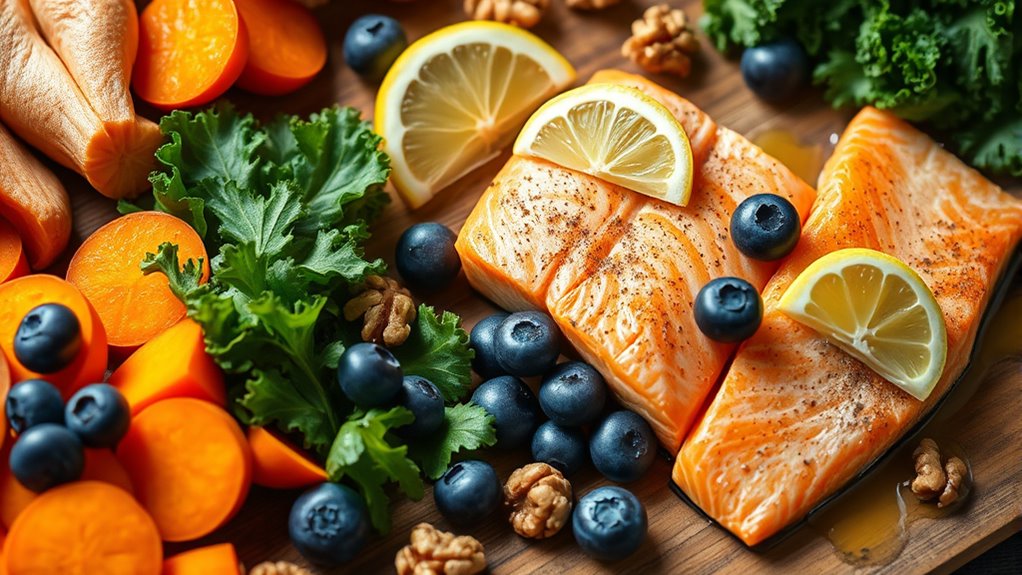
If you’re looking to reduce inflammation and improve your overall health, adopting an anti-inflammatory diet is a smart choice. One of the most effective ways to do this is by incorporating herbal remedies into your daily routine. Herbs like turmeric, ginger, and garlic are powerful anti-inflammatory agents that can help ease joint pain and swelling associated with arthritis. You can add turmeric to your smoothies or stir-fries, brew ginger tea, or enhance your dishes with fresh garlic. These herbal remedies not only boost your immune system but also provide natural relief without the side effects of medications. Alongside herbs, paying attention to your omega-3 sources is essential. Omega-3 fatty acids are known for their ability to reduce inflammatory markers in the body. Fatty fish like salmon, mackerel, and sardines are rich sources of these healthy fats. If you’re not a fan of fish, consider plant-based options such as chia seeds, flaxseeds, and walnuts, which also contain omega-3s. Incorporating these foods into your diet can markedly decrease joint stiffness and pain over time.
Additionally, choosing a high-quality projector for your home theater setup can enhance your viewing experience, making it more immersive and enjoyable. To maximize the benefits, focus on whole, unprocessed foods. Fresh fruits and vegetables are packed with antioxidants that combat inflammation. Berries, spinach, kale, and broccoli are excellent choices. These foods contain phytochemicals that help lower inflammation and support overall joint health. Avoid processed foods high in refined sugars, trans fats, and artificial additives, as they tend to promote inflammation rather than reduce it. Instead, choose healthy fats from sources like olive oil and avocados to support your body’s anti-inflammatory processes.
Hydration also plays a vital role in managing inflammation. Drinking plenty of water helps flush out toxins and keeps your joints lubricated. Pair this with regular physical activity, which can improve joint mobility and reduce stiffness. Gentle exercises like walking, swimming, or yoga are particularly beneficial for those with arthritis. Maintaining a healthy weight is equally important, as excess weight puts additional strain on your joints, worsening inflammation and pain. Combining these dietary and lifestyle habits creates an all-encompassing approach to managing arthritis naturally.
anti-inflammatory herbal supplement
As an affiliate, we earn on qualifying purchases.
As an affiliate, we earn on qualifying purchases.
Frequently Asked Questions
Can an Anti-Inflammatory Diet Cure Arthritis?
An anti-inflammatory diet can’t cure arthritis, but it can substantially improve your symptoms and overall joint health. Dietary efficacy varies from person to person, so managing expectations is essential. Don’t fall for cure misconceptions—this diet supports reducing inflammation, but it doesn’t eliminate arthritis. Incorporate anti-inflammatory foods like fruits, vegetables, and omega-3s to help manage pain and swelling effectively while maintaining a balanced lifestyle.
How Quickly Can I See Results From Dietary Changes?
You can start noticing improvements within a few weeks of changing your diet, especially if you focus on meal timing and food variety. Consistently including anti-inflammatory foods like fruits, vegetables, and omega-3 rich fish helps reduce inflammation. Keep in mind, everyone’s different—some may see results sooner, while others might need a couple of months. Staying patient and committed to your diet plan boosts your chances of relief.
Are Supplements Necessary Alongside an Anti-Inflammatory Diet?
You don’t necessarily need supplements with your anti-inflammatory diet, but they can give you an extra edge. Always check supplement safety and dosage considerations before adding anything new. Think of it as putting all your eggs in one basket; supplements can support your efforts, but they’re not a magic pill. Consult your healthcare provider to guarantee they’re right for you and won’t interfere with your diet or medications.
Can I Still Enjoy All My Favorite Foods?
Yes, you can still enjoy your favorite foods while maintaining food flexibility and flavor preservation. Focus on making healthier swaps, like using anti-inflammatory ingredients or reducing processed items. You don’t have to give up everything, just enjoy in moderation and balance your meals. This way, you keep your diet flavorful and satisfying, helping you manage arthritis without sacrificing the foods you love.
Is an Anti-Inflammatory Diet Suitable for All Types of Arthritis?
You might wonder if an anti-inflammatory diet suits all arthritis types, and the answer isn’t one-size-fits-all. It depends on your unique needs, making diet customization essential. While many find relief, food sensitivity varies, so some foods could trigger symptoms. Consult your healthcare provider to tailor a plan that addresses your specific arthritis, ensuring you enjoy a nutritious, satisfying diet without unintended flare-ups.
Conclusion
By incorporating these anti-inflammatory diet tips, you can effectively manage arthritis symptoms and improve your overall well-being. While some might think dietary changes won’t make a significant difference, evidence shows that nourishing your body with anti-inflammatory foods truly helps reduce joint pain and stiffness. Remember, consistency is key—small, sustained adjustments can lead to meaningful relief over time. Embrace these strategies, and take a proactive step toward a healthier, more comfortable life.