
As a caregiver, ensuring hospital bed safety at home involves checking the bed’s stability, securing side rails, and verifying that the mattress fits properly. Keep pathways clear and avoid clutter to reduce fall risks. Adjust the bed’s height securely and lock the wheels when stationary. Regularly inspect and maintain the bed and accessories, and conduct safety checks around the environment. To protect your loved one and create a safe space, it’s important to follow these steps carefully—more tips await you.
Open a free Amazon Business account
Business pricing, bulk buying and tax-exempt orders.
As an affiliate, we earn on qualifying purchases.
Key Takeaways
- Ensure the bed is placed on a level surface and away from hazards like cords and sharp furniture.
- Regularly inspect and securely lock bed components, side rails, and wheels for stability and safety.
- Keep pathways clear of clutter, rugs, and cords to prevent trips and falls.
- Choose and maintain beds with adjustable features and safety accessories suitable for patient needs.
- Conduct routine safety assessments, provide caregiver training, and keep emergency resources nearby.
hospital bed with side rails for home use
As an affiliate, we earn on qualifying purchases.
As an affiliate, we earn on qualifying purchases.
Why Hospital Bed Safety Is Critical for Home Care

Hospital bed safety is essential because it directly impacts your loved one’s well-being and prevents preventable accidents. Good bedside manners play a crucial role, ensuring your loved one feels comfortable and respected during care. Maintaining patient privacy is equally important, helping to foster trust and dignity while you assist with adjustments or repositioning. When safety protocols are followed, such as proper bed height, secure side rails, and clear pathways, you reduce the risk of falls or injuries. Being attentive to bedside manners also encourages open communication, so your loved one feels comfortable voicing concerns. Prioritizing safety and respectful care creates a supportive environment, enabling your loved one to recover comfortably and securely at home. Additionally, understanding the importance of proper bed positioning and features can significantly enhance safety and comfort during recovery. Regularly checking bed stability and functionality ensures the equipment remains safe and reliable for ongoing use. Incorporating sauna and cold‑plunge systems into recovery routines can further promote relaxation and healing, enhancing overall well-being. Staying informed about modern hospital bed technology can help you make better decisions to improve safety and comfort for your loved one. Remember, cloud-based healthcare solutions are increasingly used to monitor and manage patient safety remotely, offering additional peace of mind.
How to Identify Safety Hazards in Your Home for a Hospital Bed
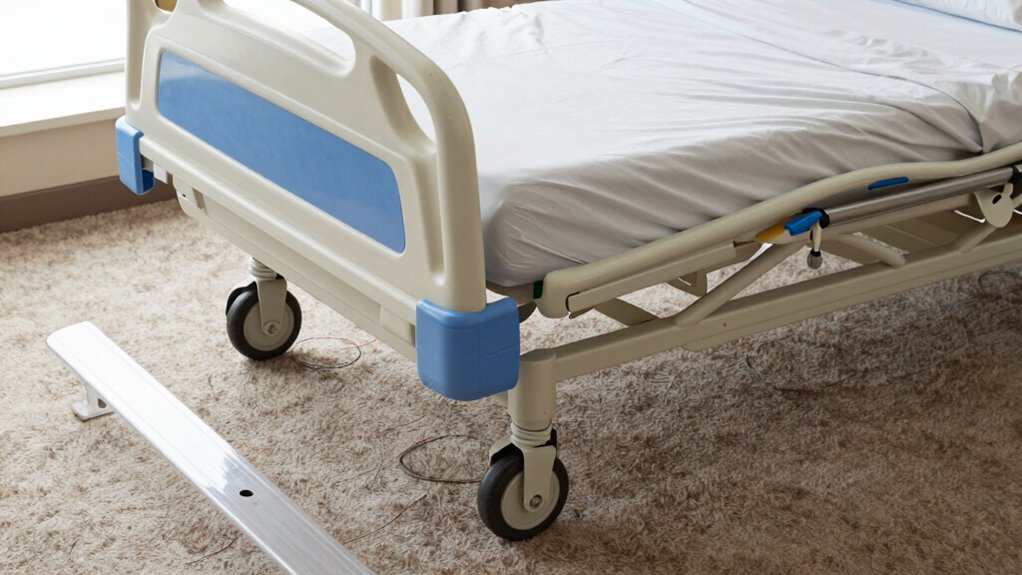
Start by checking that your floors are level to prevent the bed from shifting. Keep pathways clear of clutter to guarantee safe movement around the bed. Make sure the bed frame is secure to avoid any wobbling or accidental falls. Additionally, regularly inspect your home organization to maintain a calm and safe environment free of hazards. Regularly reviewing your fire safety measures can also help prevent emergencies and ensure safety. Properly functioning wave and wind safety devices can further enhance overall safety, especially during adverse weather conditions, creating a more secure living space. Ensuring energy-efficient appliances are used properly can also help create a safer, more sustainable living space.
Check Floor Levelness
Have you checked if your floor is level before placing a hospital bed? Ensuring floor stability is essential for safety. A level surface prevents wobbling or shifting that could cause the bed to tip or move unexpectedly. To check, use a bubble level or a carpenter’s level tool across different sections of the room. If you notice unevenness, consider installing shims or adjusting the bed’s legs to achieve a stable, level surface. Avoid placing the bed on uneven flooring, as this can compromise safety and make transfers difficult. A flat, level surface helps keep the bed secure and reduces the risk of accidents. Regularly reassess the floor’s levelness, especially if you notice shifting or if the flooring has been recently renovated. Proper flooring is a key factor in preventing falls and ensuring safe mobility at home, and understanding floor stability can help you identify potential hazards more effectively. Additionally, consulting with a home safety expert can provide personalized recommendations for your specific space. Being aware of floor levelness can further enhance your home safety assessments and prevent accidents. Remember, maintaining a level floor is also important for hospital bed functionality, ensuring smooth operation and comfort during use.
Clear Pathways Regularly
Regularly clearing pathways in your home is essential for preventing accidents and ensuring safe navigation around the hospital bed. Cluttered areas can cause trips, especially if mobility exercises are part of the care routine. Keep walkways free of rugs, cords, and furniture, and check regularly for potential hazards. Good sleep hygiene also depends on a safe environment; clutter-free spaces promote better rest. Use this table to identify key hazards:
| Hazard | Solution | Benefit |
|---|---|---|
| Obstructed walkways | Remove clutter and cords | Prevent trips and falls |
| Poor lighting | Install night lights | Improve visibility |
| Loose rugs | Secure or remove rugs | Reduce slipping risk |
Maintaining clear pathways supports both mobility exercises and restful sleep, making your home safer. Ensuring comprehensive safety information is also important for creating a secure environment in your home.
Secure Bed Frame
Ensuring your hospital bed is securely positioned is essential for safety and stability. Check that the bed frame is sturdy and free of loose or broken parts, which can compromise bed frame stability. Inspect the frame material safety by confirming it’s made from durable, non-toxic materials that won’t easily wear or splinter. Make sure all bolts, screws, and locking mechanisms are tight and engaged properly. If the bed has adjustable parts, verify they lock securely in place to prevent shifting during use. Regular bed maintenance helps ensure long-term safety and performance of the bed, while home safety assessments can identify other potential hazards. Incorporating essential oil diffusers in the room can promote a calming environment, aiding relaxation during rest or recovery. Staying vigilant about safety hazards can further prevent accidents and ensure the well-being of the user. A stable, well-maintained frame minimizes the risk of falls or injuries.
Choosing the Best Hospital Bed for Safety and Comfort at Home

When selecting a hospital bed, you want to guarantee the mattress is compatible for comfort and support. Consider adjustable features that make daily care easier and safer, like height adjustments and position controls. Don’t forget safety accessories such as side rails and lockable wheels to enhance stability and prevent accidents. Additionally, choosing a bed with endless entertainment options can help improve the patient’s overall well-being and mental health during recovery. Incorporating digital safety features can further protect patients from potential online risks and enhance overall security. It’s also helpful to select a bed with proper heat distribution to ensure comfort and safety during use. To ensure reliable operation, selecting a bed with comprehensive safety standards can provide added peace of mind for caregivers and patients alike.
Mattress Compatibility Tips
Choosing the right mattress for a hospital bed is vital for safety and comfort at home. You should consider different mattress types, such as foam, alternating pressure, or low-air-loss, to find what suits the patient’s needs best. Compatibility considerations are essential; confirm the mattress fits securely within the bed frame without slipping or creating gaps that could cause injury. Check the bed’s specifications and manufacturer guidelines to verify which mattress types are compatible. A proper fit minimizes risks like entrapment or falls, and enhances comfort. Keep in mind that some mattresses may require special features or adjustments. Taking the time to select a compatible mattress ensures safety and improves overall care during recovery or ongoing treatment.
Adjustable Bed Features
Selecting an adjustable hospital bed with the right features can substantially improve safety and comfort at home. Look for beds with easy-to-use controls that allow you to customize bed positioning quickly and smoothly. Adjustable settings should include multiple positions for sitting up, elevating the legs, or lying flat, helping prevent pressure sores and promote better circulation. Consider beds with programmable or memory settings, so you can save preferred positions for quick adjustments. Smooth bed positioning reduces strain on caregivers and minimizes discomfort for the user. Features like motorized adjustments, intuitive controls, and the ability to fine-tune bed height enhance safety and ease of use. Choosing a bed with these adjustable features ensures comfort and supports proper health management at home.
Safety Accessories Options
Ever wonder how to enhance safety and comfort further with your hospital bed? Safety accessories like bed rails and bed alarms can make a significant difference. Bed rails provide extra support and prevent falls, giving your loved one a sense of security. Choose adjustable rails that are easy to install and remove as needed. Bed alarms alert you if the patient tries to get up unexpectedly, reducing fall risks and helping you respond quickly. Combining these accessories ensures a safer environment at home. Make sure to select high-quality, compatible options for your specific bed model. Regularly check and maintain these safety features to keep them functioning properly. With the right combination of bed rails and alarms, you create a safer, more comfortable space for your loved one.
How to Place and Space the Hospital Bed for Maximum Safety
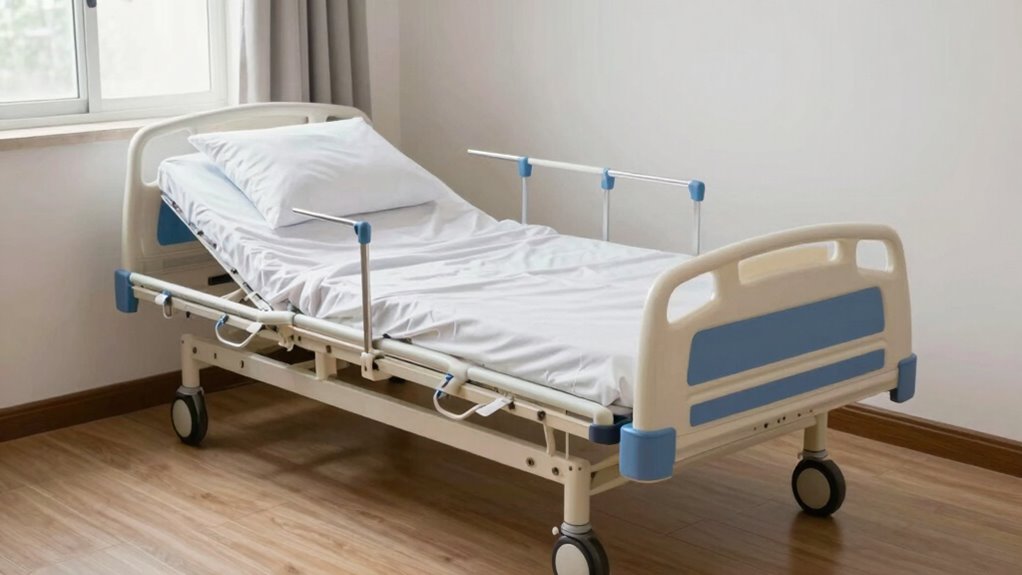
To guarantee maximum safety, it’s vital to properly place and space the hospital bed within the room. Effective bed positioning helps prevent falls and injuries, so position the bed away from windows, cords, and sharp furniture edges. Confirm the bed is centered and accessible from all sides, allowing you to assist easily. Use space planning to keep a clear path around the bed—at least 2 feet of space on each side and at the foot of the bed. This provides enough room for caregivers and mobility aids. Avoid clutter around the bed to reduce tripping hazards. Proper placement also considers proximity to the bathroom and emergency exits. Thoughtful space planning enhances safety and makes caregiving more efficient.
Securing Hospital Bed Components to Prevent Accidents

Securing hospital bed components is essential to prevent accidents and guarantee safety. Start by ensuring the bed height adjustment is locked in place after setting it at a safe level, reducing the risk of falls or unexpected movements. Regularly check that side rails are securely attached and functioning correctly. Proper side rail safety involves making sure they are raised and locked when necessary, especially during sleep or transfers, to prevent your loved one from falling out of bed. Avoid leaving side rails down unless advised by a healthcare professional. Keep all bed components tight and in good condition, inspecting for loose bolts or damaged parts. These precautions help create a safer environment, minimizing the chance of accidents and ensuring peace of mind.
How to Safely Transfer Your Loved One and Prevent Falls

Ensuring that hospital bed components are secure helps create a safer environment, especially when transferring your loved one. Adjust the bed height to a comfortable level, reducing strain and risk of falls. Proper patient positioning is vital—keep your loved one centered and supported to prevent slipping. When transferring, use proper techniques: lock the wheels, encourage your loved one to sit up slowly, and assist with their weight. Always communicate clearly, and avoid rushing.
| Bed Height Adjustment | Patient Positioning | Transfer Safety Tips |
|---|---|---|
| Lower for transfers | Keep supported | Lock wheels |
| Raise for comfort | Maintain alignment | Use transfer aids |
| Optimal for safety | Prevent sliding | Communicate clearly |
Essential Safety Features and Accessories for Hospital Beds

Hospital beds come equipped with essential safety features and accessories that help protect your loved one and make caregiving easier. These include:
- Bed rails for bed rail safety, preventing falls and ensuring secure positioning.
- Emergency alert systems that allow your loved one to call for help quickly if needed.
- Adjustable head and foot sections to customize comfort and reduce pressure points.
These features work together to promote safety and independence. Bed rails should be used carefully, ensuring they are properly installed and not creating entrapment hazards. Emergency alert systems provide peace of mind by enabling immediate communication with caregivers. By selecting a bed with these accessories, you enhance safety and foster a more secure environment at home.
Tips for Maintaining the Bed to Ensure Long-Term Safety

To keep the bed safe over time, you need to perform regular inspections to catch any issues early. Proper cleaning procedures help prevent germs and maintain the bed’s functionality. Staying on top of these tasks guarantees long-term safety for your loved one.
Regular Bed Inspections
Regular inspections are essential for keeping the bed safe and functional over time. By routinely checking the bed, you ensure all parts, especially the bed frame, remain secure and stable. Regularly assess these key areas:
- Verify the integrity of the bed frame, looking for cracks or loose bolts.
- Confirm the mattress fits properly, ensuring compatibility to prevent slips or damage.
- Test all moving parts, such as the brakes and height adjustment mechanisms, for smooth operation.
Maintaining these elements prevents potential accidents and prolongs the bed’s lifespan. Keep a schedule for inspections, and address any issues immediately. This proactive approach guarantees the safety and comfort of your loved one while safeguarding your investment in their care.
Proper Cleaning Procedures
Keeping the bed clean is essential for preventing infections and ensuring safe use over time. Follow proper cleaning protocols by regularly wiping down surfaces with approved disinfectants. Pay close attention to high-touch areas like side rails, control panels, and mattress surfaces. Use sanitation practices that eliminate germs without damaging the bed’s components. Always read manufacturer instructions for cleaning solutions to avoid voiding warranties or harming materials. Make sure to remove and replace bedding frequently, laundering it according to recommended guidelines. Regularly inspect for dirt, stains, or damage, and clean promptly to maintain a hygienic environment. Consistent sanitation practices not only extend the bed’s lifespan but also protect your loved one’s health by reducing the risk of infections.
Recognizing and Addressing Common Home Safety Risks With Hospital Beds
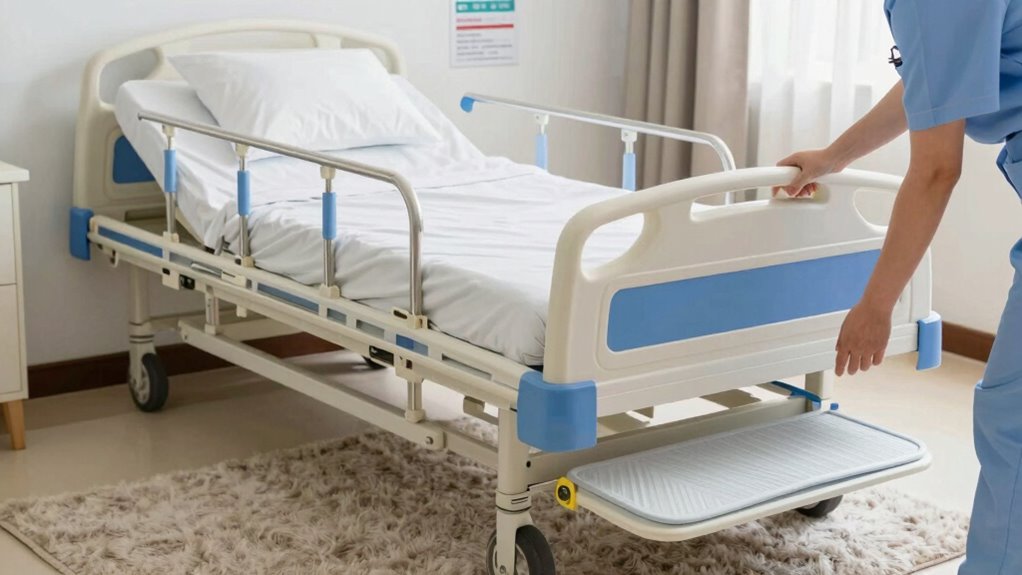
Understanding common safety risks with hospital beds is essential to preventing accidents at home. You should regularly assess your environment for hazards like clutter, uneven flooring, or loose rugs that could cause falls. To effectively address these risks, focus on three key areas:
- Ensuring the bed wheels are locked when not moving it to prevent unintended movement.
- Keeping emergency preparedness kits nearby, so you’re ready for emergencies.
- Providing caregiver training to recognize potential hazards and respond appropriately.
Resources and Support for Safe Hospital Bed Use at Home

Finding the right resources and support can make a significant difference in ensuring safe hospital bed use at home. Local healthcare providers, home health agencies, and community organizations offer valuable guidance on proper bed setup and maintenance. Many provide training on hospital etiquette and bedside manners, helping you communicate effectively with your loved one and ensure their comfort. Support groups and caregiver networks also offer emotional encouragement and practical advice from others facing similar challenges. Additionally, reputable online resources and caregiver hotlines can answer questions quickly. Don’t hesitate to reach out for professional assistance or educational materials to improve safety and comfort. Access to these resources not only enhances your confidence but also promotes a safer, more respectful environment for your loved one.
Frequently Asked Questions
How Often Should Hospital Beds Be Inspected for Safety Issues?
You should inspect your hospital bed at least once a week for safety issues. Check the bed frame for any signs of damage or loose parts, making sure it’s sturdy. Also, verify that the mattress remains stable and properly positioned. Regular inspections help prevent accidents and ensure comfort. If you notice any problems, address them immediately or consult a professional to maintain a safe environment for your loved one.
Are There Specific Age Considerations for Hospital Bed Use at Home?
Sure, age restrictions are a thing—because apparently, adults don’t need hospital beds, right? But in reality, you should consider developmental considerations and age-specific needs. For little ones, extra safety features matter, while seniors might need adjustable beds for comfort. Always evaluate the person’s mobility, health, and safety requirements, because ignoring age considerations could turn your home into a not-so-safe hospital ward.
What Emergency Procedures Should Caregivers Prepare for With Hospital Beds?
You should prepare for medical emergencies by establishing clear emergency protocols, such as quickly disconnecting the bed’s electrical supply and calling 911. Keep emergency contact numbers handy and guarantee all caregivers know how to operate safety features. Practice these procedures regularly so you’re ready to respond swiftly during medical emergencies. Being prepared helps protect your loved one and ensures you handle emergencies calmly and effectively.
How Do I Ensure Proper Ventilation Around the Hospital Bed?
To keep proper ventilation around the hospital bed, you need to make certain good airflow optimization. Open windows when possible and position the bed away from walls or furniture that block airflow. Use ventilation accessories like vents or fans to improve circulation. Regularly check that air isn’t stagnating, as it’s better to be safe than sorry, and good airflow helps prevent infections and discomfort for your loved one.
Can Hospital Beds Be Safely Used Outdoors or in Non-Traditional Settings?
You can use hospital beds outdoors or in non-traditional settings if you guarantee proper safety measures. For outdoor installation, choose a flat, stable surface protected from the elements, and verify the bed is weather-resistant. Avoid non-traditional use that could compromise safety—always follow manufacturer guidelines and consider additional supports or barriers. Regularly inspect the bed for wear or damage, and ensure it remains well-ventilated and secure in any setting.
Conclusion
Think of your home as a delicate garden, and the hospital bed as a essential plant that needs careful tending. When you follow safety tips and stay vigilant, you create a sturdy trellis that supports your loved one’s comfort and security. With every adjustment and check, you’re nurturing a safe environment—turning a once-frightening space into a sanctuary. Your attentive care keeps this garden flourishing, ensuring safety blooms at every turn.
NFL season / tailgating Picks
team gear
As an affiliate, we earn on qualifying purchases.