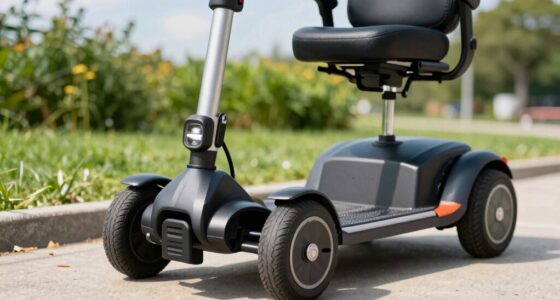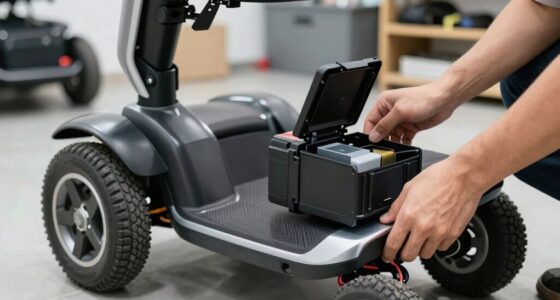
When traveling with your scooter, airlines generally allow it as either carry-on or checked baggage, but you need to follow specific rules. Lithium-ion batteries usually must be in carry-on luggage, often requiring removal or protection, and there are size and weight limits to contemplate. Arriving early, securing your scooter properly, and understanding airline policies help guarantee a smooth trip. To learn about handling tips, packing, and airline regulations, keep exploring for detailed guidance.
Key Takeaways
- Airlines typically require lithium-ion batteries to be in carry-on luggage, often needing removal or protection for safety.
- Scooters must meet size and weight restrictions for either carry-on or checked baggage, depending on airline policies.
- Proper disassembly, battery disconnection, and securing loose parts are essential to prevent damage during travel.
- Arrive early, inform airline staff about your scooter, and follow TSA procedures for inspection and handling.
- Check airline-specific policies on batteries, mobility device accommodations, and insurance coverage before traveling.
As an affiliate, we earn on qualifying purchases.
What Are Airline Policies for Flying With a Scooter?
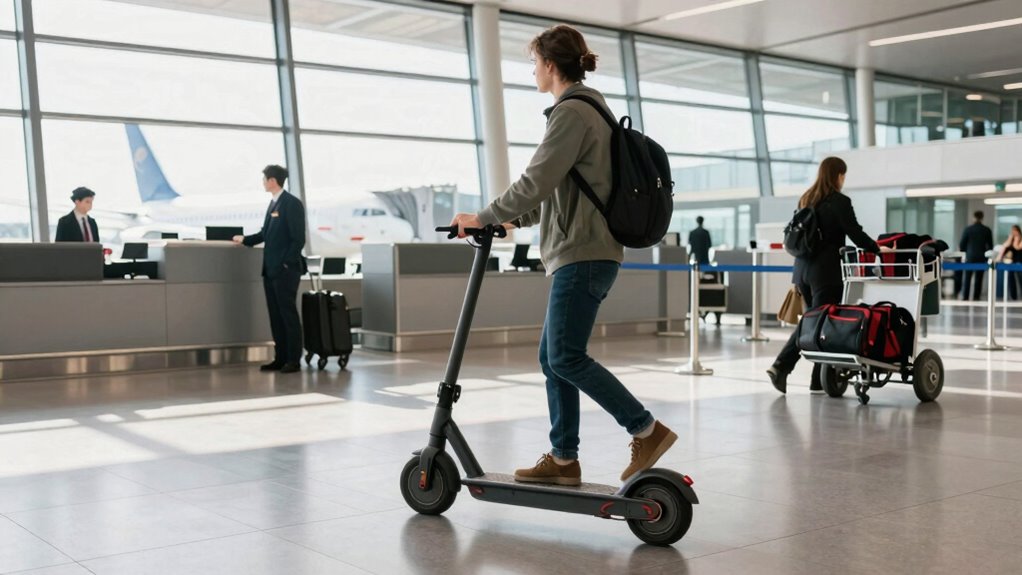
Are you wondering what airline policies you need to know before flying with your scooter? Airlines have specific guidelines for scooter battery regulations, especially for lithium-ion batteries, which must often be carried in carry-on luggage and may require battery disconnection. Check the airline’s weight and size restrictions for mobility devices, as some may treat scooters like personal mobility aids, allowing them as carry-on or checked baggage. Additionally, airline pet policies sometimes overlap with scooter rules, especially if your device contains batteries or parts that might be considered hazardous. Always review your airline’s specific policies before booking, since regulations can vary widely. Being well-informed helps ensure a smooth travel experience and avoids surprises at the airport. Consulting projector specifications can help you understand the technical requirements for any electronic devices, including scooters, during air travel. It’s also helpful to familiarize yourself with luggage & bag size and packing requirements to ensure your mobility device fits within the airline’s standards. Knowing the battery regulations beforehand can prevent delays or confiscation of your scooter at security checkpoints. Additionally, understanding battery safety practices can help you prepare your device properly for transport.
Deciding: Carry Your Scooter as Carry-On or Checked Baggage
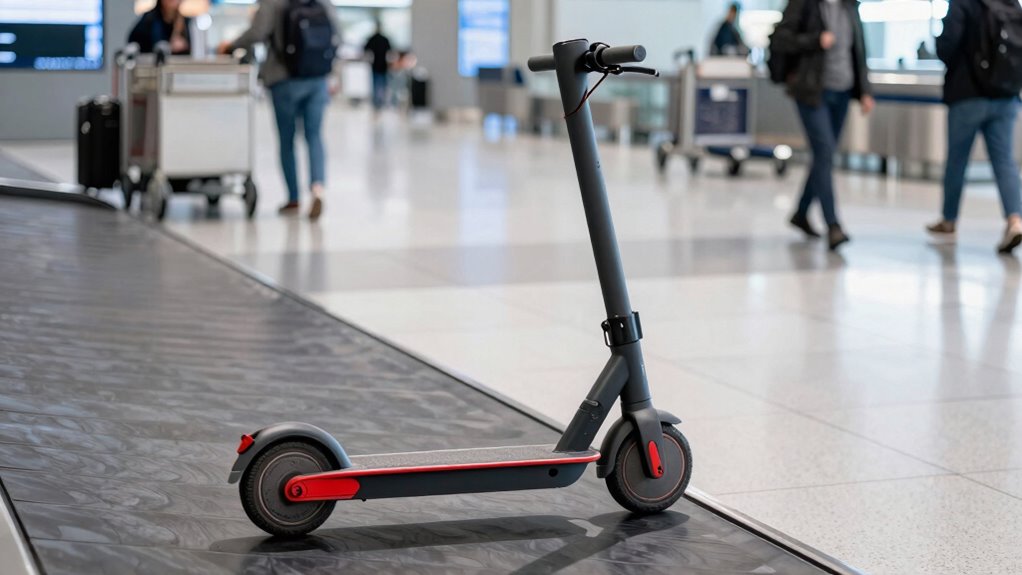
When deciding whether to carry your scooter on board or check it in, you need to contemplate size and weight limits set by airlines. Each airline has different policies about what’s allowed in the cabin versus checked baggage, so it’s important to review these before you travel. Your choice will depend on your scooter’s dimensions and the specific airline regulations you’re flying with. Additionally, considering European cloud innovation in your travel plans can help you access reliable and secure digital solutions during your trip, especially when managing baggage policies and documentation.
Size and Weight Limits
Deciding whether to carry your scooter as carry-on or checked baggage hinges on understanding size and weight limits set by airlines. Most airlines specify maximum dimensions—often around 22 x 14 x 9 inches for carry-ons—and weight limits typically between 15 to 40 pounds. If your scooter exceeds these limits, you’ll need to check it, but guarantee it fits within the airline’s weight restrictions to avoid extra fees. Battery safety is vital; lithium-ion batteries must usually be removed or protected to prevent fire hazards. Check your travel insurance to confirm coverage for damaged or lost scooters. Staying within size and weight limits not only simplifies your journey but also helps guarantee your scooter’s safety during transit, making traveling more manageable. Additionally, understanding ventilation considerations can help ensure your scooter remains in good condition throughout your trip. Considering airline regulations on batteries and accessories can further streamline your travel process and prevent delays. Being aware of battery safety protocols ensures you’re compliant with airline policies and minimizes the risk of mishandling or delays.
Airline Regulations and Policies
Understanding airline regulations and policies is essential before deciding whether to carry your scooter on board or check it in. Airlines have specific rules regarding battery safety, documentation, and baggage handling. For example, lithium-ion batteries must often be carried in carry-on luggage, and some airlines require airline documentation for battery safety compliance. Check your airline’s policies to confirm whether your scooter qualifies as a carry-on or checked baggage. Consider the following:
| Aspect | Carry-On | Checked Baggage | Notes |
|---|---|---|---|
| Battery Safety | Must be in compliance with airline regulations | Usually not allowed in checked baggage | Ensure batteries are properly protected |
| Airline Documentation | May require proof of safety standards | Not typically required | Verify if documentation is needed for batteries |
| Size & Weight | Must meet carry-on limits | Subject to checked baggage rules | Confirm size restrictions with airline |
| Additional Considerations | Scooter registration or permits may be necessary | Insurance coverage might differ for checked items | Always review airline-specific policies. Proper battery protection is vital to prevent accidents. A thorough understanding of battery safety standards can help avoid issues during travel. Additionally, proper handling procedures can ensure compliance with airline policies and safety standards. |
How to Prepare Your Scooter for Air Travel

Preparing your scooter for air travel begins with thorough inspection and necessary adjustments to guarantee it can withstand the journey. Start by checking the overall scooter maintenance, ensuring all parts are secure and functioning properly. Pay special attention to the battery safety; remove the battery if airline regulations require it, or ensure it’s fully charged and protected against damage. Inspect the tires for proper inflation and look for any signs of wear or damage. Clean the scooter to prevent dirt from causing issues during handling. If your scooter has folding or removable parts, verify they are properly secured or detached according to airline guidelines. Additionally, consult your airline’s specific policies regarding vetted scooter transportation to ensure compliance. Proper preparation minimizes the risk of damage and ensures a smoother check-in process, giving you peace of mind before your flight. Being aware of airline policies related to mobility devices can help avoid unexpected fees or issues during travel. Understanding scooter specifications can further facilitate compliance with airline safety standards and regulations. It’s also helpful to familiarize yourself with safety standards to ensure your scooter meets all necessary requirements for air travel.
Airline Restrictions and Guidelines You Should Know
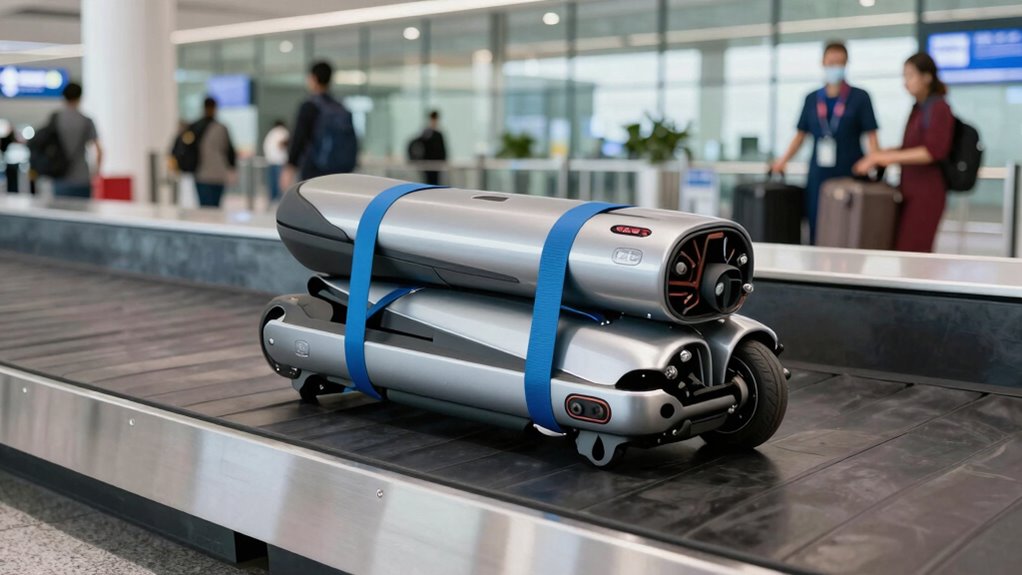
Before you pack your scooter, it’s important to familiarize yourself with airline restrictions and guidelines. Airlines have specific battery regulations, especially for lithium-ion batteries, which often require you to carry them in your carry-on baggage. Make sure your scooter’s battery complies with size and capacity limits to avoid delays or refusal. Additionally, airlines are committed to providing accessibility accommodations, so inform your airline ahead of time about your needs. They may require documentation or special arrangements to ensure smooth boarding and seating. Always check the airline’s website or contact customer service for their particular policies regarding mobility devices. Understanding these guidelines helps prevent surprises at the airport and ensures your scooter is accepted without issues during your flight. AI tools can also assist in verifying the latest airline policies to ensure compliance. Being aware of battery capacity limits and how they relate to airline policies can help prevent unexpected issues. It’s also helpful to review airline-specific mobility device policies before your trip to avoid last-minute complications. Knowing the support services available can further ease your travel experience. Additionally, consulting regulations for lithium-ion batteries can help you stay compliant with safety standards.
Tips for a Smooth Airport Experience With Your Scooter
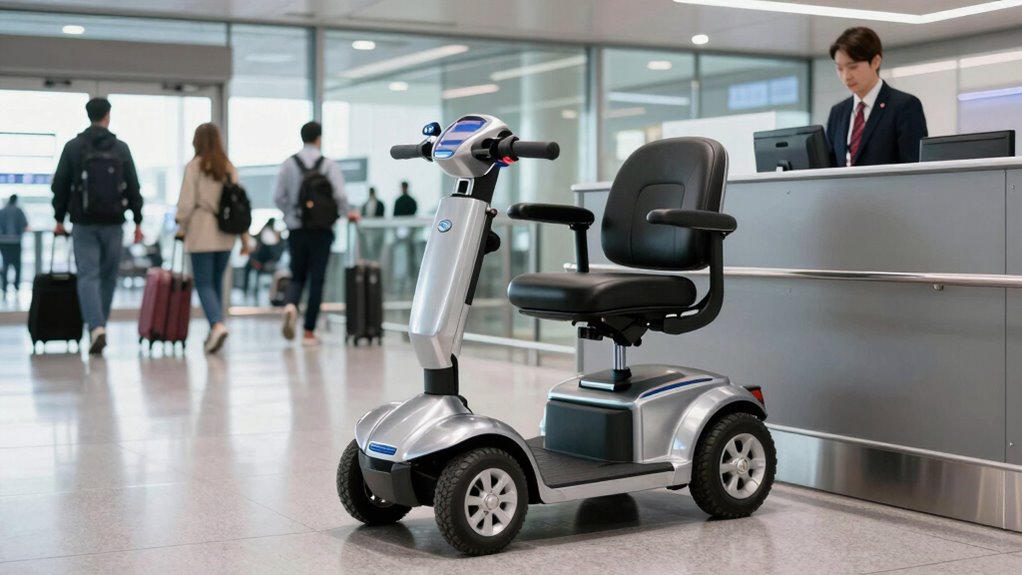
Before your trip, make sure your scooter is properly prepared and meets airline requirements. Understanding airport procedures can help you move through security smoothly. Being organized and informed will make your travel experience much easier. Additionally, consider how smart connected appliances can assist in maintaining your scooter’s functionality during travel. Familiarizing yourself with European data protection laws can also help you manage your device’s privacy settings effectively. To ensure smooth operation, it’s helpful to review smart device maintenance tips specific to travel situations.
Preparing Your Scooter Properly
Ensuring your scooter is properly prepared can make a significant difference in having a smooth airport experience. Start by checking your scooter’s battery safety; confirm it’s fully charged but not overfilled, and ensure the battery terminals are secure. Regular scooter maintenance is essential—clean and inspect wheels, brakes, and folding mechanisms to prevent surprises. To avoid delays, consider these tips:
- Remove or secure the battery according to airline regulations.
- Pack tools or spare parts in your carry-on, not checked luggage.
- Fully charge your scooter before travel for easy use upon arrival.
Navigating Airport Procedures
Traveling airport procedures with your scooter can be straightforward if you know what to expect. When going through boarding procedures, arrive early to allow time for assistance. At security checkpoints, you’ll need to remove your scooter if required, or have it inspected while powered on. To help visualize, here’s a typical process:
| Step | What to Do | Tips |
|---|---|---|
| Arrival | Check airline info for scooter policies | Arrive early for extra assistance |
| Security Check | Remove scooter or follow TSA instructions | Keep keys and charger handy |
| Boarding | Inform staff about your scooter’s needs | Use priority boarding if available |
| Onboard | Store in designated area or keep with you | Ensure easy access for disembarkment |
How to Pack and Protect Your Scooter During Flight
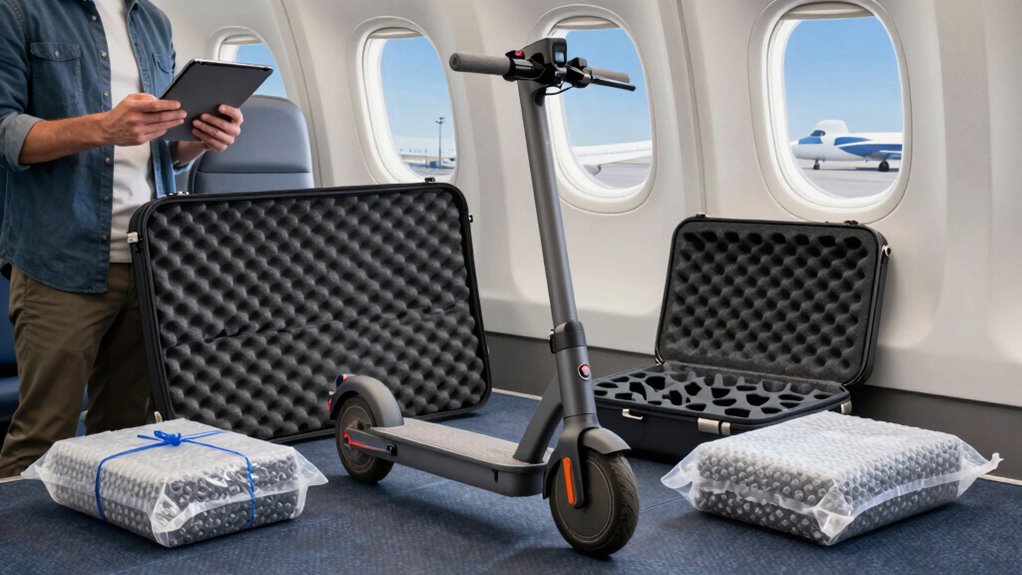
Protecting your scooter during a flight starts with choosing the right packing method. Use a sturdy, well-padded case designed for scooters to prevent damage. Always remove or disconnect the battery to ensure safety and comply with airline regulations. Secure all scooter accessories, like mirrors and lights, to avoid breakage or loss. To optimize protection, consider these tips:
- Use bubble wrap or foam padding around the scooter frame and battery to absorb shocks.
- Label the case clearly as fragile and handle with care.
- Check airline guidelines for battery safety, especially if transporting lithium-ion batteries, to prevent fire hazards.
Proper packing not only shields your scooter from damage but also guarantees safe transport, giving you peace of mind during your journey.
Additional Resources and Common Questions About Flying With Your Scooter
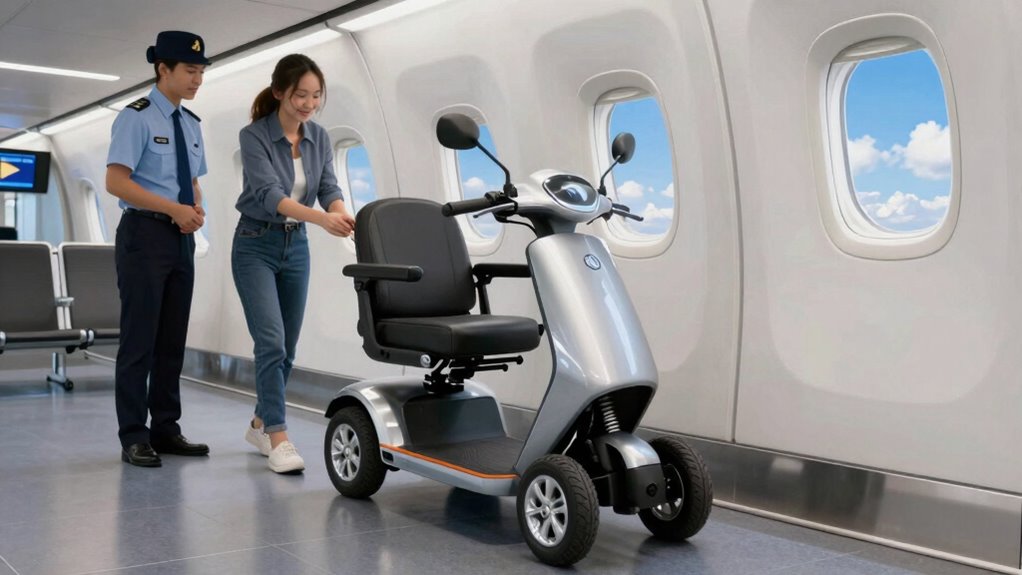
Looking for reliable resources or answers to common questions about flying with your scooter? Many airlines provide detailed guidelines on their websites, including info about charging stations at airports and policies for power mobility devices. Check if your airline offers accessible charging stations to ensure your scooter stays powered during layovers. It’s also wise to confirm your insurance coverage—some policies include protection for mobility devices during travel, while others require extra coverage. For additional assistance, reach out to airline customer service or disability advocates who can clarify rules and help you prepare. Joining online forums or support groups can also provide firsthand tips and experiences from travelers who’ve flown with their scooters. Staying informed helps ensure a smooth, stress-free journey.
Frequently Asked Questions
Are There Size Limits for Scooters on Different Airlines?
Most airline policies set size limits for scooters, typically around 48 inches in combined length, width, and height. You should check your airline’s specific rules, as scooter dimensions can vary. It’s crucial to measure your scooter beforehand and confirm with your airline to verify it meets their size restrictions. This way, you avoid surprises at the airport and make your travel experience smoother.
Can I Travel With a Powered Scooter or Only Manual Ones?
You can travel with a powered scooter, but it’s like maneuvering a maze—battery restrictions and wheelchair compatibility come into play. Airlines typically allow powered scooters if the batteries meet size and power limits, often requiring removal or special handling. Make sure your scooter’s battery complies with airline regulations, and confirm it’s wheelchair compatible for seamless travel. Double-check with your airline beforehand to avoid surprises at the gate.
Are There Specific Batteries Allowed for Scooter Travel?
Yes, there are specific battery restrictions for scooter travel. Airlines typically require you to use batteries that meet safety standards, usually requiring lithium-ion batteries with limited watt-hours. You must follow baggage policies that often restrict spare batteries to carry-on luggage only, and they must be properly protected to prevent short circuits. Always verify your airline’s specific policies before flying to ensure your scooter’s batteries are compliant and avoid travel delays.
Do I Need to Notify the Airline in Advance About My Scooter?
You should notify the airline in advance about your scooter, as “it’s better to be safe than sorry.” Doing so guarantees they provide necessary accessibility accommodations and help with any specific travel insurance policies. Airlines often require advance notice to handle the scooter properly and avoid surprises at check-in. Contact customer service early, confirm their procedures, and clarify any documentation needed to make your journey smoother and stress-free.
What Are the Costs Associated With Transporting a Scooter?
The costs for transporting your scooter vary depending on the airline, but you should anticipate to pay either a flat fee or a percentage of your ticket price. Always check the airline’s policies for specific cost considerations and insurance requirements, as some airlines may include coverage or charge extra for damage or loss. Planning ahead helps you budget effectively and ensures your scooter’s safe journey without surprises.
Conclusion
Traveling with a scooter is like exploring a new city — it takes preparation, patience, and the right map. When you understand airline policies and pack wisely, your journey becomes smoother and more enjoyable. Think of your scooter as your trusted travel companion, helping you explore with confidence. With the right planning, you’ll be cruising through airports and reaching your destination with ease, turning travel hurdles into a straightforward adventure.