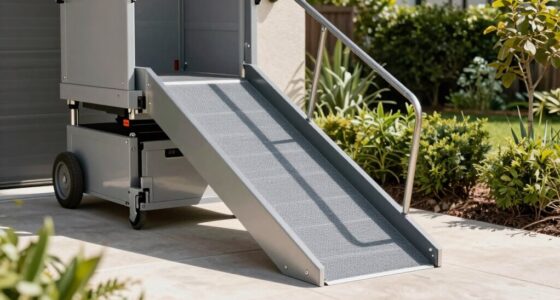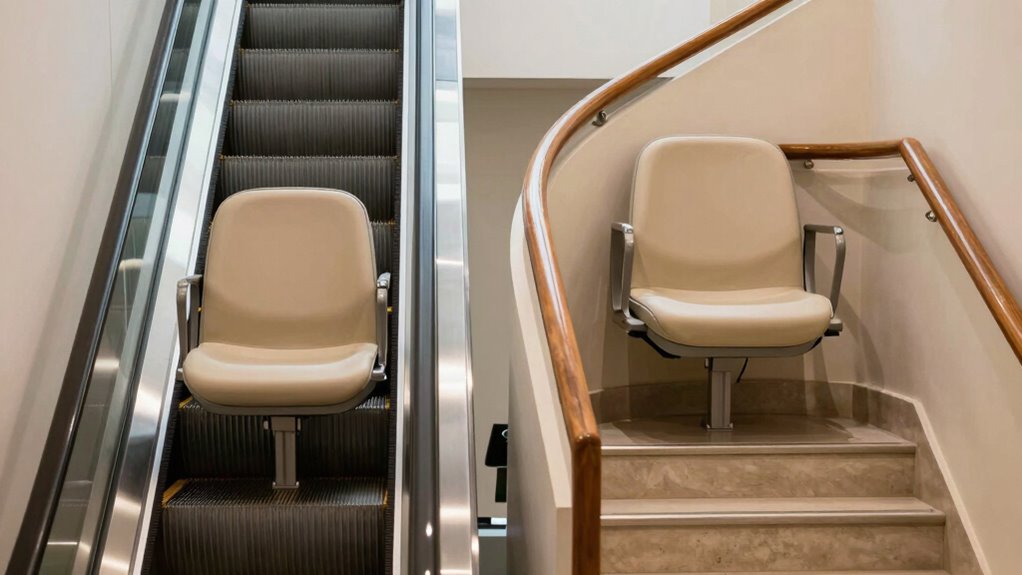

Choosing between curved and straight stair lifts depends on your staircase’s layout, safety needs, and budget. Straight lifts are simple, cost-effective, and quick to install, making them ideal for linear stairs. Curved lifts, though more expensive and complex to install, fit custom staircases perfectly and save space. Weighing these pros and cons helps you find the best match; exploring further will give you all the details to make a confident decision.
Key Takeaways
- Straight stair lifts are more affordable, quicker to install, and ideal for linear staircases, while curved lifts offer customized fit for complex layouts.
- Curved lifts provide enhanced safety and space efficiency on winding stairs but require higher initial investment and maintenance.
- Straight models are simpler, with fewer moving parts, resulting in lower maintenance and easier repairs.
- Curved lifts seamlessly integrate into home architecture, matching décor and optimizing space on complex staircases.
- The choice depends on staircase design, budget, safety needs, and long-term maintenance considerations.
Amazon Product B077NQ8MSX
As an affiliate, we earn on qualifying purchases.
Which Stair Lift Is Right for Your Home?
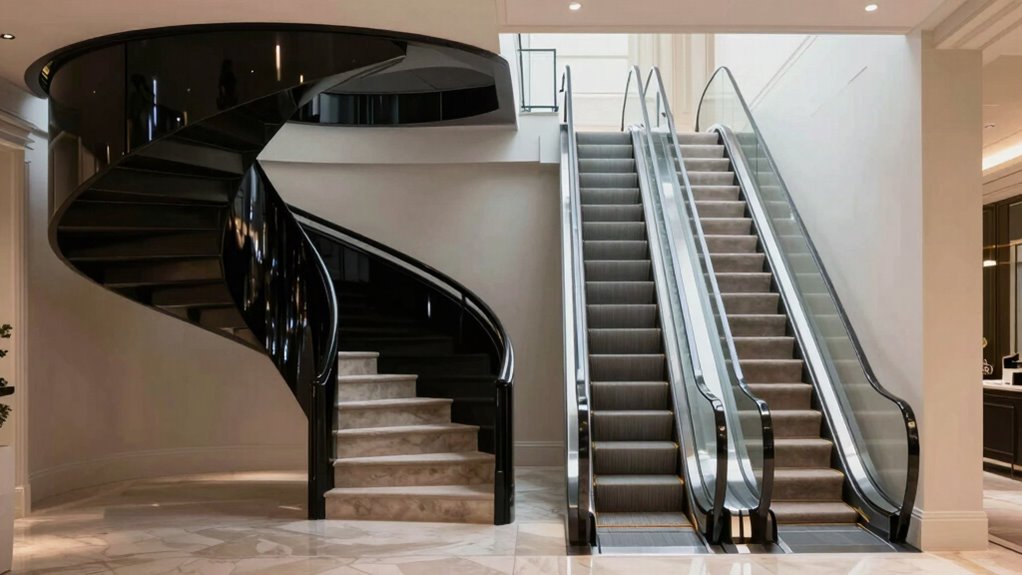
Choosing the right stair lift depends on your home’s layout and your specific mobility needs. You want a solution that guarantees installation safety while prioritizing your comfort. Straight stair lifts are ideal if your staircase is linear, providing a simple, cost-effective option that’s easier to install and maintain. They tend to offer a smoother ride and are suitable for most standard staircases. Additionally, if your staircase has any irregularities, it’s important to consider customization options that can accommodate unique configurations. However, if your home features a curved or complex staircase, a custom curved stair lift might be necessary. This type ensures safety around turns and landings, offering a comfortable, tailored fit. When selecting, consider factors like space constraints, ease of use, and safety features. Making an informed choice will enhance both safety and user comfort, helping you regain independence with confidence. Additionally, European cloud innovation emphasizes the importance of reliable technology, which can be essential for modern stair lift systems that incorporate smart features. Understanding the technological integration in modern stair lifts can help you choose a system that offers both safety and convenience. Moreover, considering maintenance requirements can ensure the longevity and optimal performance of your stair lift over time, as regular upkeep can prevent unexpected issues and extend the lifespan of your equipment.
Amazon Product B0FHPFMW2S
As an affiliate, we earn on qualifying purchases.
What Are the Differences Between Curved and Straight Stair Lifts?
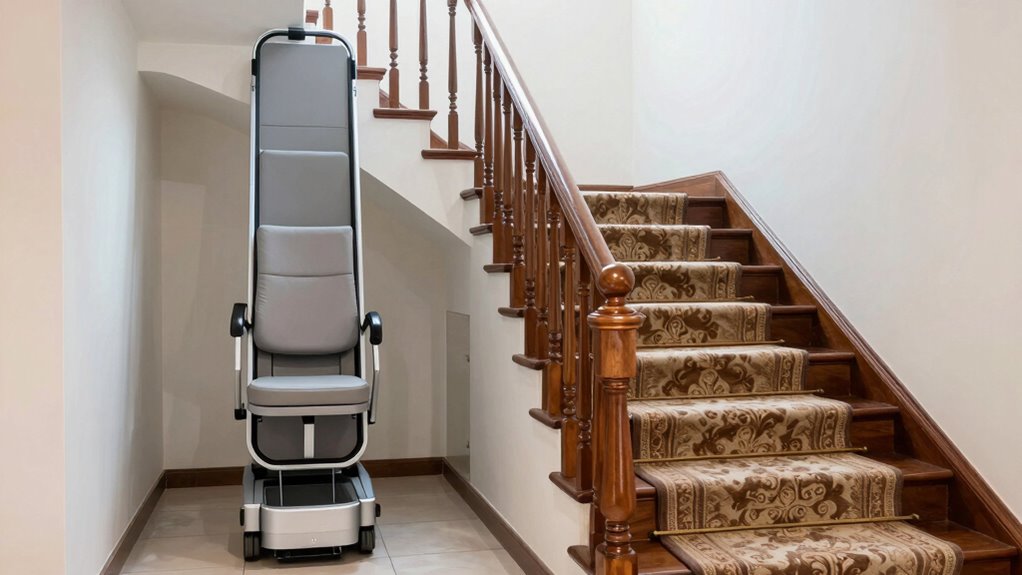
What sets curved and straight stair lifts apart? The main difference is their design: straight lifts are built for staircases without turns, offering a simple, linear track. Curved lifts are custom-made to fit staircases with bends or landings, making them more versatile. When considering stair lift safety, straight models typically have fewer moving parts and are easier to maintain, but curved lifts provide better accessibility features tailored to complex layouts. Curved lifts also ensure a smoother ride on winding stairs, reducing the risk of accidents. Accessibility features may include adjustable seats, safety sensors, and secure seat belts. Ultimately, the choice depends on your staircase’s shape, but understanding these differences helps you optimize both safety and convenience.
Amazon Product B0DNN6HMDC
As an affiliate, we earn on qualifying purchases.
What Factors Should You Consider When Choosing a Stair Lift?
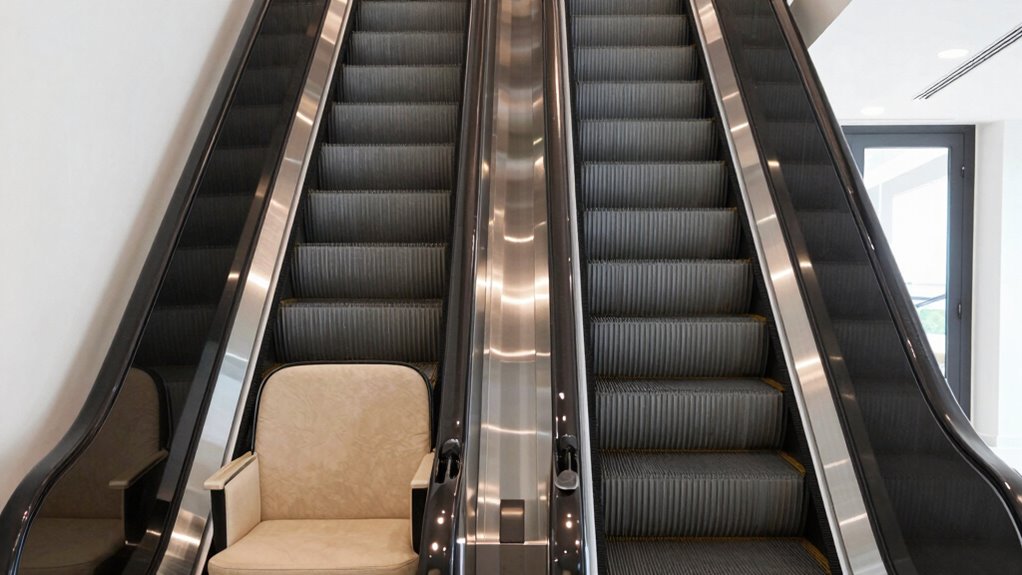
When selecting a stair lift, it’s important to evaluate several factors to guarantee you get the right fit for your needs. First, prioritize stair lift safety features like secure seat belts, reliable braking systems, and smooth operation to prevent accidents. Next, consider the ergonomic design—ensure the seat and controls are comfortable and easy to use, especially if you’ll be riding frequently. Measure your staircase carefully, noting its dimensions and any curves or landings, so you choose a model that fits perfectly. Think about power source options and maintenance requirements, too. Additionally, exploring local automation options can help tailor your stair lift setup to integrate seamlessly with your smart home system. Incorporating Rhythm Failure themed features or accessories might enhance the aesthetic appeal of your stair lift setup. It’s also beneficial to research stair lift regulations in your area to ensure compliance and safety standards. Conducting a professional assessment can provide personalized recommendations based on your staircase configuration. Moreover, understanding the thermal behavior of different stair lift materials can help you select a durable and comfortable model. By focusing on safety and ergonomic design, you’ll make a smart choice that offers comfort, security, and long-term reliability for your mobility needs.
Amazon Product B0CWQVVLDJ
As an affiliate, we earn on qualifying purchases.
Why Choose a Straight Stair Lift? Benefits and Suitability
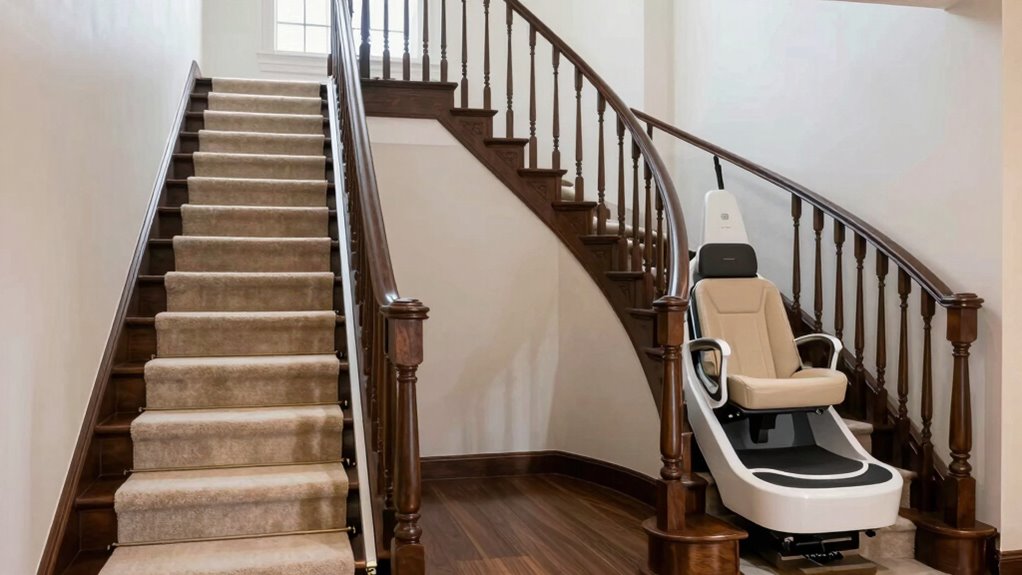
Straight stair lifts are often the most practical and cost-effective option for many households, especially if your staircase has no curves or landings. They’re simple to install and typically quicker to set up, saving you money. You’ll find that seat comfort is usually adjustable, ensuring a smooth and comfortable ride. Additionally, straight lifts tend to operate quietly, minimizing noise levels and maintaining a peaceful environment at home. Because they’re designed for straight staircases, they fit securely and function efficiently without the need for custom modifications. If your staircase is straightforward, a straight stair lift offers a reliable, affordable solution that combines ease of use with comfort. This makes it an ideal choice for those seeking practicality and comfort without the extra cost of custom features. Plus, ensuring your stair lift is installed by a reputable provider can help you avoid potential scams and ensure safety. Moreover, choosing a model with easy installation features can further simplify the process and reduce installation time. Selecting a model with standardized components can also facilitate easier maintenance and repairs, providing additional peace of mind. For added peace of mind, selecting a model with reliable safety features can help protect users during operation.
Why Opt for a Curved Stair Lift? Advantages for Custom Staircases
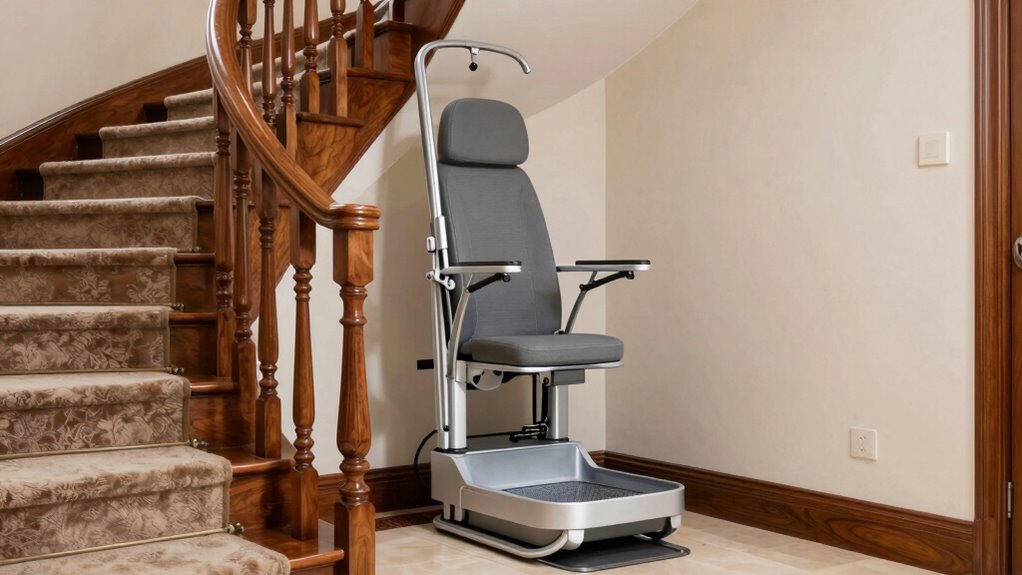
If your staircase curves or has unique angles, a curved stair lift offers a perfect fit that straight models can’t provide. It also makes better use of space, fitting snugly along your staircase without unnecessary bulk. Additionally, customized solutions like a curved stair lift can be tailored to accommodate various staircase layouts, ensuring optimal comfort and safety. Plus, you can customize the design to match your home’s style, ensuring both function and aesthetics are maintained. For intricate staircases, a customized solution like a curved stair lift is often more practical and comfortable.
Perfect Fit for Curves
Curved stair lifts are designed to follow the unique contours of your staircase, making them an ideal choice for custom layouts. This guarantees a perfect fit regardless of twists or turns, enhancing stair lift safety. An ergonomic design means the seat and controls are tailored for comfort and ease of use, reducing strain during each ride. Because they are custom-built, curved stair lifts seamlessly integrate into your home’s architecture, avoiding awkward gaps or obstructions. This precise fit not only improves safety but also creates a sleek, professional appearance. With the ability to adapt to intricate staircases, curved lifts provide a reliable, comfortable, and secure solution for maneuvering complex staircases. They truly offer a tailored experience that straight models can’t match. Incorporating simple tools like CADR quick‑calculators can help ensure the lift’s placement maintains proper airflow and safety standards.
Enhanced Space Efficiency
Because curved stair lifts are custom-designed to match your staircase’s unique layout, they make efficient use of limited space. This tailored fit guarantees you don’t waste any room, even on narrow or winding stairs. Plus, they maximize ergonomic comfort, allowing you to sit comfortably during your ride. The design also integrates essential safety features, like secure seat belts and smooth-start technology, to keep you safe without taking up extra space. Additionally, rendering lard can serve as a helpful reference for understanding traditional customization techniques that improve functionality and efficiency. Consider these benefits: – Precise fit minimizes footprint on tight or awkward stairs – Enhanced ergonomic comfort for longer rides – Built-in safety features for peace of mind
Choosing a curved stair lift ensures you optimize space while prioritizing your comfort and safety.
Custom Design Options
Custom design options allow your stair lift to perfectly match the unique contours of your staircase, providing a seamless and aesthetically pleasing solution. With home customization, you can select a design that complements your interior decor and preserves your home’s charm. This level of design flexibility means your curved stair lift isn’t just functional—it becomes an integrated part of your space. Whether your staircase has tight turns or unusual angles, a custom curved lift fits precisely, avoiding awkward gaps or bulky fixtures. These tailored options ensure your lift enhances safety and convenience without sacrificing style. By choosing a curved stair lift with custom design options, you’re investing in a solution that adapts to your home’s architecture, giving you a personalized, effective mobility aid that looks and functions perfectly.
How Do Costs Compare for Curved and Straight Stair Lifts?
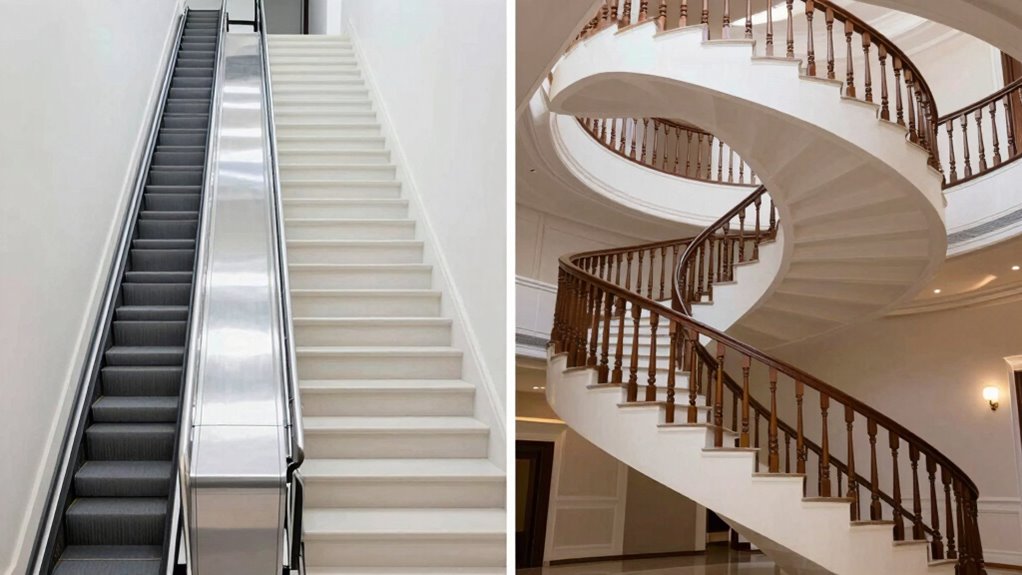
Generally, straight stair lifts cost less than their curved counterparts, making them a more budget-friendly option for many homeowners. When considering the cost comparison, straight models typically require less customization, which reduces expenses. You’ll find that:
- Straight lifts are generally quicker and cheaper to install
- Curved lifts involve custom manufacturing for your staircase’s unique shape
- Maintenance costs for straight lifts tend to be lower due to simpler designs
These factors can considerably impact your budget planning, helping you save money upfront and over time. While curved stair lifts offer tailored solutions for complex staircases, their higher price reflects the additional work involved. Weighing these costs will help you choose a lift that fits your financial plan.
How Are Stair Lifts Installed and Maintained?
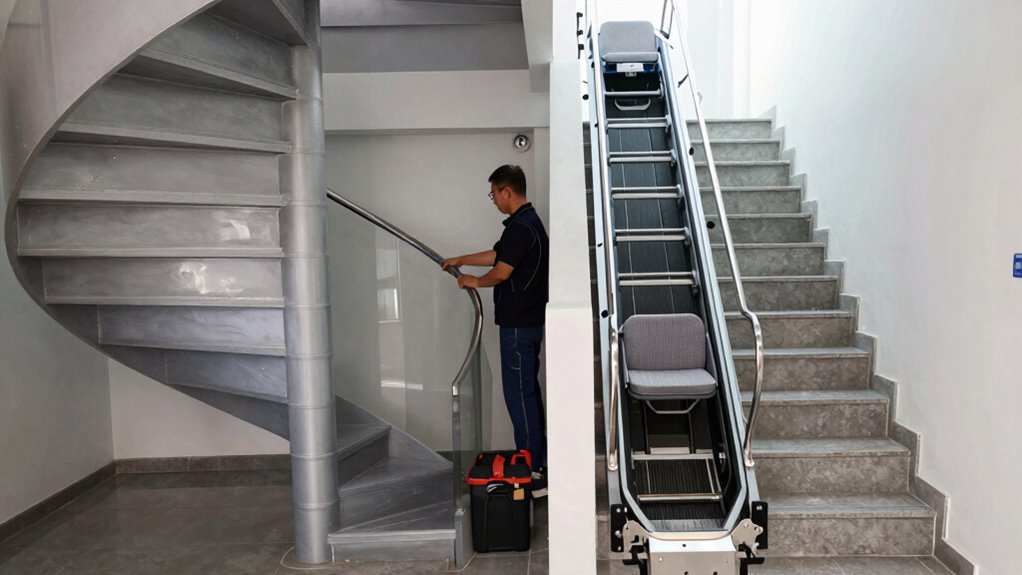
Installing a stair lift involves precise measurements and secure mounting to guarantee safety and smooth operation. Proper installation techniques ensure the lift functions correctly and safely. Once installed, regular maintenance keeps the lift functioning properly and extends its lifespan. You’ll also want to know how to troubleshoot common issues to keep everything running smoothly. Additionally, understanding vacuum features to consider can help ensure your home setup remains compatible with any cleaning devices needed to maintain the area around your stair lift. Proper installation procedures are essential to prevent potential safety hazards and ensure the lift operates reliably over time. Incorporating safety standards during installation further enhances overall security and user confidence. Moreover, applying principles of Indigenous wellness can promote a holistic approach to safety and health in your environment.
Installation Process Overview
To guarantee your stair lift functions safely and smoothly, proper installation and regular maintenance are essential. During installation, a professional assesses your staircase, ensuring the lift is securely anchored and aligned for ergonomic comfort. They also configure safety features for maximum protection. You should expect:
- Precise attachment of rails tailored to curved or straight stairs
- Calibration of the seat and footrest for comfort and safety
- Testing of safety features like sensors and seat belts
This process ensures your lift operates smoothly and safely. Once installed, routine checkups help maintain excellent performance and safety. Proper installation not only guarantees ergonomic comfort but also ensures safety features function correctly, giving you peace of mind. Additionally, understanding sound healing science can inspire innovative approaches to enhancing overall well-being during the recovery process.
Maintenance Requirements
After your stair lift is installed, regular maintenance keeps it operating safely and smoothly. You should check the battery life regularly and replace batteries as needed to prevent power loss. Keep the rails and seat clean with simple cleaning routines—use a damp cloth to remove dust and dirt. This prevents buildup that could interfere with operation.
| Maintenance Task | Frequency |
|---|---|
| Check battery status | Monthly |
| Clean rails and seat | Weekly |
| Inspect safety sensors | Monthly |
| Test operation | Every few months |
Performing these tasks ensures your stair lift remains reliable and safe, reducing the risk of breakdowns and prolonging its lifespan. Proper upkeep makes all the difference in smooth, trouble-free use.
Troubleshooting Common Issues
When your stair lift encounters issues, quick troubleshooting can often resolve problems before calling for professional help. Start by checking the remote controls; verify batteries are fresh and signals are clear. Next, examine the safety sensors—sometimes dirt or misalignment can prevent the lift from operating smoothly. Finally, inspect for obstructions on the track or seat that could interfere with movement.
Here are key troubleshooting tips:
- Reset the remote control and test the signal
- Clean and realign safety sensors
- Clear the track of any debris or obstacles
If these steps don’t resolve the problem, consult your user manual or contact a professional technician. Regular maintenance helps prevent issues, but quick troubleshooting keeps your stair lift functioning smoothly in the moment.
How Do Design and Aesthetics Match Your Home’s Style?
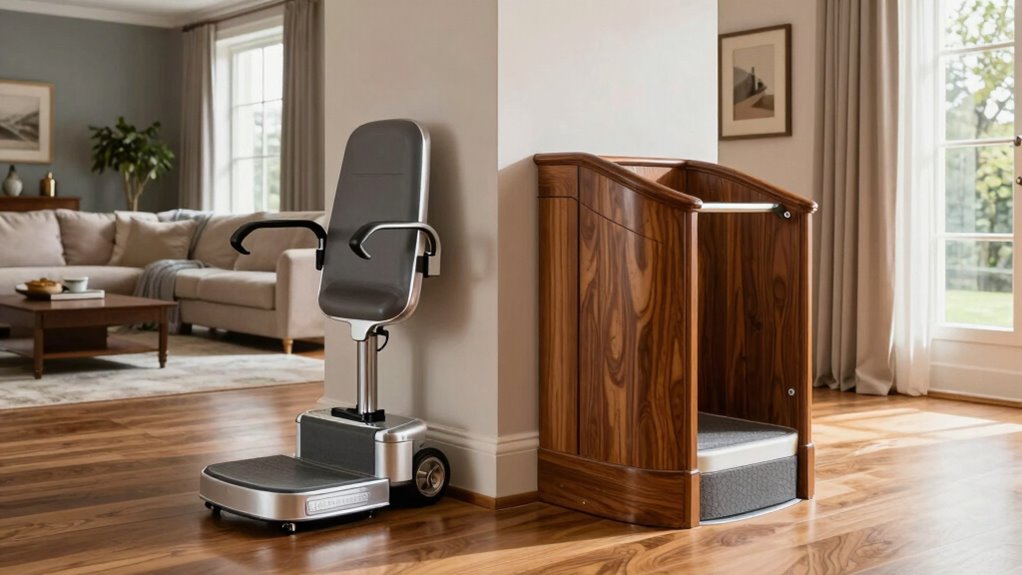
Choosing between a curved and straight stair lift involves more than just functionality; it’s also about how well the design complements your home’s style. You want a lift that seamlessly integrates with your home decor, augmenting rather than disrupting your space. Curved lifts often feature custom upholstery and sleek profiles that blend with intricate staircases, while straight lifts tend to have simpler, more streamlined designs. Consider color coordination to ensure the lift matches wall colors, flooring, or existing furniture. A well-chosen design can make your home feel cohesive and stylish, rather than cluttered or out of place. Additionally, understanding the aesthetic harmony of your lift with your interior decor can greatly enhance your home’s overall ambiance. For a truly integrated look, consider consulting with an interior designer to select a lift that complements your existing interior style. Ultimately, the right aesthetic choice ensures your stair lift enhances your home’s overall look while providing practical mobility support.
What Common Challenges Might You Face When Installing or Using Your Stair Lift?
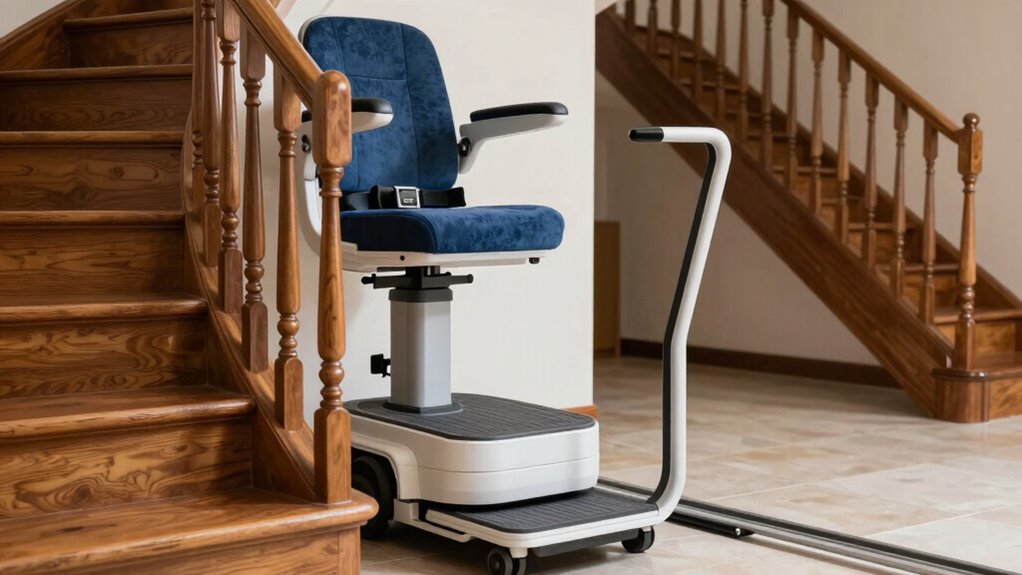
When installing or using your stair lift, space constraints and fitting issues can pose challenges, especially in tight or irregular staircases. Mechanical and electrical problems might also arise over time, affecting smooth operation. Being aware of these common hurdles helps you prepare for a seamless experience.
Space Constraints and Fittings
Installing a stair lift often presents space-related challenges that can complicate the process. You might find limited room for the lift’s track or seat, especially on narrow or curved staircases. Common issues include:
- Fitting the lift without obstructing doorways or hallways
- Ensuring the track curves smoothly on angled or winding stairs
- Choosing from available color options to match your decor
Additionally, you’ll want to take into account safety features that don’t interfere with space, like fold-up seats or compact designs. Proper fittings are essential to maximize available space while maintaining comfort and safety. Curved lifts, in particular, often require precise measurements and custom fittings. Being aware of these constraints helps ensure your stair lift fits seamlessly into your home without sacrificing style or safety.
Mechanical and Electrical Issues
Mechanical and electrical issues can pose significant challenges during both the installation and daily use of your stair lift. A stable power supply is vital for smooth operation, so verify your outlet provides consistent voltage. Power fluctuations can cause jerky movements or shutdowns. Motor reliability is also essential; a weak or faulty motor may lead to stalls, noise, or uneven movement. Regular maintenance helps prevent these problems, but if your stair lift’s motor or electrical connections are compromised, it could require costly repairs or replacement. Additionally, wiring issues might cause intermittent power loss or safety concerns. Being aware of these potential challenges allows you to choose a dependable model and schedule routine checks, ensuring your stair lift operates safely and efficiently over the long term.
How to Make Your Final Decision on the Best Stair Lift for You
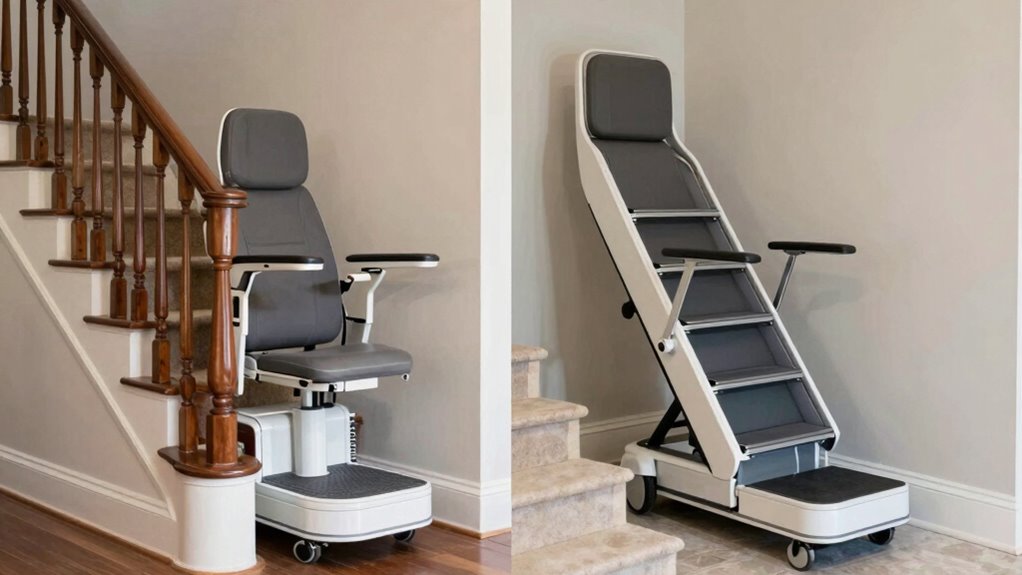
Deciding on the best stair lift for your needs involves carefully weighing several key factors. First, consider safety features like seat belts, sensors, and smooth stop functions to protect you. Second, prioritize user comfort with adjustable seats, armrests, and control options that suit your preferences. To make an informed decision, focus on these essentials:
- Safety features that guarantee your protection
- User comfort for a pleasant ride
- Compatibility with your staircase layout
Evaluate whether a curved or straight lift fits your staircase, and check for ease of use and maintenance. Keep in mind your daily routine, mobility needs, and long-term reliability. Taking these factors into account helps you choose a stair lift that maximizes safety and comfort for years to come.
Frequently Asked Questions
Can Curved Stair Lifts Accommodate Irregularly Shaped Staircases?
Yes, curved stair lifts can accommodate irregularly shaped staircases, offering greater design flexibility. They are custom-made to fit your unique staircase layout, ensuring a seamless fit. Keep in mind, they may require more space and installation time due to their tailored design. You’ll find that curved lifts are ideal if your staircase isn’t straight, providing comfort and safety without compromising your home’s aesthetics.
Are Curved Stair Lifts More Prone to Mechanical Issues Than Straight Ones?
Curved stair lifts are slightly more prone to mechanical issues than straight ones due to their complex installation and intricate design. You’ll find that they involve more parts, which can increase potential maintenance needs. Additionally, the installation complexity makes them costlier initially. However, with proper maintenance, they can be reliable. If you prioritize durability and lower maintenance, straight lifts may be a better choice for you.
How Long Does Installation Typically Take for Curved vs. Straight Lifts?
Surprisingly, installation for curved stair lifts takes longer than straight ones—think weeks rather than days. You’ll navigate a complex customization process, ensuring the lift fits your unique staircase. Straight lifts, in contrast, often install in a day or two, thanks to their standard design. So, if you’re in a hurry, be prepared for a more involved process with curved lifts, but the final fit is worth the wait.
Do Curved Stair Lifts Require More Maintenance Than Straight Models?
Curved stair lifts generally require more maintenance than straight models because of their complex tracks and additional components. You should expect to perform regular stair lift maintenance to ensure smooth operation and lift longevity. While curved lifts might need more attention over time, proper upkeep can keep them running efficiently for years. Regular inspections and timely repairs help prevent issues, ensuring your curved stair lift remains reliable and safe.
Are There Safety Differences Between Curved and Straight Stair Lifts?
Safety standards guarantee both curved and straight stair lifts meet strict regulations, but curved models often pose additional challenges. You should prioritize user precautions, like proper harness use and regular maintenance, to prevent accidents. While both types are safe when installed correctly, curved lifts may require extra attention due to their complex design. Always choose a reputable installer and follow safety guidelines to ensure your safety and confidence during use.
Conclusion
Choosing between a curved and straight stair lift might feel overwhelming, but remember, this decision can transform your daily life more than you ever imagined. By weighing the benefits, installation needs, and your home’s unique layout, you’ll find the perfect fit. Don’t settle for less when you can elevate your independence and comfort to new heights—your ideal stair lift is just a decision away. Take the step today and make your home safer and more accessible!