
To teach seniors to use a new mobility device, start by evaluating their needs and creating a safe, clutter-free space with proper lighting. Demonstrate step-by-step how to operate the device using visual aids, explaining each action clearly. Encourage hands-on practice with patience and positive reinforcement, helping them build confidence. Address concerns and safety habits along the way. If you want practical tips for effective training, keep exploring more strategies to support their independence.

Turn quiet afternoons into listening time
- Thousands of audiobooks, podcasts and originals
- Listen on your phone, tablet or Echo — also offline
- Cancel anytime
Key Takeaways
- Conduct personalized assessments to tailor device features and create a safe, accessible environment for training.
- Use clear visual aids, simple instructions, and demonstrations to enhance understanding and retention.
- Provide hands-on practice with positive reinforcement, encouraging repetition to build confidence and familiarity.
- Address fears and celebrate small successes to boost morale and promote long-term independence.
- Reinforce safety practices, troubleshooting, and problem-solving to support safe, independent device use.
As an affiliate, we earn on qualifying purchases.
Assess Your Senior’s Mobility Needs and Device Options

Before choosing a mobility device, it’s important to evaluate your senior’s specific needs and capabilities. Start with mobility evaluations to understand their strength, balance, and range of motion. These assessments help identify whether they need additional support or specific features. Device customization is key to ensuring comfort and safety, so consider options that can be tailored to their unique requirements. For example, some seniors may need adjustable height, padded hand grips, or lightweight frames. Additionally, understanding kitchen science & materials can aid in selecting lightweight and durable devices that are easier to handle and maintain. Advances in materials engineering have led to the development of lightweight, sturdy components that improve user experience. Incorporating material properties can further optimize device performance by balancing weight, durability, and ease of use. Exploring material innovations can provide insights into the latest options for enhancing mobility devices. For instance, selecting materials with enhanced strength-to-weight ratios can significantly improve ease of handling. By thoroughly assessing their mobility, you can select a device that enhances independence and minimizes discomfort. Taking the time to evaluate these factors ensures that your senior receives the most appropriate and effective mobility solution, setting a strong foundation for successful training and use.
Create a Comfortable and Safe Learning Environment

After evaluating your senior’s mobility needs, creating a comfortable and safe learning environment sets the stage for successful training. A comfortable environment helps your senior feel relaxed and confident, making it easier to focus and learn. Guarantee the space is well-lit, free of clutter, and at a comfortable temperature. Use a safe space that minimizes hazards, like loose rugs or sharp edges, to prevent falls or injuries. Arrange furniture to provide stability and support. Keep necessary equipment nearby and within easy reach. Speak calmly and encourage questions to foster trust. Incorporating organized spaces into the environment can help reduce confusion and promote independence. Additionally, paying attention to environmental security ensures your senior feels protected, which can enhance their willingness to learn new skills. Understanding the importance of accessible design can further support your senior’s comfort and ease of use. Creating a positive learning atmosphere can significantly boost your senior’s motivation and confidence, leading to a more successful adaptation to new devices. A welcoming, secure environment makes your senior more willing to try new techniques, boosting their confidence and facilitating a smoother learning process. Being mindful of senior-friendly modifications can help tailor the environment specifically to your loved one’s needs, increasing their comfort and safety during training.
Demonstrate How to Use the Mobility Device Step-by-Step
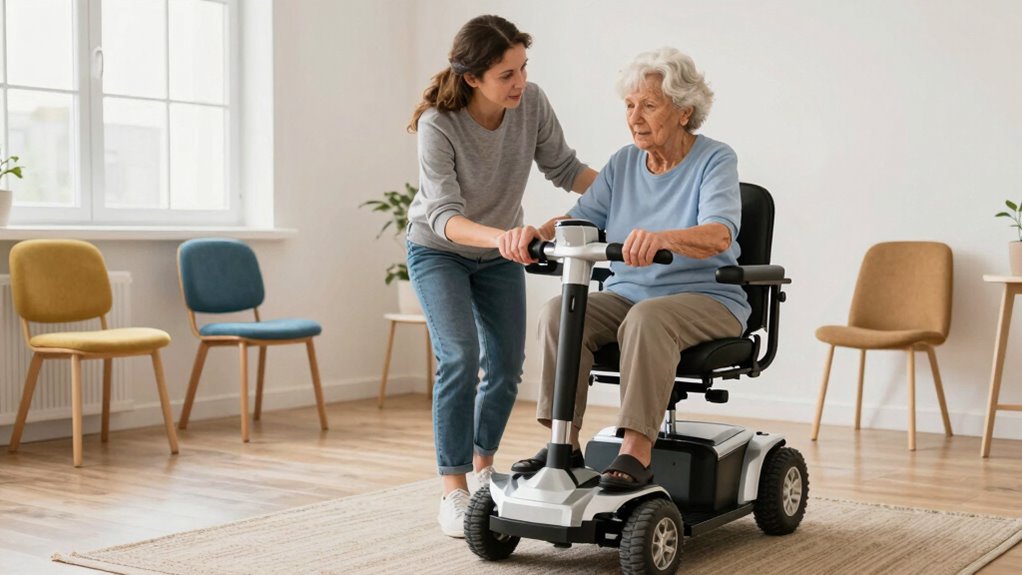
To guarantee your senior understands how to operate the mobility device properly, it’s important to demonstrate each step clearly and confidently. Start by showing how to turn on the device, emphasizing any device customization features that suit their comfort and needs. Guide them through proper grip and posture to ensure stability. Involve the caregiver to assist with adjustments or settings, making sure the device is tailored for their unique requirements. Explain each action calmly, allowing your senior to observe closely and ask questions. Demonstrate how to navigate different surfaces or obstacles, emphasizing safety. Repeating the steps reinforces understanding and builds confidence. Remember, caregiver involvement during this process helps address individual concerns and ensures the senior feels supported every step of the way. Additionally, practicing safe mobility techniques helps reduce the risk of falls and injuries, promoting confidence and independence. Incorporating proper technique into daily use further enhances safety and skill mastery. Familiarizing your senior with adaptive features can also make a significant difference in their comfort and control while using the device. It’s also beneficial to introduce regular maintenance routines to keep the device functioning safely and reliably. Moreover, understanding the thermal behavior of the device can help prevent overheating and ensure consistent performance during use.
Use Clear Instructions and Visual Aids to Teach Effectively
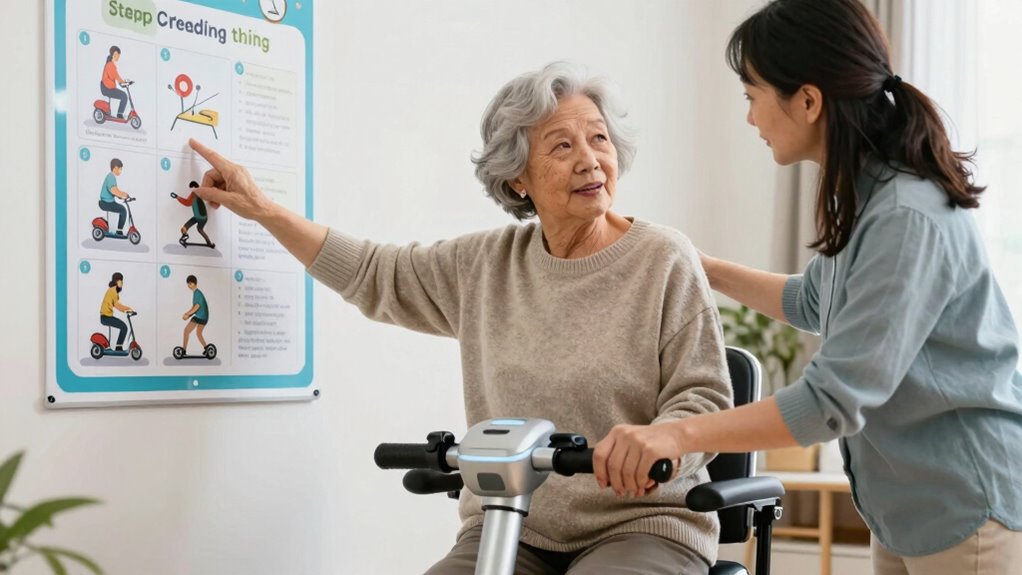
Using clear instructions and visual aids is essential for teaching seniors how to operate a new mobility device effectively. Visual cues, like arrows or symbols, help highlight key features and actions, making it easier to understand. Color coding can distinguish different parts of the device, such as using green for safe zones or red for caution areas, which reinforces correct usage. Keep instructions simple and direct, using plain language and short sentences. Show, don’t just tell, by pointing to specific parts and demonstrating their function. Visual aids like diagrams or labeled photos can reinforce learning and provide a quick reference later. Incorporating modern technology into training methods can enhance understanding and engagement. Using interactive tools or digital tutorials can further support learning and accommodate different learning styles. Combining clear instructions with visual cues and color coding helps seniors grasp how to use the device confidently and safely. Additionally, providing easy-to-understand guides tailored for seniors can improve retention and comfort with new equipment. Including step-by-step instructions can further clarify the process and reduce confusion during training. Incorporating visual demonstrations has been shown to significantly improve comprehension and recall.
Practice Together and Offer Hands-On Guidance
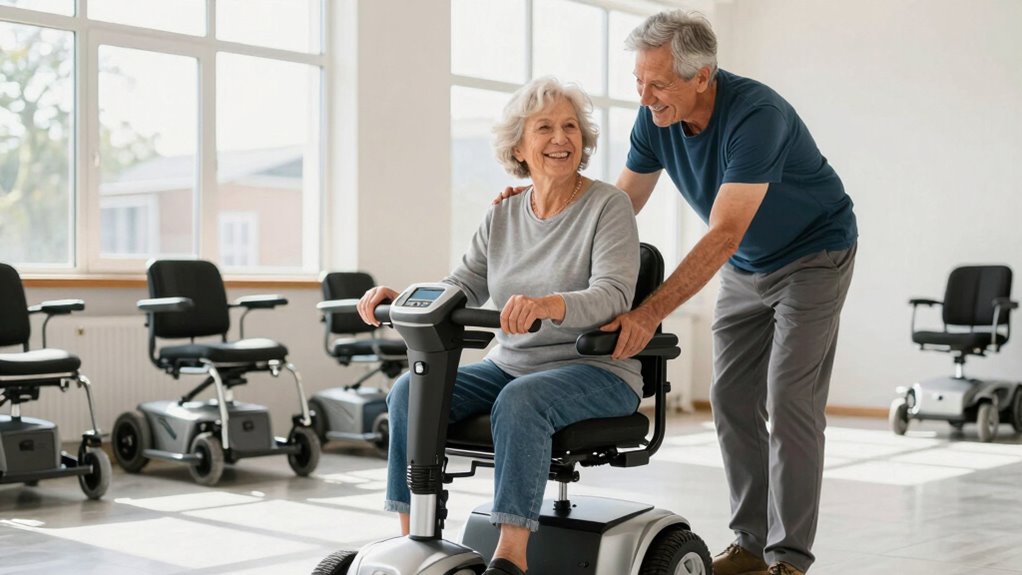
Practicing together helps seniors build confidence with their new device. Use clear and simple instructions, and be patient as they try each step. Encourage questions and offer clarification to guarantee they understand and feel comfortable. Remember, effective communication is key to ensuring they gain the skills and reassurance needed to use their device safely and confidently. Incorporating user-friendly design principles can also make the process easier and more intuitive for seniors. Focusing on accessible features can further enhance their comfort and independence during training. Additionally, understanding the smart home technology that supports relaxation and focus can create a calming environment that encourages learning and reduces anxiety during the training sessions.
Practice Regularly With Them
Practicing regularly is key to helping seniors gain confidence with their new mobility device. Consistent practice reinforces skills and reduces anxiety. You can encourage group therapy sessions where seniors practice together, fostering peer encouragement. This creates a supportive environment and helps them learn from each other. To maximize effectiveness, consider these tips:
- Schedule short, frequent practice sessions to build familiarity.
- Incorporate real-life scenarios to boost confidence.
- Use positive reinforcement to motivate progress.
- Encourage peer encouragement to foster camaraderie and shared learning.
Use Clear, Simple Instructions
When teaching seniors to use their new mobility device, clear and simple instructions make a significant difference. Use clear communication by speaking slowly and clearly, ensuring they understand each step. Keep your language simple—avoid jargon or complicated terms. Demonstrate actions visually, then guide their hands if needed, so they can feel confident in their movements. Focus on one step at a time, giving them ample opportunity to practice. Use gentle reminders and positive reinforcement to boost their confidence. Remember, patience is key; some seniors may need more repetition or reassurance. By emphasizing clear communication and simple language, you help them feel more comfortable and capable when using their new mobility device. Comfort and confidence are essential for a successful learning experience.
Encourage Questions and Clarification
How can you guarantee seniors feel comfortable and confident during training? The key is to encourage questions and clarification. Use open-ended questions like, “How does that feel?” or “What concerns do you have?” to invite dialogue. Employ clarification techniques such as repeating instructions in different ways or asking for demonstrations to ensure understanding. Practice together by guiding their hands-on experience with the device, offering gentle corrections and praise. Remember, creating a safe space helps seniors voice confusion without hesitation. Incorporate these strategies:
- Ask open-ended questions to gauge understanding
- Use clarification techniques to resolve doubts
- Encourage seniors to practice under your supervision
- Respond patiently and positively to all questions
This approach builds trust and boosts confidence in using their new mobility device.
Be Patient and Celebrate Small Victories in Learning

Learning to use a new mobility device can be challenging, but staying patient makes all the difference. Celebrate small victories, like a successful transfer or improved balance, to boost confidence. Remember, motivational stories from others who faced similar hurdles can inspire your loved one to keep trying. Peer support plays a vital role; knowing they’re not alone encourages perseverance. Your patience helps create a positive learning environment where setbacks are viewed as normal parts of progress. By acknowledging each achievement, no matter how minor, you reinforce their motivation. Over time, these small wins build momentum, leading to greater independence. Your calm, supportive approach helps seniors feel appreciated and understood, making the entire learning process smoother and more encouraging.
Troubleshoot Common Challenges When Using Mobility Devices

Even with proper training, seniors may encounter common challenges when using mobility devices, but addressing these issues promptly can make a significant difference. For example, device compatibility issues may cause difficulty in maneuvering, while neglecting maintenance routines can lead to breakdowns. To troubleshoot effectively, check for:
Address common mobility device issues promptly to maintain safety and independence for seniors.
- Proper alignment of wheels and parts
- Battery life and charging habits
- Clear pathways free of obstacles
- Regular inspection of moving parts for wear
Encourage seniors to keep their devices clean and well-maintained, which helps prevent sudden failures. If a device isn’t working as expected, always verify compatibility with their specific needs. Addressing these common challenges quickly helps seniors feel more confident and independent using their mobility devices.
Reinforce Safety Rules and Proper Usage Habits
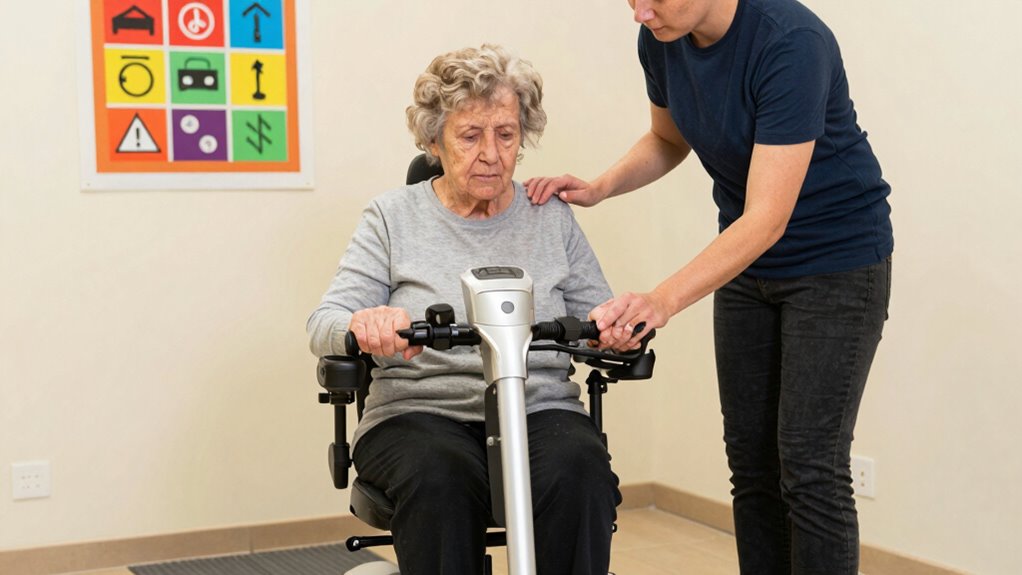
To keep your loved one safe, it’s crucial to regularly remind them of proper device handling techniques. Consistent safety reminders help reinforce good habits and prevent accidents. By staying attentive to these practices, you can guarantee they use their mobility device confidently and securely.
Proper Device Handling Techniques
Ensuring seniors handle their mobility devices safely starts with reinforcing key safety rules and proper usage habits. You should emphasize maintaining good ergonomic positioning to prevent strain and injury. Always check device maintenance regularly to ensure brakes, wheels, and batteries are in good condition. When handling the device, keep a firm grip and move at a steady pace. Avoid rushing or twisting your body, which can cause imbalance.
To promote safe handling, remember:
- Keep the device clean and well-maintained
- Use ergonomic positioning for comfort and safety
- Practice smooth, controlled movements
- Regularly inspect for damage or wear
Focusing on these habits helps prevent accidents and extends the device’s lifespan. Proper handling boosts confidence and independence for seniors.
Consistent Safety Reminders
Consistent safety reminders are essential to help seniors develop and maintain safe habits when using their mobility devices. You should establish a regular reminder frequency to reinforce safety rules and proper usage. This could include daily check-ins or weekly reviews, ensuring safety becomes second nature. Using clear safety signage in common areas also helps reinforce important messages and serves as visual cues. Reminders about proper device handling, speed limits, and obstacle awareness keep safety at the forefront. Consistent cues help seniors retain correct habits and reduce accidents. By combining regular verbal reminders with visible signage, you create a supportive environment that encourages safe device use. This consistency builds confidence and promotes lifelong safety habits.
Offer Ongoing Support and Follow-Up Help
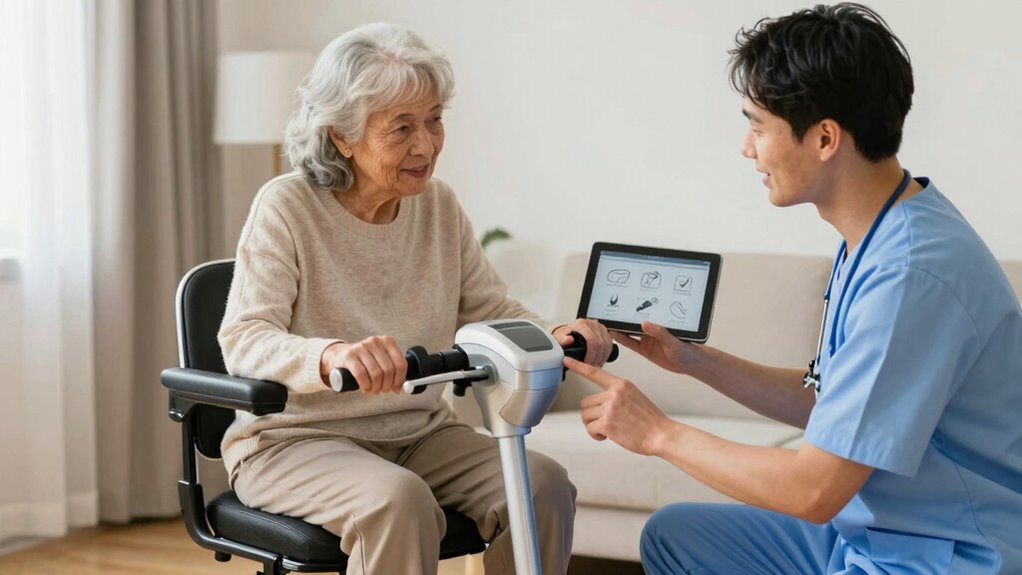
Providing ongoing support and follow-up is essential to help seniors feel confident and comfortable using their new mobility device. Regular check-ins foster trust and guarantee proper usage. You can encourage peer support groups where seniors share experiences, boosting motivation and reducing feelings of isolation. Motivational coaching helps seniors stay focused on their progress and overcome setbacks. Consider these strategies:
- Schedule follow-up calls or visits
- Connect seniors with peer support networks
- Offer encouragement and positive reinforcement
- Address concerns promptly to prevent frustration
Build Confidence to Promote Independence in Mobility
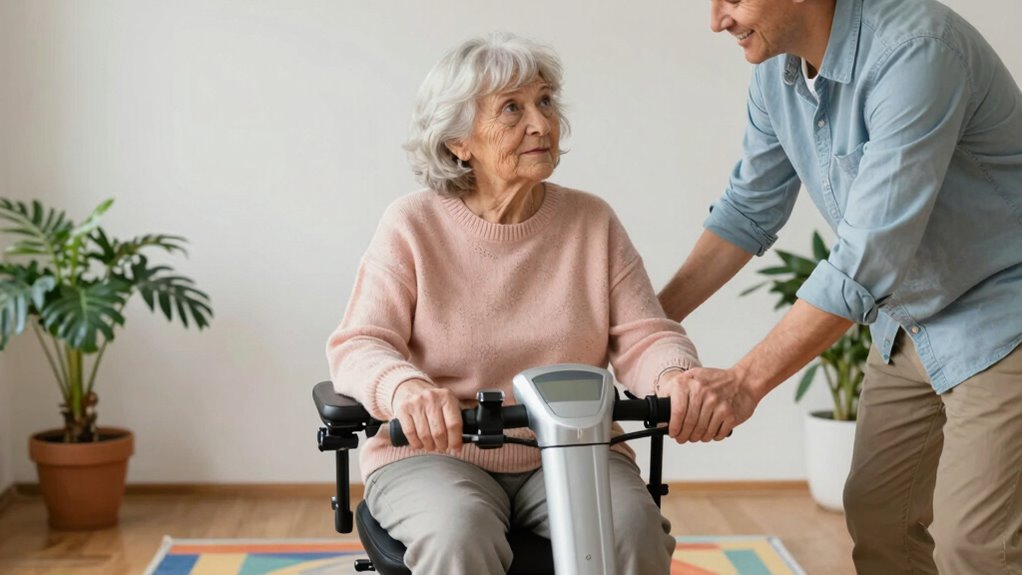
How can you help seniors build confidence to use their mobility devices independently? Confidence building is key to promoting independence in mobility. Start by encouraging small, achievable goals, like short walks or steering familiar spaces. Celebrate each success to reinforce their progress. Offer clear instructions and demonstrate proper device use, ensuring they feel comfortable and secure. Avoid rushing; patience is essential for fostering trust and reducing anxiety. Provide positive reinforcement and reassurance, emphasizing their abilities rather than limitations. By creating a supportive environment, you help seniors overcome fears and develop self-assurance. This confidence boost motivates them to practice regularly, making independence in mobility more attainable. Ultimately, your consistent encouragement plays a crucial role in their journey toward greater autonomy.
Frequently Asked Questions
How Can I Motivate My Senior to Try the New Mobility Device?
You can motivate your senior to try the new mobility device by highlighting the benefits and using motivational strategies like positive reinforcement. Show them success stories or involve peers who are already comfortable with the device to provide peer support. Encourage small, manageable steps to build confidence and celebrate progress. Your encouragement and the sense of community can make trying the new device feel less intimidating and more motivating.
What Should I Do if My Senior Refuses to Use the Device?
When your senior refuses to use the device, remember it’s like trying to fit a square peg in a round hole. Respect their feelings and offer device customization options to make it more comfortable. You can also encourage peer support, showing others who benefit from it. Gently listen and avoid pushing, fostering trust and gradually helping them see the device as a helpful tool rather than a burden.
How Do I Address Fear or Anxiety About Using the Device?
To address fear or anxiety about using a new mobility device, focus on fear management and anxiety reduction strategies. You can start by reassuring your senior, explaining how the device can improve their independence, and demonstrating patience. Encourage small, manageable steps to build confidence. Remind them it’s normal to feel nervous, and offer continuous support. Creating a positive, encouraging environment helps ease their fears and promotes comfort with the device.
Are There Specific Devices for Seniors With Cognitive Impairments?
Yes, there are adaptive technology devices designed for seniors with cognitive impairments. These devices often include features like simplified controls, auditory prompts, and visual cues to enhance cognitive support. When choosing a mobility device, look for options specifically tailored to cognitive needs, making it easier for your senior to operate safely and confidently. Always consult with a healthcare professional to guarantee the device meets their individual cognitive and mobility requirements.
How Often Should I Check in on My Senior’s Progress With the Device?
You should check in on your senior’s progress regularly, ideally through periodic assessments every few days or weekly, depending on their comfort and adaptation. Use encouragement strategies like positive reinforcement and gentle reminders to boost their confidence. During these check-ins, observe how they handle the device, address any difficulties, and celebrate small victories to keep motivation high and guarantee safe, effective use of the mobility device.
Conclusion
Teaching your senior to use a new mobility device can transform their independence, much like opening a door to new freedom. While the process requires patience and practice, the reward is seeing them regain confidence and move comfortably. It’s a delicate balance—offering guidance without overwhelming. With your support, they’ll not only master the device but also embrace a more active, engaged life. Remember, every small step forward makes a world of difference.
Fall Picks
fall essentials
As an affiliate, we earn on qualifying purchases.