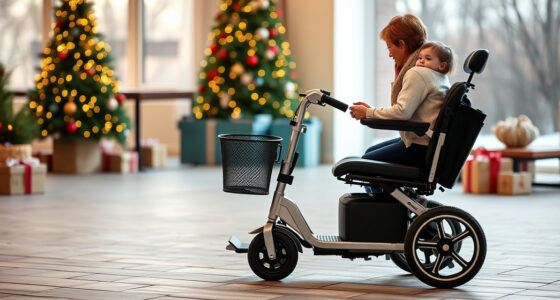

Your mobility needs change over time due to factors like strength, balance, and health. You might start with a cane, then progress to a walker as stability decreases, and eventually need a wheelchair if walking becomes unsafe. Recognizing early signs, such as frequent falls or fatigue, helps you plan ahead. Understanding this timeline guarantees you stay safe and independent, and there’s more to uncover about managing each stage confidently.

Turn quiet afternoons into listening time
- Thousands of audiobooks, podcasts and originals
- Listen on your phone, tablet or Echo — also offline
- Cancel anytime
Key Takeaways
- Transition depends on increasing mobility challenges like instability, fatigue, and reliance on furniture or walls for support.
- Regular assessments and mobility training guide the timing for moving from cane to walker and then to seated support.
- Signs such as frequent falls, gait disturbances, or pain indicate it’s time to upgrade aids for safety.
- Medical advice and individual progress determine the optimal transition points between mobility devices.
- Safety measures, home modifications, and confidence-building support ongoing adaptation throughout the progression.
As an affiliate, we earn on qualifying purchases.
Why Do People Need to Transition to Different Mobility Aids?

People often need to switch between different mobility aids because their physical condition changes over time. As your strength and balance fluctuate, you may find that a cane no longer provides enough support, prompting the need for assistive technology like a walker. Rehabilitation strategies help assess your progress and determine when a change is necessary. Moving to a more supportive aid can improve safety and independence during recovery or ongoing mobility challenges. The right aid adapts to your evolving needs, helping you maintain daily activities with confidence. Regular evaluations ensure you’re using the most effective mobility aid for your current condition. Incorporating advanced mobility technology can further enhance safety and ease of use, making transitions smoother. This gradual shift supports your rehabilitation goals, preventing falls and promoting a smoother, safer movement as your capabilities change. Utilizing effective email marketing strategies can also help communicate these important updates to caregivers and healthcare providers efficiently. Staying informed about mobility aid options ensures you are choosing the best support for your needs at every stage. Additionally, understanding the benefits of water-based therapies can aid in maintaining mobility and strength during these transitions, especially when combined with modern rehabilitation techniques.
How Do You Recognize Early Signs You Might Need a Cane?

If you notice you’re having trouble keeping your balance or feeling unsteady when you walk, it might be time to contemplate a cane. Frequent falls or near-misses are clear signs that your mobility is changing. Paying attention to these early signs can help you seek support before your condition worsens.
Notice Balance Difficulties
Noticing balance difficulties early can help prevent falls and the need for more extensive mobility aids. If you start experiencing balance issues, you might notice gait disturbances, such as shuffling steps, uneven stride, or feeling unsteady when walking. These signs often appear gradually, making it easy to overlook them at first. You may find yourself holding onto furniture for support or feeling unsure on your feet, especially on uneven surfaces. Pay attention to these subtle changes, as they are early warning signs that a cane could help improve stability. Recognizing these issues early allows you to seek assistance before balance problems worsen, reducing the risk of falls and making future mobility progressions smoother. Balance difficulties can develop subtly over time, so staying alert to these early signs is crucial. Additionally, understanding how to assess mobility can empower you to take timely action.
Experience Frequent Falls
Frequent falls are a clear sign that your balance and mobility may be declining, signaling the need for additional support like a cane. Recognizing these falls early helps prevent injuries and promotes fall prevention strategies. Pay attention to:
- Unsteady walking or feeling off-balance regularly
- Hesitation or fear of walking in familiar environments
- Near-misses or actual falls during routine activities
- Continuous support throughout the project lifecycle can help address underlying issues and adapt your environment to enhance stability. Incorporating proper assessment by healthcare professionals can further identify specific mobility concerns and appropriate interventions.
These signs indicate it’s time to contemplate home modifications, such as removing tripping hazards or installing grab bars. Using a cane can improve stability and confidence, reducing the risk of future falls. Addressing these early signs helps you maintain independence and safety. Don’t ignore frequent falls; they’re a vital warning to act before more serious accidents occur.
Feel Unsteady Walking
Feeling unsteady while walking can be an early warning sign that you may need a cane, especially if it happens regularly or worsens over time. You might notice balance issues that make it difficult to stay upright or maintain a steady gait. Gait instability can cause you to stumble or veer off course, increasing your risk of falls. If you find yourself gripping furniture for support, taking small, hesitant steps, or feeling wobbly even on flat surfaces, it’s time to pay attention. These signs indicate your body is struggling to coordinate movement smoothly. Recognizing these early symptoms allows you to seek help promptly, potentially preventing falls and injuries. Addressing gait instability early can improve safety and help you maintain independence longer. Assessing balance is an important step in determining when to seek mobility assistance. Additionally, understanding support options like canes or walkers can help you choose the most suitable aid for your needs. Being aware of early signs of mobility decline can also empower you to act before falls occur. Regular mobility assessments can help detect issues early and ensure you receive appropriate support.
When Should You Consider Moving From a Cane to a Walker?

As your mobility limitations grow, a cane might no longer provide enough support. You should consider switching to a walker when walking becomes more challenging or unstable. Always consult your doctor for personalized advice before making the change. Recognizing zodiac traits and personalities can also help in understanding how different conditions might affect your mobility needs.
Mobility Limitations Increase
When your mobility challenges become more pronounced, it’s time to think about upgrading from a cane to a walker. As your mobility progression slows, assistive devices that provide better stability become essential. Signs include increased difficulty walking, frequent loss of balance, or fatigue after short distances. Recognizing these changes early helps prevent falls and injuries. Consider these indicators:
- You rely heavily on furniture or walls for support
- Walking becomes slow and unsteady
- You experience pain or discomfort during movement
- Proper assistive device use can improve overall safety and confidence in mobility.
- Incorporating fall prevention strategies can further reduce the risk of injury during mobility challenges.
Additionally, integrating cybersecurity principles into your safety routines—such as securing your personal health information—can help protect your privacy during medical device use. If these issues persist, moving to a walker can offer greater support and safety. Don’t wait until mobility limitations cause a fall; addressing them promptly ensures independence and confidence in daily activities.
Doctor’s Medical Advice
Recognizing the right time to switch from a cane to a walker is essential for maintaining safety and independence. Your doctor’s medical advice is key here; they’ll assess your mobility, strength, and balance. If your current assistive technology no longer provides enough support, it’s time to contemplate a walker. Your healthcare provider may recommend physical therapy to improve your stability and adapt to new equipment. They’ll evaluate whether a walker’s added support can prevent falls and enhance your daily activities. Understanding mobility assessments can help you and your doctor make informed decisions about your transition. Trust your doctor’s guidance—if they suggest transitioning, it’s because they see your safety and recovery as the top priority. Staying proactive and following medical advice ensures you choose the right mobility aid at the right time.
How to Choose the Best Walker for Your Needs

Choosing the right walker is essential for ensuring safety and comfort, but with so many options available, it can feel overwhelming. To select the best fit, consider ergonomic features that promote proper posture and reduce strain. Look for models with adjustable height settings, comfortable grips, and lightweight frames for ease of use. Additionally, explore aesthetic options to match your style and preferences, making the walker feel less clinical and more personalized. Keep in mind:
Choose an ergonomic, adjustable, stylish walker for comfort, safety, and personalized confidence.
- Ergonomic handles and padded grips for comfort
- Adjustable height and foldability for convenience
- Stylish designs and customizable accessories
- Considering ergonomic features can also help determine the most suitable mobility aids if your mobility needs are influenced by your dog’s activity level or temperament. Focusing on these aspects helps you find a walker that suits your needs while encouraging confidence and independence. Being aware of ergonomic considerations ensures you choose a device that effectively supports your daily activities.
Furthermore, selecting a walker with appropriate weight capacity can ensure durability and safety tailored to your specific requirements.
The Typical Timeline: From Cane to Walker to Wheelchair
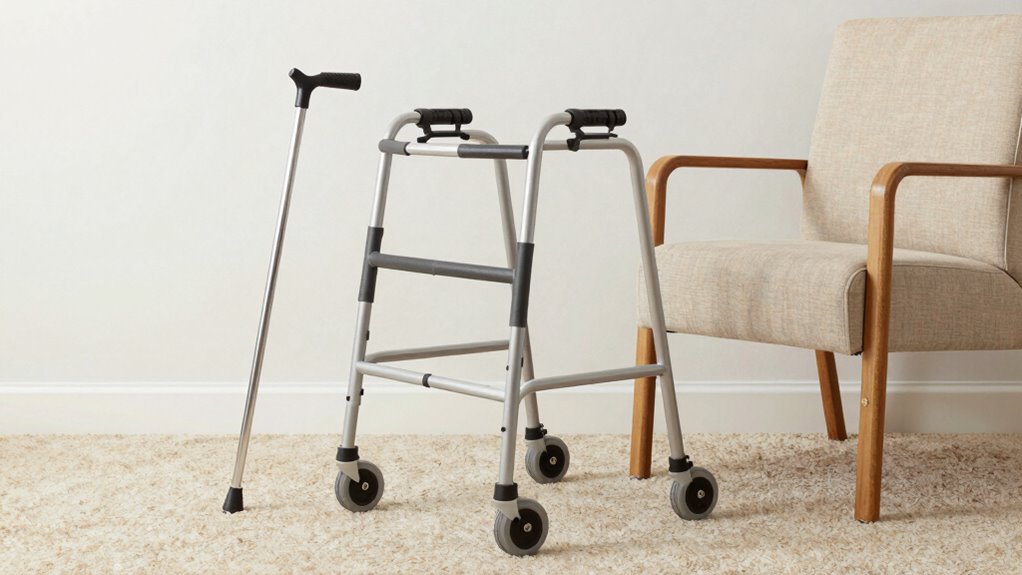
Understanding the typical timeline helps you anticipate how your mobility needs may change over time. Factors like your strength, balance, and medical condition influence when you might shift from a cane to a walker or wheelchair. Recognizing these signs makes certain you’re prepared for each stage and can choose the right aid at the right time. Monitoring your medication management and overall health status can also help detect early signs that mobility aid adjustments are needed. Staying informed about assistive device innovations can improve your mobility strategy as technology advances. Being aware of progression patterns can further aid in planning your mobility support effectively. Additionally, consulting with healthcare professionals about mobility assessment tools can provide personalized guidance tailored to your situation.
Progression of Mobility Aids
As mobility challenges develop, many individuals typically begin by using a cane to maintain balance and independence. This stage introduces assistive technology that supports daily activities and encourages mobility exercises to strengthen muscles. Over time, if stability decreases, a walker becomes necessary, providing more support and weight distribution. As your condition progresses, you may find yourself shifting to a wheelchair for longer distances or when standing becomes difficult. This progression guarantees safety and preserves independence. Understanding this timeline helps you prepare mentally and physically. Key factors influencing the transition include changes in strength, balance, and endurance. Staying proactive with mobility exercises and seeking guidance on assistive technology can make each stage smoother and more manageable.
Factors Influencing Transition
The timeline for shifting between mobility aids is primarily driven by changes in your strength, balance, and endurance. As these areas improve or decline, your healthcare team may recommend assistive technology to support your mobility needs. Factors like muscle strength, stability, and confidence influence when you progress from a cane to a walker or wheelchair. Regular mobility training helps you build the skills necessary for safe use of each aid and signals when a change is appropriate. Medical conditions, recovery progress, and personal comfort also play roles in this decision-making process. Ultimately, your individual progress and safety determine the most suitable timing for each transition, ensuring that your mobility aids support your independence without risking falls or injury.
Common Challenges During Each Stage of Mobility Transition

Navigating each stage of mobility transition presents unique challenges that can make the process feel overwhelming. You might struggle with adjusting to new adaptive equipment, which requires patience and practice. Mobility training can be frustrating if progress feels slow or inconsistent. Common challenges include:
- Gaining confidence in using new devices safely
- Overcoming fear of falls or losing independence
- Managing physical discomfort or fatigue during transitions
At each stage, you may find it difficult to accept the change or feel frustrated by limitations. Proper support, ongoing training, and patience are essential to overcoming these hurdles. Recognizing these challenges early helps you prepare mentally and physically for a smoother transition.
Practical Tips for Safely Using Walkers and Wheelchairs

Using walkers and wheelchairs safely requires awareness and proper technique. Confirm your assistive technology is well-maintained and fits your body correctly to prevent accidents. Practice good posture by sitting upright and keeping your weight centered. When steering your home, consider modifications like removing rugs, securing cords, and installing grab bars to improve safety. Always lock the wheelchair wheels when stationary to prevent unintended movement. When transferring in or out of the wheelchair, use stable surfaces and avoid rushing. Keep pathways clear of clutter, and be mindful of uneven surfaces or thresholds. Regularly check your equipment for wear and tear. Taking these steps minimizes risks and helps you maintain independence while using your mobility aids confidently and safely.
How to Involve Caregivers in Your Mobility Transition

Involving caregivers in your mobility journey helps guarantee safety and confidence as you adapt to different assistive devices. Their support ensures proper use of assistive technology and helps prevent accidents. To involve them effectively, share your progress and concerns openly, so they understand your needs. You can also ask for their assistance with practicing new techniques or adjusting to new devices. Additionally, consider the following:
- Educate caregivers on the proper use of assistive technology
- Encourage their involvement in mobility training sessions
- Seek their feedback on safety and comfort during changes
Their active participation not only boosts your confidence but also ensures safety, making your transition smoother and more secure. Caregiver support is vital for a successful and comfortable adaptation.
Signs It’s Time to Switch to a Wheelchair : What to Watch For

Recognizing when it’s time to switch to a wheelchair can substantially improve your safety and independence. If you find yourself frequently exhausted after mobility exercises, or if walking becomes increasingly unstable, it may be a sign to contemplate adaptive technology like a wheelchair. Notice if you’re relying more on furniture or walls to balance, or if pain and fatigue limit your mobility. Difficulty maintaining proper posture or increased risk of falls also signal it’s time to change over. A wheelchair can provide a safer, more comfortable option, especially when walking no longer supports your needs. Paying attention to these signs helps you make informed decisions, ensuring your mobility remains as safe and effective as possible.
Maintaining Independence and Confidence Throughout Your Journey

As you adapt to new mobility aids, maintaining your independence and confidence becomes an essential part of your journey. Embracing adaptive technology can help you stay connected and functional, whether through voice-activated devices or ergonomic designs. Building emotional resilience allows you to face setbacks with a positive mindset and persistence. To support your confidence, consider:
- Learning how to use your aids effectively through training and practice
- Connecting with support groups for shared experiences and encouragement
- Setting small, achievable goals that showcase your progress
These steps reinforce your sense of control and self-reliance. Remember, adapting isn’t just physical; it’s about cultivating mental strength and leveraging technology to maintain your lifestyle. Confidence and independence are ongoing pursuits, even as you progressionfrom cane to chair.
Frequently Asked Questions
How Do I Determine the Right Timing for Each Mobility Aid Transition?
You’ll want to assess your mobility and safety regularly with your healthcare provider’s guidance. Look for signs like difficulty walking, fatigue, or instability that signal it’s time to shift assistive technology. Your caregiver can support you by monitoring your progress and ensuring you don’t push beyond your limits. Changing gradually helps prevent falls and builds confidence, making each move safer and more comfortable.
What Are the Safety Precautions When Switching Between Mobility Devices?
When switching between mobility devices, prioritize safety by using assistive technology properly and always seeking caregiver support. Make certain your environment is clear of obstacles, and practice using each device in a safe space. Before shifting, confirm that your devices are secure and in good condition. Communicate with your caregiver for guidance and support, especially during more challenging shifts, to reduce the risk of falls or injury.
How Can I Maintain Independence During Mobility Transitions?
You can maintain independence during mobility shifts by using adaptation strategies like practicing each device in safe environments and setting small, achievable goals. Rely on caregiver support for guidance and reassurance, which helps build confidence. Stay patient with yourself, and don’t hesitate to seek professional advice when needed. Embracing these strategies guarantees you stay as independent as possible while adapting smoothly to new mobility devices.
Are There Specific Exercises to Improve Mobility Before Transitioning?
Imagine you’re preparing for a new chapter. To improve mobility before shifting, focus on balance training and strength exercises like standing on one leg and leg lifts. These help boost stability and muscle support, making the move smoother. Consistent practice builds confidence, so you can confidently step into your next phase. Incorporate these exercises into your routine, and you’ll feel more secure during each transition.
How Do Emotional Factors Influence the Transition Process?
Your emotional resilience plays a crucial role in your progression process. As you adapt, psychological adjustment helps you cope with feelings of loss or frustration, making the change smoother. Emotions like fear or anxiety may surface, but building resilience allows you to face these feelings confidently. Remember, acknowledging your emotions and seeking support strengthens your mental health, ultimately empowering you to embrace mobility changes with a positive outlook.
Conclusion
Remember, your mobility journey is like a river—ever flowing, ever changing. Embrace each progression as a step toward greater independence and confidence. By recognizing early signs and seeking the right support, you navigate these changes with grace. Every aid is a bridge, guiding you safely across new waters. Trust yourself, stay proactive, and let each milestone remind you: you’re stronger than any obstacle. Your journey isn’t just about moving; it’s about thriving.
Halloween Picks
halloween
As an affiliate, we earn on qualifying purchases.