To help your loved one maintain independence while using a scooter, assess their safety risks, such as balance and strength, and choose features like long battery life and responsive steering. Offer hands-on training, support, and regular check-ins to boost confidence. Make your home safer with good lighting and non-slip surfaces, and encourage emotional well-being through community activities. If you want practical tips on fostering safety and confidence, there’s more to explore below.
Key Takeaways
- Conduct safety assessments to ensure scooter suitability and address mobility or health concerns.
- Provide hands-on training and support to build confidence in using the scooter safely.
- Customize scooter features like adjustable seats and anti-tip wheels for comfort and security.
- Modify home environments with proper lighting, non-slip surfaces, and accessible pathways to enhance safety.
- Encourage social engagement and celebrate progress to boost emotional well-being and independence.
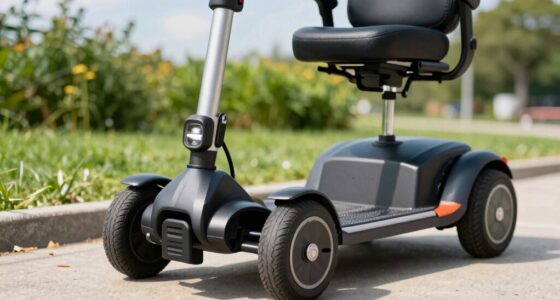
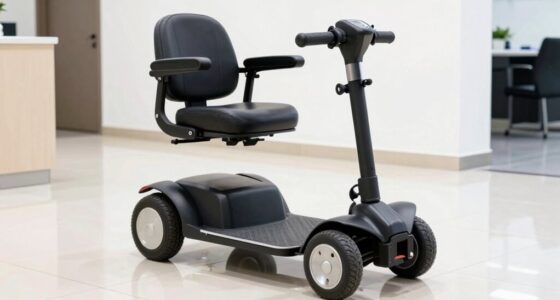
electric mobility scooter with long battery life
As an affiliate, we earn on qualifying purchases.
As an affiliate, we earn on qualifying purchases.
How to Assess Your Loved One’s Safety Risks and Needs

Before your loved one starts using a scooter, it’s crucial to evaluate their safety risks and needs thoroughly. Consider their overall mobility aids, such as walkers or canes, to determine if a scooter is appropriate. Assess their balance, strength, and endurance to identify potential hazards. Medication management plays an important role, as some medications may cause dizziness or drowsiness, increasing fall risks. Talk to their healthcare provider to understand how medications might affect their ability to operate a scooter safely. Also, evaluate their ability to navigate different environments and handle daily tasks. This detailed assessment helps ensure the scooter will support their independence without compromising safety, giving you peace of mind and helping them maintain confidence in their mobility. Additionally, understanding projector specifications can help in creating a comfortable and safe viewing environment at home. Ensuring the home environment is home safety compliant and free of hazards is also essential for supporting their independence.
How to Choose Scooter Features That Promote Safety and Independence
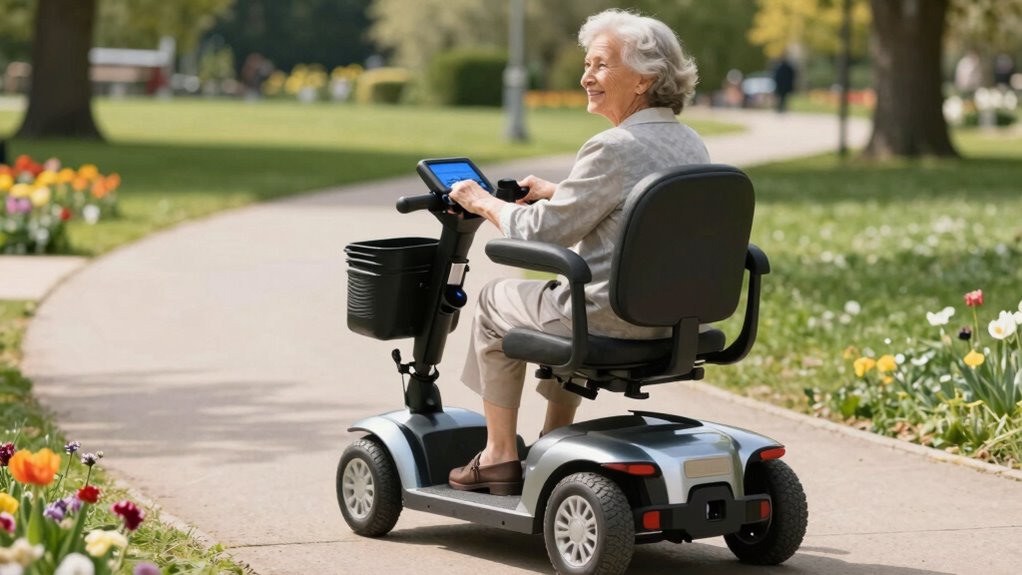
Selecting the right scooter features is essential to guarantee your loved one’s safety and promote their independence. Start by considering battery life; a longer-lasting battery allows for extended trips without frequent recharging, reducing frustration and risk of getting stranded. Maneuverability is equally important—it determines how easily your loved one can navigate tight spaces or uneven terrain. Look for a scooter with a tight turning radius and responsive steering to boost confidence and safety. Additional features like adjustable seats, anti-tip wheels, and reliable brakes further enhance security. Prioritize these aspects to ensure the scooter supports independence while minimizing safety concerns. Incorporating essential oils for safety such as lavender for calming or peppermint for alertness can also support overall well-being during mobility. Moreover, selecting a scooter with advanced safety features can provide extra reassurance in various environments. Understanding industry trends can help you choose models equipped with the latest technology and safety innovations.
How to Provide Training and Ongoing Support for Confident Scooter Use

Once you’ve chosen a scooter with the right features, helping your loved one become comfortable and confident in using it is the next step. Start with these key actions:
- Schedule hands-on training sessions, possibly through mobility workshops, to build skills and confidence.
- Introduce useful tech accessories like portable chargers or signal alarms to enhance safety and independence.
- Encourage regular practice in familiar environments, gradually expanding to new areas.
- Offer ongoing support by checking in, addressing concerns, and adjusting training as needed.
- Emphasize the importance of proper safety measures and awareness to prevent accidents and promote confidence. Incorporating accessible tools and safety features can further support their independence and comfort. Recognizing the benefits of advanced features like collision avoidance can also boost their confidence in using the scooter safely. Additionally, training programs tailored for seniors can provide structured guidance and reassurance during the learning process.
Consistent guidance helps your loved one feel secure and capable. Remember, patience is essential. Providing access to mobility workshops and tech accessories makes the learning process more engaging and effective, empowering them to use their scooter confidently.
How to Make Your Home and Outdoors Safer and More Accessible
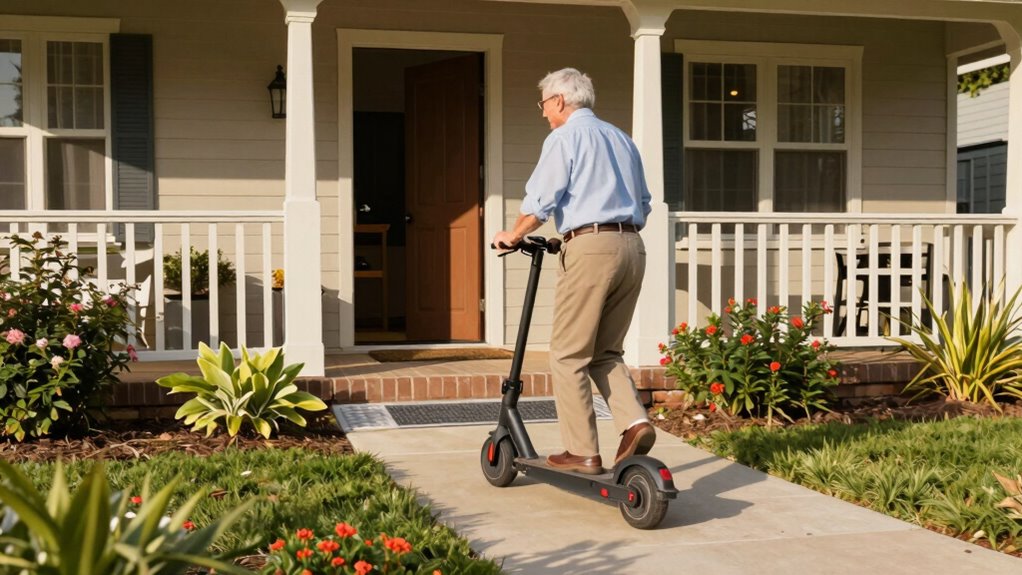
Making your home and outdoor spaces safer and more accessible guarantees your loved one can move around confidently without unnecessary risks. Start by installing accessible lighting throughout hallways, staircases, and outdoor pathways to ensure clear visibility at all times. Proper lighting reduces the chance of trips and falls, especially during nighttime. Additionally, replace or add non-slip flooring in key areas like the kitchen, bathroom, and entryways. Non-slip surfaces provide better grip and stability, even if floors become wet or slippery. Remove clutter and secure loose rugs that can cause tripping hazards. Incorporating free floating elements like lightweight furniture or portable ramps can further enhance mobility and safety. Ensuring your flooring has the right non-slip surfaces is crucial for preventing slips and falls. Choosing the appropriate flooring with safety in mind can significantly reduce accident risks. These simple modifications create a safer environment that promotes independence, allowing your loved one to navigate their home and yard comfortably and securely. Using load‑planning tools to assess your home’s layout and potential hazards can help you identify additional safety improvements.
How to Boost Confidence and Emotional Well-Being While Using a Scooter

Using a scooter can be an empowering experience, but it’s natural to feel self-conscious or uncertain at first. To boost confidence and emotional well-being, focus on building a sense of community engagement and seeking emotional support. Consider these steps:
Embrace community, celebrate progress, and seek support to boost confidence when using a scooter.
- Join local scooter or senior groups to connect with others who understand your journey.
- Celebrate small victories to reinforce positive feelings and progress.
- Encourage loved ones to offer genuine praise and reassurance regularly.
- Share experiences in community settings to foster belonging and reduce feelings of isolation, which can enhance your overall sense of inner wisdom.
- Incorporate positive sleep hygiene practices to improve overall well-being and resilience as you adapt to new mobility methods. Additionally, engaging in mindfulness exercises can help manage anxiety and build emotional resilience during this transition. Developing a supportive social network can further strengthen your emotional well-being during this adjustment process.
Adding social support and maintaining a routine aligned with safe riding habits can further reinforce confidence and emotional well-being as you navigate using a scooter.
Frequently Asked Questions
How Can Caregivers Encourage Independence Without Risking Safety?
You can encourage confidence while balancing safety by involving your loved one in planning their activities and setting achievable goals. Offer reassurance and praise their efforts, which boosts independence. Regularly assess their skills and environment to prevent hazards, and provide training on safe scooter use. By fostering open communication and respecting their choices, you help them stay confident without compromising safety.
What Community Resources Are Available for Scooter Users?
You can find valuable community resources for scooter users at local community centers and recreational programs. These places often offer accessible activities, classes, and social events tailored for individuals with mobility challenges. By encouraging your loved ones to participate, you boost their independence and social engagement. Check with your community center for special programs or adaptive sports, ensuring they stay active and connected while safely using their scooters.
How Do I Handle Mobility Scooter Repairs and Maintenance?
Managing mobility scooter maintenance means mastering battery basics and troubleshooting troubles. You should regularly check and charge the battery to guarantee peak operation, and promptly address any signs of power loss. For repairs, contact the manufacturer or a certified technician for troubleshooting tips and professional fixes. Keep a maintenance schedule, stay proactive, and always carry a basic repair kit to keep your loved one’s scooter smooth, safe, and reliable.
Are There Ergonomic Accessories to Improve Comfort During Long Rides?
Yes, you can improve comfort during long rides by adding ergonomic cushions and handlebar grips to the scooter. Ergonomic cushions provide better support and reduce pressure points, making rides more comfortable. Handlebar grips help minimize hand fatigue and improve grip control. Installing these accessories is simple, and they can make a significant difference in overall comfort, allowing your loved ones to enjoy longer, more pleasant scooter trips with less discomfort.
How Can I Identify Signs of Emotional Distress in Scooter Users?
You can identify signs of emotional distress in scooter users by paying attention to emotional cues and stress indicators. Look for sudden changes in mood, withdrawal, or visible frustration. Notice if they become unusually quiet, agitated, or avoid social interactions. Be attentive to physical signs like trembling or tense posture. Address these cues with patience and compassion, offering reassurance and support to help them feel understood and comforted.
Conclusion
By supporting your loved one’s journey with a scooter, you become their guiding star, illuminating the path to independence. With safety as your compass and confidence as your destination, you help them navigate daily challenges with grace. Remember, your care acts as the steady lighthouse, reassuring them amidst the storms of change. Together, you create a horizon filled with freedom and dignity, where every step forward is a beacon of hope and trust.