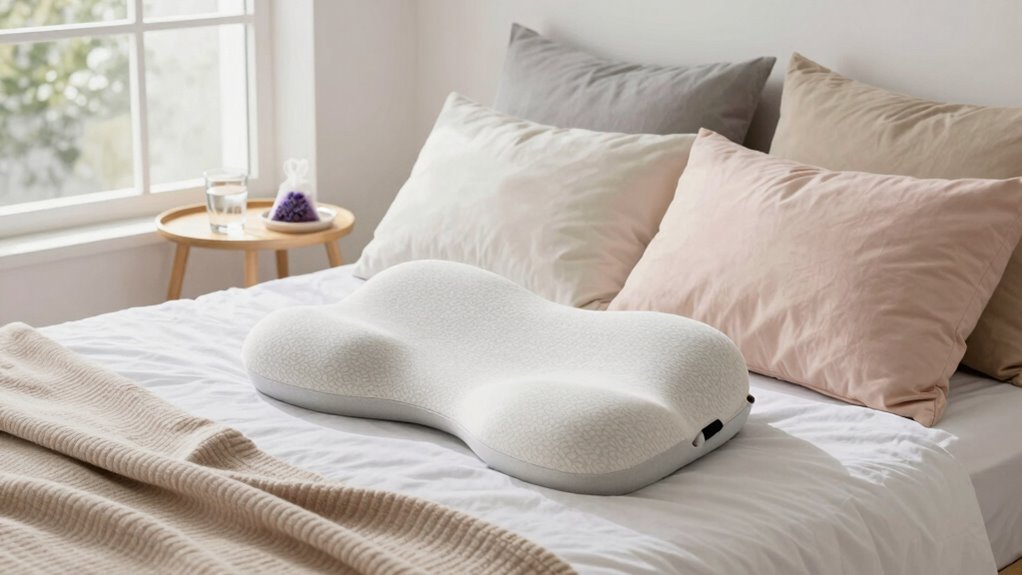

To connect better sleep positioning with your daily care needs, pay attention to your body signals and routines. Adjust your sleep posture based on activities like desk work or exercise to ease tension or promote recovery. For specific conditions, such as pregnancy or respiratory issues, adopt positions that support health and comfort, like sleeping on your side with a pillow or elevating your upper body. Staying mindful of these adjustments can boost your overall wellness and help you optimize your sleep health.
Key Takeaways
- Adjust sleep positions based on daily activities and physical strain to promote recovery and reduce tension.
- Use supportive pillows or cushions to align the body properly for specific health conditions or routines.
- Incorporate posture awareness into your bedtime routine to address ongoing health needs effectively.
- Elevate or modify sleeping positions for respiratory comfort or pregnancy support as needed.
- Monitor body signals and make small positional adjustments to enhance overall sleep quality and daily well-being.
Getting restful sleep isn’t just about comfort; it’s also about how your sleep position aligns with your daily care needs. Your sleep posture plays a vital role in ensuring you wake up feeling refreshed and ready to handle your routines. When you choose a position that supports your specific health concerns, you’re setting yourself up for better mornings and more effective daily routines. For example, if you deal with back pain, sleeping on your side with a pillow between your knees can help keep your spine aligned. If you have acid reflux, elevating your head while sleeping on your back may reduce symptoms. Understanding how your sleep posture impacts your health allows you to tailor your sleeping position to match your daily care needs.
Choosing the right sleep position supports your health and daily routines effectively.
Your daily routines influence how you should position yourself during sleep. If you spend long hours at a desk, you might experience neck or shoulder tension, so sleeping in a position that minimizes strain, like sleeping on your side with proper pillow support, can help ease those aches. Conversely, if you’re active and tend to wake up sore, a position that encourages full-body relaxation, such as sleeping on your back with supportive pillows, can aid muscle recovery. Consider how your daytime habits—like exercise, work, or medical conditions—impact your ideal sleep posture. Adjusting your sleeping position to support these routines can lead to better rest and faster recovery. Recognizing posture and alignment as essential components of sleep health can further optimize your nightly rest. Additionally, being mindful of your sleep environment can enhance your overall sleep quality and comfort.
Aligning your sleep posture with your daily routines isn’t just about comfort; it’s about prevention and support. If you’re pregnant, sleeping on your side with a pillow between your knees reduces pressure on your hips and improves circulation. Those with respiratory issues may find sleeping slightly elevated on their back helps ease breathing difficulties. For individuals managing chronic conditions, specific positions can alleviate symptoms and promote healing. Paying attention to how your daily activities affect your body during waking hours helps you choose the most appropriate sleep position. It’s a proactive way to integrate your health needs into your sleep habits. Additionally, understanding the importance of sleep positioning can help you make informed decisions that optimize your overall health. Being aware of body signals and making small adjustments can significantly improve your sleep quality and overall well-being.
supportive pregnancy pillow
As an affiliate, we earn on qualifying purchases.
As an affiliate, we earn on qualifying purchases.
Frequently Asked Questions
Can Specific Sleep Positions Help Reduce Daily Stress?
Yes, specific sleep positions can help reduce daily stress by improving sleep ergonomics. Sleeping on your side or in a fetal position often alleviates tension, promoting relaxation. Proper positioning minimizes strain on your muscles and joints, leading to better rest. When your body feels less stressed, you wake up refreshed and ready for the day. Prioritize comfortable, supportive positions to enhance stress alleviation and support your overall well-being.
How Does Posture Impact Long-Term Health Beyond Daily Care?
A stitch in time saves nine, and maintaining good posture today shapes your long-term health. Proper spinal alignment prevents chronic back pain and supports your nervous system, while good posture boosts circulatory health by reducing pressure on blood vessels. Over time, poor posture can lead to degenerative issues and circulatory problems, so prioritizing alignment now helps you avoid costly health challenges later, ensuring you stay active and healthy.
Are There Sleep Position Adjustments for Different Age Groups?
Yes, different age groups benefit from tailored sleep position adjustments. You should consider your sleep habits and bedroom ergonomics to find the best position. For example, infants need back sleeping, while pregnant women might prefer side sleeping for comfort. Older adults may need extra support with pillows or mattresses. Adjusting your sleep position based on age helps improve rest quality and supports overall health, making your sleep environment more ergonomic and personalized.
What Are the Best Pillows for Aligning Sleep With Daily Needs?
Imagine sinking into a cloud—your perfect pillow supports your every move. For aligning sleep with your daily needs, choose pillows with the right firmness—firm enough to support your neck, soft enough to comfort your shoulders. Material preferences matter too; memory foam offers contouring support, while natural latex provides resilience. Find a pillow that matches your sleep position and daily care routine, ensuring restful nights and energized mornings.
How Quickly Can Changing Sleep Positions Improve Daily Comfort?
Changing your sleep position can boost daily comfort within just a few nights, especially if you consider your sleep cycle and mattress firmness. As you adjust, your body aligns better, reducing discomfort and stiffness. A softer mattress may allow easier repositioning, while a firmer one supports better posture. Consistent adjustments help your sleep cycle stabilize, leading to quicker improvements in comfort and daily energy levels.
adjustable bed wedge for acid reflux
As an affiliate, we earn on qualifying purchases.
As an affiliate, we earn on qualifying purchases.
Conclusion
Think of your sleep positioning and daily care needs as dance partners—when they move in harmony, your whole day flows smoothly. By tuning into what your body needs and adjusting your sleep habits accordingly, you create a rhythm that supports your health and comfort. Remember, small steps toward better positioning can lead to a graceful, stress-free routine. Embrace this dance, and you’ll find each day starts with a confident, balanced step forward.
orthopedic body pillow for back pain
As an affiliate, we earn on qualifying purchases.
As an affiliate, we earn on qualifying purchases.
ergonomic neck and shoulder pillow
As an affiliate, we earn on qualifying purchases.
As an affiliate, we earn on qualifying purchases.