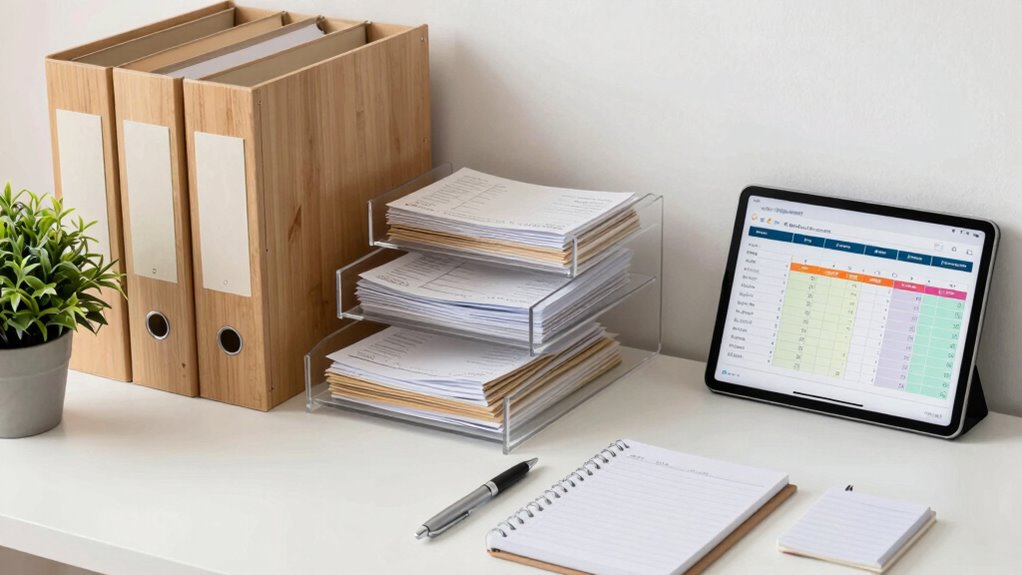

By establishing a consistent digital recordkeeping system, you can save your family time and money effortlessly. Organize important documents like insurance policies, medical records, and birth certificates in secure digital folders with clear names. Regularly update and back up files to prevent loss or chaos during emergencies. Using strong passwords and encryption keeps your data safe. Keep a routine to maintain your system, and you’ll be better prepared for anything—if you stay committed, you’ll discover more tips to strengthen your family’s organization.
Key Takeaways
- Establishing a consistent digital organization routine reduces time spent searching for important documents.
- Using clear naming conventions and master lists prevents duplicate purchases and missed deadlines.
- Regularly updating and backing up files ensures quick access during emergencies, saving costly delays.
- Encrypting sensitive information protects against identity theft and financial loss.
- Maintaining organized records improves overall family preparedness, reducing stress and potential emergency costs.

Have you ever wondered how families can stay organized and prepared for anything that comes their way? The key often lies in establishing a solid recordkeeping habit. When you keep your records in order, you’re not just saving time—you’re also saving money and reducing stress during emergencies. Digital organization plays a central role in this, making it easier to access important documents quickly. Instead of digging through piles of paper or hunting down scattered files, you can have everything stored safely in a cloud-based system or a well-structured digital folder. This setup ensures your vital information, like insurance policies, medical records, and birth certificates, is always at your fingertips. Digital organization also means updates are simple; you can easily add new documents or remove outdated ones without clutter.
Digital organization keeps vital documents accessible, updated, and secure, simplifying emergencies and reducing stress.
When it comes to emergency preparedness, being organized is critical. Emergencies can strike unexpectedly, whether it’s a natural disaster, a health crisis, or a financial setback. If your important documents are all in one digital space, you can act swiftly and confidently. Imagine needing proof of insurance or medical history during a medical emergency—you’ll be able to retrieve those files instantly, without panic. Regularly backing up your digital records ensures you won’t lose everything if your devices fail or are compromised. This habit of maintaining current, accessible records helps you stay calm and in control, even in stressful situations. Developing a consistent recordkeeping routine further enhances your readiness and peace of mind. Having a dedicated folder system makes it easier to keep everything organized and accessible. Plus, understanding the importance of digital security can help you protect sensitive information from unauthorized access. Incorporating digital security practices such as strong passwords and encryption further safeguards your data from cyber threats.
Creating a routine for recordkeeping might seem tedious at first, but the benefits quickly become clear. Set aside a few minutes weekly to organize and update your digital files. Use clear naming conventions so you can find documents easily. Keep a master list of what records you have and what needs to be added. This proactive approach helps you spot gaps before an emergency or a big purchase. Additionally, encrypt sensitive files to protect your family’s privacy. When you’re disciplined about digital organization, you build a safety net that minimizes confusion and saves money—no more duplicate purchases or missed deadlines because you forgot important paperwork.
Ultimately, cultivating a recordkeeping habit transforms chaos into clarity. It empowers you to handle emergencies confidently and ensures your family’s financial and personal information is always secure. With consistent effort, you turn what might seem like mundane chores into a powerful tool for peace of mind. Staying organized digitally isn’t just about convenience; it’s about creating a resilient family ready to face whatever comes your way.
As an affiliate, we earn on qualifying purchases.
Frequently Asked Questions
How Often Should Families Review Their Financial Records?
You should review your financial records at least once a month to stay on top of your budget planning and savings strategies. Regular reviews help you identify overspending, track progress towards goals, and make timely adjustments. By consistently checking your records, you guarantee your financial habits stay aligned with your family’s needs, ultimately saving you time and money in the long run. Stay proactive to maintain financial health effectively.
What Tools Are Best for Organizing Family Documents?
You should use digital organization tools like cloud storage or specialized apps to keep your documents accessible and secure. For paper storage, invest in labeled folders or a fireproof safe to protect important records. Combining both methods guarantees you can quickly find what you need, whether digitally or physically. Regularly updating and reviewing your system keeps everything organized, saving you time and reducing stress during emergencies or tax season.
How Can Families Protect Sensitive Financial Information?
To protect sensitive financial information, you should prioritize digital security and privacy safeguards. Use strong, unique passwords for your accounts, enable two-factor authentication, and regularly update your software. Store digital documents securely with encrypted storage or password-protected files. Be cautious when sharing information online, and limit access to sensitive data within your family. These steps help guard against cyber threats and guarantee your family’s financial privacy remains intact.
What Common Mistakes Do Families Make in Recordkeeping?
You often make mistakes in recordkeeping by neglecting digital organization and relying solely on paperless systems. You might forget to update files regularly, leading to clutter or missing important documents. Overlooking secure backups can risk data loss, and inconsistent categorization makes it hard to find information quickly. To avoid these errors, stay disciplined with your digital organization and guarantee your paperless systems are well-maintained and securely backed up.
How Long Should Families Keep Different Types of Documents?
You should keep tax records for at least seven years, and digital backups of important documents for added security. Keep receipts and warranties until the item’s warranty expires or you sell it. Shred outdated or unnecessary documents regularly to prevent clutter. For legal or property papers, hold onto them permanently. Regularly updating and securely disposing of records guarantees you save time and money while maintaining a well-organized system.
Conclusion
By establishing a solid recordkeeping habit, you’ll save your family time, money, and headaches—no need to be a throwback to the days of quill and parchment! Just like a trusty pocket watch keeps you punctual, organized records keep your finances in check. Start today, and soon, you’ll wonder how you ever managed without this modern twist on an age-old practice. Trust me, it’s the secret weapon your family didn’t know it needed!