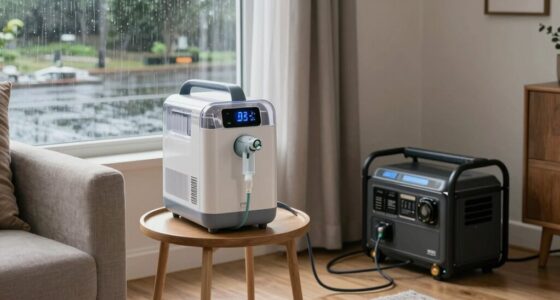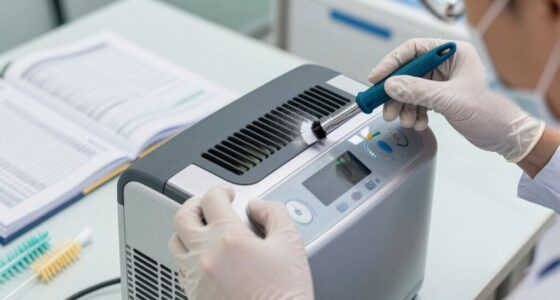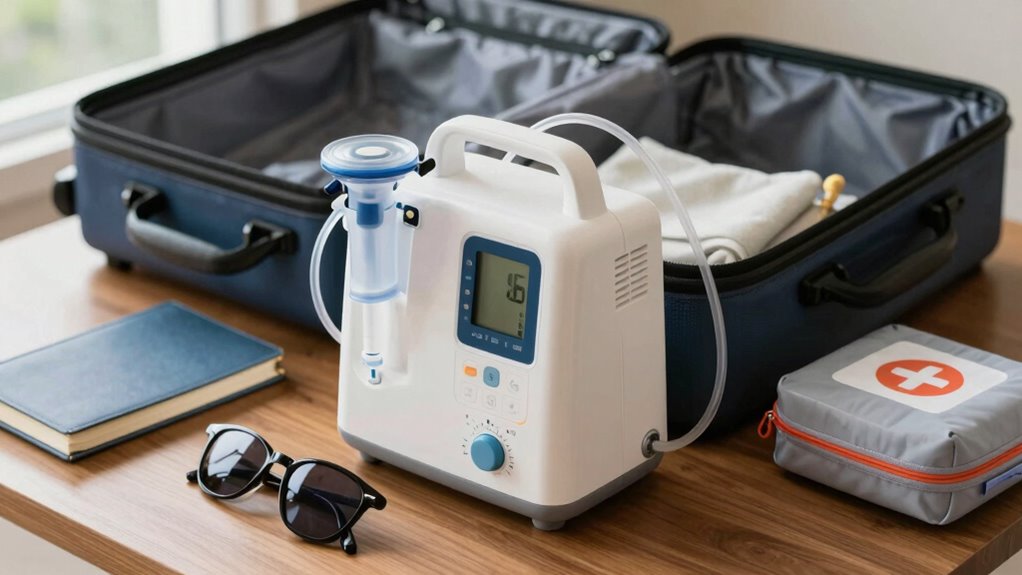

Before leaving home with oxygen, ask your healthcare provider if your devices are travel-ready and compatible with local power sources. Contact your airline to understand their oxygen policies and verify your equipment meets safety standards. Confirm backup plans like extra batteries or generators, and find nearby medical facilities at your destination. Make certain you have all prescriptions and emergency contacts ready. Following these steps helps keep your journey safe—continue to discover how to prepare thoroughly.

Turn quiet afternoons into listening time
- Thousands of audiobooks, podcasts and originals
- Listen on your phone, tablet or Echo — also offline
- Cancel anytime
Key Takeaways
- Confirm with your healthcare provider that your oxygen equipment is travel-compatible and safe for use during transit.
- Inquire with airlines and transportation services about specific oxygen policies, documentation, and required approvals.
- Check available power sources and carry backup batteries or generators to ensure continuous oxygen supply.
- Research local medical facilities and emergency contacts at your destination in case of equipment failure or health issues.
- Pack all necessary medications, prescriptions, and extra supplies to cover the entire journey and any delays.
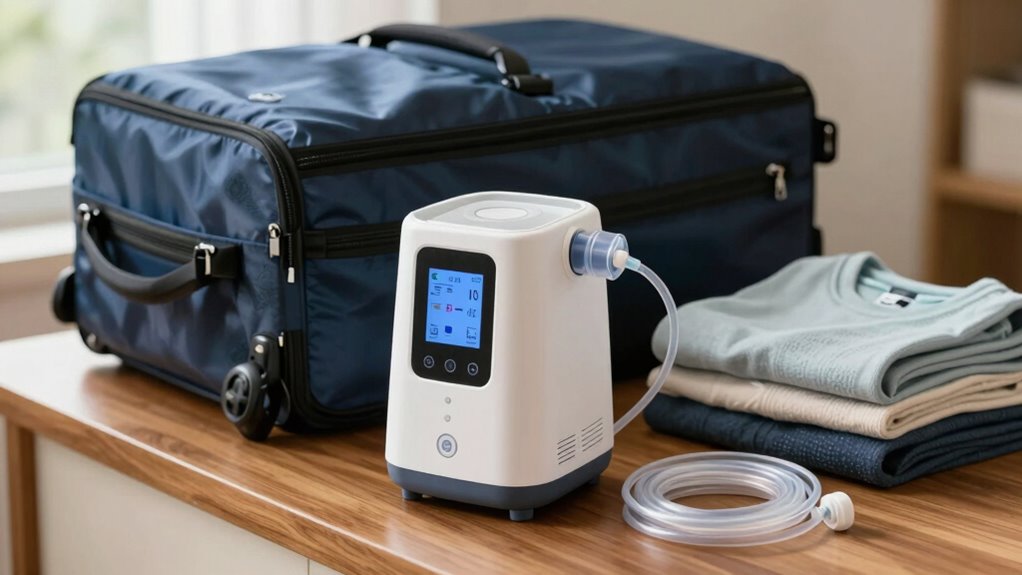
Traveling with oxygen requires careful planning to guarantee a smooth journey. When you’re managing oxygen therapy, it’s essential to ask the right questions before you leave home. These questions help ensure your oxygen safety and that your travel preparations are thorough. First, consider whether your current oxygen equipment is suitable for travel. Some devices are portable and designed specifically for travel, while others may need to be replaced or adjusted. Confirm with your healthcare provider or oxygen supplier which device is safest and most practical for your trip. You should also ask about the power sources available at your destination if your device requires electricity, and whether you’ll need backup batteries or a portable generator. Making sure your equipment is compatible with the power outlets where you’re going can prevent disruptions during your trip.
Plan ahead: ensure your oxygen equipment is travel-ready, compatible, and has backup power sources for a smooth journey.
Next, think about the airline or transportation policies regarding oxygen. Different airlines have specific rules about traveling with oxygen, including what equipment is allowed and how it must be documented. Contact your airline well in advance to ask about their procedures, and verify if you need a medical clearance or additional paperwork. It’s also smart to ask if they provide any special accommodations for passengers using oxygen. If you’re traveling by car, check that your oxygen setup is secure and that you have enough supplies for the entire journey, including extras in case of delays. Understanding oxygen device compatibility can help prevent technical issues during your travels. Additionally, inquire whether your oxygen equipment meets travel safety standards, which can vary by country or transportation mode. Knowing the specific regulations and guidelines for your mode of transport will help you stay compliant and avoid issues during travel.
Another essential aspect is understanding how to maintain oxygen safety throughout your trip. Ask your healthcare provider for tips on managing your oxygen therapy while in transit and at your destination. This includes knowing how to handle your equipment safely, avoid leaks, and troubleshoot common issues. It’s also wise to confirm that your travel insurance covers oxygen-related needs and any emergencies that might arise. You’ll want to know who to contact and what steps to take if your equipment malfunctions or if you experience a health issue during your trip. Additionally, understanding oxygen safety precautions can help you stay prepared for unforeseen challenges during travel.
Finally, think about your destination and ask about local medical facilities in case you need assistance. Find out if there are nearby hospitals or clinics familiar with oxygen therapy. Ensure you have all necessary prescriptions, emergency contacts, and a list of your medications and dosages. Doing this research beforehand means you’re prepared for any unexpected situations, keeping your journey safe and comfortable. By asking these critical questions before leaving home, you help secure your oxygen safety and make your travel preparations complete, giving you peace of mind every step of the way.
portable oxygen concentrator for travel
As an affiliate, we earn on qualifying purchases.
As an affiliate, we earn on qualifying purchases.
Frequently Asked Questions
Can I Fly With My Oxygen Equipment Without Notifying the Airline?
You shouldn’t fly with your oxygen equipment without notifying the airline first. For oxygen safety, airlines require advance notice to guarantee they can accommodate your needs and provide proper travel accessories. Failing to inform them could lead to delays or safety risks. Always check airline policies, confirm your oxygen arrangements, and carry necessary documentation. This way, you safeguard a smooth journey and maintain safety throughout your flight.
Are There Specific Oxygen Tank Regulations for International Travel?
Yes, there are specific oxygen tank regulations for international travel. You need to check airline policies and international regulations, such as IATA guidelines, before you go. Make certain your oxygen tanks are approved for air travel, properly labeled, and meet size restrictions. Contact your airline in advance to confirm their rules and guarantee your oxygen equipment complies with all international travel regulations. Planning ahead helps avoid delays and ensures a smooth journey.
How Do I Handle Oxygen Needs During Layovers or Airport Delays?
During layovers or airport delays, prioritize oxygen safety by keeping your oxygen supply secure and easily accessible. Use travel accessories like padded cases or straps to prevent damage to your tanks. Notify airport staff about your oxygen needs early to guarantee assistance. Stay calm and monitor your equipment regularly to avoid malfunctions. Planning ahead and using the right travel accessories helps make your journey smoother and safer.
What Should I Do if My Oxygen Device Malfunctions During Travel?
If your oxygen device malfunctions during travel, stay calm and switch to your backup device immediately. Check your device’s maintenance instructions and make certain it’s functioning properly. Keep emergency preparedness essentials, like extra batteries and oxygen supplies, accessible. Contact airline staff or airport medical services if needed. Promptly inform your travel companions and follow your emergency plan to ensure safety, and don’t hesitate to seek professional help if problems persist.
Is There Special Insurance Coverage for Traveling With Oxygen?
Yes, you should look into travel insurance that offers oxygen coverage to make sure you’re protected during your trip. Many policies include specialized coverage for medical needs like oxygen, but it’s crucial to verify this before purchasing. Contact your insurer or travel agent to confirm the details, and consider additional coverage if necessary. Having the right travel insurance with oxygen coverage gives you peace of mind and supports your health needs while traveling.
Conclusion
Before you hit the road with oxygen, make sure you’ve checked all essentials—like portable tanks, medication, and emergency contacts. Imagine Sarah, who forgot to confirm her airline’s oxygen policy and faced delays; a quick call could’ve prevented that stress. By asking the right questions beforehand, you’ll travel confidently and comfortably. So, take a moment to plan thoroughly—your smooth journey depends on it. Safe travels!
Halloween Picks
halloween
As an affiliate, we earn on qualifying purchases.