You might not realize how much ramp length and slope impact safety and accessibility in your home or property. Proper measurements guarantee everyone can use the ramp comfortably and safely, preventing falls or injuries. An ideal slope, usually 1:12, balances ease of use with space, while incorrect sizing can create hazards. If you keep exploring, you’ll discover why getting these details right is essential for everyone’s safety and independence.
Key Takeaways
- Proper slope and length ensure safety and prevent falls for users with mobility challenges.
- Incorrect measurements can lead to non-compliance with accessibility standards and legal requirements.
- Adequate landings and resting intervals reduce fatigue and improve comfort for prolonged use.
- Steep or improperly measured ramps increase risk in adverse weather conditions like rain or ice.
- Thoughtful design promotes inclusivity, independence, and safety for all users, beyond just compliance.
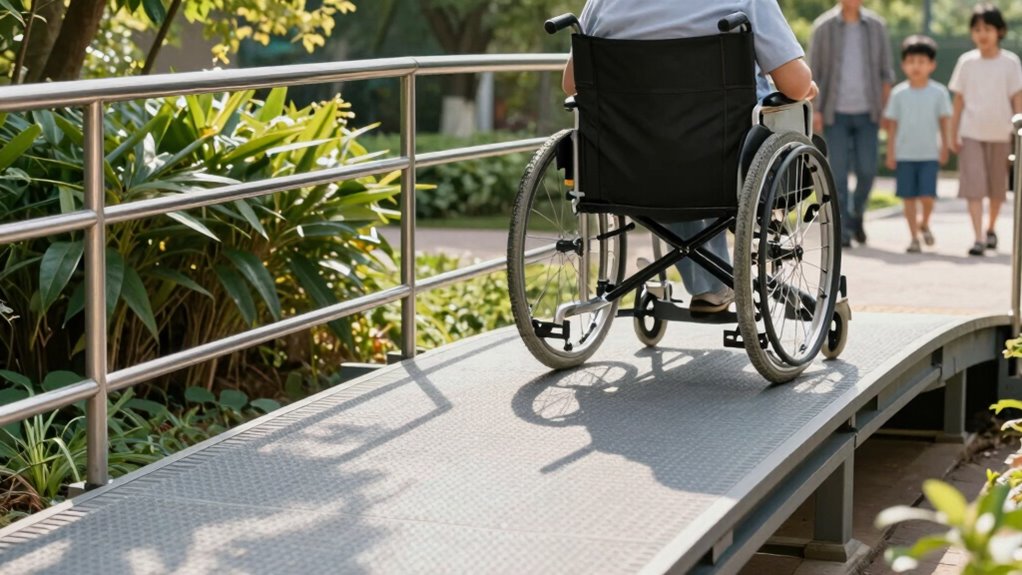
When designing ramps, understanding the importance of length and slope isn’t just a matter of compliance—it directly impacts safety and accessibility. You might think a simple incline will do, but the reality is, proper measurements guarantee everyone can navigate safely and comfortably. Accessibility standards outline specific guidelines for ramp design, setting minimum and maximum slopes to accommodate users with different mobility needs. Ignoring these standards can lead to dangerous situations, especially for those using wheelchairs, walkers, or other assistive devices. When your ramp isn’t built with the correct length and slope, it can become a hazard, increasing the risk of falls or injuries.
Proper ramp length and slope are essential for safety, accessibility, and compliance.
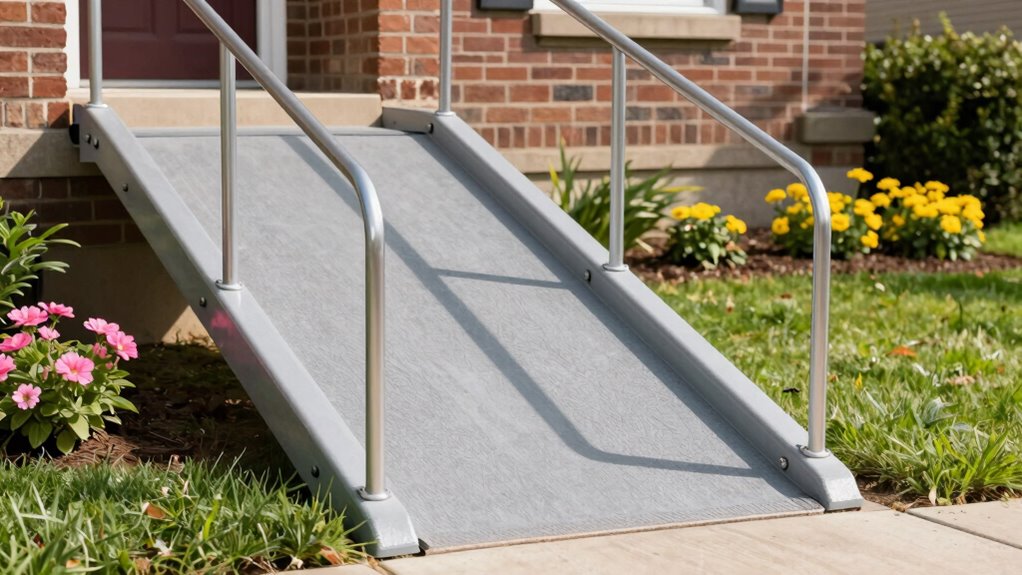
Safety considerations are at the heart of proper ramp design. A slope that’s too steep can cause users to lose control or become fatigued quickly, while a ramp that’s too flat might require excessive space, making construction impractical. The key is finding a balance—making sure the slope isn’t so steep that it jeopardizes safety, yet not so long that it becomes cumbersome or costly. Typically, safety guidelines recommend a slope ratio of 1:12, meaning for every inch of height, you need at least 12 inches of length. This ratio provides a manageable incline that most people can ascend and descend safely. Longer ramps should be designed with landings at intervals, giving users a rest and reducing the strain on their muscles. Properly measuring the ramp length is essential to ensure the slope remains within safe limits and adheres to standards.
You also need to take into account the terrain and environment where the ramp will be installed. If you’re building outdoors, factors like snow, rain, and ice can make even a compliant slope hazardous if not properly designed with slip-resistant surfaces or adequate drainage. Properly measuring the required length guarantees that the slope remains within safe limits, regardless of external conditions. Moreover, adhering to accessibility standards isn’t just about meeting legal requirements; it’s about creating an inclusive environment where everyone feels comfortable and secure. Understanding the design standards and their rationale can help you make informed decisions during construction.
Ultimately, you can’t underestimate the importance of correct ramp length and slope. They’re fundamental to making your space accessible and safe for all users. When you pay close attention to these details, you’re not only complying with regulations but also demonstrating a commitment to safety and inclusivity. It’s worth taking the time to get it right—because the safety and independence of those who rely on your ramp depend on it. Proper planning and adherence to standards make all the difference in ensuring your ramp serves its purpose effectively.
As an affiliate, we earn on qualifying purchases.
Frequently Asked Questions
How Do I Determine the Ideal Ramp Slope for My Specific Needs?
To determine the ideal ramp slope for your needs, start by considering material selection and aesthetic considerations. You should aim for a slope of about 1:12 (about 4.8 degrees) for wheelchair access, but adjust based on space constraints. Choose durable materials like concrete or treated wood, matching your home’s style. Make certain the slope remains gentle enough for safety and comfort, balancing practicality with visual appeal.
Are There Safety Standards for Ramp Length and Slope?
Yes, safety standards for ramp length and slope are strict enough to make even the most daring acrobat nervous! These standards guarantee your ramp’s aesthetic considerations blend seamlessly with material durability, preventing slips, falls, and structural failures. Following ADA guidelines and local building codes, you’ll create a safe, sturdy ramp that looks great and withstands the test of time—because safety isn’t just a rule; it’s a lifestyle.
Can Improper Ramp Design Affect Insurance Coverage?
Yes, improper ramp design can affect your insurance coverage. Insurance considerations often include safety compliance, and liability concerns are heightened if a ramp doesn’t meet safety standards. If an accident occurs due to a poorly designed ramp, your insurer might deny claims or increase premiums. Ensuring the ramp’s length and slope follow safety standards helps protect you from liability issues and keeps your insurance coverage intact.
How Does Ramp Slope Impact User Comfort and Safety?
You’ll notice that a gentle ramp slope makes users feel more comfortable and secure, reducing fatigue and risk of falls—especially for those with mobility challenges. When design considers aesthetic appeal and material durability, it subtly enhances safety and confidence. If you get the slope right, it’s like creating a smooth, welcoming path that feels natural and safe, encouraging everyone to use it without fear or discomfort.
What Are the Long-Term Cost Implications of Different Ramp Designs?
Different ramp designs affect your long-term costs through material durability and aesthetic considerations. Choosing durable materials like concrete or treated wood may have higher upfront costs but reduce maintenance and replacement expenses over time. Aesthetically pleasing ramps might boost property value but could require specialized finishes or upkeep, adding to costs. Investing in quality, durable materials and thoughtful design helps you save money long-term, ensuring safety and style without frequent repairs.
Conclusion
Just like the legendary story of Icarus who soared too close to the sun, rushing into ramp design without proper planning can lead to a fall. Remember, choosing the right length and slope isn’t just about compliance—it’s about safety and accessibility. By paying attention now, you’re ensuring a smoother journey for everyone who uses it. So, take the time to get it right; your careful planning can make all the difference in enabling independence and confidence.