
This guide helps adults and caregivers choose and use disposable or reusable incontinence products for urine leaks, bowel leakage, or both. You will identify a suitable product, check its fit and absorbency, put it on, change it, protect the skin, and dispose of or wash it correctly. It is written for beginners; allow about 20-40 minutes to compare products and prepare, then follow the product’s instructions for each change.

Get comfort and care essentials delivered free — and shop member deals
- Fast, free delivery on millions of items
- Access to Prime Big Deal Days deals on October 6–7
- Prime Video, Amazon Music and more included
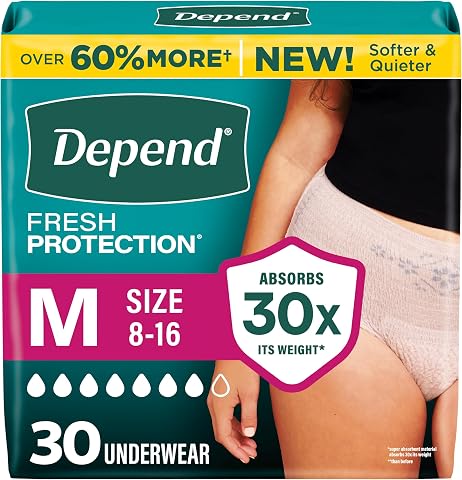
Depend Fresh Protection Adult Diapers for Women, Medium, 30 Count
- ✔ Product type: Disposable adult incontinence underwear
- ✔ Intended fit: Designed for women
- ✔ Size: Medium

Depend Fresh Protection Adult Diapers for Men, Large, 28 Count
- ✔ Product type: Disposable adult incontinence underwear
- ✔ Intended fit: Designed for men
- ✔ Size: Large

Because Overnight Booster Pads Fit All Adult Diapers, 45 Count
- ✔ Product type: Adult incontinence booster pad
- ✔ Pack quantity: 45 count
- ✔ Design: Flow-through, easy-to-change
Difficulty: Beginner | Time: 20-40 minutes to choose and prepare; changing time varies
What You’ll Need
Tools & Materials:
- Product packaging or manufacturer instructions
- Measuring tape, if checking waist or hip size
- Clean disposable gloves for caregiver assistance, if appropriate
- Mild cleanser or perineal wipes and a soft towel
- Barrier cream, if recommended for the wearer
- Lined waste bin or a bag for used disposable products
Knowledge:
- Basic handwashing
- The difference between urinary leakage and bowel leakage
- How to read product size and absorbency labels
Products include pads or liners worn inside close-fitting underwear, pull-on underwear, tab-fastened briefs, and washable underwear or inserts. Select a product designed for the type and amount of leakage. Product labels and sizing differ by brand, so check the package rather than relying only on a familiar size. If leakage is new, worsening, painful, or accompanied by other symptoms, contact a healthcare professional.
Depend Fresh Protection Adult Diapers for Women, Medium, 30 Count
Depend Fresh Protection for Women, Medium earns our top spot because it functions as a complete disposable incontinence-underwear option, not an insert that depends on another garment. Its stated 31–37-inch waist range gives shoppers a concrete starting point for fit selection, while the underwear-like design may feel more familiar than a traditional bulky brief. The product description also emphasizes odor neutralization and high absorbency, useful priorities for people looking for day-to-day protection.Compared with the men’s Large, this pick is intended for a different fit and wearer; the two are not interchangeable simply because both come from the Fresh Protection line. Compared with the Because booster pad, it provides the main garment rather than extra capacity layered into one. That makes it the more direct choice for someone building a basic disposable routine. The tradeoff is that its stated waist range is limited, and it remains a single-use product. We would skip it if the wearer falls outside the listed range or specifically needs a reusable option. The supplied absorbency claim should not replace checking personal needs and fit in real use.
Pros:
- Complete disposable underwear rather than a supplemental insert
- Stated 31–37-inch waist range helps guide sizing
- Underwear-like fit is designed to feel familiar
- Description cites high absorbency and odor neutralization
Cons:
- Designed for a specific wearer and waist range, not a universal fit
- Disposable construction means it must be replaced after use
- Packaging may vary
Best for: Women seeking complete disposable incontinence underwear who measure within the stated 31–37-inch waist range.
Not ideal for: People outside the listed waist range, shoppers seeking reusable protection, or anyone who only needs a booster insert for underwear they already use.
Bottom line: For a wearer within its specified range who wants a full disposable garment, this is the clearest all-around starting point in our lineup.
“For a wearer within its specified range who wants a full disposable garment, this is the clearest all-around starting point in our lineup.”
Depend Fresh Protection Adult Diapers for Men, Large, 28 Count
For men who need a complete garment in a larger stated size, Depend Fresh Protection for Men, Large is the most directly matched option here. Its 35–43-inch waist range and maximum-absorbency positioning make it a practical alternative to the women’s Medium—not an upgrade for every wearer, but a better fit for a different stated body range. The description also highlights a soft, underwear-like feel and odor neutralization, which may matter when choosing a disposable product for routine wear.Unlike the Because booster pads, this Depend product is intended to provide primary coverage on its own. That means it makes more sense for someone who needs a full garment than for someone trying to increase the capacity of underwear they already own. Its drawbacks are equally specific: it is made for men, the waist range is limited, and disposable products require replacement. The pack contains 28 rather than the women’s option’s 30, so buyers comparing quantities should note the difference without assuming the products have identical fit or use. We would pass if the wearer needs a different size, a reusable solution, or an insert rather than complete underwear.
Pros:
- Complete disposable garment for primary protection
- Maximum-absorbency positioning
- Stated 35–43-inch waist range clarifies intended fit
- Soft, underwear-like feel and odor-neutralizing design
Cons:
- Designed specifically for men and a limited waist range
- Disposable construction can mean frequent replacement
- Pack quantity is 28, fewer pieces than the women’s option’s 30
Best for: Men seeking maximum-absorbency disposable underwear with a stated 35–43-inch waist fit.
Not ideal for: Wearers outside the listed waist range, anyone seeking a gender-neutral fit, or buyers who need supplemental absorbency rather than a complete garment.
Bottom line: Choose this over the women’s Medium when the men’s fit and 35–43-inch waist range are the right match; otherwise its specialization is a limitation.
“Choose this over the women’s Medium when the men’s fit and 35–43-inch waist range are the right match; otherwise its specialization is a limitation.”
Because Overnight Booster Pads Fit All Adult Diapers, 45 Count
Because Overnight Booster Pads fill a different role from both Depend products: they are an absorbency add-on, not adult underwear. The flow-through design is intended to let liquid pass into the underlying garment, adding capacity without replacing that garment. That may suit someone who already has incontinence underwear that fits well and wants an insert that is easy to change, including when away from home. The 45-count pack also gives buyers a dedicated supply of supplemental pads.This is not a direct competitor to the Depend women’s or men’s disposable underwear for someone starting from scratch. Both Depend options are complete products; this pad needs compatible underwear to contain leakage. Crucially, the supplied details say it has no waterproof backing, so it should not be used alone for heavy leaks. It may help reduce changes in some routines, but that outcome depends on the underlying product and the wearer’s needs. We would choose it only when extra absorbency is the goal and a suitable garment is already in place. Those seeking primary protection should start with a complete product instead.
Pros:
- Adds absorbency to adult incontinence underwear
- Flow-through design works with an underlying garment
- Easy-change format may be convenient on the go
- 45 pads per pack
Cons:
- No waterproof backing, so it is not standalone protection
- Requires suitable incontinence underwear underneath
- Printed manufacturing date on packaging may concern some users
Best for: People who already wear compatible adult incontinence underwear and want a flow-through insert for added absorbency or easier changes while traveling.
Not ideal for: Anyone needing a standalone leak barrier, heavy-leak protection without an underlying garment, or a complete incontinence product.
Bottom line: This is a useful supplemental choice for an established underwear routine, but it cannot replace either Depend garment as primary protection.
“This is a useful supplemental choice for an established underwear routine, but it cannot replace either Depend garment as primary protection.”
As an Amazon Associate we earn from qualifying purchases.
Before You Start
Ask the wearer what they prefer, and protect their privacy and dignity. If assisting someone, explain each action, get consent, and let them do as much as they can independently. Gather supplies before changing so the wearer is not left unattended. Wash your hands; use gloves when handling soiled products or bodily fluids, and change gloves between dirty and clean tasks. Never flush pads, wipes, briefs, or liners, even if a package suggests that a wipe is flushable.
Step-by-Step Instructions
Step 1: Identify the leakage needs
Record whether the product is needed for urine, bowel leakage, or both. Estimate how often leakage occurs, how much is usually lost, and when protection is needed, such as overnight, during exercise, or while away from home. Keep a simple diary over several days, noting timing, amount, activities, and changes. Use these details to compare product labels and decide whether a lighter liner or more absorbent brief is appropriate.
Tip:Do not choose the highest absorbency automatically. A bulky product can be uncomfortable, while a product that is too light may leak. Repeated leaks call for a fit and product review, not simply adding layers.
Check: You can describe the type, usual amount, and main situations of leakage that the product must manage.
Step 2: Choose a product type and size
Compare pads or liners, pull-on underwear, tab-fastened briefs, and washable options. Choose a pad or liner if close-fitting underwear can hold it in place; choose pull-ons for underwear-like wear, or tab-fastened briefs when easier access or caregiver assistance is useful. For bowel leakage, select a product whose label covers that use and provides suitable containment. Measure the waist or hips where the package directs, then match the measurement to that brand’s chart.
Tip:If possible, buy a small pack or sample first. Product shape, leg openings, materials, and absorbency vary, even among products with the same size label.
Check: The product is made for the type of leakage, the wearer’s measurements fit the package chart, and the style suits the wearer’s mobility and routine.
Step 3: Prepare a clean changing area
Set out a fresh product, cleanser or wipes, towel, barrier cream if used, gloves if needed, and a disposal bag or bin. Choose a private, stable place with enough room to stand or lie safely. If the wearer has limited balance or mobility, arrange help or use their usual safe transfer method before removing the current product.
Tip:Keep clean supplies away from the used product and soiled wipes. Do not leave a person who needs assistance standing unsupported.
Check: Everything needed is within reach, the area is private, and the wearer can change position safely.
Step 4: Put on the product correctly
Wash your hands and put on gloves if assisting with a soiled change. For a pad or liner, place it inside snug underwear and follow its front-and-back markings; smooth it flat so it does not bunch. For pull-on underwear, identify the front, step into it, and pull it up evenly. For a tab-fastened brief, position the absorbent area centrally, bring the front panel into place, and fasten the tabs snugly without pulling the skin. Follow package directions for any product-specific features.
Tip:Check that leg openings lie flat and the product does not pinch or gap. Do not cut or alter a product unless its manufacturer specifically permits it.
Check: The product sits centered, feels secure but not tight, and allows comfortable movement without visible gaps at the legs or waist.
Step 5: Check comfort and protection
Ask the wearer to stand, sit, or move as they normally would, if safe. Check that the product stays in place, the waistband does not roll, and the leg openings do not gape. Make sure clothing is not compressing the product so tightly that it shifts or restricts movement. Follow the product’s guidance on changing; replace it when soiled, uncomfortable, damaged, or at its stated capacity.
Tip:Absorbency varies, and a product can feel dry on the surface while holding fluid. Do not wait for an odor or a leak to decide whether a bowel-soiled product needs changing.
Check: The wearer can move comfortably, and the product remains in position with no immediate leak or pressure mark.
Step 6: Change a used product and clean the skin
Gather a fresh product before removing the used one. Remove the product gently; for tab-fastened briefs, open the tabs, and for pull-ons, lower or remove clothing as needed. Clean the skin from front to back, especially after bowel leakage, using mild cleanser or suitable wipes. Pat dry rather than rubbing. Apply a thin layer of barrier cream only if needed and compatible with the product, then put on a clean product using the steps above.
Tip:Change promptly after bowel leakage and whenever the skin is wet or soiled. Avoid fragranced products or vigorous scrubbing if the skin is sensitive.
Check: The skin is clean and dry, the fresh product is fitted correctly, and the wearer has no new discomfort.
Step 7: Dispose of or wash the product
Roll a used disposable product inward, place it in a bag or lined bin, and follow local waste rules. Do not flush it. Remove gloves without touching their soiled outer surfaces, discard them, and wash your hands. For reusable products, follow the care label for rinsing, washing temperature, detergent, and drying; keep used laundry separate from clean items until washed.
Tip:Do not use fabric softener or bleach on reusable products unless the care instructions allow it; these can reduce absorbency or damage materials.
Check: Used items are contained or placed in the correct laundry, the area is clean, and hands have been washed.
Common Mistakes to Avoid
- Choosing a size based only on a clothing label or a different brand’s sizing. — Measure as directed and use the specific brand’s size chart; check fit with a small pack before buying in quantity.
- Using a pad or liner without close-fitting underwear, or using a product not designed for the leakage type. — Match the product to the kind of leakage and follow its instructions for underwear, positioning, and use.
- Waiting until a product leaks or smells before changing it, especially after bowel leakage. — Check it routinely and change it when soiled, uncomfortable, damaged, or at the capacity stated by the manufacturer.
- Rubbing damp or irritated skin, or applying a thick layer of cream that interferes with the product. — Clean gently, pat dry, and use only a thin layer of compatible barrier cream when needed.
Troubleshooting
Problem: The product leaks at the legs or waist.
Solution: Check that it is centered, the leg openings are flat, and tabs or waistband are fitted as directed. Recheck sizing measurements and try a different cut or absorbency if leaks continue. Do not layer products unless the manufacturer advises it.
Problem: The product bunches, slips, or feels too tight.
Solution: Remove and refit it, smoothing folds and checking front-to-back orientation. Confirm the size chart measurement and try another style if movement remains restricted or the product leaves marks.
Problem: The skin becomes red, sore, or itchy.
Solution: Change wet or soiled products promptly, clean gently, pat dry, and stop using any new scented product that may be irritating. Seek medical advice for broken skin, worsening rash, pain, or symptoms that do not improve.
Problem: The product seems to fill too quickly or absorb too slowly.
Solution: Check that it is the correct product and is being worn according to its instructions. Try a higher absorbency or a different style after reviewing the leakage pattern. Contact a healthcare professional if leakage has suddenly increased or changed.
What Success Looks Like
The chosen product matches the wearer’s type and amount of leakage, fits the brand’s size guidance, and stays comfortable and secure during normal movement. The wearer’s skin is clean and dry after changes, used products are disposed of or laundered as directed, and leaks or irritation are not recurring. A new or worsening continence problem has been discussed with a healthcare professional when appropriate.
Next Steps
Track leaks, comfort, skin condition, and change frequency for several days. Adjust the style, size, or absorbency based on that record, and test a new product before buying a large supply. Store products in a clean, dry place and check reusable items for damage or reduced absorbency. Arrange clinical advice if leakage is new, worsening, painful, associated with blood, fever, difficulty urinating, or accompanied by persistent skin damage.
Frequently Asked Questions
How often should an adult incontinence product be changed?
Follow the package instructions and change the product when it is soiled, uncomfortable, damaged, or at its stated capacity. Change promptly after bowel leakage. The right schedule depends on the product and the wearer’s leakage pattern; do not rely on a single timetable for every person.
Can I wear two products at once for extra protection?
Do not layer products unless the manufacturer explicitly recommends it. Layers can shift, interfere with absorbency, or create gaps that increase leakage. Choose a suitable absorbency and fit instead.
Can incontinence products be flushed?
No. Do not flush pads, liners, briefs, or wipes. Put disposable products in a bag or lined bin and follow local waste guidance. Flushable claims for wipes do not apply to incontinence products.
When should I ask a healthcare professional about incontinence?
Seek advice for new or worsening leakage, pain, blood, fever, difficulty urinating, repeated infections, or skin that is broken or persistently irritated. A clinician can help identify causes and discuss treatment as well as products.
Fall Picks
fall essentials
As an affiliate, we earn on qualifying purchases.