If you’re dealing with COPD and anxiety, breathing techniques can make a big difference. Try deep breathing to relax your nervous system, or use pursed-lip breathing to improve airflow during breathlessness. Diaphragmatic breathing helps strengthen your lungs, while mindfulness and relaxation exercises reduce stress. Practicing these methods regularly can ease anxiety and breathe easier. Keep exploring these techniques further to discover how they can best support your comfort and well-being.
Key Takeaways
- Deep breathing exercises like inhaling through the nose and exhaling through the mouth can calm the nervous system during COPD flare-ups.
- Pursed-lip breathing helps keep airways open longer and reduces airway collapse, easing breathing difficulties.
- Diaphragmatic breathing engages the diaphragm to improve oxygen exchange and reduce feelings of breathlessness.
- Regular practice of mindfulness and relaxation techniques can decrease anxiety linked to breathing problems.
- Combining breathing exercises with stress management strategies can break the cycle of anxiety and COPD symptoms.
Understanding the Connection Between COPD and Anxiety

Living with COPD can be challenging, and it often leads to feelings of anxiety. When your breathing becomes difficult, your mind may start to worry about not getting enough air or having a breathing emergency. This fear triggers your body’s stress response, increasing your heart rate and making you feel even more anxious. Over time, this cycle can reinforce feelings of panic, making it harder to breathe and causing you to avoid activities you once enjoyed. The connection between COPD and anxiety is complex—your physical symptoms influence your mental state, and your mental state can worsen your physical symptoms. Recognizing this link is the first step toward managing both conditions effectively and improving your overall quality of life. Incorporating breathing techniques can help break this cycle and promote relaxation during stressful moments. Practicing proper respiratory exercises can further strengthen your lungs and reduce anxiety symptoms. Additionally, understanding the benefits of integrated care approaches can support a more comprehensive management of these interconnected health issues. Developing a better understanding of the physiology of breathing can also empower you to implement effective coping strategies. Mindfulness practices, including meditation, may also enhance emotional regulation and help you cope better with stress.
Deep Breathing Exercises to Calm Your Mind and Body

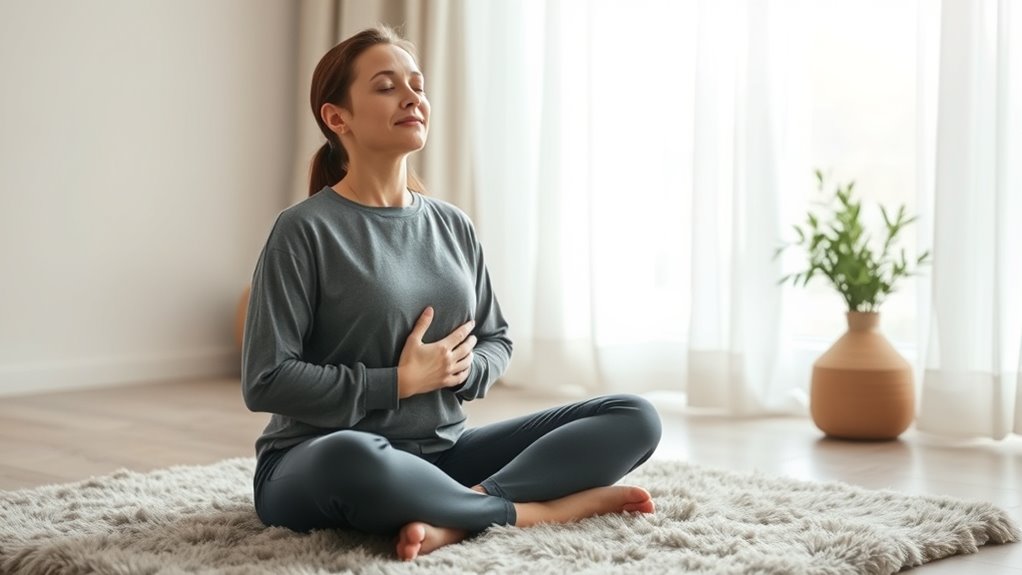
Deep breathing exercises can help break the cycle of anxiety caused by COPD symptoms. When you feel short of breath or overwhelmed, slow, deliberate breaths can calm your nervous system. To start, find a comfortable position and close your eyes if you like. Inhale slowly through your nose for a count of four, feeling your abdomen rise. Hold your breath briefly, then exhale gently through your mouth for a count of six. Focus on the sensation of your breath leaving your body. Regular practice helps reduce stress and prevents anxiety from escalating during COPD flare-ups. Incorporating breathing techniques such as relaxation techniques can further enhance your overall well-being. Consistent practice may also positively impact autonomic nervous system balance, supporting better stress management. Practicing these exercises regularly can also improve your lung capacity over time, especially when combined with other stress reduction strategies. Utilizing proper air purification methods at home can also create a healthier environment that supports your breathing exercises.
Pursed-Lip Breathing for Better Airflow
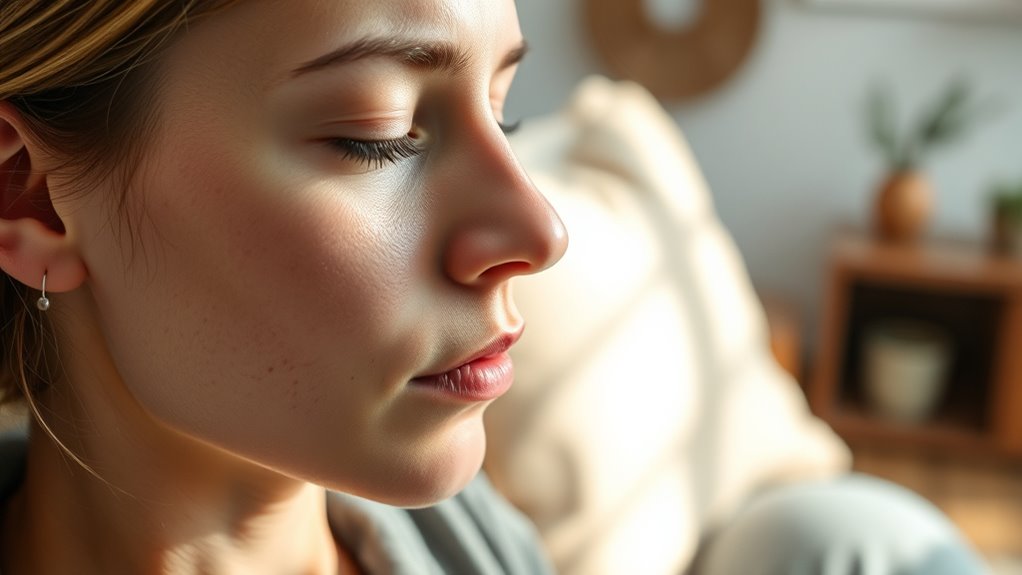
Pursed-lip breathing is a simple technique that can considerably improve airflow and reduce shortness of breath during COPD flare-ups. To do it, breathe in slowly through your nose for about two counts. Then, purse your lips as if you’re blowing out a candle and exhale slowly through your pursed lips for four counts. This prolongs your exhalation, helping to keep your airways open longer. It also increases pressure in your lungs, which can reduce airway collapse and improve airflow. Practice this technique during stable periods so it becomes automatic when you’re short of breath. Pursed-lip breathing can help you feel more in control, lessen anxiety, and make breathing easier during COPD episodes. It’s a simple, effective way to support your lung function.
Diaphragmatic Breathing to Strengthen Lung Function
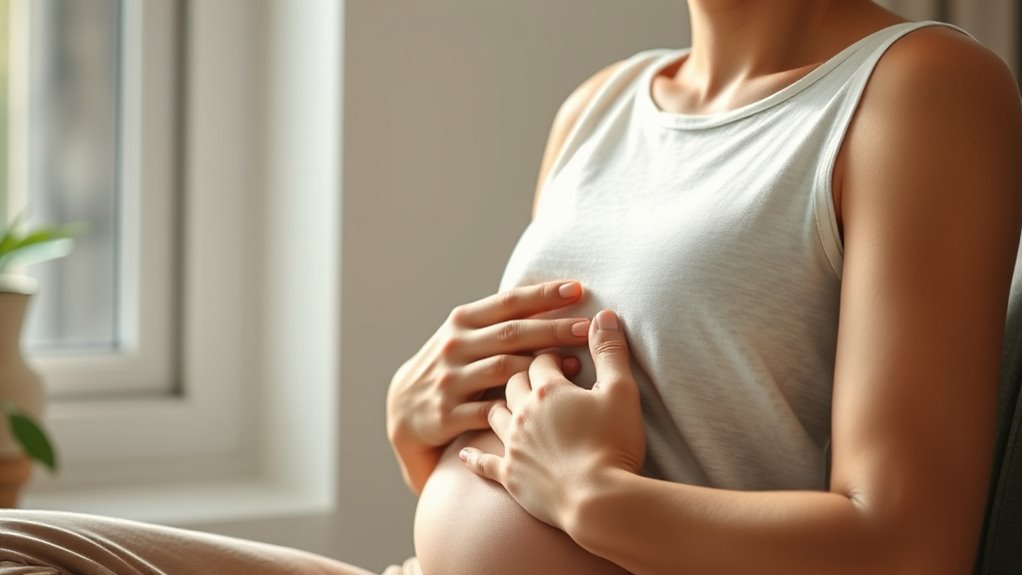
Diaphragmatic breathing, also known as belly breathing, is a technique that helps strengthen your lung muscles and improve overall breathing efficiency. By focusing on deep, controlled breaths that engage your diaphragm, you can enhance your lung capacity and reduce breathlessness. This method encourages you to breathe deeply into your stomach rather than shallowly into your chest. Regular practice can lead to better oxygen exchange and decreased anxiety related to breathing difficulties. To get started, find a comfortable position and focus on slow, steady inhales and exhales. Incorporating diaphragmatic breathing into your daily routine can reinforce the importance of natural materials and their role in creating a calming environment for relaxation.
Incorporating Mindfulness and Relaxation Techniques
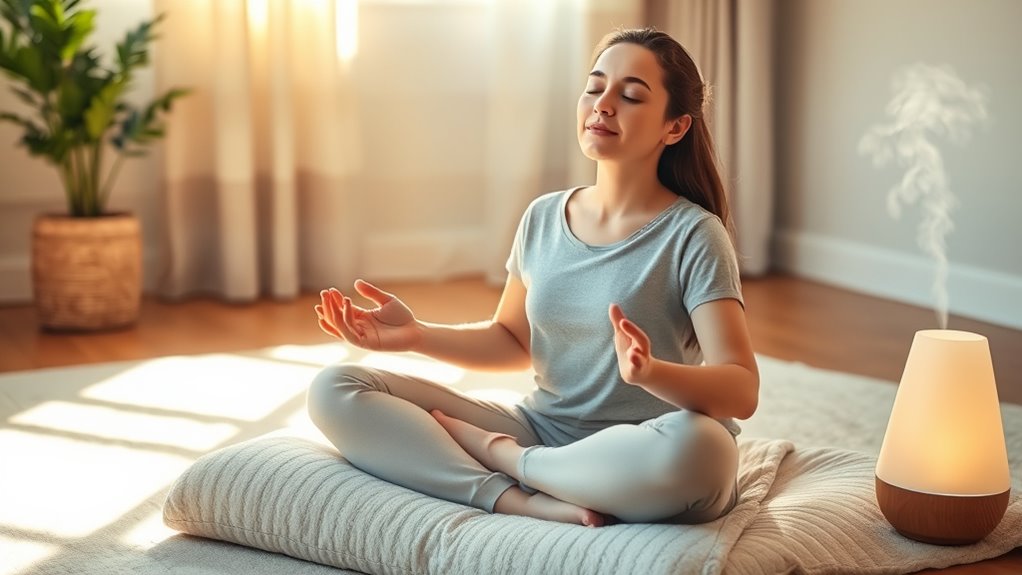
Incorporating mindfulness and relaxation techniques can considerably reduce anxiety and improve your breathing, especially when managing COPD. Practices like deep breathing, progressive muscle relaxation, and guided imagery help calm your mind and body. When you focus on the present moment, you can reduce worry and prevent panic attacks. Regularly setting aside a few minutes for mindfulness exercises can make a significant difference in how you handle breathlessness and stress. You might try deep, slow breaths, paying close attention to each inhale and exhale, or listen to calming sounds to relax your mind. Using pressure relief materials can further enhance overall comfort and support during relaxation practices. Additionally, incorporating mindfulness strategies can help train your mind to stay grounded during stressful moments. Incorporating gentle stretches and breathing exercises can further deepen these benefits. Engaging in relaxation techniques regularly can further deepen these benefits. Applying proper equipment setup can optimize the effectiveness of your relaxation routines and improve comfort. Over time, these techniques can help you feel more in control, lessen anxiety, and improve your overall breathing patterns, making daily COPD management easier.
Frequently Asked Questions
Can Breathing Techniques Completely Cure COPD or Anxiety?
Breathing techniques can’t completely cure conditions like COPD or anxiety, but they can substantially improve your symptoms. You might find that slow, deep breaths help you feel calmer and breathe more easily during flare-ups or stressful moments. While these techniques won’t eliminate the underlying issues, practicing them regularly can empower you to manage your symptoms better and enhance your overall well-being. Always consult your healthcare provider for thorough treatment options.
How Often Should I Practice These Breathing Exercises Daily?
You should aim to practice your breathing exercises at least twice a day, ideally in the morning and evening. Consistency helps improve your lung function and reduce anxiety. Start with 5 to 10 minutes per session, gradually increasing as you feel comfortable. Listen to your body, and don’t push too hard. Regular practice can make a noticeable difference in managing symptoms and promoting relaxation.
Are There Any Risks Associated With These Breathing Techniques?
Think of these breathing techniques as a gentle stream guiding your boat; if you rush or force, you might cause unnecessary splashes. Generally, they’re safe, but if you feel dizzy, chest pain, or shortness of breath, it’s like hitting rocks—stop and consult a healthcare professional. Always listen to your body, and avoid overdoing it. With caution, these methods can be a calm, steady current supporting your well-being.
Can Children With COPD Benefit From These Methods?
You wonder if children with COPD can benefit from breathing techniques. While these methods may improve breathing and reduce anxiety, you should consult a healthcare professional before trying them. Children might respond differently than adults, so personalized guidance is essential. If approved, gentle techniques like deep breathing or diaphragmatic breathing could help manage symptoms and promote relaxation, making breathing easier and providing some relief.
How Do I Know if My Breathing Exercises Are Effective?
Did you know that improved breathing techniques can reduce anxiety symptoms by up to 40%? To know if your exercises are effective, pay attention to how you feel afterward. Do you experience less shortness of breath or a calmer mind? Track your progress over time, noting changes in your symptoms. If you notice consistent improvement, your exercises are working. If not, consider adjusting your routine or consulting a healthcare professional.
Conclusion
By practicing these breathing techniques, you can better manage your COPD and reduce anxiety. Remember, your breath is a powerful tool for calming your mind and strengthening your lungs. Are you willing to take control of your well-being and breathe easier each day? With consistency and patience, these techniques can make a real difference—so why not start today and embrace the relief they can bring? Your path to calmer, healthier breathing begins now.