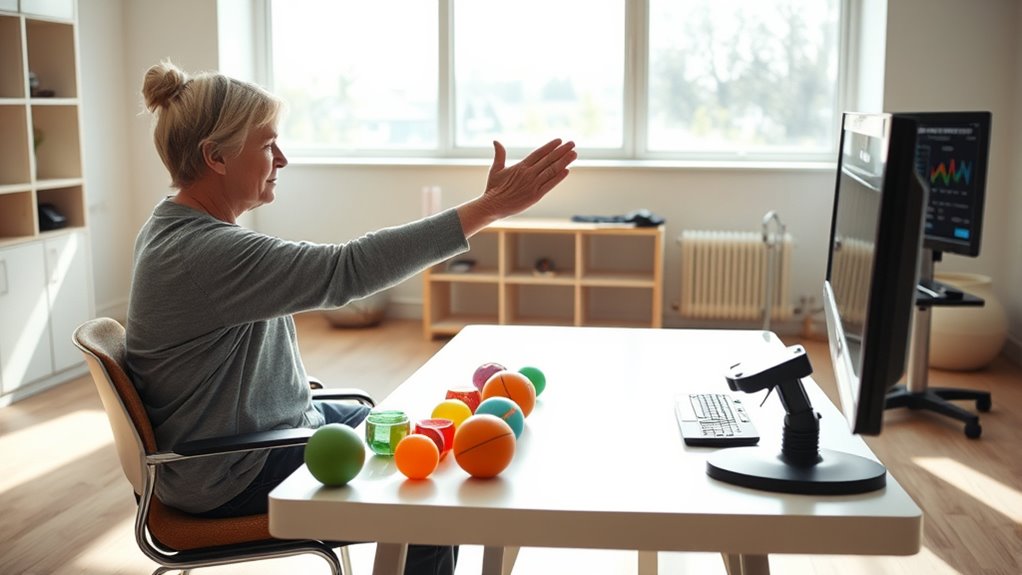

Task-specific upper-limb training after stroke involves practicing meaningful activities like grasping, reaching, and object manipulation to promote neural reorganization. Focusing on real-world tasks helps strengthen neural pathways and improves motor skills, especially when exercises are challenging yet achievable. Techniques like task chaining and repetition enhance recovery and confidence. Tailoring programs to your goals maximizes progress, and evidence shows it leads to better functional outcomes. To discover practical strategies and how to optimize your recovery, keep going.
Key Takeaways
- Task-specific training involves practicing meaningful, real-life upper limb activities like reaching, grasping, and object manipulation to promote neural reorganization.
- High repetitions of functional tasks strengthen neural pathways and enhance motor recovery through neuroplasticity.
- Techniques such as task chaining, shaping, and goal-oriented activities tailor training to individual needs and improve transfer to daily tasks.
- Constraint-Induced Movement Therapy (CIMT) restricts unaffected limb to encourage use and improve affected upper limb function.
- Personalizing upper limb exercises with assistive devices and technology maximizes engagement, motivation, and recovery outcomes.
Understanding the Principles of Task-Specific Training

Understanding the principles of task-specific training is essential for effective stroke rehabilitation. You focus on practicing real-life tasks that are meaningful to you, which helps your brain relearn how to perform these activities. This type of training emphasizes repetition, so you repeatedly practice tasks to strengthen neural pathways. You should also break down complex activities into smaller, manageable steps, making it easier to improve gradually. Additionally, training should be challenging but achievable, encouraging you to push your limits without causing frustration. By targeting specific movements and functions, task-specific training promotes better transfer of skills to daily life. Incorporating neural plasticity can further enhance the effectiveness of your rehabilitation. Recognizing the importance of task-specific practice can help motivate you to stay committed to your therapy. This approach ensures your efforts directly improve the skills you need most, making rehabilitation more relevant and effective. Engaging in automated insights derived from data analysis can help tailor your therapy to your individual progress and needs. Furthermore, understanding the diversity of training methods available allows for more personalized and adaptable rehabilitation strategies.
Common Techniques and Activities Used in Practice
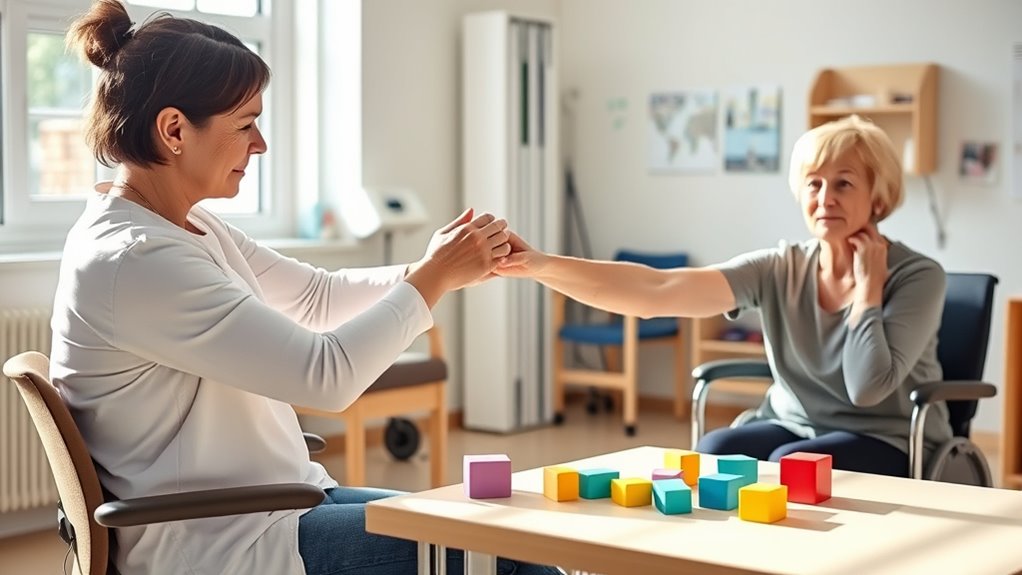
You’ll find that repetitive task practice helps reinforce motor skills and boost recovery. Engaging in functional activities keeps therapy meaningful and focused on real-life tasks. Constraint-induced movement therapy encourages use of the affected limb by restricting the unaffected side, promoting better function. Additionally, incorporating task-specific exercises that resemble daily activities can further enhance motor relearning and confidence in limb use. Recognizing emotional intelligence and supportive interactions can also positively influence motivation and engagement during therapy sessions. Employing appropriate technology, such as specialized assistive devices and adaptable tools, can further support task-specific training and improve outcomes. Incorporating dog breeds with friendly and adaptable traits can serve as motivating companions in therapy, enhancing emotional support and engagement for patients. Utilizing training techniques informed by current research can optimize recovery strategies.
Repetitive Task Practice
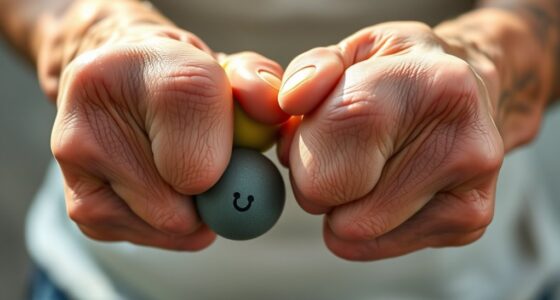
Repetitive task practice is a cornerstone of effective upper-limb rehabilitation after stroke, focusing on repeated performance of meaningful activities to promote neural reorganization. You engage in tasks that mimic daily activities, such as reaching, grasping, or object manipulation, to reinforce motor pathways. This repetition helps strengthen neural connections, encouraging recovery of movement control. You might use therapy sessions that emphasize practicing specific tasks multiple times, gradually increasing difficulty or complexity. The key is maintaining high repetition levels to maximize neuroplasticity. Techniques like task-specific drills, task chaining, or shaping are common. These activities are designed to be purposeful and relevant, motivating you to participate actively and consistently, which ultimately supports regaining functional use of your affected arm.
Functional Activity Engagement
Building on repetitive task practice, engaging in functional activities involves practicing real-life tasks that are meaningful and relevant to daily life. These activities help you transfer skills to everyday situations, boosting confidence and independence. Common techniques include task-specific training, where you focus on activities like dressing, cooking, or grooming. You might also use activities tailored to your goals, such as reaching for objects or opening jars.
Here’s a quick overview:
| Technique | Example Activities |
|---|---|
| Task-specific training | Folding laundry, making a bed |
| Functional task practice | Cooking, buttoning a shirt |
| Repetition of real-life | Repeating locking/unlocking doors |
| Goal-oriented activities | Picking up objects, pouring drinks |
This approach helps you regain practical skills efficiently.
Constraint-Induced Movement Therapy
Constraint-Induced Movement Therapy (CIMT) is a focused rehabilitation technique that encourages the use of your affected limb by restricting the unaffected one, promoting neuroplasticity and functional recovery. In practice, you wear a mitt or sling on your unaffected hand for most of the day, typically 6 hours or more, to force use of your weaker limb. The therapy involves intensive, task-specific training, often including activities like reaching, grasping, and manipulating objects that mimic daily tasks. These activities are performed repeatedly to strengthen neural pathways and improve motor control. CIMT also incorporates behavioral strategies that motivate you to use your affected limb actively. This combination of restraint, repetition, and functional tasks helps maximize recovery and encourages the brain to rewire itself.
Benefits of Focused, Real-World Task Practice

Focusing on real-world tasks in upper-limb training offers significant benefits for stroke survivors. When you practice activities that mimic daily life—like dressing, cooking, or reaching for objects—you help your brain relearn essential movements in meaningful contexts. This approach enhances motivation, making therapy more engaging and relevant. It also promotes better transfer of skills to everyday situations, increasing independence. Focusing on specific tasks encourages you to use your affected limb more naturally, which can reduce learned non-use. Additionally, practicing real-world activities can improve your coordination, strength, and fine motor control more effectively than abstract exercises alone. Overall, task-specific training helps you regain functional abilities faster, boosting confidence and quality of life as you resume daily routines.
Tailoring Training Programs to Individual Needs

Because every stroke survivor has unique strengths and challenges, customizing training programs guarantees you get the most effective therapy. When you tailor your rehabilitation, you focus on what matters most to your recovery and daily life. This personalized approach boosts motivation, encouraging you to stay committed. Consider your specific goals, abilities, and limitations, and work with your therapist to design a program that fits your needs. Here’s an example of how personalized goals can vary:
| Goal | Focus |
|---|---|
| Regain independent dressing | Fine motor control |
| Improve grasp strength | Functional tasks |
| Increase arm mobility | Everyday reaching |
Tailoring ensures your journey is meaningful and impactful, empowering you every step of the way. Creativity plays a role in developing innovative rehabilitation strategies that cater to individual needs. Incorporating educational tools that support cognitive engagement can further enhance motor recovery and motivation. Understanding wall organization options can help create a supportive home environment that promotes independence and safety. Additionally, applying maximized space and organization principles can optimize your home setup for easier therapy integration and daily functioning. Recognizing the importance of evidence-based practices in rehabilitation ensures that your program is grounded in proven strategies for recovery.
Evidence Supporting Effectiveness and Outcomes
Recent studies show that task-specific upper-limb training leads to significant improvements in motor function and daily activity performance after a stroke. These programs consistently demonstrate enhanced dexterity, strength, and coordination, translating into better ability to perform everyday tasks like dressing, grooming, and cooking. Randomized controlled trials reveal that patients engaging in targeted training experience faster recovery and more sustained gains compared to traditional therapy methods. Additionally, neuroplasticity plays a critical role, with evidence showing increased brain reorganization and functional connectivity following task-specific interventions. The mechanisms underlying these improvements involve brain reorganization, which supports recovery by strengthening neural pathways. Incorporating evidence-based practices into rehabilitation programs can further optimize outcomes. Moreover, the use of appropriate training tasks tailored to individual needs has been shown to maximize recovery potential. Understanding neuroplasticity is essential for designing effective interventions that promote long-term recovery. For example, neural adaptation processes underpin the brain’s ability to reorganize and recover functions post-stroke. Overall, the evidence supports that this focused approach not only accelerates motor recovery but also improves quality of life, making it a highly effective rehabilitation strategy for stroke survivors.
Challenges and Strategies for Successful Implementation
Implementing task-specific upper-limb training after stroke presents several challenges that can hinder its success. You might face limited patient motivation, especially if progress feels slow or frustrating. Time constraints in clinical settings can also restrict the frequency and duration of therapy sessions. Additionally, resource limitations, such as insufficient equipment or trained staff, may impede consistent application. To overcome these obstacles, you should tailor interventions to individual goals, making tasks meaningful and engaging. Incorporate technology like virtual reality or robotics to boost motivation. Prioritize interdisciplinary collaboration to optimize resource use and ensure patient-centered care. Regular assessment and adjustments help maintain progress and address barriers early. Using self-watering plant pots as an analogy, planning for sustainable and adaptable strategies can help maintain consistent engagement and progress. Emphasizing portable and adaptable equipment can further support flexible therapy delivery. Staying informed about entertainment and parks, such as visiting venues with flexible hours, can also provide additional opportunities to promote motivation and social engagement for patients. Additionally, integrating high-pressure application techniques can make therapy more efficient and effective, especially when time is limited. Furthermore, understanding newborn safety guidelines can serve as a reminder of the importance of safety and well-being in all aspects of patient care. With careful planning and flexibility, you can enhance the implementation and effectiveness of task-specific upper-limb training.
Frequently Asked Questions
How Long Does Task-Specific Upper-Limb Training Typically Last?
You’re wondering how long task-specific upper-limb training usually lasts. Typically, sessions range from 30 minutes to an hour, and programs often run for several weeks, commonly between 4 to 8 weeks. The exact length depends on your individual progress and goals. Consistency is key, so sticking with your schedule and gradually increasing intensity can help maximize your recovery. Always follow your therapist’s recommendations for the best results.
Are There Age Restrictions for Effective Training Post-Stroke?
Age doesn’t usually limit your ability to benefit from post-stroke upper-limb training. You’re never too old to improve your arm function through targeted exercises. Your progress depends more on your overall health, motivation, and consistency than on age. With appropriate guidance, you can see meaningful improvements regardless of how old you are. Focus on your goals, stay committed, and work closely with your therapist to optimize your recovery.
Can Task-Specific Training Be Combined With Other Therapies?
Think of your recovery as a recipe—you can mix different therapies for better results. Yes, you can combine task-specific training with other treatments like physical or occupational therapy. This integrated approach targets various aspects of your recovery, making your progress more effective. By blending therapies, you create a personalized plan that addresses your unique needs, helping you regain upper limb function more efficiently and confidently.
What Are Common Barriers Patients Face During Training?
You might face common barriers like fatigue, pain, or frustration during training. Sometimes, motivation drops when progress feels slow, or you struggle with coordination and weakness. Environmental factors, such as lack of support or access to equipment, can also hinder your efforts. These challenges are normal, but with patience, encouragement, and tailored strategies, you can overcome them and stay committed to your recovery journey.
How Soon After Stroke Should Training Ideally Begin?
You should aim to start training as soon as medically stable, ideally within the first days to weeks after your stroke. Early intervention helps maximize recovery potential, promotes neuroplasticity, and prevents learned non-use of the affected limb. While exact timing varies per individual, initiating activity early under professional guidance can considerably improve your chances of regaining function and independence. Always follow your healthcare team’s advice for the best outcomes.
Conclusion
By embracing task-specific upper-limb training, you plant seeds for meaningful recovery, turning everyday tasks into powerful tools for rehabilitation. When you tailor activities to individual needs and stay committed to evidence-based practices, you transform challenges into opportunities. Remember, just like a skilled gardener tends to each plant’s unique growth, your focused efforts nurture steady progress. With patience and persistence, you’ll see your patient’s recovery blossom into a vibrant display of regained independence.