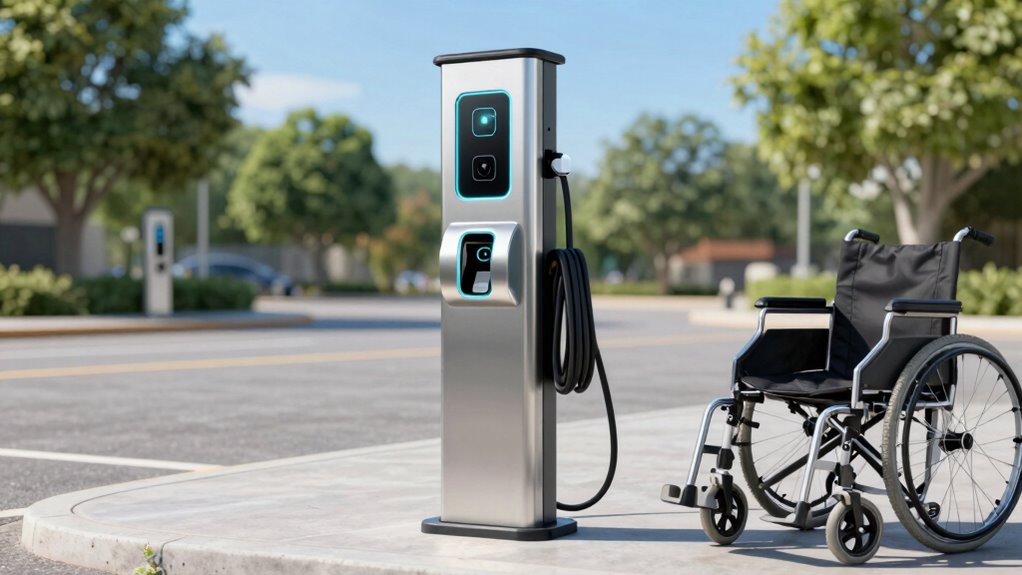

To build a better charging station for mobility devices, focus on integrating advanced safety features like fire-resistant materials, GFCIs, and automatic shutoffs to protect users. Incorporate efficient battery management systems that monitor health, prevent overcharging, and optimize charge cycles. Design for accessibility with clear signage and straightforward controls, ensuring safety and ease of use. Combining these elements creates a reliable, safe station—learn more about each part to enhance your project further.

Turn quiet afternoons into listening time
- Thousands of audiobooks, podcasts and originals
- Listen on your phone, tablet or Echo — also offline
- Cancel anytime
Key Takeaways
- Integrate advanced battery management systems with voltage regulation, overcharge protection, and real-time health monitoring.
- Use fire-resistant materials, proper wiring, and electrical safety features like GFCIs and automatic shutoffs.
- Design for accessibility with clear signage, straightforward instructions, and ease of use for all users.
- Ensure compliance with electrical standards and conduct regular maintenance and safety inspections.
- Balance efficiency and safety by incorporating intelligent charging, temperature monitoring, and reliable grounding techniques.
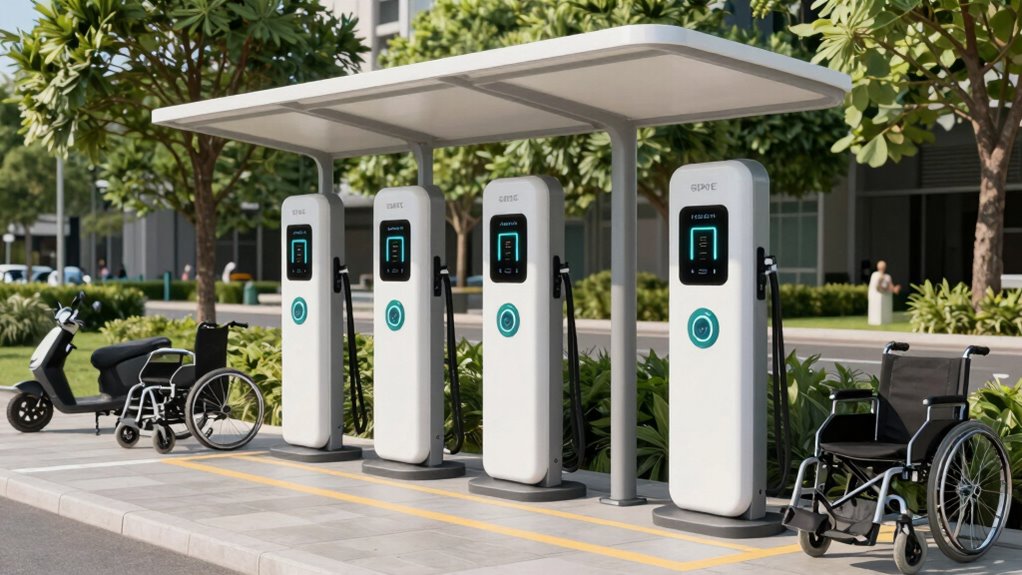
As more people rely on mobility devices for daily activities, creating efficient and accessible charging stations becomes essential. You want a setup that not only charges devices quickly but also ensures user safety and device longevity. To achieve this, focus on solid battery management practices. Proper battery management involves incorporating features like voltage regulation, overcharge protection, and temperature monitoring. These elements help prevent battery degradation, reduce the risk of overheating, and extend the life of the device’s battery. When designing your station, select high-quality components that support these functions and are compatible with a variety of mobility devices. Implementing intelligent charging systems that communicate with the device’s battery can optimize charge cycles, ensuring batteries are neither overcharged nor undercharged, which is vital for maintaining their health over time. Additionally, incorporating battery health monitoring technologies can provide real-time insights into the condition of the batteries, helping to prevent unexpected failures. Proper wiring and connections also contribute to overall electrical safety, preventing potential hazards and ensuring reliable operation. Using proper grounding techniques further enhances safety by reducing the risk of electrical shock or damage.
Safety protocols are just as critical as effective battery management. You should prioritize safety at every stage of your charging station’s design. Start with fire-resistant materials for the station’s housing and secure wiring to prevent shorts or sparks. Incorporate clear safety signage to inform users about proper operation and precautions. Ground-fault circuit interrupters (GFCIs) are essential to cut power in case of electrical faults, reducing the risk of electric shocks. Consider adding automatic shutoff features that activate if abnormal temperatures or voltages are detected. To further enhance safety, integrating electrical standards compliance ensures your station adheres to recognized safety regulations. Additionally, make sure the station is accessible and user-friendly, with straightforward instructions for safe use. Regular maintenance and inspections are necessary to identify potential hazards early and keep safety protocols up-to-date. Training users on best practices, emphasizing the importance of not leaving devices unattended during charging and avoiding the use of damaged cords or connectors, is equally important.
Designing a charging station that balances efficiency with safety involves careful planning and the right technology. Integrate features that monitor and control the charging process, and always adhere to electrical safety standards. By combining robust battery management with strict safety protocols, you create a reliable environment where mobility devices can be charged efficiently without compromising safety. This approach not only benefits the users by providing consistent, safe charging but also prolongs the lifespan of the devices and their batteries. Remember, a well-designed charging station is an investment in accessibility and peace of mind, making daily routines smoother and safer for everyone relying on mobility devices.
mobility device charging station with safety features
As an affiliate, we earn on qualifying purchases.
As an affiliate, we earn on qualifying purchases.
Frequently Asked Questions
What Are the Best Materials for Weatherproofing a Charging Station?
You should use weatherproof materials like stainless steel, UV-resistant plastics, or treated wood for your charging station. These materials undergo durability testing to guarantee they withstand harsh weather, and they’re compatible with various environmental conditions. By choosing these options, you prevent corrosion and damage, ensuring your station remains functional over time. Regular maintenance and sealing also help maintain weatherproofing, keeping your mobility devices charged safely regardless of weather.
How Can I Ensure the Safety of Users Around Electrical Components?
Did you know that proper safety measures can reduce electrical accidents by up to 80%? To guarantee user safety around electrical components, you should secure the power source with protective covers and grounding. Implement clear safety protocols, like warning signs and emergency shut-off switches. Regular inspections and staff training are essential. These steps help prevent hazards and give users confidence that the charging station is safe and reliable.
What Security Features Prevent Theft of Mobility Devices?
To prevent theft of mobility devices, you should incorporate device tracking systems and security alarms. Device tracking allows you to monitor the location of each device, deterring theft and aiding recovery if stolen. Security alarms activate if tampering occurs, alerting staff or security personnel instantly. Combining these features creates a secure environment, giving users peace of mind and protecting your investment in mobility devices effectively.
How to Accommodate Multiple Device Types and Sizes?
To accommodate multiple device types and sizes, you should prioritize device organization by designing adjustable or customizable slots that fit various mobility devices securely. Incorporate smart power management to distribute charging efficiently, preventing overloads. Use modular components that can be reconfigured as needed. Clear labeling helps users quickly identify their device’s spot, streamlining the charging process while ensuring safety and compatibility for all device sizes and types.
What Is the Ideal Height and Placement for Accessibility?
Think of your charging station as a welcoming doorway; it should be within easy reach. To meet accessibility standards and guarantee user comfort, place the charger at about 36 inches high, aligning with the average wheelchair seat height. Position it in a well-lit, unobstructed area, allowing users to access without strain or difficulty. This thoughtful placement makes your station inclusive, fostering independence and ease for every user.
Conclusion
Imagine a charging station so well-designed that it becomes a hub of independence for mobility device users. By prioritizing accessibility, safety, and convenience, you’re not just building a station—you’re empowering lives. Some say that better infrastructure alone can transform mobility experiences. While technology is essential, it’s your thoughtful planning that truly makes a difference. When you create a seamless, reliable charging spot, you’re fostering a world where mobility isn’t limited by charging needs—it’s enhanced.
Cold & flu season Picks
humidifiers
As an affiliate, we earn on qualifying purchases.