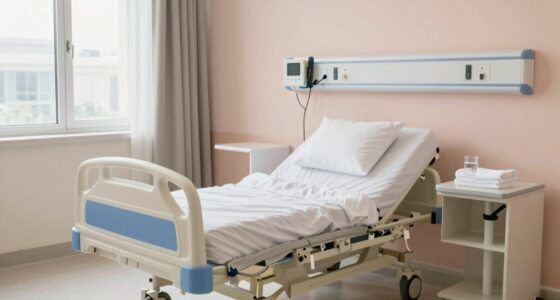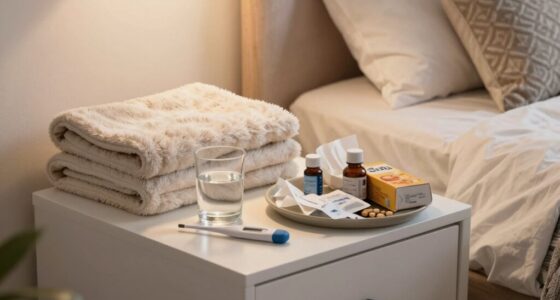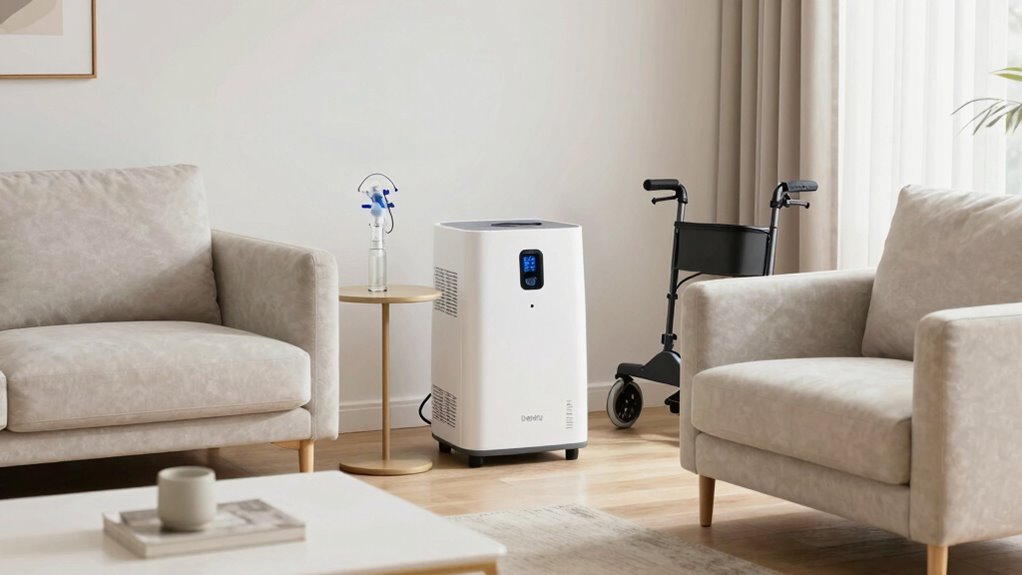

To arrange furniture around home medical equipment, focus on creating clear, at least 3-foot-wide pathways for easy movement. Position essential equipment on stable, flat surfaces that are within reach but out of walkways to prevent tripping. Avoid tight corners and cluttered spaces, secure tall or unstable items to the wall, and keep frequently used supplies nearby. Brighten your space with good lighting and organize everything for quick access. If you want more tips, keep exploring how to optimize your setup safely and efficiently.

Turn quiet afternoons into listening time
- Thousands of audiobooks, podcasts and originals
- Listen on your phone, tablet or Echo — also offline
- Cancel anytime
Key Takeaways
- Position medical equipment on stable, flat surfaces for easy access and safety.
- Keep pathways at least 3 feet wide to ensure smooth, unobstructed movement.
- Arrange furniture to avoid tight corners and cramped spaces that hinder mobility.
- Place frequently used supplies near equipment for quick and efficient access.
- Secure tall or unstable furniture to the wall to prevent tipping and ensure safety.
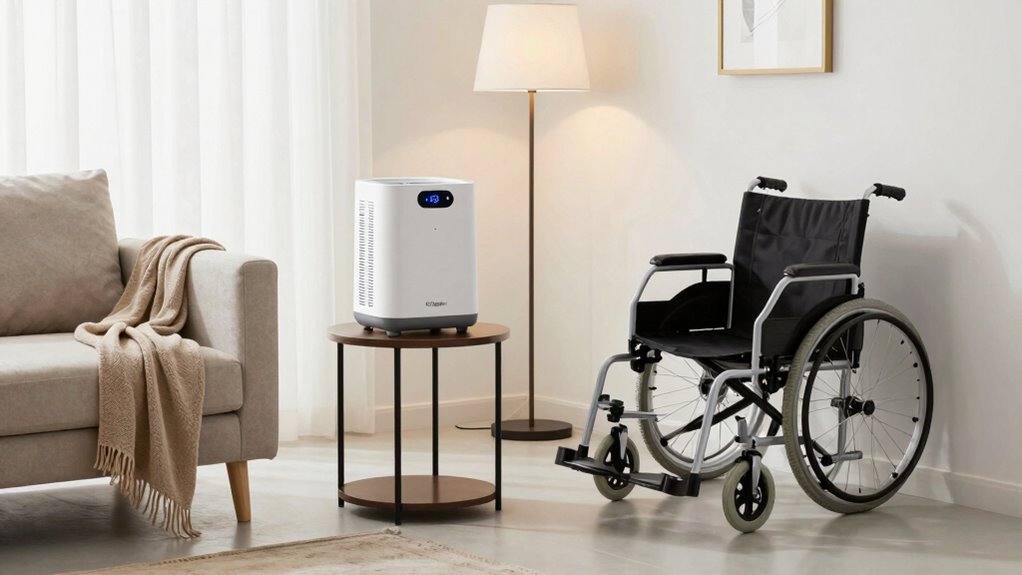
When setting up a space that includes medical equipment, arranging your furniture thoughtfully is essential for safety and efficiency. You want your home to be both functional and comfortable, so consider decorating tips that keep the space accessible without cluttering it. Start by identifying the location of your medical equipment and think about how you’ll need to access it daily. Position the equipment in a way that allows easy reach, avoiding tight corners or cramped spots that could hinder movement or cause accidents. Keep pathways clear—at least 3 feet wide—so you can navigate smoothly without tripping hazards or having to squeeze past furniture.
Arrange medical equipment for easy access, clear pathways, and avoid tight corners to ensure safety and efficiency.
Safety considerations should be your top priority. Make sure heavy or bulky equipment is placed on stable, flat surfaces to prevent tipping. Use furniture that won’t wobble or slide, and consider securing items to the wall if they’re tall or unstable. Keep cords and wires out of walkways to avoid tripping, and use cord covers or tape them down securely. If you’re working around electrical devices, ensure outlets are easily accessible and that cords aren’t stretched across walkways. Avoid overloading power strips to minimize fire risks, and check that all electrical connections are safe and functioning properly. Properly managing electrical safety is crucial to preventing accidents in your home. Additionally, understanding Indian currency and number formatting can help you manage medical bills and expenses more effectively.
When choosing furniture, opt for pieces that serve multiple purposes. For example, a narrow console table can hold supplies or medical devices without taking up much space. Use storage solutions like baskets or bins to organize supplies, keeping them within reach but out of the way. Keep frequently used items close to your medical equipment to minimize movement and make daily routines more efficient. If you’re decorating the space, select calming colors and simple designs that won’t distract or overwhelm you. Avoid overly ornate furniture or accessories that could get in the way or become dust collectors. Incorporating ergonomic furniture can also enhance comfort and reduce fatigue during daily activities.
Lighting plays a critical role in both safety and decorating. Use bright, even lighting that illuminates all areas clearly. Consider task lighting for specific tasks, like reading medication labels or adjusting equipment. Make sure light switches are within easy reach, and avoid placing furniture where it might block natural light or electrical sources. Regularly review your setup to confirm all safety measures remain effective. Keep emergency contacts, medical supplies, and communication devices nearby, so you can act quickly if needed.
medical equipment stable surface stand
As an affiliate, we earn on qualifying purchases.
As an affiliate, we earn on qualifying purchases.
Frequently Asked Questions
How Do I Prevent Tripping Hazards Around Medical Equipment?
To prevent tripping hazards around medical equipment, you should practice cord management and follow safety tips. Keep cords organized using cable ties or clips, and run them along walls or furniture to keep walkways clear. Regularly check cords for damage and replace if needed. Make certain furniture is arranged to avoid blocking access, and always maintain clear paths. These steps help create a safer environment and reduce the risk of accidents.
What if I Have Limited Space for Furniture Arrangement?
If space is limited, you can maximize it by using multifunctional furniture and clever storage solutions. Incorporate decorative covers to hide and protect medical equipment, making your space look cleaner and more inviting. Opt for compact furniture that serves dual purposes, like ottomans with storage or wall-mounted shelves. Keep pathways clear and prioritize essential items, ensuring easy access without clutter, so your small space remains functional and comfortable.
How Can I Hide Medical Devices Without Sacrificing Accessibility?
Like a modern-day Robin Hood, you can hide medical devices without sacrificing access by using decorative covers or concealed storage. Place devices inside stylish cabinets or baskets that blend with your décor, making them virtually invisible. Guarantee these containers are easily accessible for quick use. This way, your space stays cozy and organized, while your medical needs remain met discreetly and effortlessly.
Are There Specific Furniture Types Recommended for Medical Equipment?
You should consider using decorative furniture with ergonomic designs that blend seamlessly into your space. Opt for storage ottomans or side tables with hidden compartments to keep medical devices accessible yet discreet. Look for furniture with adjustable features or lightweight frames for easy repositioning. These choices help maintain a stylish, functional environment while ensuring your medical equipment remains convenient and unobtrusive, blending seamlessly into your home decor.
How Do I Keep Cords and Wires Organized Safely?
To keep cords and wires organized safely, you should focus on effective cable management and cord concealment. Use cable ties or clips to bundle wires neatly, preventing tripping hazards. Consider under-desk or wall-mounted cable organizers to hide excess cords, maintaining a tidy space. Regularly check cords for damage and verify they’re not stretched or pinched. This approach reduces clutter, minimizes risks, and keeps your medical equipment setup safe and accessible.
Conclusion
Think of your home as a well-orchestrated garden, where each piece of furniture is a plant, and the medical equipment is the delicate flower that needs care. Just like tending to each bloom guarantees a vibrant, balanced garden, arranging furniture thoughtfully creates a space that’s both functional and harmonious. When you give each element room to breathe, your home becomes a sanctuary where comfort and accessibility flourish—truly, a beautiful landscape of well-being.
Fall Picks
fall essentials
As an affiliate, we earn on qualifying purchases.