
Your back pain often starts when you lift patients at the wrong time. Moving too early or too late can cause misalignment and strain your muscles and spine. Proper timing ensures your movements are smooth and safe, reducing the risk of injury. By paying attention to patient cues and using ergonomic techniques, you safeguard your back while providing safe care. Discover how combining timing, techniques, and tools can help you stay injury-free.

Get comfort and care essentials delivered free — and shop member deals
- Fast, free delivery on millions of items
- Access to Prime Big Deal Days deals on October 6–7
- Prime Video, Amazon Music and more included
Key Takeaways
- Proper lift timing prevents unnecessary strain by ensuring movements are made when the patient is ready.
- Moving too early or late can cause misalignment, increasing the risk of injury to the caregiver.
- Recognizing patient cues helps caregivers coordinate safe, smooth transfers, reducing back stress.
- Correct timing, combined with ergonomic techniques and assistive devices, minimizes physical effort and injury risk.
- Proper lift timing promotes safety, reduces fatigue, and protects caregivers from developing chronic back pain.

Caring for a loved one can be deeply rewarding, but it often takes a toll on your body, especially your back. One of the most vital factors in preventing back pain is understanding the importance of patient lift timing. When you lift or reposition someone, waiting until the right moment can make all the difference. Moving too early or too late puts unnecessary strain on your muscles and spine, leading to fatigue or injury over time. Recognizing the signs that your loved one is ready for movement ensures you’re not rushing or forcing a lift, which can cause misalignment and increase your risk of pain.
Using ergonomic techniques is essential in reducing back strain during caregiving tasks. These techniques involve maintaining proper posture, keeping your back straight, and bending at your hips and knees rather than your waist. When you adopt this stance, you distribute the weight more evenly across your legs and core, minimizing stress on your lower back. Keeping close to your loved one’s body during lifts also helps, reducing the leverage your back has to counteract. Remember to avoid twisting or jerking movements, as these can strain your muscles and discs. Instead, move smoothly and deliberately, ensuring your movements are controlled and safe. Additionally, understanding patient lift timing can significantly improve your safety and efficiency during transfers. Being aware of your own body mechanics and limits is equally important in preventing injury. Incorporating proper timing into your routine can help prevent unnecessary strain and promote smoother transfers. Applying body mechanics techniques correctly is key to sustaining your strength and preventing injury over time. Furthermore, practicing these techniques regularly can help build muscle memory, making transfers more instinctive and less stressful.
Use proper posture, avoid twisting, and move smoothly to protect your back during lifts.
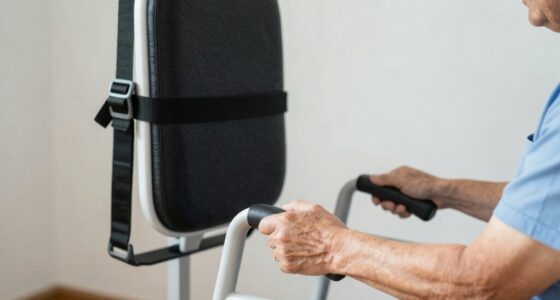
Assistive devices are game-changers when it comes to lifting and repositioning patients. Devices like transfer belts, slide sheets, and hydraulic lifts can considerably lessen the physical effort required. These tools are designed to help you maintain proper body mechanics, making lifts safer and less taxing on your back. For example, a transfer belt provides a sturdy grip point, allowing you to stabilize and guide your loved one without bending excessively or twisting awkwardly. Hydraulic lifts do the heavy lifting for you, reducing the risk of injury and fatigue. Incorporating these assistive devices into your routine not only protects your back but also provides more dignity and comfort for your loved one during transfers. Regularly inspecting and maintaining your equipment is also vital to ensure safety and reliability.
Timing your lifts properly, combined with ergonomic techniques and assistive devices, creates a safer caregiving environment. It’s about being attentive to your loved one’s cues and understanding when they’re ready to be moved. Rushing or delaying can both lead to back injuries. Prioritize planning each movement carefully, using the right tools, and maintaining good posture. When you do, you’ll find that caring for your loved one becomes less physically demanding and more sustainable over time. Protecting your back starts with awareness and deliberate action—your body will thank you for it. Recognizing the importance of proper timing as part of a comprehensive approach can greatly enhance your overall safety and well-being. Being proactive and educated about lift techniques can also contribute to injury prevention and improve your confidence during transfers.
As an affiliate, we earn on qualifying purchases.
Frequently Asked Questions
How Can Caregivers Prevent Back Pain During Lifts?
To prevent back pain during lifts, focus on proper lifting techniques and ergonomic adjustments. Keep your back straight, bend at your hips and knees, and hold the patient close to your body. Use your leg muscles to lift, not your back. Make ergonomic adjustments by ensuring your workspace is at a comfortable height and using assistive devices when needed. This approach helps reduce strain and protects your back.
What Are the Early Signs of Caregiver Back Strain?
You might notice early signs of caregiver back strain through persistent caregiver fatigue and emotional stress. If you feel constant muscle soreness, tightness, or aches, it’s a warning sign. Emotional stress can also intensify physical discomfort. Pay attention to these signals and take breaks to avoid worsening your back pain. Recognizing these early signs helps you intervene promptly, prevent injury, and maintain your well-being while caring for others.
Are There Specific Exercises to Strengthen Caregiver Back Muscles?
Did you know that regular core strengthening exercises can reduce caregiver back pain by up to 60%? To protect your back, incorporate exercises like planks, bridges, and bird dogs, which target your core muscles. Focus on posture correction during these workouts, keeping your back straight and engaging your abdominal muscles. Consistent practice helps build resilience, making lifting and caring for patients safer and easier over time.
How Often Should Caregivers Take Breaks During Patient Lifts?
You should take breaks frequently during patient lifts, especially if you’re maintaining patient positioning or using proper lift technique. Aim for a break every 10-15 minutes to rest your back muscles and prevent strain. During these breaks, reassess your posture, stretch, and guarantee your lift technique remains correct. Proper timing helps reduce back pain and minimizes injury risk, keeping you comfortable and safe throughout caregiving tasks.
What Equipment Can Reduce Caregiver Back Injury Risk?
Using equipment like lift assists can considerably reduce your risk of back injuries. These devices support ergonomic techniques, making patient lifts safer and easier. Lift assists minimize strain by helping you maintain proper body mechanics while lifting or repositioning patients. Incorporating these tools into your routine not only protects your back but also enhances safety for both you and your patients. Always choose the right equipment for each lift to prevent injury.
Conclusion
Remember, every lift is a bridge you build or break—your timing determines whether you carry your patient safely or let back pain become your silent burden. When you wait for the right moment, you’re anchoring yourself in strength and care. But rushing can send ripples through your well-being, like a stone skipping on water. Choose patience, respect the flow, and let proper lift timing be the steady hand guiding you across the turbulent waters of caregiving.
Halloween Picks
halloween
As an affiliate, we earn on qualifying purchases.