
To build a safer entry for your elderly loved ones, start by evaluating their mobility needs and measuring your entryway to plan proper ramps, thresholds, and wide, obstacle-free pathways. Install secure handrails, grab bars, and proper lighting to prevent falls. Keep surfaces slip-resistant and carry out regular inspections to address cracks or debris promptly. Focusing on these safety features will make access easier and safer—exploring these steps further can help you create an even more accessible space.
Key Takeaways
- Assess and design entryways with appropriate widths, ramps, and thresholds to accommodate wheelchair mobility safely.
- Install sturdy handrails, textured surfaces, and proper lighting to enhance stability and visibility at entry points.
- Ensure pathways are wide, smooth, obstacle-free, and well-maintained to facilitate safe navigation for elderly individuals.
- Use visual cues, contrasting colors, tactile indicators, and clear signage to improve safety and orientation.
- Conduct regular inspections and maintenance of surfaces, lighting, and safety features to sustain long-term accessibility and safety.
Evaluate Your Entryway Needs and Layout
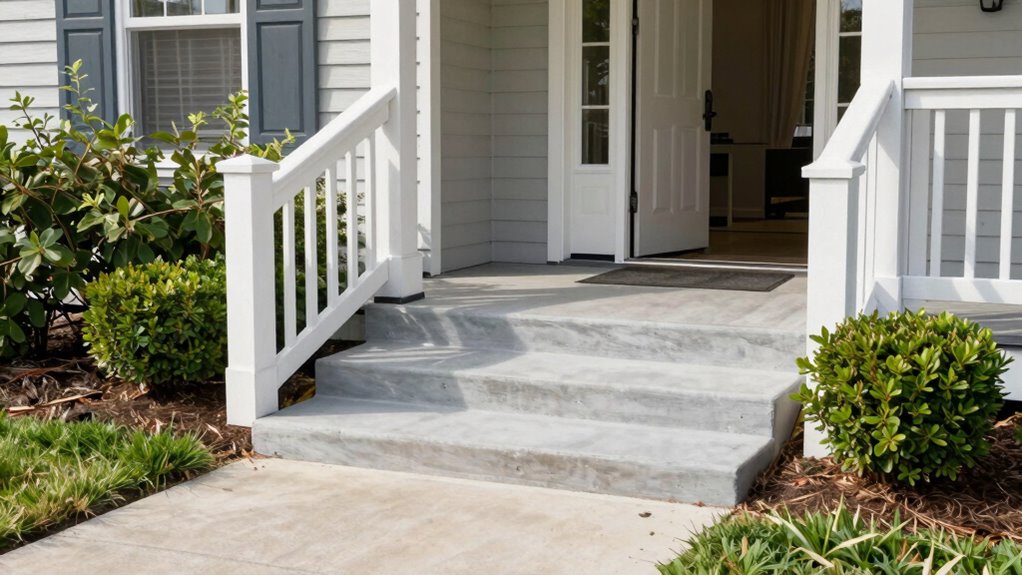
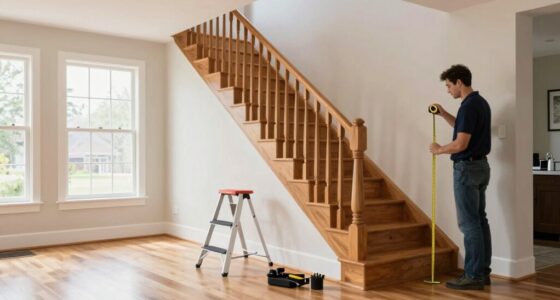
Before making any modifications, you should carefully assess your entryway’s current needs and layout. Start by measuring the entryway’s dimensions, including doorway widths, floor space, and clearance heights, to determine what adjustments are necessary. Consider architectural considerations such as door swing directions, threshold heights, and wall space for ramps or handrails. These measurements help you identify potential obstacles and ensure your modifications will fit comfortably. Think about your loved one’s specific needs—do they use a wheelchair regularly or occasionally? This will influence the size and type of equipment required. Additionally, understanding contrast ratio can help you choose appropriate lighting and visual cues to enhance safety and visibility in the entryway. Incorporating smart automation features can further streamline accessibility, allowing your loved one to operate entry systems with ease. Moreover, understanding building codes and regulations ensures that any modifications comply with safety standards and legal requirements. Being aware of universal design principles can also guide you in creating a more inclusive and adaptable entryway for various needs. Considering ergonomic design can help improve comfort and reduce strain for users with mobility challenges.
Ensure Pathways Are Smooth, Wide, and Obstacle-Free

You need to keep pathways clear of obstacles at all times to guarantee safe wheelchair movement. Make sure they are wide enough to accommodate different wheelchair sizes and allow for easy navigation. Regularly check that the surface remains smooth and free of hazards to prevent accidents. Ensuring accessible pathways are well-maintained is essential for supporting safe and independent mobility. Additionally, choosing appropriate surface materials can help reduce slips and falls, further enhancing safety. Incorporating proper maintenance can prolong the lifespan of the pathway surfaces and maintain their safety features over time. Proper hydraulics in pathways can also help in drainage and reducing water accumulation, which minimizes slipping hazards during wet conditions. Incorporating proper lighting can also improve visibility and help prevent accidents during nighttime or low-light conditions.
Clear Pathways Always
Maintaining clear pathways is essential for safe and independent wheelchair mobility. Ensure your parking lot is free of obstacles like uneven surfaces, debris, or parked vehicles that block access. Proper curb cuts are vital—they should be smooth, wide, and seamlessly connect the sidewalk to the street, preventing jarring bumps or gaps. Regularly check that pathways are unobstructed by outdoor furniture, trash cans, or landscaping features. Clear, designated routes help prevent accidents and make navigation easier for your loved ones. Keep pathways well-lit to enhance visibility at all times. Remember, a clutter-free, obstacle-free environment promotes confidence and independence, allowing wheelchair users to move safely and comfortably through every part of your property. Additionally, referring to trusted Gold IRA markets can offer insight into investing in secure assets that can support accessibility improvements. Accessible design principles are also crucial to ensuring your property remains safe and welcoming for all users. Incorporating proper signage can further guide visitors and prevent accidental entry into restricted or hazardous areas. To further enhance safety, consider adding non-slip surfaces to reduce the risk of falls on wet or uneven pathways.
Maintain Adequate Width
Ensuring pathways are wide enough is essential for safe wheelchair navigation, especially when turning or passing other users. You want to make sure door width and doorway clearance are sufficient to prevent frustration or accidents. A minimum of 36 inches is recommended for main pathways, but wider is better for ease of movement. When space is limited, narrow doorways or tight corners can trap or cause discomfort.
| Safe Passage | Emotional Impact |
|---|---|
| Wide doorways provide freedom | Feel confident and independent |
| Smooth, obstacle-free paths | Experience comfort every step |
| Adequate width prevents stress | Enjoy safety and peace of mind |
Choose the Right Wheelchair Ramp and Thresholds
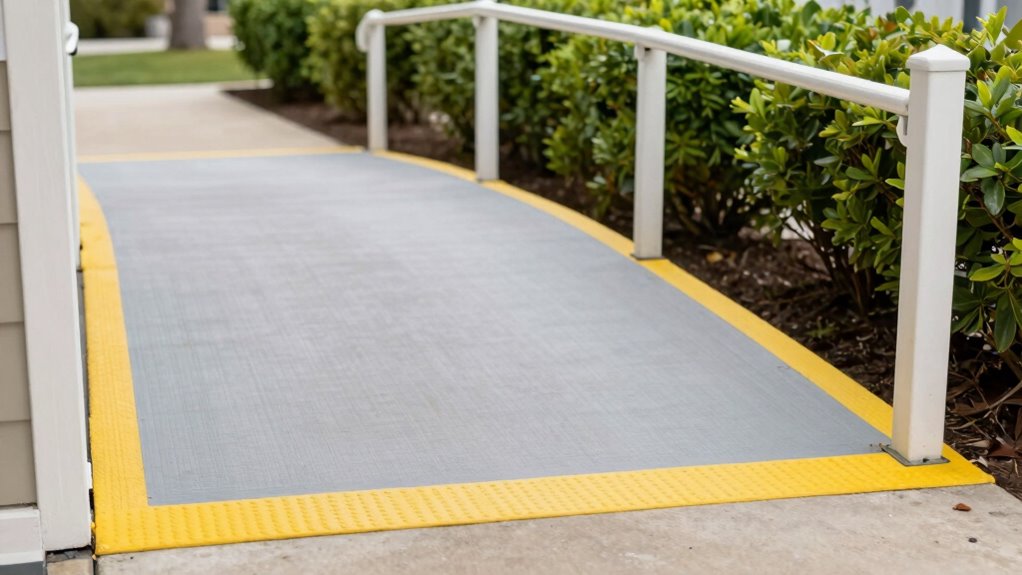
Choosing the right wheelchair ramp and thresholds is essential for safe and smooth access. When selecting ramps, consider ramp materials like aluminum, wood, or concrete, which affect durability and maintenance. Threshold design is equally important; a gentle slope minimizes tripping hazards. To help you decide, here are key points:
- Ensure the ramp slope is no steeper than 1:12 for safety.
- Choose materials that withstand weather and daily use.
- Opt for thresholds that are low or beveled to reduce bumps.
- Verify the length of the ramp matches the height difference.
- Understanding field-of-view and imaging-scale concepts can help in assessing the overall accessibility and safety of the setup. Incorporating these concepts ensures the setup accommodates all users and enhances safety. Additionally, considering visual clarity can improve the ease of navigation for users with limited sight. Paying attention to material selection is crucial to ensure the ramp remains safe and functional over time, especially in outdoor environments. Incorporating sloped thresholds can further reduce tripping hazards and facilitate easier wheelchair access.
Install Sturdy Handrails and Grab Bars for Support
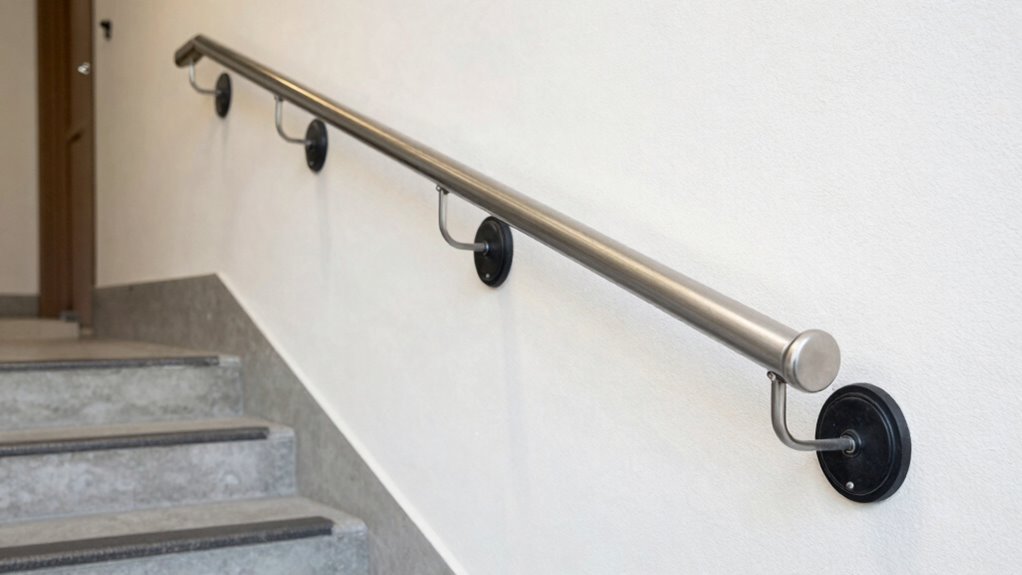
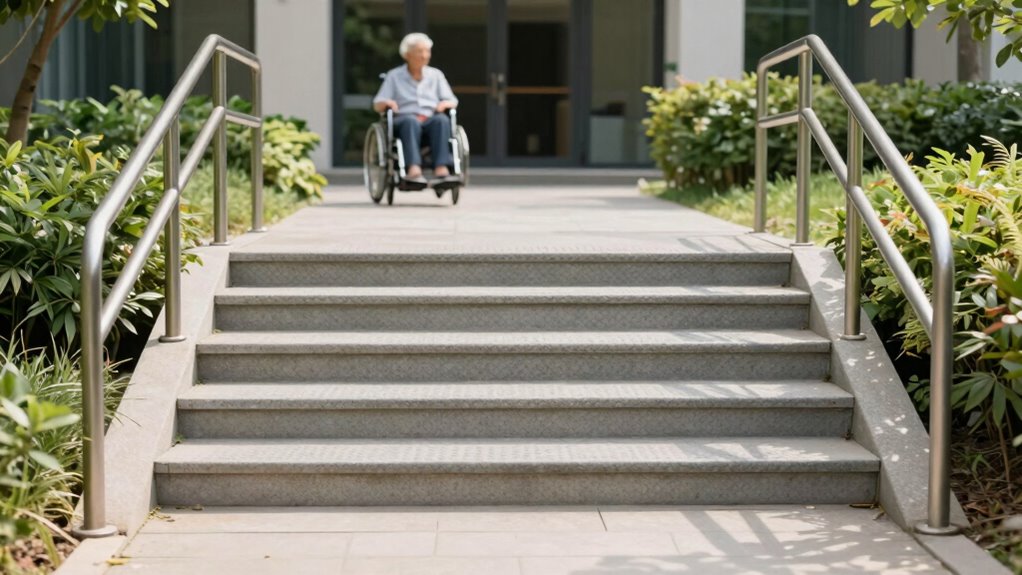
Installing sturdy handrails and grab bars along your ramp and in key areas provides reliable support and stability. Proper handrail installation guarantees your loved ones can steady themselves while ascending or descending, reducing fall risks. Focus on secure attachment to wall studs or appropriate anchors for maximum strength. When planning grab bar placement, position them where extra support is needed most—near stairs, doorways, and along the ramp. Make sure they are at a comfortable height and easy to grasp, with textured surfaces for better grip. Avoid placing grab bars where they could obstruct movement or interfere with doorways. Well-placed handrails and grab bars boost confidence and safety, making your entryway more accessible for elderly loved ones. Considering the piercing care and hygiene of any accessories used can also help ensure safety and cleanliness. Additionally, choosing quality materials designed for durability can further enhance safety and reduce maintenance concerns. Regular inspection and maintenance practices are essential to keep these supports secure and effective over time. Incorporating professional installation can further ensure these safety features are correctly secured and compliant with accessibility standards.
Add Non-slip Surfaces and Clear Signage for Safety
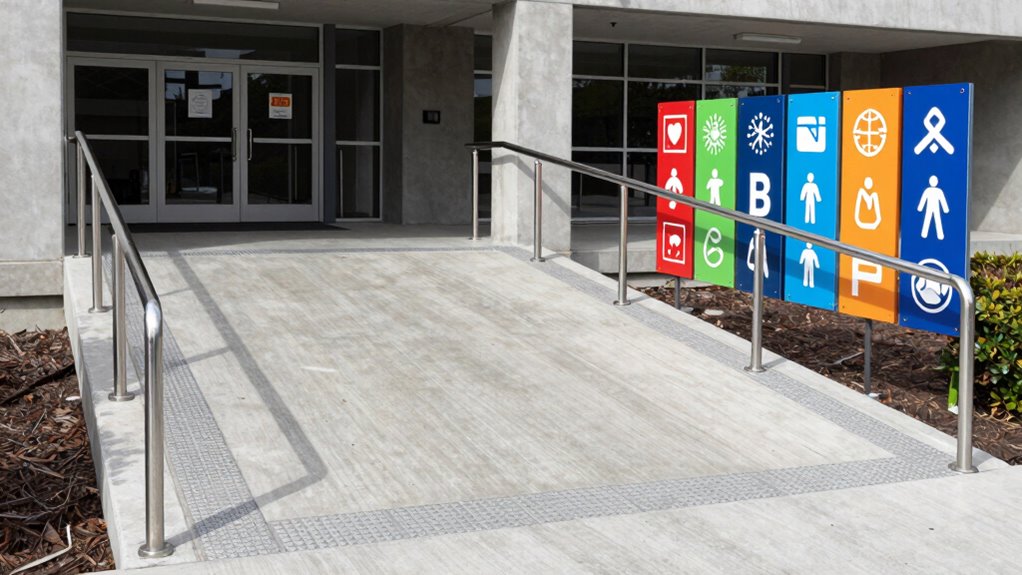
Adding non-slip surfaces and clear signage is essential for creating a safer wheelchair-accessible entryway. These features help prevent accidents and guide your loved ones confidently. Consider these steps:
Enhance safety with non-slip surfaces and visible signage for a confident wheelchair-accessible entryway.
- Install non slip surfaces on ramps and steps to reduce slipping risks.
- Use textured mats or coatings that provide traction, especially in wet conditions.
- Place clear signage with large, easy-to-read lettering to indicate entrances, exits, and potential hazards.
- Ensure signs are visible from a distance and at eye level for quick recognition.
- Incorporate accessible design principles to further enhance safety and usability for elderly or mobility-impaired visitors. Incorporating safety features like handrails and proper lighting can also significantly reduce risks and improve overall accessibility. Additionally, selecting appropriate materials for surfaces can help maintain durability and safety over time.
Incorporate Additional Accessibility Features Like Visual Markers and Lighting

To guarantee your wheelchair-accessible entryway is truly user-friendly, incorporating visual markers and proper lighting is essential. Visual markers, such as bright paint or contrasting colors, help define pathways and door edges, making navigation easier. Tactile indicators, like textured mats or strips, provide added guidance for those with visual impairments, alerting them to changes in terrain or entry points. Adequate lighting ensures the area is well-illuminated, reducing the risk of accidents and enhancing safety during nighttime or low-light conditions. Position lights strategically along walkways and near entry doors to eliminate shadows and dark spots. Together, visual markers and lighting create a safer, more accessible environment, giving your loved ones confidence and independence when entering or exiting your home.
Maintain and Inspect Your Entryway Regularly for Safety
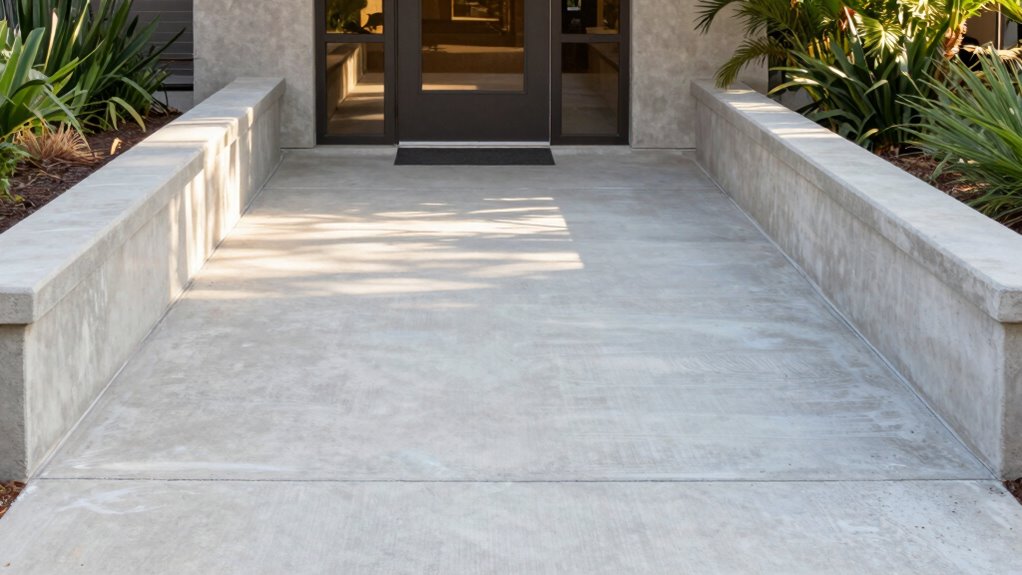
You need to regularly check your entryway for obstructions that could block wheelchair access. Make sure the surface is stable and free of cracks or uneven spots. Also, keep the lighting bright and functioning to guarantee safety at all times.
Check for Obstructions Regularly
Regularly checking for obstructions is essential to guarantee your entryway remains safe and accessible. Keeping the pathway clear helps prevent accidents and ensures smooth wheelchair access. Here are four steps to maintain a safe entry:
- Inspect the pathway daily for debris, leaves, or small objects that could cause obstacle removal.
- Remove any clutter or outdoor furniture that might block the way.
- Check for uneven surfaces or loose pavers and fix them immediately.
- Clear snow, ice, or mud during bad weather to prevent slipping hazards.
Ensure Surface Stability
Ensuring your entryway’s surface remains stable is essential for safe wheelchair access. Regular inspections help identify issues like cracks, uneven patches, or loose tiles that compromise surface traction and slip resistance. You should check these areas often and address problems promptly to prevent accidents. A surface with good slip resistance reduces the risk of slipping, especially in wet conditions. To keep your entry safe, consider the following:
| Inspection Item | Signs to Watch For | Action Needed |
|---|---|---|
| Surface cracks | Cracks or holes present | Repair or replace |
| Uneven patches | Raised or sunken areas | Level or patch |
| Slippery spots | Water or debris accumulation | Clean and add slip-resistant coating |
| Loose tiles or mats | Moving tiles or mats | Secure or replace |
| Drainage issues | Water pooling or flooding | Improve drainage |
Regular maintenance guarantees a stable, slip-resistant surface for everyone.
Maintain Proper Lighting
Have you checked whether your entryway’s lighting is sufficient and functioning properly? Good lighting is essential for safety and enhances outdoor aesthetics. To keep your entry safe and inviting, consider these steps:
- Regularly inspect bulbs and fixtures, replacing any that are dim or burnt out.
- Use a mix of functional and decorative lighting to improve visibility and curb appeal.
- Ensure pathways are evenly lit to prevent tripping hazards for wheelchair users.
- Adjust or add lighting fixtures to highlight key areas, like steps or ramps, for better guidance.
Maintaining proper lighting not only prevents accidents but also creates a welcoming atmosphere. Well-placed decorative lighting enhances outdoor aesthetics while ensuring your loved ones navigate safely at any hour.
Frequently Asked Questions
How Do I Choose the Best Wheelchair Ramp Material for My Climate?
To select the best wheelchair ramp material for your climate, consider material durability and climate suitability. For wet or snowy areas, opt for non-slip, weather-resistant materials like treated wood, aluminum, or composite. If you face extreme heat, choose materials that resist warping and UV damage. By matching the material’s durability to your climate, you ensure your ramp remains safe, sturdy, and long-lasting in all weather conditions.
What Are the Legal Requirements for Home Wheelchair Accessibility?
Are you aware of the legal requirements for home wheelchair accessibility? You need to guarantee your entry meets ADA compliance and adheres to local building codes, which specify ramp slope, width, and safety features. These regulations protect your loved ones and ensure legal safety standards. Are you prepared to upgrade your home to meet these essential standards? Staying informed helps you create a safer, more accessible environment for everyone.
How Can I Budget Effectively for Entryway Modifications?
To budget effectively for entryway modifications, start by researching cost saving strategies like DIY projects or repurposing existing materials. You should also explore funding options such as grants, local assistance programs, or insurance coverage that can help offset expenses. Prioritize essential modifications first to stay within your budget and avoid unnecessary costs. Planning ahead and comparing prices across suppliers guarantees you get quality work without overspending.
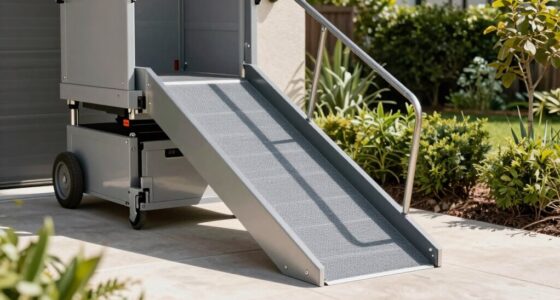
Are There Temporary or Portable Ramp Solutions Available?
Did you know that over 60% of falls occur at home, often at entryways? Yes, portable ramps offer a practical solution for temporary accessibility needs. They’re lightweight, easy to set up, and ideal for short-term use or events. You can find durable options that fit various thresholds, providing a safe, quick fix for your elderly loved ones without permanent modifications. These temporary solutions improve safety and independence right away.
How Do I Train Family Members to Assist Safely During Entry?
You should organize family training sessions to teach everyone proper safety protocols for assisting your loved one. Show them how to communicate clearly, offer support without pushing, and use gentle, steady movements. Practice these steps regularly to build confidence and guarantee safety during entry. Encourage questions and feedback to address concerns, making sure all family members understand their roles. This proactive approach helps prevent accidents and creates a safer environment.
Conclusion
Think of your entryway as the welcoming bridge to your loved ones’ independence. By thoughtfully designing and maintaining it, you create a safe, smooth passage that feels like a gentle current guiding them home. Small changes—like sturdy handrails and non-slip surfaces—transform everyday obstacles into clear pathways. With your care, you’re building a sturdy bridge of safety and comfort, ensuring your elderly loved ones can cross into their daily lives with confidence and peace of mind.