
To adapt your home entryway for a wheelchair user, start by clearing obstacles, widening doors, and replacing stairs with ramps or lifts. Guarantee surfaces are smooth, slip-resistant, and properly installed for safety. Use lever handles and low thresholds for easier access. Improve safety with proper lighting and clear signage. Thoughtful design balances style and function, making it welcoming and accessible. Continue exploring ways to create a safe, stylish entrance that everyone can use comfortably.
Key Takeaways
- Widen doorways and remove thresholds to ensure smooth wheelchair passage.
- Install ramps with gentle slopes and slip-resistant surfaces for safe access.
- Ensure pathways are clear, well-lit, and free of obstacles or uneven surfaces.
- Use lever handles on doors and accessible hardware for easier operation.
- Add proper signage and lighting to enhance safety and navigation at the entryway.
How to Make Your Entryway Fully Accessible for Wheelchair Users
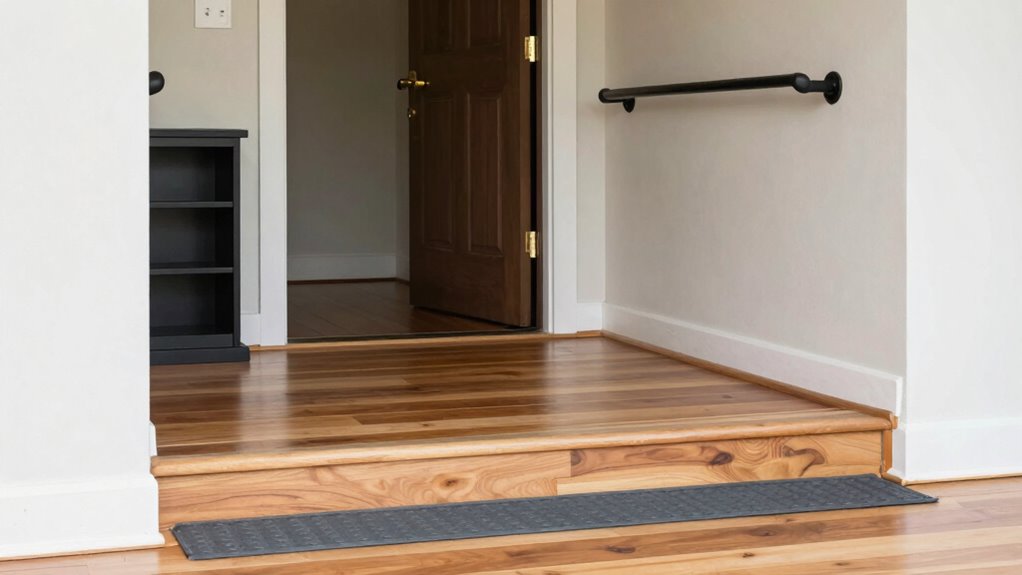
To guarantee your entryway is fully accessible for wheelchair users, start by removing any obstacles that could block easy access. Clear pathways of clutter, outdoor furniture, or garden decor that might hinder movement. Ascertain the sidewalk or ramp leading to your door is smooth and wide enough for a wheelchair to navigate comfortably. Consider adjusting or relocating outdoor furniture so it doesn’t encroach on the entrance area. Keep the area well-lit to improve visibility and safety. Simplify steps or replace them with a gentle ramp if needed. Removing barriers and creating a clear, open path makes it easier for wheelchair users to approach and enter your home without difficulty. Properly installing and maintaining ramps ensures safety and durability for everyday use. Regular inspections and safety checks can help prevent accidents and ensure the ramp remains in good condition. Additionally, accessible design principles can help optimize the entryway for ease of use and safety. Incorporating universal design features can further enhance accessibility and accommodate various mobility needs. Being aware of water resistance considerations can help protect these modifications from weather-related wear and tear. Making these adjustments promotes safety, independence, and a welcoming environment.
Assess Your Current Entryway and Identify Accessibility Barriers

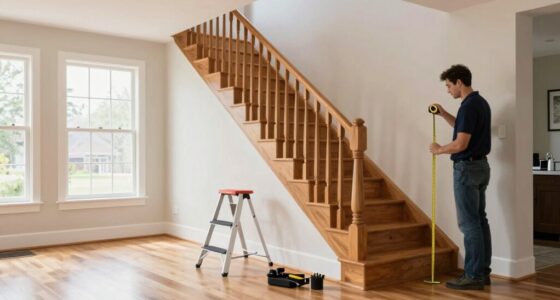
Before making any modifications, it’s important to evaluate your current entryway carefully. Look for obstacles like uneven surfaces, narrow pathways, or clutter that could hinder wheelchair access. Check for stair replacements—if stairs exist, consider options like ramps or lifts instead of decorative features that might obstruct movement. Examine the doorway width and doorway thresholds; narrow or high thresholds can block wheelchair entry. Also, assess any decorative features, such as intricate door frames or uneven floor tiles, that could pose hazards or obstruct mobility. Identifying these barriers now helps you prioritize modifications and avoid unnecessary expenses later. Take notes or photos to clearly see what needs attention, ensuring your entryway becomes safer and more accessible for wheelchair users. Conducting an accessibility assessment can help you systematically identify all potential barriers, including appropriate modifications that can improve safety and ease of use. Additionally, understanding universal design principles can guide you in creating an entryway that accommodates a variety of mobility needs. Incorporating inclusive design strategies early in the process can also streamline the planning and implementation of accessible features. Recognizing the importance of proper measurements ensures that modifications like ramps and doorways are tailored to actual needs, enhancing overall accessibility.
Widen Doors and Remove Obstacles for Easy Wheelchair Access
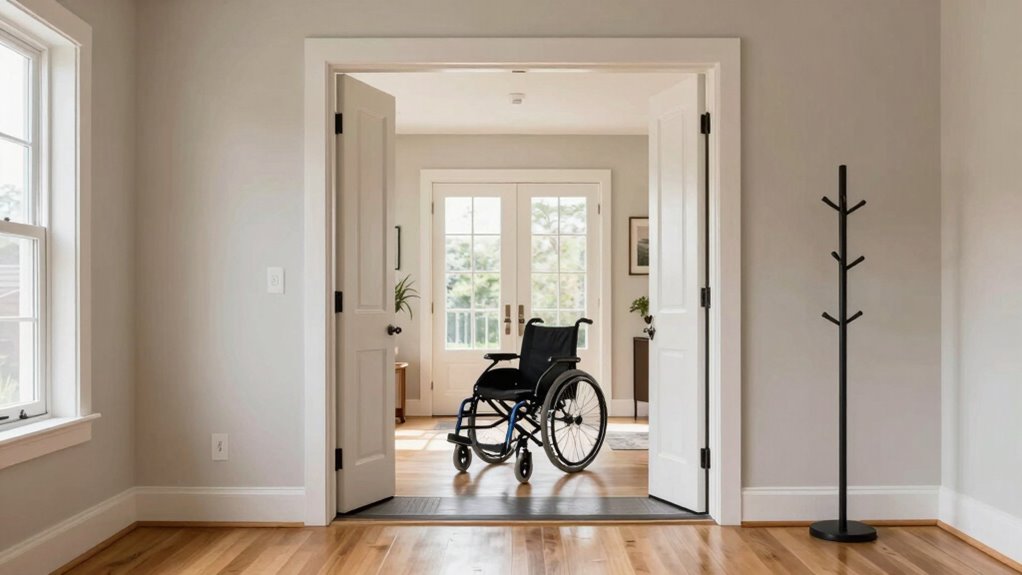
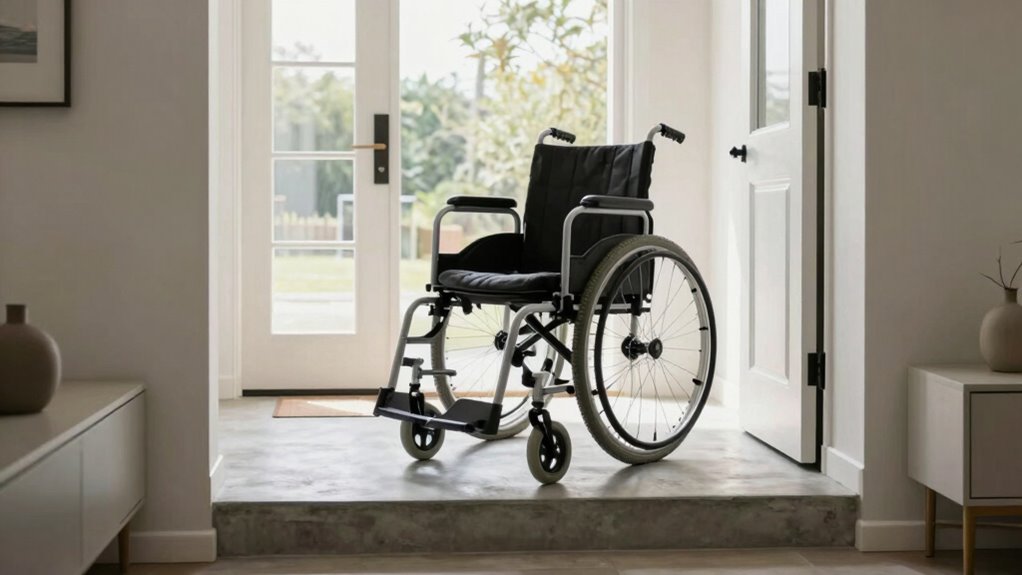
Widening your doorways is essential for ensuring smooth wheelchair access, especially if current measurements are too narrow. Start by considering threshold modifications to create a seamless connection between rooms. Removing obstacles like bulky furniture or loose rugs also helps prevent accidents. When selecting door hardware options, opt for lever handles instead of knobs—they’re easier to operate. Here’s a quick guide:
| Modification Type | Benefits | Examples |
|---|---|---|
| Threshold Modifications | Eliminates tripping hazards | Low-profile thresholds |
| Door Hardware Options | Easier to open and close | Lever handles, automatic openers |
| Removing Obstacles | Clear path for wheelchair | Declutter entryway |
Additionally, incorporating universal design principles during remodeling ensures your entryway remains accessible and functional for everyone. Implementing adaptive features, such as automatic door openers, can further enhance accessibility and ease of use for wheelchair users. Employing accessible design standards can help ensure compliance with safety and accessibility guidelines.
Choose and Install Ramps and Level Surfaces

Choosing the right ramps is essential for safe and easy wheelchair access, so focus on options that fit your entryway’s needs. Make certain the surface is stable and slip-resistant to prevent accidents. Proper installation ensures that your ramps and level surfaces provide reliable support every day. Additionally, consider home safety & accessibility features that can enhance stability and security during use. Incorporating load calculations can help determine the appropriate ramp weight capacity for your specific needs. Evaluating compliance with building codes is also important to ensure safety and legality. Understanding building standards can help you select compliant and safe options for your home, and consulting with professionals can further guarantee that your modifications meet all necessary safety regulations.
Selecting Suitable Ramps
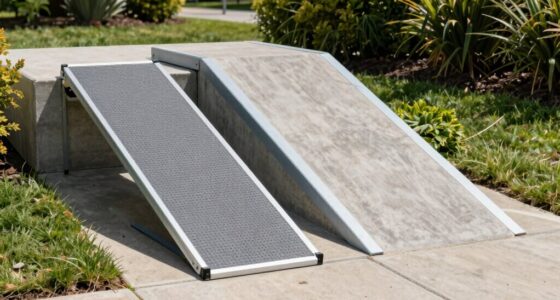
Selecting the right ramp is vital to guarantee safe and smooth wheelchair access to your home. You’ll want to contemplate threshold options, making certain they are low or beveled to prevent tripping or difficulty crossing. When choosing ramp materials, durability and slip resistance are key. Options like aluminum, wood, or composite materials each have benefits; aluminum is lightweight and weather-resistant, while wood offers customization. Think about your climate and maintenance needs when selecting materials. Properly matching the ramp to your threshold options ensures a seamless transition from your entryway to the ramp, enhancing safety. Measure carefully to determine the correct length and slope, and prioritize sturdy, reliable materials to support daily use. Your goal is a smooth, safe entry that accommodates your specific needs. Incorporating visual and auditory cues can further aid in safe navigation and accessibility. Additionally, understanding how surface texture affects slip resistance can help you choose the most secure ramp surface for your environment. Considering building codes and regulations ensures your ramp installation complies with safety standards and local requirements. For optimal safety, it’s also important to assess proper installation techniques to prevent potential hazards and ensure the ramp’s longevity. Evaluating environmental conditions can help you select the most suitable ramp type and surface for your specific location.
Ensuring Surface Stability
To guarantee a secure and steady entrance, it’s vital to select and install ramps and level surfaces that can withstand daily use. Focus on ensuring surface evenness to prevent tripping hazards and make navigation smoother. Non-slip flooring is essential, especially in wet conditions, to reduce the risk of slips and falls. Choose materials like textured concrete, rubber, or treated wood that provide good traction. When installing ramps, verify that the surface remains consistent without bumps or gaps that could destabilize wheelchair movement. Regularly inspect these surfaces for wear and tear, and address any unevenness promptly. Incorporating surface stability considerations during installation ensures long-term safety and durability. Proper installation techniques help maintain a stable and secure entryway over time. Additionally, using appropriate surface materials can significantly enhance grip and longevity of the entryway surfaces. A stable, even surface combined with non-slip flooring creates a safe, reliable entryway, promoting independence and confidence for wheelchair users.
Pick Door Hardware and Thresholds That Are Easy to Use

Choosing the right door hardware and thresholds can make a big difference in accessibility. Lever handles are easier to operate than traditional knobs, especially for wheelchair users. Additionally, selecting smooth thresholds or ramps helps guarantee safe and effortless passage through entryways.
Lever Handles vs. Knobs
When considering door hardware for a wheelchair-accessible entryway, lever handles often provide a more user-friendly option than traditional knobs. They require less grip strength and can be operated with a simple push or pull. Imagine grabbing a smooth, horizontally oriented lever handle that moves easily under your hand, eliminating the need for twisting. Visualize the difference:
- A sleek, horizontal lever that’s effortless to push down
- No twisting needed, ideal for limited hand mobility
- Easy to grasp, even with limited dexterity
- Compatible with various door types and styles
Choosing door hardware with lever handles makes entry smoother and safer. They reduce strain and improve independence, especially for wheelchair users, making your home more accessible and welcoming.
Thresholds and Ramp Options
Selecting thresholds and ramps that are easy to use is essential for creating a truly accessible entryway. Threshold modification can eliminate raised or uneven surfaces, making it easier for a wheelchair to pass smoothly. For doorways with significant elevation changes, ramp installation provides a gentle incline that ensures safe and effortless access. When choosing thresholds, opt for low-profile options or those specifically designed for wheelchair accessibility. Ramps should have a gentle slope, sturdy handrails, and slip-resistant surfaces. Properly installed ramps and modified thresholds reduce the risk of accidents and improve independence. Consulting professionals for threshold modification and ramp installation guarantees compliance with accessibility standards and assures safety and functionality for wheelchair users entering your home.
Ensure Proper Lighting and Clear Signage for Safety

Ensuring proper lighting and clear signage is essential for a safe and accessible home entryway. Good lighting safety prevents accidents and helps everyone see obstacles clearly. Signage visibility guides visitors and alerts them to important information. To achieve this, consider:
Proper lighting and clear signage ensure safe, accessible entryways for all visitors.
- Installing bright, even lighting along pathways and near steps
- Using motion-activated lights for added safety at night
- Placing high-contrast, large-print signs at eye level
- Keeping signs unobstructed and easy to read from a distance
These steps improve overall safety by illuminating hazards and making signage easily identifiable. Proper lighting safety and signage visibility reduce confusion and prevent accidents, creating a welcoming and secure entrance for wheelchair users and visitors alike.
Design Your Entryway for Style and Functionality
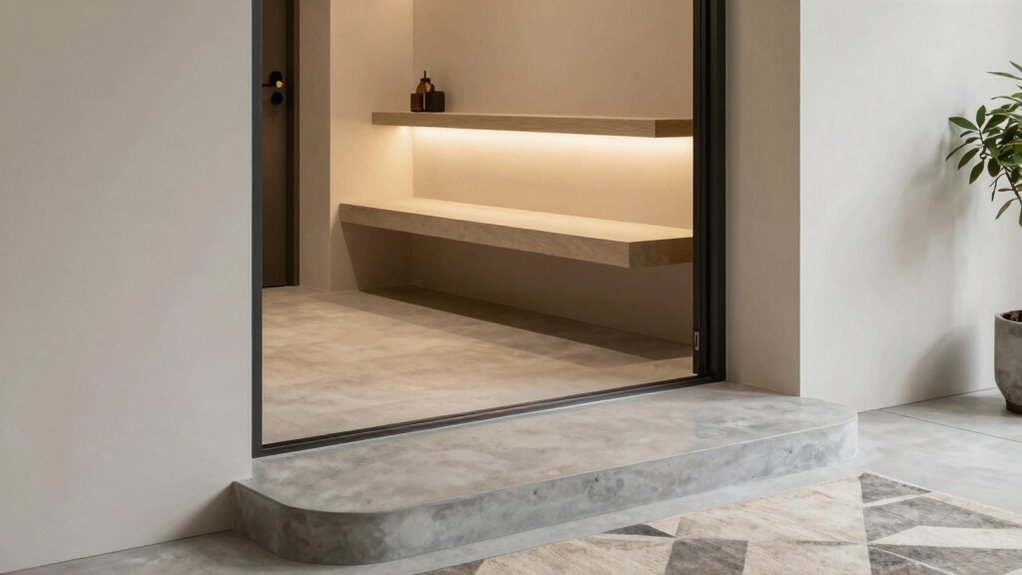
A well-designed entryway balances style and functionality to welcome guests and accommodate a wheelchair user comfortably. Start by choosing a cohesive color scheme that creates a warm, inviting atmosphere while also highlighting accessibility features. Incorporate decorative accents like stylish planters, artwork, or a welcoming rug to add personality without cluttering the space. Keep your layout open and unobstructed, ensuring easy navigation. Select furniture and storage that serve dual purposes—functional and attractive—such as a sleek bench with built-in storage. Lighting should be both practical and aesthetic, emphasizing safety and ambiance. By thoughtfully blending decorative accents with a thoughtful color scheme, you create an entryway that’s not only accessible but also reflects your personal style.
Frequently Asked Questions
What Are the Legal Requirements for Home Accessibility Modifications?
You need to check local building codes and permit requirements before making home modifications. These regulations guarantee your changes meet safety and accessibility standards. Typically, you must submit plans and obtain approval from your local building department. Failing to follow these rules can lead to fines or needing to undo work. Always verify specific requirements in your area to ensure your modifications are legal and compliant with all relevant building codes.
How Much Do Entryway Modifications Typically Cost?
Entryway modifications typically cost between $1,000 and $5,000, depending on the extent of changes needed. Your modification expenses might include installing ramps, widening doorways, or adding handrails. Cost estimates can vary based on materials and labor, so it’s wise to obtain multiple quotes. Planning your budget carefully guarantees you cover necessary upgrades without surprises, making your home more accessible and comfortable for a wheelchair user.
Are There Temporary Solutions for Rental Homes?
A stitch in time saves nine, so yes, there are temporary solutions for rental home modifications. You can use portable ramps, door extension devices, and adhesive grab bars that don’t require drilling or permanent changes. These temporary solutions are cost-effective and easy to install, making them perfect for renters. Just make sure you get approval from your landlord and follow any lease restrictions to avoid issues later.
What Maintenance Is Needed for Installed Ramps and Hardware?
You should regularly check your ramps for safety issues like loose or damaged hardware, which can jeopardize hardware durability and lead to accidents. Clean the ramps to prevent debris buildup that could cause slipping. Inspect the hardware connections, tightening any loose bolts or screws to maintain ramp safety. Periodic maintenance ensures your ramps stay sturdy and reliable, providing safe, easy access for wheelchair users over time.
How Can I Ensure My Entryway Remains Accessible Over Time?
To keep your entryway accessible, regularly check the doorway width and threshold clearance. Make certain the doorway remains wide enough for a wheelchair, ideally at least 32 inches, and that thresholds are low or beveled to prevent tripping or difficulty crossing. Keep hardware secure, remove debris, and promptly address any damages. Routine inspections help maintain smooth, safe access, preventing obstructions and ensuring continued ease of wheelchair entry over time.
Conclusion
So, there you have it—your grand plan to turn your entryway into a wheelchair-friendly paradise. Who knew that widening doors, adding ramps, and ditching thresholds could be so stylish and functional? Now, your guests will marvel at your accessibility savvy, and your wheelchair user will glide in with ease. Remember, a little effort goes a long way—because nothing says “welcome” like an entryway that’s both inclusive and Instagram-worthy. Cheers to making everyone feel at home!