Choosing between portable and permanent ramps depends on your senior’s needs, environment, and budget. Portable ramps offer flexibility for temporary or changing access, are easy to transport, and cost less. Permanent ramps are better for long-term stability and high foot traffic but require more installation and maintenance. To find the best fit for your situation, consider how often the ramp will be used and outdoor needs—more details await.
Key Takeaways
- Portable ramps offer flexibility and quick setup, ideal for seniors with changing or temporary access needs.
- Permanent ramps provide stable, long-term solutions, suitable for consistent, permanent entry points.
- Cost varies: portable ramps are generally cheaper ($100–$600) and easier to maintain, while permanents are more expensive ($1,000–$3,500).
- Environmental durability is key; outdoor permanent ramps require weather-resistant materials, whereas portable ramps are lightweight and weather-tolerant.
- Choice depends on budget, permanence of access, environmental conditions, and the senior’s mobility and safety requirements.

Spacewalk 4 Wheel Mobility Scooter for Seniors - with Dual Baskets, 350W Motor, 264 lbs Capacity, 15 Miles Range, USB Charging Port, Foldable Heavy Duty Mobile Scooter for Elderly
【Friendly control panel】: color battery indicator, horn, headlight switch, speed control knob and lock switch, forward, reverse levers,...
As an affiliate, we earn on qualifying purchases.
Which Ramp Is Right for Your Senior’s Needs?

Choosing the right ramp depends on your senior’s specific mobility needs and daily routines. Consider how often they’ll need wheelchair accessibility and the environments they visit most frequently. If they require frequent access to different locations, a portable ramp offers flexibility and ease of use. For permanent entries, a sturdy, fixed ramp ensures long-term safety and reliability. Pay attention to safety features like non-slip surfaces, sturdy handrails, and secure anchoring to prevent accidents. The ramp’s weight capacity is also essential to support mobility devices safely. By matching the ramp type to your senior’s mobility level and lifestyle, you’ll guarantee both convenience and safety. Proper contrast ratio in the environment can also improve visibility and safety around ramps, especially in low-light conditions. This way, you create a comfortable, accessible environment that promotes independence and peace of mind.

WayCare 15-25 Miles Long Range Mobility Scooter,Weight Capacity 300 LBS+ Powered Mobility Scooters for Seniors, Compact Duty Mobile for Travel with LED Headlight and Detachable Basket(Red)
WAYCARE Mobility Scooter: Equipped with a powerful 24V 250W motor and a 12AH battery, it delivers impressive performance...
As an affiliate, we earn on qualifying purchases.
What Are the Differences Between Portable and Permanent Ramps?
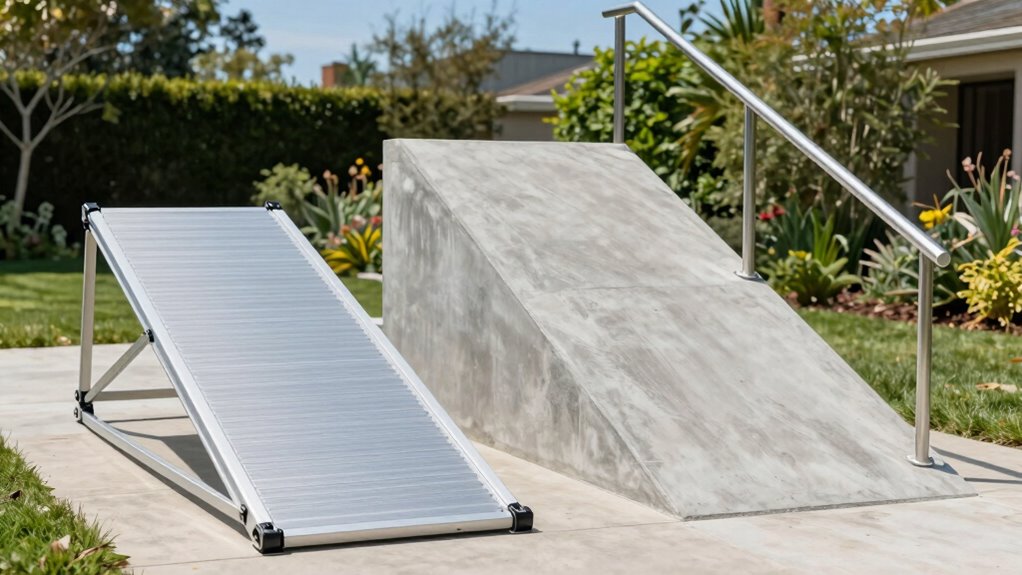
Understanding the differences between portable and permanent ramps helps you choose what’s best for your needs. Consider how easily each type can be moved or installed, along with their costs and maintenance requirements. By comparing these points, you can select the most practical solution for your situation. Additionally, incorporating outdoor safety considerations ensures the ramp choice aligns with overall safety and environmental factors. For example, proper ventilation considerations can prevent moisture buildup and prolong the lifespan of the ramp materials. Proper surface traction is also essential to prevent slips and falls, especially in outdoor environments. Recognizing weather resistance features can further enhance durability and safety in various climates, which is particularly important for sustainable and secure outdoor solutions.
Portability and Flexibility
Have you ever wondered how the flexibility of a ramp can impact your daily needs? Portable ramps excel in this area, offering features like folding mechanisms that make them easy to carry and store. They’re typically lightweight but still maintain material durability, ensuring they withstand regular use. Here are some key points:
- Folding mechanisms allow quick setup and breakdown, enhancing convenience.
- Lightweight designs improve portability without sacrificing strength.
- Material durability ensures the ramp remains reliable over time.
- Flexibility means you can adapt to different locations or situations easily.
- The ease of setup of portable ramps makes them ideal for users who need quick and simple solutions.
- Understanding the material composition helps users choose ramps that balance weight and durability effectively.
- The material durability of portable ramps is often tested through simple, repeatable tests to ensure long-term reliability.
Installation and Permanence
The primary difference between portable and permanent ramps lies in their installation process and long-term stability. Portable ramps are designed for easy setup, often requiring minimal installation considerations, and can be moved as needed. They typically use lightweight materials and don’t need extensive anchoring, making them ideal for temporary use. Permanent ramps, on the other hand, involve a more involved installation process—often requiring permits, concrete work, or securing to the structure. The permanence implications are significant: permanent ramps provide a stable, long-lasting solution, but they’re fixed in place. This stability benefits ongoing use but makes removal difficult. Your choice depends on whether you need a quick, flexible option or a lasting, stable solution for consistent access.
Cost and Maintenance
When comparing the costs of portable and permanent ramps, it’s clear that portable options usually come with a lower upfront price due to simpler materials and installation requirements. However, the overall cost comparison depends on maintenance needs over time. Portable ramps generally require minimal maintenance—just occasional cleaning and inspection for stability. Permanent ramps, on the other hand, demand more extensive upkeep, including structural repairs and weatherproofing. Additionally, considering smart home technology can enhance safety and ease of use for both types of ramps, especially for seniors with mobility challenges. The durability and longevity of these ramps can also influence long-term expenses, as material quality plays a significant role in how well each option withstands environmental factors. Proper installation techniques can also impact the stability and safety of permanent ramps, reducing the need for costly repairs later. Regularly checking and maintaining air quality in the surrounding environment can also impact the longevity of the ramps, particularly in areas with high dust or humidity. Moreover, understanding environmental resilience and how each ramp type responds to weather conditions can help in planning for future expenses. Consider these factors: 1. Portable ramps incur minimal ongoing costs. 2. Permanent ramps may need repairs due to weather damage. 3. Maintenance requirements for permanent options are more time-consuming. 4. Long-term costs can be higher for permanent ramps if upkeep isn’t managed properly. Choosing between them depends on your budget and how much ongoing care you’re prepared to provide.

Vive 4 Wheel Mobility Scooter - Electric Powered Wheelchair Device - Compact Heavy Duty Mobile for Travel, Adults, Elderly - Long Range Power Extended Battery with Charger & Basket
SAFELY NAVIGATE SMOOTH SURFACES: Easily maneuver over smooth indoor surfaces and rough outdoor surface with the Vive 4-Wheel...
As an affiliate, we earn on qualifying purchases.
What Factors Should You Consider When Choosing a Ramp?
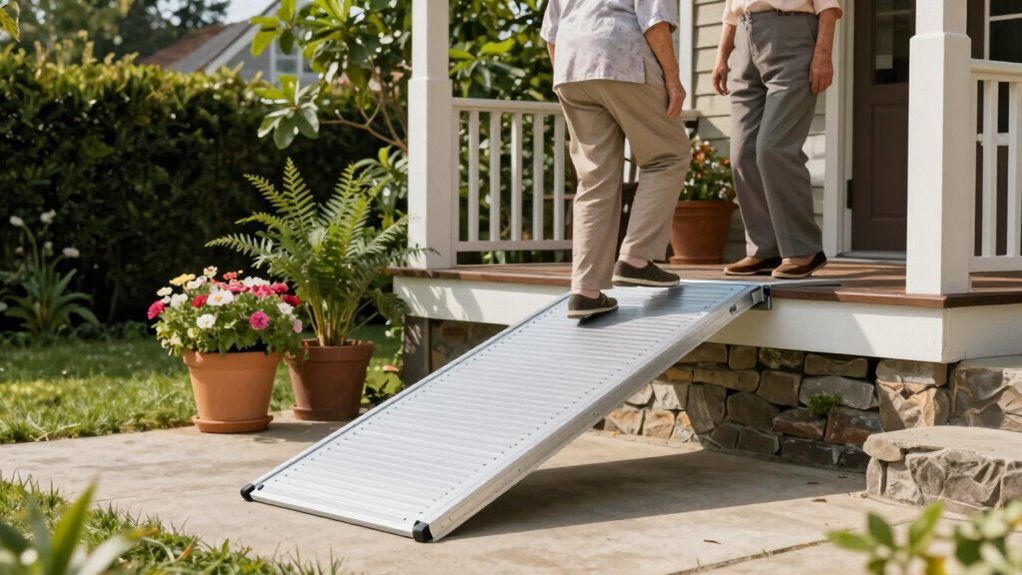
Choosing the right ramp involves considering several key factors to guarantee safety and functionality. First, evaluate height considerations to ensure the ramp can comfortably handle the elevation change without being too steep. A proper incline reduces the risk of accidents and makes wheelchair or walker use easier. Next, focus on material durability; select ramps made from sturdy, weather-resistant materials like aluminum or heavy-duty plastic to withstand daily wear and outdoor elements. Additionally, think about weight capacity to ensure the ramp supports your weight and mobility devices safely. Portability, ease of installation, and surface texture are also important factors. Making sure these aspects align with your specific needs will help you choose a ramp that offers both safety and convenience for everyday use. proper incline and surface traction are essential for reducing fall risk and ensuring stability while using the ramp. Furthermore, considering material durability can extend the lifespan of your ramp, especially in outdoor environments. Incorporating safety features such as non-slip surfaces and edge barriers can further enhance user safety and confidence when navigating ramps. Including installation ease as a factor can also save time and effort during setup and adjustments.

Heavy Duty Wheel Mobility Scooters for Seniors & Adults 350-400 lbs Capacity - 350W All Terrain Fast Mobility Scooter Long Range Power Extended Battery with Charger and Basket Included (Large X08)
Spacious, Stylish, and Fun Mobility:Offering an upgraded experience, this mobility scooter stands out with its larger size—51.1 inches...
As an affiliate, we earn on qualifying purchases.
What Are the Benefits and Drawbacks of Portable Ramps?
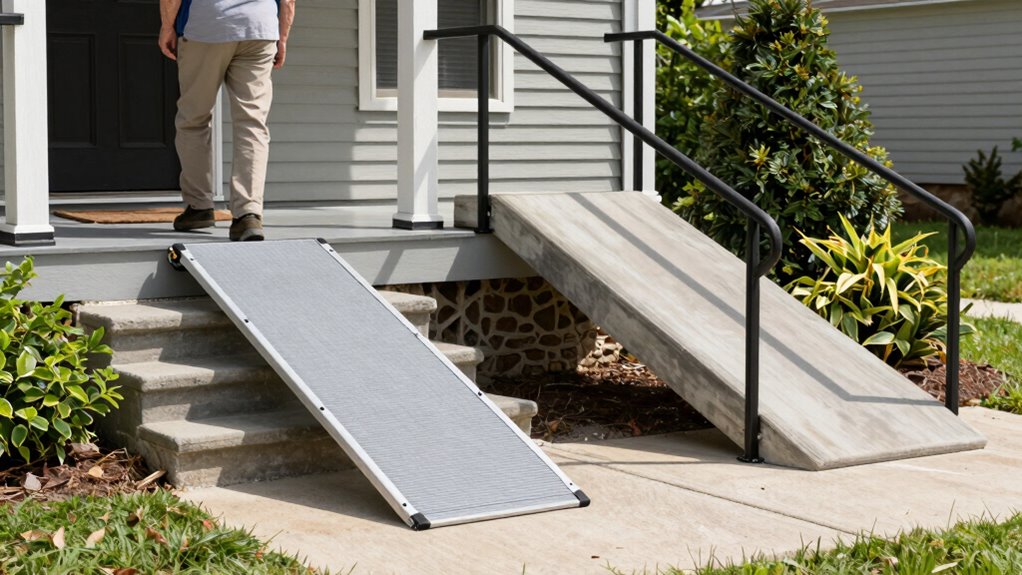
Portable ramps are easy to transport, making them convenient for various locations. Their flexibility allows you to use them in different situations, adapting to your needs. However, this versatility can sometimes mean sacrificing stability or durability compared to permanent options. Incorporating visual and auditory cues can enhance the learning process for users adapting to different ramp types. Additionally, understanding safety considerations is crucial for ensuring secure use across diverse environments. To further support users, clear signage and outage preparedness tips can help mitigate potential hazards during unexpected situations. Recognizing maintenance requirements is also essential to ensure these ramps remain safe and functional over time. Utilizing AI-driven assessment tools can aid in evaluating the safety and suitability of portable ramps for specific settings.
Ease of Transport
Because they are designed for easy mobility, portable ramps offer significant advantages when it comes to transport. You can quickly set them up at different locations, making them ideal for outings or visits. Their lightweight nature ensures you can carry or roll them without much effort. When considering wheelchair compatibility, portable ramps are versatile, fitting various wheelchair sizes and styles. Material durability is vital—high-quality aluminum or reinforced plastic ensures they withstand frequent use and outdoor conditions. Additionally, modern safety features such as anti-slip surfaces enhance their reliability during use. Many portable ramps also incorporate easy deployment mechanisms, allowing for quick setup and removal in various environments. To ensure safe and effective use, regular inspection of the structural integrity of the ramp is recommended.
Flexibility and Versatility
The lightweight and compact nature of portable ramps makes them highly adaptable for various settings, allowing you to use them in different locations with ease. Their adjustability options enable you to customize the ramp’s length and angle, ensuring a secure fit for different terrain or door thresholds. This flexibility means you can switch between homes, vehicles, or outdoor spaces without hassle. Additionally, portable ramps often come with convenient storage solutions, making them easy to fold or roll up when not in use. This versatility allows you to take them anywhere, providing a practical solution for mobility needs that change over time. Overall, their flexibility makes portable ramps a convenient choice for seniors who require adaptable, temporary access solutions.
What Are the Advantages and Limitations of Permanent Ramps?

Permanent ramps offer a durable and reliable solution for accessibility needs, making them ideal for places with consistent foot traffic. They provide stability and long-term safety, but come with some limitations. First, safety considerations include the risk of tripping if surfaces aren’t properly maintained. Second, maintenance requirements involve regular inspections to check for wear, rust, or damage that could compromise safety. Third, installation can be costly and time-consuming, requiring professional help. Fourth, they lack portability, so you can’t easily move them if your needs change. While permanent ramps are a solid choice for permanent access, you must weigh their long-term commitment against potential limitations like reduced flexibility and ongoing upkeep.
How Much Do Portable and Permanent Ramps Cost?
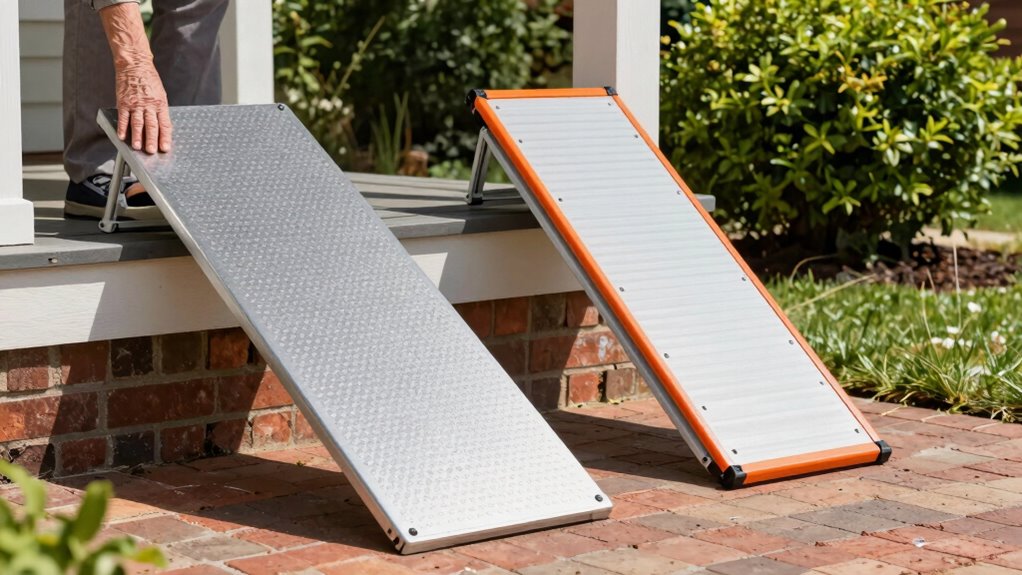
When considering ramp options, understanding the cost differences between portable and permanent ramps is essential. Portable ramps typically cost between $100 and $600, depending on material options like aluminum or plastic. Permanent ramps, on the other hand, usually range from $1,000 to $3,500, influenced by size, material, and installation complexity. The table below highlights key cost comparison details:
| Ramp Type | Average Cost | Material Options |
|---|---|---|
| Portable Ramps | $100 – $600 | Aluminum, plastic |
| Permanent Ramps | $1,000 – $3,500 | Concrete, wood, metal |
| Installation | Usually DIY or professional | Varies by material and site |
Knowing these cost differences helps you choose based on your budget and material preferences.
How to Decide Which Ramp Type Fits Your Living Situation
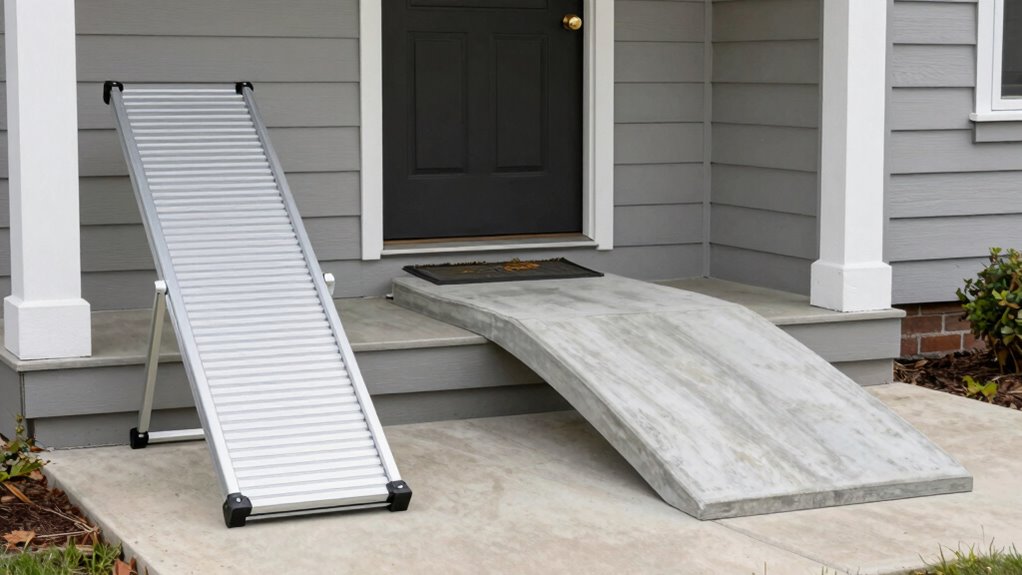
Choosing the right ramp depends largely on your living situation and long-term needs. To determine the best fit, consider these factors:
- Accessibility standards: Ensure the ramp complies with safety and building codes for your area.
- Material durability: Choose materials that withstand weather and daily use, especially if needed outdoors.
- Mobility needs: Decide if you need a portable ramp for versatility or a permanent one for stability.
- Space constraints: Measure available space to determine if a shorter, portable ramp or a longer, permanent ramp suits your environment perfectly.
Are Portable Ramps Suitable for Outdoor Use and Long-Term Needs?
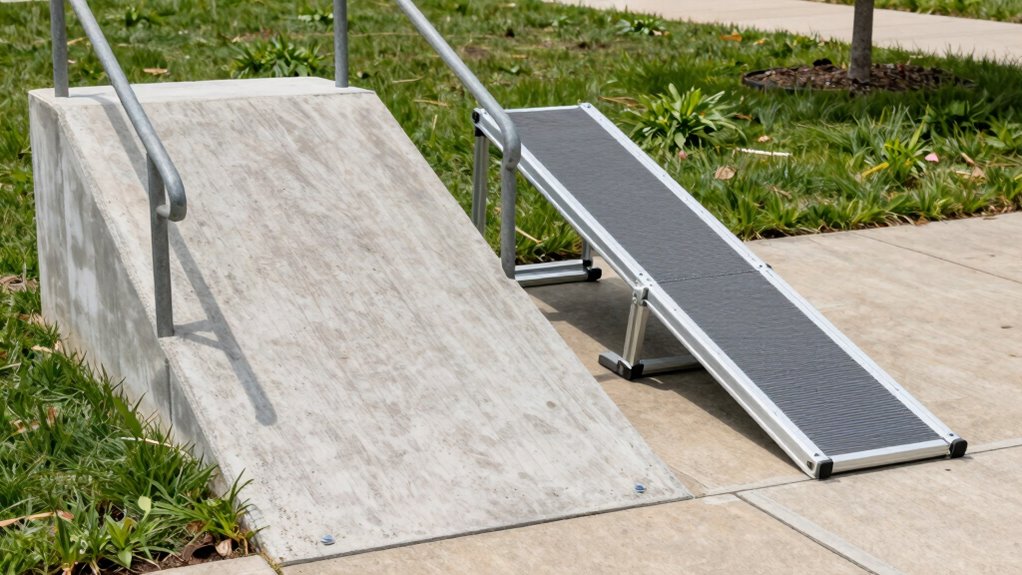
Portable ramps are often seen as a flexible solution for various environments, but their suitability for outdoor use depends on several factors. Outdoor durability is vital, as exposure to weather elements can weaken materials over time. If you plan to use a portable ramp outside regularly, look for one made from weather-resistant materials like aluminum or treated composites. However, even the sturdiest portable ramps may struggle with long-term suitability outdoors if they aren’t designed to withstand continuous exposure. They might require frequent maintenance or replacement. For long-term outdoor needs, permanent ramps often provide better durability and stability. Portable ramps work well for temporary outdoor use or short-term needs, but for consistent outdoor accessibility, a permanent solution is usually more reliable and cost-effective over time.
Frequently Asked Questions
How Long Does It Typically Take to Install a Permanent Ramp?
Installing a permanent ramp usually takes anywhere from a few days to a couple of weeks, depending on the complexity of the project. Your installation timeline can be influenced by factors like site preparation and material availability. You’ll also need to obtain building permits beforehand, which might add extra time to the process. Planning ahead ensures a smoother installation and helps you avoid delays.
Can Portable Ramps Support Heavy Wheelchair Weights?
Yes, portable ramps can support heavy wheelchair weights. Look for ramps with a high weight capacity, usually listed by manufacturers, to guarantee safety. Material durability is vital; aluminum and steel ramps are sturdy and designed to handle significant weight. Always check the specific weight limits and construction quality before purchasing. This way, you make certain the ramp provides reliable support for your mobility needs without compromising safety or stability.
Are There Any Safety Regulations for Outdoor Ramps?
Outdoor ramps must meet strict safety standards to keep you safe—think of them as the backbone of your mobility. Yes, there are outdoor regulations you should follow, including slip-resistant surfaces, proper width, and sturdy handrails. These standards ensure the ramp withstands weather and heavy use, preventing accidents. Always check local building codes and regulations before installation to guarantee your outdoor ramp remains a safe, reliable access point for years to come.
How Often Should Portable Ramps Be Inspected or Maintained?
You should inspect your portable ramp at least once a month and after any heavy use or severe weather. Follow the inspection guidelines to check for loose bolts, cracks, or corrosion. Regular maintenance includes tightening connections, cleaning surfaces, and replacing worn parts promptly. This guarantees safety and prolongs the ramp’s lifespan. Staying consistent with maintenance frequency and inspections helps prevent accidents and keeps your ramp reliable for everyday use.
What Are the Insurance Considerations for Permanent Ramps?
You should verify your insurance coverage for permanent ramps, as they can impact liability concerns. Many policies consider them an added safety feature, potentially reducing your liability risk, but some may require documentation or inspections to ensure compliance. Confirm with your insurer whether the ramp is covered and if any specific standards or maintenance routines are necessary to keep your coverage active and minimize liability issues.
Conclusion
Choosing between portable and permanent ramps depends on your senior’s specific needs and lifestyle. Consider factors like mobility, outdoor use, and long-term plans. Sometimes, a simple coincidence—like discovering a portable ramp that fits perfectly—can make all the difference. By weighing benefits and limitations, you’ll find the right solution. Remember, the right ramp isn’t just about accessibility; it’s about making life easier and safer, often when you least expect it.