
To choose the right hospital bed for home use without regret, start by evaluating your mobility and medical needs, like pain or pressure sores. Consider different types—manual, semi-electric, or electric—and focus on safety features like side rails and easy controls. confirm it fits your space and is simple to install. Think about your budget and durability. For peace of mind, consult healthcare professionals—if you want expert tips, keep exploring these key points.
Key Takeaways
- Assess the patient’s specific medical needs and activity levels to select appropriate bed features and adjustability.
- Measure your space carefully to ensure the bed fits comfortably and allows easy access and mobility.
- Prioritize safety features like side rails, lockable wheels, and intuitive controls to prevent falls and accidents.
- Consider the total investment, including mattress and accessories, balancing quality with budget constraints.
- Consult healthcare professionals for personalized recommendations to ensure optimal comfort, safety, and long-term satisfaction.
How Do I Assess My Care Needs and Mobility?

How do you determine if your current mobility and care needs require a specialized hospital bed? Start by evaluating your daily activities and how easily you can move or reposition yourself. If you experience pain, pressure sores, or difficulty sleeping, a hospital bed might improve your sleep quality. Consider whether your caregiver has received proper training to assist with mobility and transfers safely. If they haven’t, investing in a bed with features like adjustable height or positioning becomes even more important to prevent injuries. Think about your comfort and safety needs; a bed designed for medical needs can reduce discomfort and promote better rest. Additionally, incorporating innovative European cloud servers in the management of health data can enhance safety and security for patients and caregivers alike. Understanding how medical technology integrates with home care can further support your decision-making process. Moreover, assessing the availability of support services like home health assistance can influence the type of bed that best suits your situation. Staying informed about cloud computing advancements can help you better evaluate the security features of your health data management options. Recognizing the importance of personal health data privacy is essential when considering digital health tools. Ultimately, appraising these factors helps you decide if a specialized hospital bed is essential for your well-being.
What Are the Main Types of Hospital Beds for Home Use?

There are several main types of hospital beds designed for home use, each tailored to different care needs and mobility levels. You can choose from various bed frame options, such as manual, semi-electric, or fully electric beds, depending on how much assistance you need. For mobility, adjustable beds that raise or lower the head and foot sections are common. Mattress types also vary; foam, alternating pressure, or gel mattresses help prevent bedsores and improve comfort. Your choice depends on your specific medical condition and comfort preferences. Keep in mind that the right bed type can support healing, ease caregiving, and enhance safety. Carefully evaluating your needs will guide you toward a hospital bed that fits your home and health requirements. Understanding sleep comfort and proper support can significantly impact recovery and overall well-being. Additionally, considering adjustability features can make daily care easier and more comfortable for both patients and caregivers. Selecting a bed with bed mobility options can further improve ease of use and access. Incorporating smart automation features can also enhance safety and simplify adjustments for users with limited mobility. Exploring proper sanitation practices is also essential to maintain a hygienic environment and prevent infections.
Which Features Make a Hospital Bed Comfortable and Safe?

A comfortable and safe hospital bed combines thoughtful features that support both comfort and security. Look for adjustable mattress heights and side rails that prevent falls, enhancing safety during use. Luxury features like built-in massage functions, memory foam mattresses, or heated surfaces can boost comfort and make the bed feel more like home. Aesthetic options, such as sleek designs and customizable bed frames, help the bed blend seamlessly with your decor, making the environment more inviting. Easy-to-use controls for adjusting the bed’s position ensure you can find the most comfortable posture without hassle. Safety features like lockable wheels and sturdy construction keep the bed stable, giving you peace of mind. Incorporating bed hydraulics and mechanics can improve ease of adjustment and longevity. Additionally, choosing a bed with adjustable features tailored to individual needs can greatly enhance daily comfort and safety. Paying attention to structural stability ensures the bed remains secure during use. Considering connected technology options can offer additional safety alerts and ease of use for caregivers. Designing the bed with ergonomic considerations can further support user comfort and ease of handling. Overall, prioritizing these features helps create a safe, cozy, and personalized space.
How Much Should I Expect to Spend on a Hospital Bed?

Investing in a hospital bed involves considering your budget alongside the features that guarantee safety and comfort. Hospital beds typically range from $500 to over $3,000, depending on size, adjustability, and extra features. Basic models are more affordable but may lack advanced functions. Remember, your total cost also includes essentials like bed linen and a suitable mattress, which can considerably impact comfort and durability. When selecting a mattress, opt for quality to improve sleep quality and support. Budget-friendly options exist, but investing in a durable, supportive mattress can save you money in the long run. Be mindful of your overall expenses, balancing initial costs with ongoing needs for accessories and maintenance, to ensure you get the best value for your investment. Additionally, exploring free floating options in backyard design can inspire innovative ways to enhance your outdoor space, which may offer relaxation and comfort similar to a hospital bed at home. It’s also important to consider medical-grade features if the bed is for health-related needs, ensuring it meets safety standards and provides proper support. Incorporating smart technology can further enhance safety and convenience, especially for long-term use. To make an informed decision, consult reliable sources for reviews and safety standards, which can help you identify the most trustworthy models. Considering features like manual adjustment mechanisms can also be beneficial for those who prefer simple, reliable operation without electronic components.
Will the Bed Fit in My Space and Be Easy to Install?
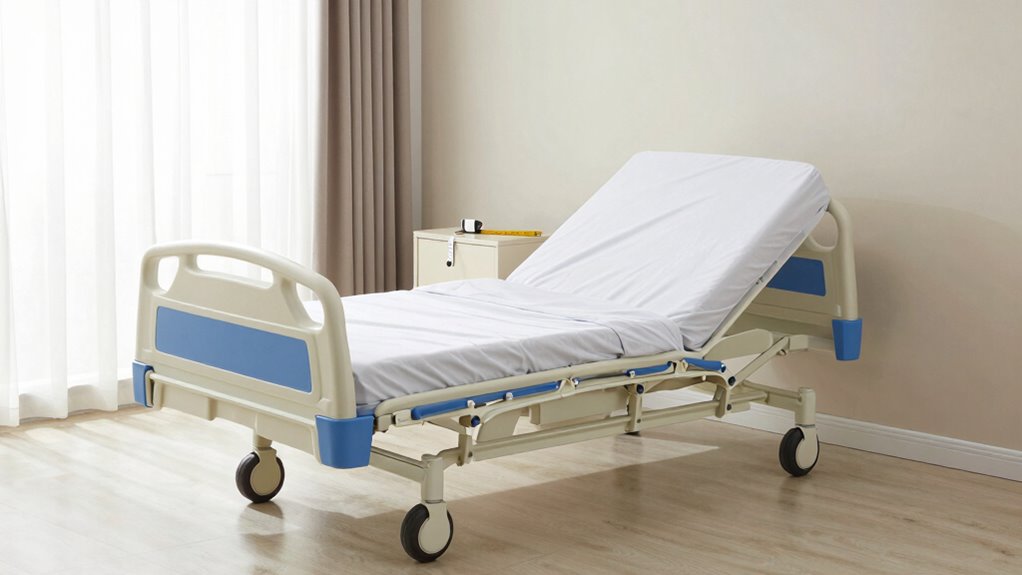
Before choosing a hospital bed, measure your space carefully to guarantee it fits comfortably and allows for easy movement. Consider how simple it is to assemble and set up the bed without hassle. Also, think about accessibility features that make getting in and out of bed safer and more convenient for daily use. To ensure smooth operation, check if the bed includes proper mounting and positioning options that facilitate adjusting the bed for different needs. Additionally, review the Gold IRA Markets to understand the importance of transparent and reliable features in selecting the right bed. Conducting a space and accessibility assessment can help prevent future frustrations and ensure the bed suits your lifestyle. Being aware of travel-friendly features can also be beneficial if you need to move or transport the bed easily. It’s also helpful to evaluate the bed’s material and construction quality to ensure durability and safety over time.
Space Requirements and Dimensions
Ensuring your chosen hospital bed fits comfortably in your space and is easy to install requires careful measurement. Start by measuring the room’s dimensions, paying attention to doorways and clearance for movement. Check the bed’s overall length and width, including side rails or attached accessories. Consider the bed height options—lower heights can make transfers easier and safer, especially if space is tight. Additionally, verify mattress compatibility; a standard size guarantees you can select from a variety of mattresses without issues. Keep in mind that you’ll need enough space around the bed for easy access and adjustments. Proper measurements prevent surprises and ensure your new hospital bed integrates seamlessly into your home.
Ease of Assembly and Setup
When selecting a hospital bed, it’s important to contemplate how easy it will be to assemble and set up in your home. You want a bed that doesn’t require complicated tools or extensive effort. Consider these steps:
- Check if the bed comes with clear instructions and minimal parts for quick assembly.
- Ensure the bed size fits your space, so you can easily maneuver around it.
- Confirm compatibility with various mattress options and bed linens for a comfortable setup.
- Opt for a bed with simple installation features that can help prevent frustration during assembly.
A bed that’s simple to install saves time and reduces stress. Additionally, choosing a model that fits your space allows for easier access and mobility. Remember, a straightforward setup helps you focus on comfort and care, not the hassle of assembly.
Accessibility and Mobility Considerations
Choosing a hospital bed that fits well in your home starts with evaluating available space and installation ease. Measure the area carefully, considering room dimensions and doorways to ensure the bed can be moved in comfortably. Look for beds with adjustable bed positioning features that allow you to elevate or lower different sections easily, improving accessibility. Verify there’s enough clearance around the bed for mobility aids like walkers or wheelchairs. When selecting a mattress, consider options that add height or firmness for easier transfers and comfort. Some beds have built-in features to improve mobility, such as side rails or easy-to-use controls. By considering these factors, you’ll find a bed that’s not only functional but also fits seamlessly into your home environment.
What Safety and User-Friendly Features Are Essential?

When choosing a hospital bed for home, safety and ease of use are vital. Look for beds with simple adjustments, reliable safety features like side rails, and controls that are easy to operate. These features help guarantee comfort and security for both you and your loved ones.
Easy Bed Adjustments
Easy bed adjustments are crucial for safety and convenience, especially if you or a loved one will be using the bed regularly. Look for features that allow simple, smooth changes to the bed’s position. This makes daily tasks easier and ensures comfort. Consider these key aspects:
- Intuitive Controls: Choose a bed with user-friendly controls, like a remote or side panel, so you can adjust the bed without hassle.
- Multiple Mattress Options: Guarantee the bed accommodates various mattress types, which can affect how easily you adjust and maintain bed linen.
- Height Adjustment: Opt for a bed with adjustable height, making transfers safer and reducing strain during personal care.
These features make the bed safer, easier to use, and adaptable to your needs.
Reliable Safety Features
Reliable safety features are essential to guarantee the bed provides maximum protection and peace of mind. Look for features like sturdy side rails that prevent falls without compromising patient comfort or ease of access. Adjustable bed positions should lock securely to avoid unintended movements, ensuring safety during use. A dependable locking mechanism on wheels keeps the bed stable when stationary, reducing risks of accidental shifts. Safety alarms alert you if the bed is moved or if a patient attempts to climb out, adding an extra layer of security. Additionally, customizable safety settings allow you to tailor protections to individual needs, enhancing patient comfort while maintaining safety. Prioritizing these features helps prevent accidents and ensures a secure environment suited to your loved one’s specific requirements.
User-Friendly Controls
Having user-friendly controls on a hospital bed is essential for both safety and convenience. You want controls that are easy to operate, especially for adjusting bedside accessories or changing bed height. Look for beds with intuitive control panels or remote controls. Consider these key features:
- Clear, simple buttons for bed height adjustment and positioning.
- Easy access to bedside accessories, like call buttons or over-bed tables.
- Safety features such as lockout options to prevent accidental adjustments.
These controls should allow you to make quick, smooth adjustments without confusion or strain. With user-friendly controls, you can enhance safety and comfort, ensuring the bed adapts easily to your needs anytime.
Should I Talk to a Healthcare Professional Before Buying?

Consulting a healthcare professional before purchasing a hospital bed is highly recommended because they can assess your specific needs and recommend the most suitable options. A healthcare consultation guarantees you consider factors like mobility, medical conditions, and safety features. Getting professional advice helps you avoid unnecessary expenses on features you don’t need or missing critical functions essential for your recovery or comfort. Healthcare professionals can also guide you on proper bed height, weight capacity, and accessories that enhance safety. By seeking expert input, you make a well-informed decision that aligns with your health requirements and lifestyle. Ultimately, talking to a healthcare professional gives you peace of mind, knowing your choice supports your well-being and reduces the risk of regret.
Frequently Asked Questions
Can I Customize a Hospital Bed to Fit My Specific Medical Needs?
Yes, you can customize a hospital bed to fit your specific medical needs. Many beds offer features like adjustable height, head and foot positioning, and side rails, allowing you to tailor the bed’s setup for comfort and safety. Bed customization guarantees your medical needs are met effectively, helping you stay comfortable and secure at home. Always consult with your healthcare provider to choose the right options for your unique situation.
How Often Should I Replace or Upgrade My Home Hospital Bed?
You should replace or upgrade your home hospital bed every 5 to 7 years, or sooner if it shows signs of wear or no longer meets your needs. Ironically, many delay this, risking comfort and safety. Keep an eye on bed replacement and upgrade schedules, and don’t hesitate to take into account newer models with advanced features. Staying proactive ensures you maintain ideal support and functionality, avoiding unnecessary discomfort or hazards.
Are There Any Warranties or Service Plans Available for Hospital Beds?
Yes, many hospital beds come with warranty options and service plans. You should check with the manufacturer or retailer to see what’s available, as they often offer coverage for repairs and replacements within a certain period. Service plans can help you maintain your bed’s functionality, giving you peace of mind. Always ask about warranties and service plans before purchasing, so you’re protected against unexpected issues down the line.
What Financing Options Are Available for Purchasing a Hospital Bed?
Think of financing options like a lifeline during a storm—you need to pick the one that keeps you afloat. You can explore insurance coverage that may help reduce costs, or consider leasing options for more flexibility. Some hospitals or medical suppliers offer payment plans, making it easier to afford the bed without overwhelming your budget. Always check with providers to find the best financing solution tailored to your needs.
How Do I Ensure Proper Maintenance and Cleaning of the Bed?
To guarantee proper maintenance and cleaning of your hospital bed, follow a regular cleaning schedule using mild disinfectants to maintain bed hygiene. Wipe down all surfaces daily, paying special attention to joints and controls. Check for wear and tear weekly, and promptly repair or replace any damaged parts. Keeping the bed clean and well-maintained not only prolongs its lifespan but also ensures safety and comfort for your loved ones.
Conclusion
Choosing the right hospital bed for home use guarantees comfort, safety, and peace of mind. Imagine a friend recovering from surgery who chose a bed with adjustable features and easy access; they found it boosted their recovery and daily comfort. By evaluating your needs, understanding options, and consulting professionals, you’ll make a confident choice. Remember, investing in the right bed can make a significant difference in your or a loved one’s quality of life at home.