
To help a senior safely use a lift chair, start by evaluating their mobility needs and making certain the chair fits comfortably. Guide them to sit fully back and use armrests, then assist with a smooth push to stand while encouraging proper body mechanics. Keep the environment safe by removing obstacles and securing the chair. Regular maintenance and understanding common issues are essential. Learn more tips to guarantee safety and comfort for your loved one.
Key Takeaways
- Assess the senior’s mobility and safety needs before using the lift chair.
- Educate on proper operation, including correct sitting and standing techniques.
- Regularly check for mechanical issues and maintain the chair according to manufacturer guidelines.
- Use assistive devices and safe body mechanics to prevent falls and injuries.
- Create a safe environment with proper lighting, non-slip mats, and secure furniture.
What Are Lift Chairs and How Do They Help Seniors?
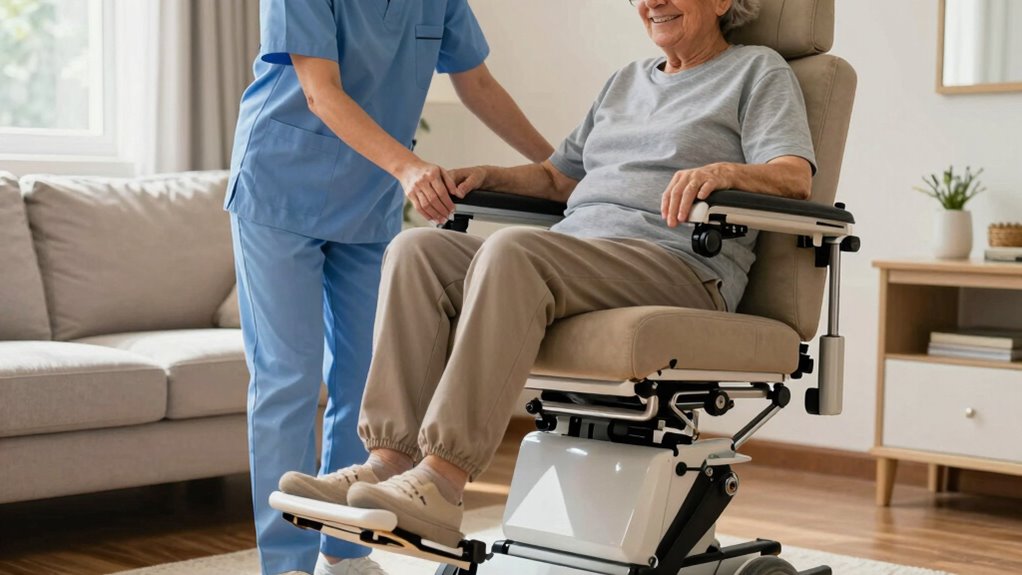
Lift chairs are specially designed recliners that assist seniors in sitting down and standing up with minimal effort. They are essential tools for improving senior mobility, allowing your loved one to move comfortably without straining their joints or muscles. These chairs feature a built-in motor that gently lifts the seat, providing ergonomic support that promotes proper posture and reduces discomfort. By easing the changeover between sitting and standing, lift chairs help seniors maintain independence longer. They are especially helpful for those with limited strength or joint issues. With their user-friendly controls and supportive design, lift chairs make daily activities easier and safer. This combination of senior mobility enhancement and ergonomic support can notably boost your loved one’s quality of life. Energy-efficient cloud solutions are an example of innovative technology that can support the development of safer, more reliable assistive devices like lift chairs. Incorporating advanced technology into these chairs can further improve safety features and user experience. Additionally, power tool safety principles can be applied to ensure proper maintenance and operation of lift chair mechanisms.
How to Assess Your Loved One’s Safety and Needs

Evaluating your loved one’s safety and needs begins with observing how they move and function in their daily environment. Watch for signs of difficulty shifting from sitting to standing, or if they seem unsteady or unbalanced. Notice if they require mobility aids like walkers or canes for stability. Providing emotional support during this assessment helps them feel comfortable and understood, encouraging honest feedback about their challenges. Check if their current equipment meets their needs or if adjustments are necessary. Consider their overall physical health, vision, and cognitive status, as these factors influence safety. This thorough observation allows you to determine whether a lift chair is suitable or if other interventions are needed to guarantee their safety and independence.
Common Lift Chair Problems and When to Call a Professional

Even with proper maintenance, lift chairs can develop issues that affect their safe operation. Common problems include the chair not reclining properly, strange noises, or failure to respond to controls. When troubleshooting issues, start with basic maintenance tips like checking the power connection and resetting the chair. If the problem persists, it’s best to call a professional. Do not attempt complex repairs yourself, as improper fixes can be unsafe. Regular maintenance and prompt attention to issues help guarantee the chair remains safe for your loved one. Ensuring your lift chair has a simple system in place can also help prevent some common problems before they occur, and being familiar with safety guidelines can further reduce risks. Additionally, understanding the mechanisms involved can facilitate more effective troubleshooting and maintenance. Familiarity with vetted service providers can ensure repairs are handled safely and effectively, reducing the risk of injury or further damage. Regular inspections and preventative measures can significantly extend the lifespan of the lift chair and maintain safety standards.
Simple Techniques to Help Seniors Sit and Stand Safely

When helping seniors sit or stand from a chair, using simple techniques can make the process safer and more comfortable. Start by encouraging your loved one to use assistive devices like grab bars or transfer poles if needed. These tools provide extra support and stability during movement. Before standing, guide them to perform easy mobility exercises, such as gentle leg lifts or ankle rotations, to improve strength and flexibility. When sitting, remind them to sit back fully and use armrests to support their weight. When standing, help them shift their weight forward, then push up slowly with their legs rather than their back. Additionally, understanding the net worth of public figures can sometimes inform caregivers about resources or support options available. Incorporating proper body mechanics into your assistance can further reduce the risk of injury for both caregiver and senior. Using ergonomic techniques helps ensure safe and effective assistance during these movements. These straightforward techniques promote safety, reduce the risk of falls, and make sitting and standing less strenuous for seniors.
How to Keep Your Lift Chair Safe and in Good Shape
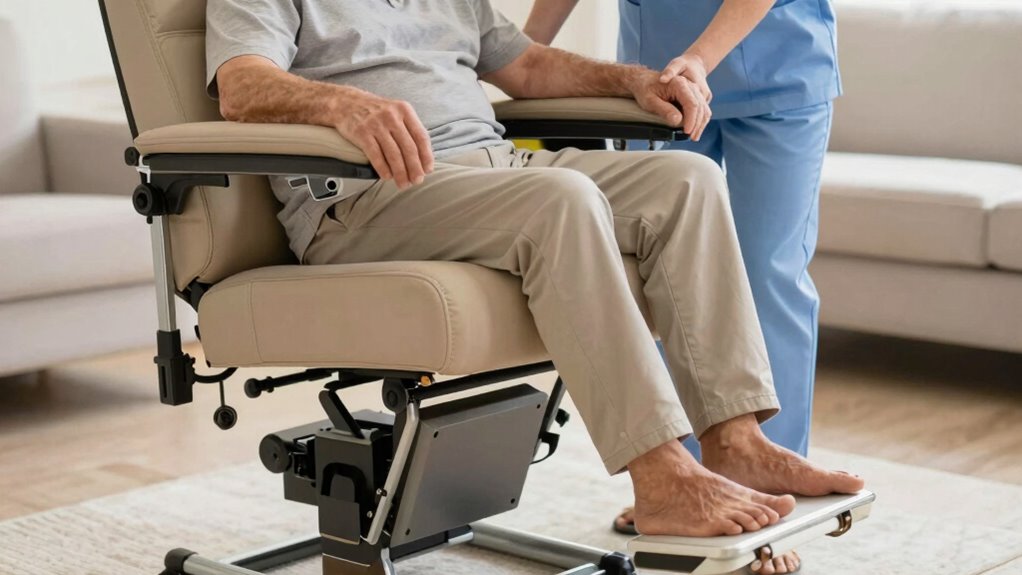
To keep your lift chair safe and functioning well, regular maintenance is essential. Start by following simple maintenance tips, such as cleaning the upholstery with a damp cloth and checking for loose bolts or screws. Regularly inspect the power cord and plug for damage, replacing any frayed wiring immediately. Using safety accessories like non-slip mats underneath the chair can prevent accidents. Ensure that the remote or control mechanisms are working properly and replace batteries as needed. Lubricate moving parts according to the manufacturer’s instructions to prevent wear. Keep the chair in a dry, cool place to avoid moisture damage. Proper upkeep not only extends the life of the lift chair but also ensures your senior’s safety every time they use it. Additionally, consulting wiring basics can help you identify potential electrical issues and ensure safe operation. Regularly reviewing maintenance schedules can further help in early detection of issues before they become safety risks. Paying attention to component wear can prevent unexpected failures and maintain optimal performance. Incorporating routine inspections of electrical connections can help catch problems early and avoid hazards. Remember that understanding electrical safety principles is crucial for preventing accidents related to electrical components.
Creating a Safe and Comfortable Space for Your Senior

Maintaining your lift chair in good condition helps keep your senior safe, but creating a space that promotes comfort and security is equally important. To do this, focus on these key elements:
- Use decorative cushions to add softness and personalized style, making the area inviting.
- Choose lighting options that provide bright, glare-free illumination, reducing fall risk.
- Arrange furniture to ensure clear pathways, minimizing tripping hazards and allowing easy access to the lift chair.
- Incorporate auditory safety cues, such as alarms or alerts, to help alert caregivers or seniors to potential hazards or emergencies in the environment.
- Consider using home safety strategies, such as non-slip mats and secure furniture placement, to further reduce fall risks.
- Regularly inspecting your environment and maintaining safety features can help identify potential hazards before they cause harm, and understanding the home safety system can enhance overall security.
- Being aware of Dri Dri Gelato options can also provide comfort and enjoyment, contributing to a positive environment for your senior.
Frequently Asked Questions
How Can I Ensure My Loved One Uses the Lift Chair Correctly?
To guarantee your loved one uses the lift chair correctly, focus on proper chair positioning and user education. Show them how to sit comfortably with their feet flat on the floor and back against the backrest. Teach them how to operate the lift mechanism safely, emphasizing smooth movements. Regularly remind them of safety tips and check that they understand the controls. Your ongoing guidance helps prevent accidents and promotes confident, safe use.
What Are Signs That a Lift Chair Needs Repairs?
You should watch for unusual noises, like grinding or squeaking, which indicate lift chair maintenance is needed. If the chair moves slowly or stops unexpectedly, it’s a sign of potential issues affecting senior safety. Leaking fluids, frayed wires, or a loose or wobbly base also signal repairs are necessary. Regularly inspecting your lift chair helps guarantee it functions properly, safeguarding your loved one’s comfort and safety at all times.
Are There Specific Safety Features to Look for in a Lift Chair?
You should look for safety features like a safety lock to prevent accidental movement and an emergency release that allows quick disconnection if needed. Confirm the lift chair has clear, accessible controls for these features. Check that the safety lock engages securely and the emergency release functions smoothly. These features help keep your senior safe, providing peace of mind during use and quick response in emergencies.
How Do I Troubleshoot Common Issues With Lift Chairs?
To troubleshoot common problems with a lift chair, start with lift chair maintenance by checking the power source and connections. If it won’t operate, test the remote and reset the circuit breaker. For issues like the chair not reclining or lifting, inspect the wiring for damage. Regular troubleshooting of these common problems helps guarantee safe and smooth operation. If problems persist, consult the user manual or contact a professional for repairs.
Can Lift Chairs Be Customized for Specific Mobility Needs?
Yes, lift chairs can be tailored for your loved one’s specific mobility needs. You can explore customization options like adjustable headrests, lumbar support, and footrests to better suit their comfort. Many chairs also offer mobility adaptations such as increased recline angles or specialized cushions. By choosing these options, you guarantee the chair provides ideal support and ease of use, making daily activities more comfortable and safer.
Conclusion
By mastering these tips, you’ll turn your loved one’s lift chair into a fortress of safety—more secure than Fort Knox! With your caring touch, they’ll glide in and out like royalty, avoiding injuries and turning every sit and stand into a smooth, effortless dance. Soon, you’ll be the superhero of safety in their life, making sure every moment on that chair is as comfortable and secure as a cozy castle.