TL;DR
Elderly fall prevention tools work best as part of a plan that addresses several risks at once: home hazards, balance, footwear, vision, medications, and access to help. Start with changes that match the person’s daily routines, and ask a healthcare professional to help choose mobility aids or review fall risks.
A loose rug can turn an ordinary trip to the kitchen into a frightening fall. For an older adult, that risk can come from more than one source: dim lighting, a medication that causes dizziness, unsteady walking, or clutter along a familiar path. Falls are a major safety concern for older adults, but they are not an inevitable part of aging.

Turn quiet afternoons into listening time
- Thousands of audiobooks, podcasts and originals
- Listen on your phone, tablet or Echo — also offline
- Cancel anytime
The useful question is not “Which device fixes everything?” It is “What would make this person’s usual day safer?” In this article, you’ll find practical elderly fall prevention tools for the bathroom, stairs, walking, exercise, and emergencies, plus ways to choose them without taking over someone’s independence.
Think of prevention as repairing several stepping stones across a stream. A grab bar may steady one step; better lighting may make the next one easier to see. A clinician or therapist can help you decide where support matters most. These key facts for planning can help you start a useful conversation and make changes that fit real life.
Clear the paths a person uses each day, and improve lighting where shadows hide steps or objects.
Use a therapist or other qualified professional to select and fit a cane or walker.
Ask a clinician or physical therapist about safe strength-and-balance exercise, especially after a fall or when health affects mobility.
Review footwear, eyesight, and medication concerns with appropriate professionals; do not stop prescribed medicine without advice.
Choose an alert system based on the person’s routine, comfort, connectivity, charging habits, and ability to call for help.
Start with the home changes that remove everyday trip hazards
Elderly fall prevention tools at home reduce hazards in the places a person walks and turns every day. Clear walking routes, brighter lighting, stair handrails, and securely installed bathroom grab bars can make routine movement easier to manage. The best first change is often a simple one, such as moving a charging cable out of the hallway.
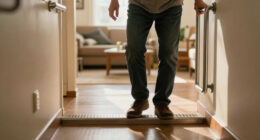
Walk through the home together at the times the person uses it most. Notice the dim stretch between the bedroom and bathroom at night, the rug that bunches near the kitchen, and the shoes that slide on polished floors. A motion-sensor night light can illuminate the path, while removing a loose rug or securing a cord can clear it.
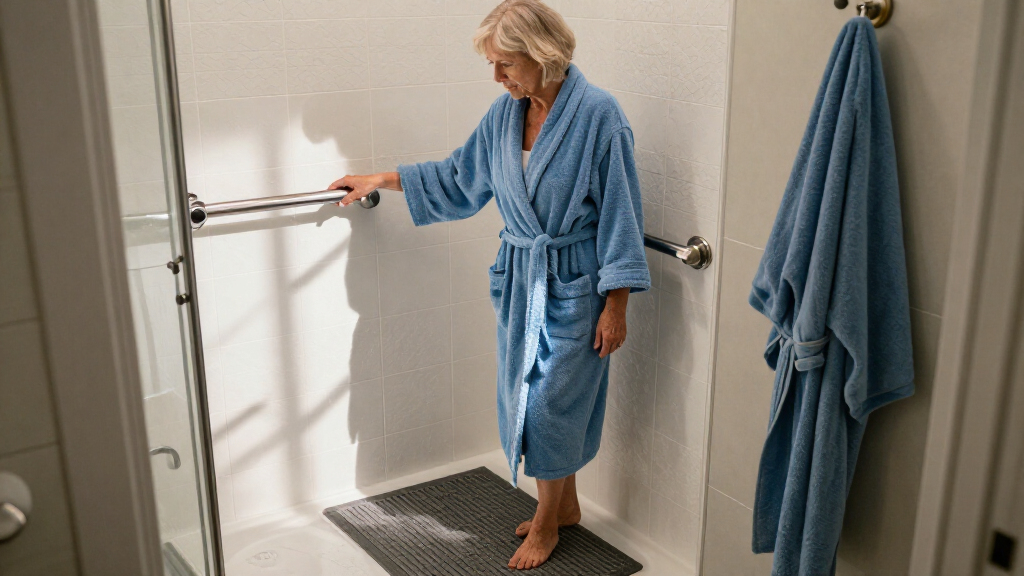
Bathrooms deserve a close look because wet floors and tight turns can make ordinary tasks harder. A firmly installed grab bar near the shower or toilet, a non-slip bath mat, and a shower chair may provide helpful support. Suction-cup bars can lose their grip and should not be treated as a dependable substitute for securely installed bars.
For example, if someone steadies themselves on the towel rail while stepping out of the shower, that is a useful clue about where a proper grab bar might help. Ask a qualified installer or occupational therapist about placement and safe installation. Small adjustments should support the person’s routine, not leave them feeling that their home has become an obstacle course.
Keep necessary items within easy reach. A frequently used mug stored on a high shelf may invite a risky stretch; moving it to a waist-height cupboard makes the task simpler. The right setup depends on the person’s home and abilities, so a professional home assessment can help identify changes you might miss.
Products Worth Considering

Philips Sonicare DiamondClean 9500 Electric Toothbrush with 3 Brush Heads, Black

Withings Body Scan Smart Scale with Segmental Body Composition and ECG, Black

Oura Ring 5 Smart Ring, Gold, Size 8
As an affiliate, we earn on qualifying purchases.
Choose a cane or walker with a professional fitting
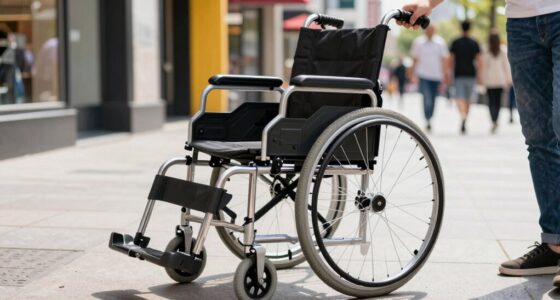
A cane or walker can improve stability when it suits the person’s walking needs, fits correctly, and is used safely. A mobility aid that is the wrong height or type can make movement awkward. A physical or occupational therapist can assess walking and balance, recommend an appropriate aid, and teach practical techniques.
Imagine someone using a borrowed cane whose handle sits too low. They may hunch or grip it tightly, making each step more uncomfortable. A therapist can check the fit and show how to place the cane while walking. A walker also needs instruction: the user should know how to move it safely and position it before sitting or standing.
Here is a practical sequence for selecting and trying an aid:
- Describe the difficulty. Note when unsteadiness appears: on stairs, outdoors, during turns, or after standing up.
- Ask for an assessment. Share any recent falls, pain, or trouble with daily activities with a clinician or therapist.
- Try the recommended aid with instruction. Practice in a safe setting before relying on it in busy or unfamiliar places.
- Check the setup at home. Confirm that doorways, rugs, and furniture leave enough space to use it safely.
For instance, someone who walks comfortably indoors but loses confidence on uneven sidewalks may need advice tailored to outdoor trips. The answer is not automatically a heavier or more supportive device. A professional can weigh comfort, strength, balance, and the person’s usual surroundings.
Build confidence with practice, especially when learning to turn, cross thresholds, or enter a lift. If the aid feels unstable, causes pain, or keeps catching on furniture, ask for a reassessment. Preserving independence means finding support that helps someone keep doing valued activities with greater confidence.
Use exercise to build steadier steps over time
Strength and balance exercise can help reduce fall risk for many older adults, according to public health guidance. Movement trains the muscles and coordination used to rise from a chair, turn, and walk across a room. The right starting point depends on health and ability, so someone with pain, dizziness, or a recent fall should ask a qualified professional about safe options.
A class that includes standing balance practice may feel more useful than an exercise routine built around movements someone already handles easily. Tai chi and structured strength-and-balance programs are common options. A physical therapist can suggest modifications, such as beginning with supported movements near a sturdy counter.
Consider a person who avoids walking to the mailbox after feeling wobbly on the front path. A suitable supervised exercise plan may help them practice strength and balance gradually, while a home or outdoor safety check addresses the path itself. Exercise and environmental changes do different jobs; together, they can support a return to meaningful routines.
Regular practice matters more than a dramatic workout. A short session of exercises selected by a therapist can fit into the week more easily than a plan that feels exhausting or intimidating. The person should stop and seek professional guidance if an activity causes new symptoms or feels unsafe.
Exercise should support confidence and everyday movement. A clinician or physical therapist can help match the activity to the person, especially after a fall or when health conditions affect balance.
Ask about local classes, home-based programs, or referrals through a healthcare provider. Some people prefer a group setting with a teacher; others feel more comfortable practicing at home after receiving instruction. The most useful plan is one the person can keep doing safely.
Check shoes, eyesight, and medicines for overlooked risks
Footwear, vision, and medication effects can all affect how safely someone walks. Low-heeled shoes that fit well and have non-slip soles can provide a steadier base than loose slippers. Regular vision checks matter, too, because a prescription that no longer works well can make steps and objects harder to see.
Picture someone walking from a sunlit kitchen into a shadowy hallway in soft, backless slippers. The footwear may slip, and the sudden change in light can hide a low stool. Better-fitting shoes and brighter hallway lighting address separate parts of that moment. A routine eye appointment may reveal another practical change, such as updating glasses.
Some medicines, or combinations of medicines, can contribute to dizziness, drowsiness, or low blood pressure. If someone feels lightheaded after standing or unusually sleepy during a walk, write down when it happens and discuss it with a clinician or pharmacist. Do not stop prescribed medicine on your own; a professional can review possible effects and discuss options.
A simple example: a family member might notice that a parent became unsteady after a medication change. That observation is worth sharing, but it does not prove the medicine caused the problem. A medication review can consider the full list, including prescriptions and over-the-counter products, alongside other health factors.
These checks can be easy to overlook because none looks like a traditional safety device. Yet a fresh pair of well-fitting shoes, an updated prescription, or a professional medication review may be more relevant than buying another gadget. Share concerns early, especially after a fall or a new episode of dizziness.
Compare alert pendants, watches, and phone apps before choosing
A personal alert system can help someone contact assistance after a fall, but devices differ in how they work. Some require the user to press a button; some offer automatic fall detection; others use a phone or watch. Detection can miss a fall or trigger a false alarm, so a device should not be treated as a guarantee of rescue.
| Option | What may help | What to check |
|---|---|---|
| Wearable pendant | A dedicated button may be easy to reach | Whether it works outside the home, charging needs, and response arrangements |
| Watch | May combine calling, location sharing, and fall detection | Battery life, phone or network connection, fit, and subscription cost |
| Phone app | Can use a phone the person already carries | Whether the phone is usually nearby, charged, unlocked, and usable after a fall |
Imagine someone who leaves a phone charging in the kitchen while gardening in the back yard. A phone-only alert may not be available when needed. A wearable might fit their routine better, but only if they are comfortable wearing and charging it.
Before buying, ask who receives an alert, whether someone answers at all hours, and what happens if the device loses signal. Try the manual call function and understand any setup steps. If automatic detection matters, read the current product details and ask how the feature behaves in everyday use.
Connected devices can share location or activity information, so discuss privacy and consent with the wearer. Cost and coverage vary; check device fees and ask an insurer or benefits provider whether any support is available. The best system is one the person understands, keeps charged, and is willing to use.
Turn a previous fall into a practical prevention plan
A previous fall is a good reason to discuss prevention with a healthcare professional. One fall can point to several contributing factors at once, such as balance changes, dim lighting, medication effects, or an obstacle on a familiar path. A professional assessment can help sort through them and identify realistic next steps.
Suppose a person slips on the way to the bathroom at night but feels fine afterward. The family could note where it happened, the lighting, footwear, and whether the person felt dizzy. A clinician may review the event and consider walking, balance, blood pressure, vision, and medicines, while an occupational therapist could assess the route at home.
Do not assume that being uninjured means the fall has no value to discuss. An unexplained or repeated fall can be especially useful information for a healthcare professional. Seek urgent help for serious injury, severe pain, a head injury, loss of consciousness, or inability to get up safely.
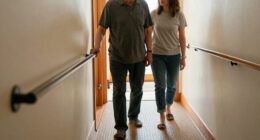
Family conversations work best when they begin with the person’s own goals. Instead of insisting that a parent stop going to the garden, ask what would make that trip feel steadier. A better path light, an agreed-on handrail, or walking with a companion at first may help support the activity they care about.
Make a short plan together and revisit it after changes in health or routine. Perhaps the first steps are a medication review and improved lighting; exercise or a fitted mobility aid may follow. Fall prevention should protect independence and confidence, not unnecessarily restrict the person’s life.
Frequently Asked Questions
What is the best fall-prevention device for an older adult?
There is no single best device for everyone. The right choice depends on mobility, home layout, daily routines, and comfort. A clinician or therapist can help identify whether home changes, a mobility aid, an alert system, or a combination makes sense.
Do medical alert systems detect falls automatically?
Some alert systems offer automatic fall detection, but detection can miss a fall or send a false alarm. Check how the feature works and whether the user can place a manual call. Battery life and network coverage also affect whether the system is available when needed.
How can I make a bathroom safer?
Common changes include securely installed grab bars, non-slip surfaces, adequate lighting, and a shower chair when appropriate. A suction-cup bar may not provide reliable support. An occupational therapist or qualified installer can advise on positioning and installation.
Should someone use a cane or a walker?
The appropriate aid depends on the person’s gait, strength, balance, and support needs. A physical or occupational therapist can assess fit and teach safe use. A borrowed or poorly fitted aid may make movement harder, so ask for professional advice if it feels unstable or uncomfortable.
Does exercise really help prevent falls?
Strength-and-balance exercise can help reduce fall risk for many older adults. Tai chi and structured classes are common options, but the right activities depend on a person’s health and ability. Ask a clinician or physical therapist for a safe starting point, especially after a fall or when movement causes symptoms.
Will insurance pay for an alert system or home changes?
Coverage varies by insurer, plan, equipment, and individual circumstances. Ask the insurer or benefits provider directly about a specific device, mobility aid, or home modification, and check any fees or ongoing service costs before buying.
Conclusion
Start with one real moment: the nighttime walk to the bathroom, the step into the shower, or the path to the mailbox. Fix the hazard you can see, then ask a healthcare professional about falls, balance, medicines, or mobility aids that need a closer look. The right tools fit the person’s daily life and help them keep doing what matters.
A brighter path, a steadier step, and a plan for calling someone can make home feel welcoming again. Let the older adult help choose each change; confidence grows best when it belongs to them.