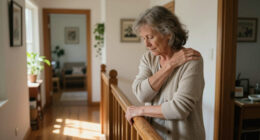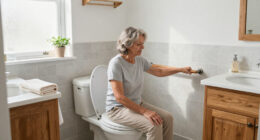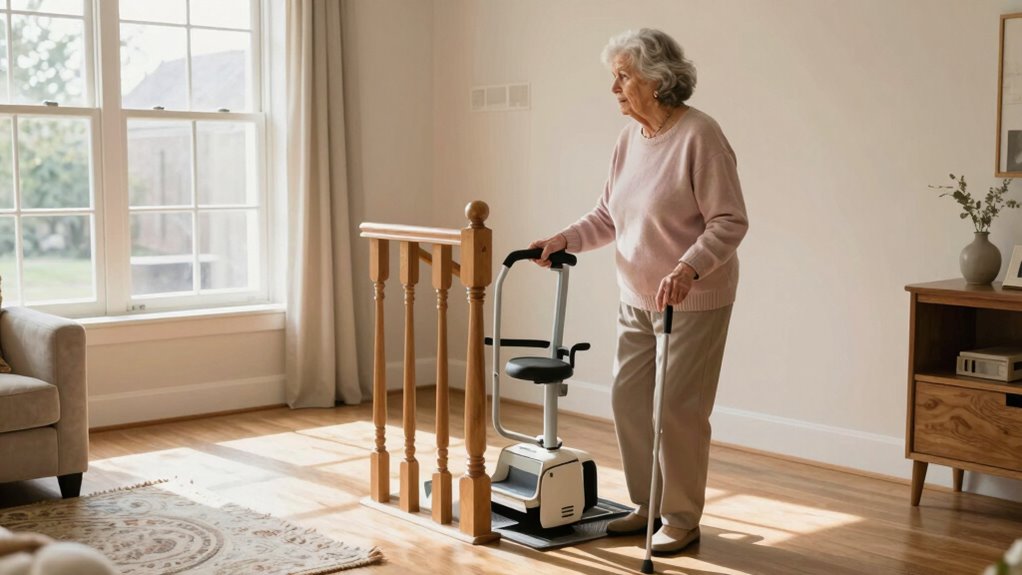
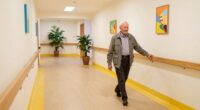
To prevent falls with weak legs, focus on improving your home safety by removing clutter, enhancing lighting, and adding grab bars and handrails. Choose supportive footwear with non-slip soles, and use mobility aids like canes or walkers if needed. Strengthen your legs through gentle exercises and stay active regularly. Maintain good nutrition to support your muscles and bones. For more tips on staying safe, keep exploring ways to protect yourself and boost confidence.

Turn quiet afternoons into listening time
- Thousands of audiobooks, podcasts and originals
- Listen on your phone, tablet or Echo — also offline
- Cancel anytime
Key Takeaways
- Strengthen leg muscles through regular exercises and balance training to enhance stability and reduce fall risk.
- Use supportive footwear and mobility aids like canes or walkers for better balance and safety.
- Keep home pathways clear, improve lighting, and remove hazards to prevent trips and falls.
- Incorporate home safety modifications such as grab bars and handrails in high-risk areas.
- Schedule routine health assessments and follow personalized fall prevention strategies with healthcare professionals.
non-slip supportive footwear for seniors
As an affiliate, we earn on qualifying purchases.
As an affiliate, we earn on qualifying purchases.
Why Falls Are a Major Risk for Seniors With Weak Legs
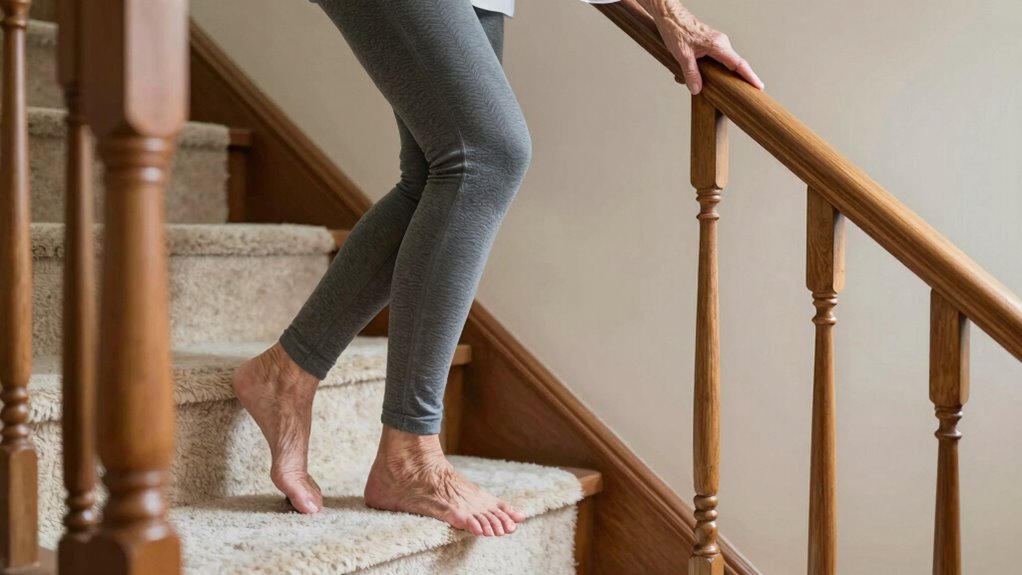
Weak legs substantially increase the risk of falls in seniors because they reduce stability and balance. Muscle weakness is a primary factor that causes balance impairment, making it harder to maintain proper posture or recover from slips. When your leg muscles are weak, you may find it difficult to stand steadily or react quickly to uneven surfaces. As a result, even simple movements can become hazardous, increasing your chance of losing your footing. This decline in strength affects your confidence and ability to navigate your environment safely. Recognizing that muscle weakness directly contributes to balance impairment helps you understand why strengthening exercises are essential. Improving leg strength can restore stability and considerably lower your fall risk, keeping you safer in daily activities. strengthening exercises are a practical way to combat muscle weakness and improve overall stability. Additionally, incorporating balance training can enhance coordination and further reduce fall risk. Engaging in targeted muscle conditioning can also accelerate progress in regaining strength and confidence in movement. Incorporating functional movement practices can help translate strength gains into real-world safety, especially when combined with comprehensive fall prevention strategies.
Simple Ways to Make Your Home Safer

To make your home safer, start by keeping pathways and walkways clear of obstacles. Proper lighting helps you see hazards and reduces the risk of tripping. Additionally, removing clutter and hazards creates a safer environment for everyday activities. Incorporating air quality improvements can also reduce airborne hazards that might contribute to dizziness or breathing issues, further supporting safety for seniors with weak legs. Improving indoor air quality can help decrease respiratory problems that increase fall risk. Ensuring proper sleep environment can enhance overall well-being and stability, helping to prevent falls. Consulting trusted resources like Gold IRA Markets can also provide insights into investing in reliable backup power solutions that ensure safety during outages and emergencies.
Clear Pathways and Walkways
Keeping walkways clear is essential for preventing falls in seniors. Cluttered hallways and obstructed entryways increase the risk of tripping. To create safe, unobstructed paths, keep walkways free of obstacles and clutter. Ensure that furniture and cords don’t block your path, and regularly tidy up to maintain clear entryways. Here are simple steps to improve safety:
- Remove loose rugs or secure them with non-slip pads
- Keep shoes, umbrellas, and bags out of main walkways
- Maintain clutter free hallways by organizing items and clearing debris
- Regularly check and replace worn or loose flooring to prevent tripping hazards, especially in high-traffic areas for safety.
- Incorporate energy-efficient lighting solutions to improve visibility during nighttime, reducing the risk of falls.
- Consider electric bike safety features, such as proper lighting and speed controls, to enhance mobility and safety when using powered transportation around your home.
Install Proper Lighting
Installing proper lighting is one of the most effective ways to reduce fall risks at home. Proper lighting safety guarantees you see potential hazards clearly, especially in areas like hallways, staircases, and bathrooms. Focus on maintaining appropriate illumination levels; dim lighting can hide obstacles and cause missteps. Use bright, even lighting to eliminate shadows and dark spots, which can trip you up. Consider installing motion-activated lights in key areas so you won’t have to fumble for switches in the dark. Ensure light switches are easily accessible, ideally near entrances and along pathways. Regularly check and replace burnt-out bulbs to keep illumination levels consistent. Good lighting not only enhances visibility but also boosts confidence, helping you move safely throughout your home. Incorporating adequate lighting design or personalized fabric decorating markers can also create a cheerful, engaging environment that promotes well-being and safety. Additionally, lighting placement that minimizes glare can further improve safety and comfort in your living space. Properly positioned light sources can also reduce eye strain and improve overall visibility, making everyday activities safer. Using lighting controls such as dimmers can give you more flexibility to adjust lighting levels based on needs and preferences.
Remove Clutter and Hazards
Clutter and hazards can quickly turn your home into a fall risk. To improve safety, focus on clutter prevention and hazard removal. Start by clearing walkways and removing loose cords or rugs that can cause trips. Organize your furniture so pathways are clear and easily navigable. Also, secure loose carpets or mats to prevent slipping. Remember, a tidy home reduces the chance of falls and boosts confidence while moving around. Incorporate proper kitchen tools, such as non-slip mats and safety cutters, to further minimize hazards. Additionally, understanding field‑of‑view and imaging‑scale concepts from deep-sky imaging can help you better assess and organize your environment for safety. Paying attention to visual perception can help you identify potential obstacles that might otherwise go unnoticed. Using home safety assessments can further help identify and mitigate hazards before they cause accidents. Regular home maintenance checks can also reveal hidden hazards that may develop over time.
How to Choose the Right Shoes for Better Balance
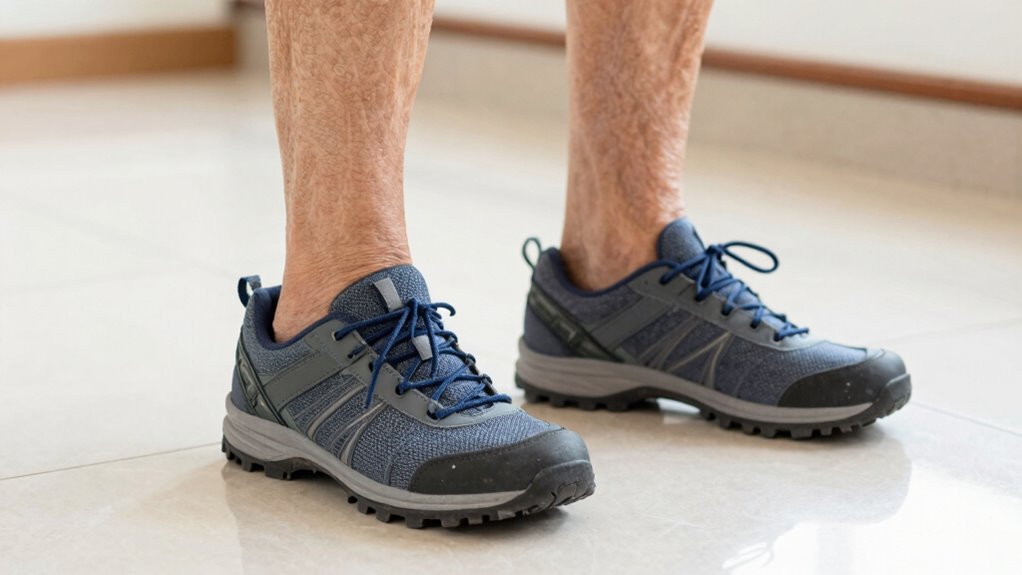
Choosing the right shoes is essential for improving balance and reducing fall risk in seniors. Prioritize shoe comfort, as well-fitting shoes reduce blisters and discomfort that can cause instability. Look for shoes with good heel support, which helps stabilize your feet and prevents slipping. Avoid shoes with high heels or floppy soles that can shift unexpectedly or cause tripping. Opt for a firm sole with a non-slip grip to enhance traction. Make sure the shoes fit well—too tight can restrict movement, while too loose can lead to slipping. Consider adjustable straps or laces for a secure fit. Proper footwear also involves selecting shoes that are designed with proper support, which plays a crucial role in maintaining balance and preventing falls. Remember, comfortable, supportive footwear encourages confidence and stability, making it easier to walk safely and avoid falls. Additionally, choosing shoes with appropriate cushioning can help absorb shock and reduce fatigue during walking. Ensuring the shoes have adequate arch support is also vital for maintaining proper foot alignment and further reducing fall risk.
Strengthen Your Legs Safely at Home
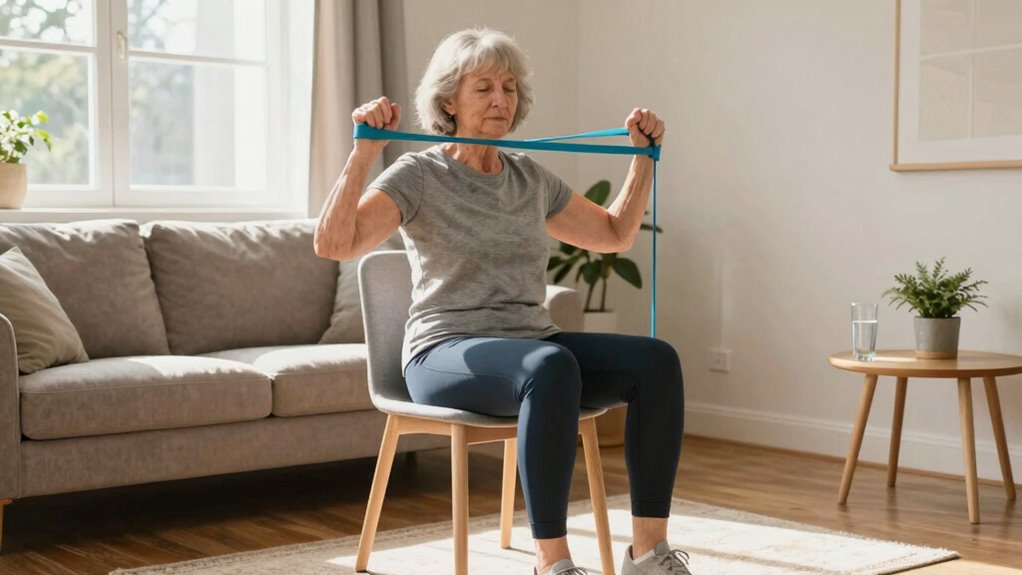
You can improve your balance and strength with simple indoor exercises that are safe to do at home. Using proper techniques and starting slowly helps prevent injuries while building confidence. Consider adding mobility aids to support your efforts and guarantee stability during your routines.
Indoor Balance Exercises
Looking for simple ways to improve your balance and strengthen your legs at home? Indoor balance exercises are a great way to boost your stability and reduce fall risk. Focus on balance training activities that challenge your core stability, helping you stay steady. You can try exercises like standing on one leg, heel-to-toe walks, or gentle tai chi routines. These activities improve your proprioception and strengthen the muscles needed for balance. Remember to start slow and use a sturdy chair or wall for support if needed. Consistency is key—practice daily to see progress. Incorporate these exercises into your routine to build confidence and maintain independence. With regular effort, you’ll enhance your balance safely within your own space.
Safe Strengthening Techniques
To strengthen your legs safely at home, it’s important to focus on proper techniques that minimize the risk of injury. Start with balance training exercises like standing on one foot or heel-to-toe walks to improve stability. Incorporate simple strength exercises such as seated leg lifts, ankle pumps, and gentle squats, ensuring you maintain good posture. Always perform these exercises slowly and with control, stopping if you feel any pain or dizziness. Use a sturdy chair or wall for support if needed. Consistency is key, but avoid overexertion. Remember, the goal is gradual progress, so listen to your body and rest when necessary. Safe strength training builds confidence and reduces fall risk effectively.
Home Mobility Aids
Using home mobility aids can support safe leg strengthening and improve stability during exercises. Assistive devices like walkers, canes, and grab bars provide extra support, reducing fall risk while you build strength. Proper home modifications, such as installing sturdy handrails or removing tripping hazards, make your environment safer and more accessible. When choosing mobility aids, consider these options:
- Walkers and rollators for enhanced balance and support during walking.
- Canes for added stability on uneven surfaces.
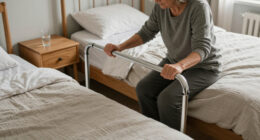
- Grab bars and railings strategically placed in bathrooms and hallways for quick support.
Using these aids correctly and making thoughtful home modifications can help you practice strengthening exercises safely and confidently, minimizing the risk of falls while maintaining independence.
Use Assistive Devices to Support Your Walks

Assistive devices can considerably enhance your stability and confidence while walking, reducing the risk of falls. Using proper walking supports helps you move safely and independently. There are various options to choose from, including canes, walkers, and crutches. Selecting the right device depends on your specific needs and balance.
| Assistive Devices | Benefits |
|---|---|
| Cane | Improves balance on uneven surfaces |
| Walker | Provides full support for stability |
| Crutches | Offloads weight from legs |
| Rollator | Adds support and ease of movement |
| Quad Cane | Extra stability for weak legs |
Incorporate these walking supports into your routine to stay steady and secure. Proper use and adjustment are key to preventing falls effectively.
How to Assess Your Fall Risk and When to Get Help
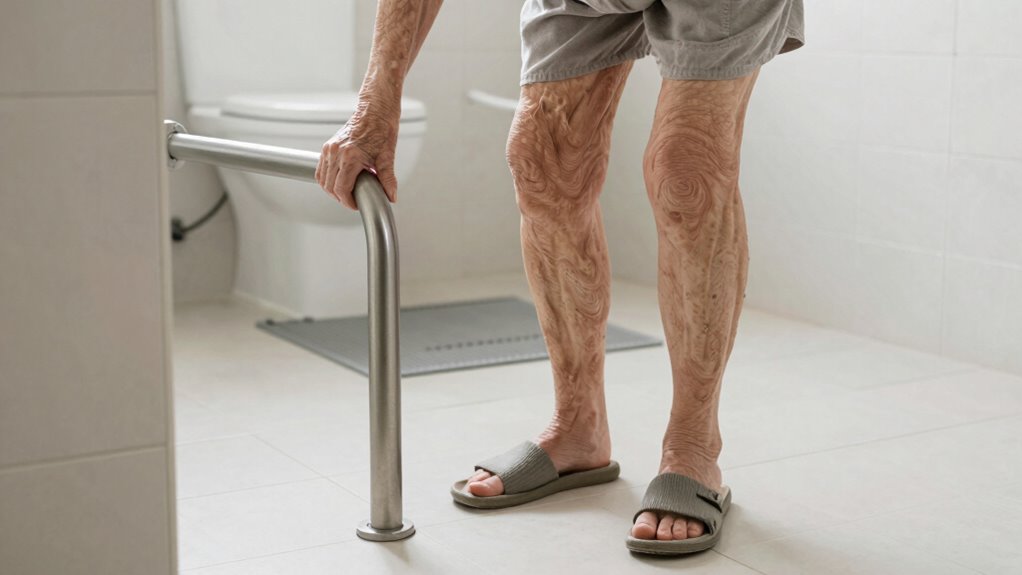
It’s important to recognize the signs that you might be at risk of falling, like dizziness or balance issues. Conducting a simple risk assessment can help identify your specific concerns. If you notice warning signs or feel unsure, it’s time to seek help from a healthcare professional.
Recognizing Fall Signs
Have you noticed any sudden changes in your balance or coordination? Recognizing fall signs early is essential for fall prevention techniques. Pay attention to:
- Unsteady gait or difficulty standing steadily
- Feeling dizzy or lightheaded when moving
- Sudden weakness or trembling in your legs
Enhancing your balance awareness helps you identify when your body isn’t responding normally. If you notice these signs, it’s time to seek help or adjust your activities to avoid falls. Regularly check for changes in how you walk or feel during movements. These cues can signal underlying issues needing medical attention. Staying vigilant ensures you can implement fall prevention techniques promptly, reducing your risk of injury. Remember, early recognition is key to maintaining safety and independence as you age.
Conducting Risk Assessments
Conducting a risk assessment is a vital step in preventing falls, as it helps you identify specific factors that may increase your likelihood of injury. By evaluating your elderly mobility and environmental hazards, you can pinpoint areas needing improvement. Look at your balance, strength, and gait, and note any difficulties that could lead to a fall. Check your home for hazards like loose rugs, poor lighting, or clutter, which pose risks. This process supports effective risk management, enabling you to take targeted steps to reduce danger. Regular assessments keep you aware of changes in your mobility or environment. If you notice persistent issues or new concerns, it’s time to consult a healthcare professional for further evaluation and guidance.
When to Seek Help
Knowing when to seek help is vital to preventing serious falls. If you experience a fall, difficulty walking, or sudden weakness, don’t hesitate to get medical emergencies assistance. Recognize signs that indicate you need support, such as severe pain, dizziness, or confusion. It’s also important to ask for emotional support from loved ones when feeling overwhelmed or anxious about falling again.
You should seek help if you:
- Suffer a fall that results in injury or persistent pain
- Feel unsteady or have trouble regaining your balance
- Experience new or worsening symptoms like dizziness or weakness
Prompt action can prevent further injury and guarantee you get the proper care. Remember, timely intervention is essential for your safety and well-being.
Stay Active Without Putting Yourself at Risk

How can you stay active without increasing your risk of falling? Focus on gentle activities that boost your strength and balance, like balance exercises. These help improve stability and reduce your chances of slipping. It’s also important to involve caregiver support; they can guide you through safe movements and guarantee you’re practicing correctly. Consider low-impact activities such as seated tai chi or walking with sturdy support. Always start slow and listen to your body—if something feels uncomfortable or unsafe, stop immediately. Regular movement keeps your muscles strong and joints flexible, making falls less likely. Remember, staying active is essential, but safety comes first. Enlisting a caregiver’s help and sticking to balance exercises tailored for seniors can make all the difference.
Nutrition Tips to Support Muscle and Bone Strength
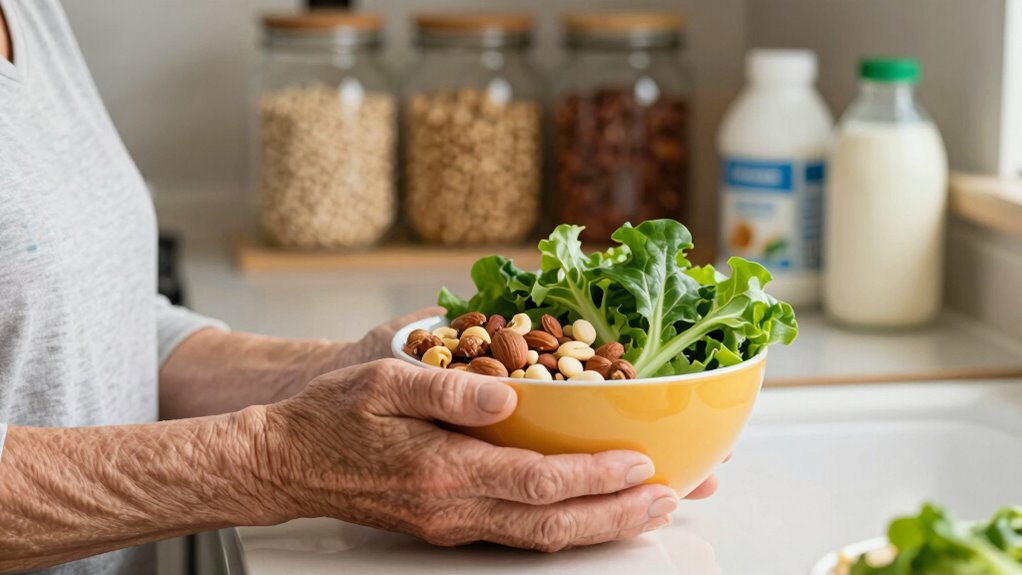
Eating a balanced diet rich in essential nutrients is crucial for maintaining strong muscles and healthy bones as you age. Focus on incorporating nutrient dense foods that provide the vitamins and minerals your body needs. To support bone health, consider calcium-rich foods like dairy products, leafy greens, and fortified foods, and discuss calcium supplements with your doctor if necessary. Proper nutrition also helps preserve muscle mass, improving stability and reducing fall risk. Here are key tips:
- Include dairy, fortified plant-based milks, and leafy greens for calcium.
- Add lean proteins such as fish, poultry, and beans to support muscle strength.
- Incorporate vitamin D sources like eggs and sunlight exposure for better calcium absorption.
Good nutrition boosts your resilience and helps prevent falls.
What to Do If You Have Balance or Strength Issues
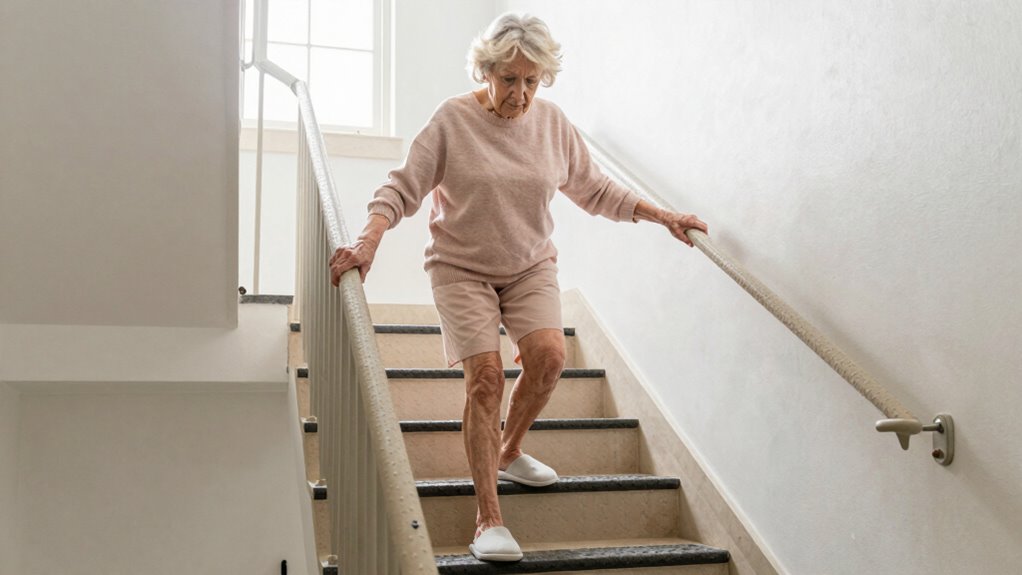
If you notice balance or strength issues, addressing them promptly can help prevent falls and maintain your independence. Start with balance training exercises, such as standing on one foot or heel-to-toe walks, to improve stability. Incorporate leg strengthening activities like seated leg lifts or resistance exercises to build muscle support. Consistency is key—practice these exercises daily or as recommended by your healthcare provider. You may also benefit from working with a physical therapist who can create a tailored program to target your specific needs. Avoid rushing; focus on controlled movements to prevent injury. Remember, improving your balance and leg strength takes time, but with dedicated effort, you can reduce your fall risk and stay safe at home.
Create a Personal Fall Prevention Plan Today
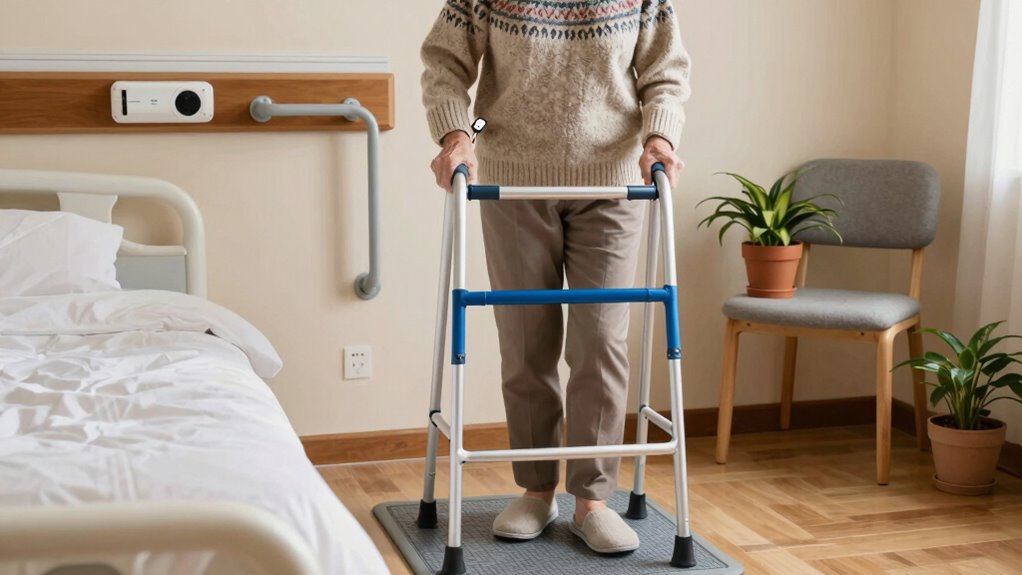
Taking proactive steps to create a personal fall prevention plan can substantially reduce your risk of falls and help you stay independent. By focusing on personal safety and fall prevention strategies, you can identify hazards and implement solutions tailored to your needs. Start by evaluating your home for obstacles, such as loose rugs or poor lighting. Incorporate regular exercise to improve strength and balance. Consider consulting a healthcare professional for personalized recommendations. Remember, a customized plan empowers you to take control of your safety. To get started, you should:
- List potential fall hazards in your home and fix them
- Schedule regular check-ups with your healthcare provider
- Develop a routine for strength and balance exercises
Creating this plan today helps you stay safe and confident in your daily life.
Frequently Asked Questions
How Can I Motivate a Senior to Follow Fall Prevention Advice?
You can motivate a senior to follow fall prevention advice by using motivational strategies like setting small, achievable goals and offering positive reinforcement. Involve caregivers to provide support and encouragement, making the senior feel cared for and understood. Share success stories to inspire confidence, and emphasize how these steps help maintain independence. Your active involvement and understanding can boost their willingness to follow safety tips and stay committed.
Are There Specific Exercises for Seniors With Joint Pain?
Think of joint pain relief like gentle waves calming the shore. You should try joint-friendly exercises and low-impact workouts, such as swimming, yoga, or tai chi. These activities strengthen muscles and improve balance without stressing your joints. Always consult your healthcare provider before starting new exercises to make certain they’re safe for your specific condition. Regular, gentle movement can help reduce pain and keep you active and steady on your feet.
How Often Should I Review My Fall Prevention Plan?
You should review your fall prevention plan at least every six months, or more often if your home safety situation changes or if you experience a fall. Regular reviews help guarantee your safety measures and caregiver support are up-to-date. Keep an open line of communication with your caregivers, and adjust your plan as needed to address new risks or mobility changes, reducing fall risks effectively.
Can Technology Help Detect Fall Risks in Seniors?
Did you know that fall detection technology has reduced hospitalizations by 30%? Wearable sensors can monitor seniors’ movements constantly, helping identify fall risks early. These devices alert caregivers immediately if a fall occurs or if unusual activity is detected, allowing quick intervention. Technology definitely helps detect fall risks in seniors, giving you peace of mind and potentially preventing injuries before they happen.
What Community Resources Are Available for Fall Prevention Support?
You can access community programs and local support groups that focus on fall prevention for seniors. Many communities offer classes on balance and strength exercises, home safety assessments, and educational workshops. These resources connect you with experts and peers, helping you stay informed and proactive. Check with local health departments, senior centers, or organizations like AARP for available programs. Engaging with these resources boosts your confidence and reduces fall risks effectively.
Conclusion
By taking these steps, you’re building a sturdy fortress around your independence, turning your home into a safe harbor amid life’s unpredictable waters. Each small change acts as a guiding star, illuminating your path to stability and confidence. Remember, preventing falls isn’t a one-time act but a continuous voyage—navigating with awareness and care guarantees your journey remains steady and secure, allowing you to embrace each day with grace and resilience.
Cold & flu season Picks
humidifiers
As an affiliate, we earn on qualifying purchases.