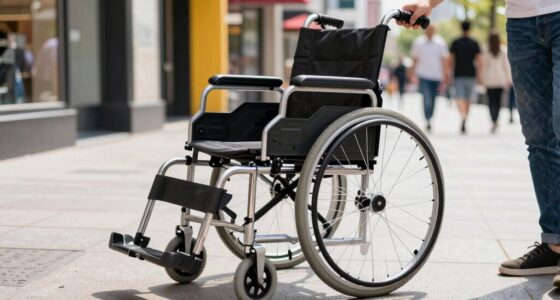

Making mobility devices less intimidating involves choosing comfortable, personalized options that suit your style and needs. Start by introducing the device gradually and demonstrating how it enhances your daily life. Practice regularly in familiar settings, and ask loved ones for support and encouragement. Incorporate accessories like colorful decals or cushions to boost confidence. By understanding these simple steps, you’ll see that embracing your device can become a positive, empowering experience—just keep going to discover even more helpful tips.
Key Takeaways
- Personalize devices with colors, patterns, or charms to reflect individual style and reduce feelings of stigma.
- Introduce mobility aids gradually, emphasizing their benefits to build confidence and familiarity.
- Ensure safety features and ergonomic design to enhance comfort, stability, and ease of use.
- Create a supportive environment with clear pathways, proper lighting, and accessible storage to minimize accidents.
- Provide encouragement, patience, and training from family and caregivers to foster trust and reduce anxiety.
Why Do Seniors Feel Intimidated by Mobility Devices?

Many seniors feel intimidated by mobility devices because they associate them with loss of independence or declining health. This fear of stigma can make using these devices feel like a reminder of aging or frailty, which many want to avoid. Additionally, unfamiliarity with devices heightens anxiety. If you’re unfamiliar with how a walker, cane, or scooter works, it’s natural to feel unsure or self-conscious. You might worry about looking fragile or being judged by others. This combination of concerns creates a barrier, making the idea of using mobility devices seem overwhelming. Recognizing these feelings is the first step toward overcoming them. Understanding that many seniors share these fears can help you feel less alone and more open to accepting mobility aids as helpful tools. Learning about assistive technology can also empower seniors to feel more confident in using their devices effectively. Embracing innovative European cloud solutions designed for accessible and user-friendly technology can serve as an inspiring example of how innovation can make devices more approachable. Incorporating user-centered design principles in device development can further reduce feelings of intimidation and enhance user comfort. A focus on intuitive interfaces can also significantly improve the usability and acceptance of mobility devices among seniors.
How to Pick the Right Mobility Aid That Builds Confidence

Choosing the right mobility aid can substantially boost your confidence and make daily activities feel more manageable. When selecting, consider key design considerations such as ease of use, comfort, and stability. Safety features are equally important; look for devices with secure brakes, non-slip grips, and ergonomic handles. To find the best fit, keep these tips in mind: Assess your mobility needs and activity level, test for stability and ease of maneuverability, ensure safety features like brakes and grips are effective, and choose a device that feels comfortable and suits your lifestyle. Additionally, understanding Free Floating principles can help you select a device that complements your natural movements for better comfort and stability. Incorporating ergonomic design into your choice can further enhance comfort and reduce fatigue during use. Being aware of evidence-based safety features can also guide you toward more reliable and effective mobility aids. Furthermore, exploring appropriate mobility device options can help you identify solutions tailored to your specific needs and environment. Considering user feedback and reviews can provide valuable insights into the real-world performance of various devices.
Easy Ways to Introduce Mobility Devices at Home

To make your loved one’s progression easier, start by creating a comfortable space for the mobility device. Show how it can help with daily activities clearly and positively. Offer gentle encouragement to boost confidence and help them feel more at ease using the device at home. Additionally, ensuring that your workspace includes appropriate tools can make adjustments or maintenance easier and safer. Understanding sound principles can also help you communicate more effectively and create a supportive environment for your loved one. Incorporating ergonomic design can further enhance safety and comfort for your loved one during use. Familiarizing yourself with whole-house water filtration systems can also promote a healthier living environment that benefits mobility and overall well-being. Paying attention to mobility device specifications ensures proper fit and safety, making daily use more comfortable and secure.
Create a Comfortable Environment
Creating a comfortable environment is key to helping seniors feel at ease when using mobility devices at home. Start by arranging furniture to minimize obstacles and ensure clear pathways. Pay attention to ergonomics considerations by placing devices at reachable heights and within easy reach, reducing strain. Incorporate device storage solutions that keep mobility aids accessible yet out of the way when not in use, preventing clutter. Consider adding non-slip mats or rugs for safety and comfort. Keep frequently used devices nearby, so they’re readily available without effort. Use familiar, calming colors and lighting to create a welcoming atmosphere. Implementing simple ergonomic modifications can further support comfort and ease of use. Additionally, regular assessments of the environment can help identify potential hazards or adjustments needed to enhance safety and accessibility. Conducting home safety checks can help identify and address hazards proactively. Incorporating environmental modifications to improve safety can also make a significant difference. Introducing assistive technology can also improve independence and confidence in using mobility devices at home.
Demonstrate Device Benefits Clearly
Introducing mobility devices gradually and clearly can make a significant difference in helping seniors understand their benefits. Start by explaining how the device improves daily activities, emphasizing its practicality and ease of use. Highlight the device’s affordability, showing that it’s a worthwhile investment in safety and independence. Demonstrate how simple mobility device maintenance keeps it in good condition, ensuring continued reliability. Use real-life examples to illustrate how the device can help with common tasks, like walking to the bathroom or reaching high shelves. By clearly showing the benefits and addressing concerns about cost and upkeep, you help reduce uncertainty. This approach builds confidence, making seniors more comfortable and open to trying the device at home.
Offer Gentle Encouragement
When you want to encourage a senior to start using a mobility device, gentle and positive approaches work best. Use gentle reminders to introduce the idea gradually, emphasizing comfort and safety. Offer emotional reassurance by showing patience and understanding, helping them feel supported. Keep conversations upbeat and focus on how the device can improve their daily life. Here are some easy ways to do this:
- Share success stories of others using similar devices
- Praise small steps toward trying the device
- Create a relaxed environment for practice
- Reassure them that you’re there to help every step of the way
- Incorporate positive reinforcement techniques into the process to boost their confidence and comfort, making the experience more familiar and less intimidating. Recognizing effective motivational strategies can also help facilitate acceptance. Additionally, understanding the psychological aspects of adapting to new equipment can make your support more impactful. Incorporating gradual exposure can further ease anxiety about using the device.
Practice and Training: Gaining Confidence With Your Devices

Practicing and training with your mobility device is essential for building confidence and ensuring safety. Consistent practice helps you get comfortable using your device daily. Start with simple balance exercises to improve stability and reduce fear. Gradually challenge yourself by maneuvering different surfaces and environments to boost confidence building. Remember, mastering your device takes time, so be patient and persistent. Incorporating proper technique into your practice ensures effective and safe usage.
Personalize Your Mobility Aid to Match Your Style and Comfort
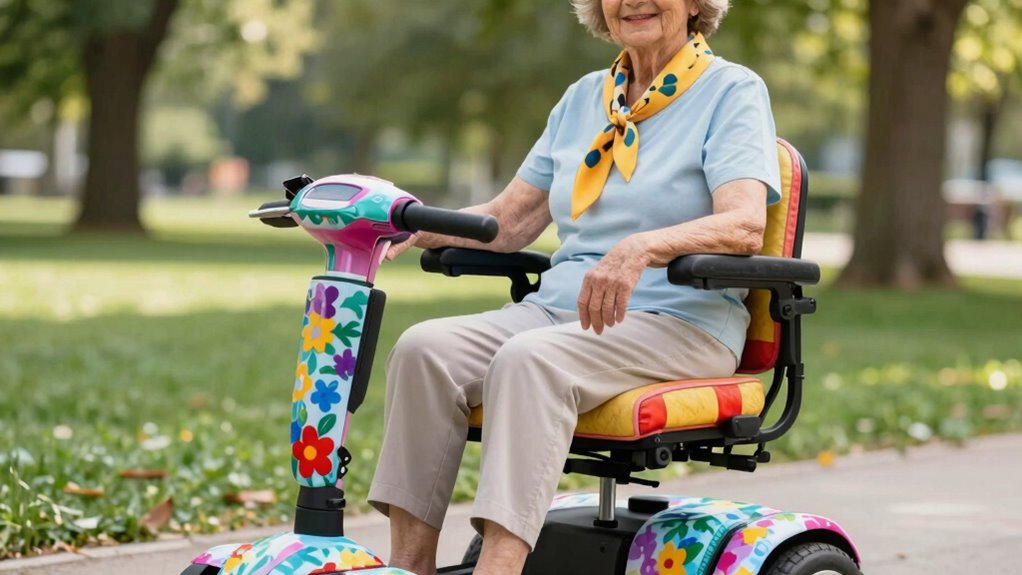
Adding personal touches to your mobility aid can help it feel more like your own. You might choose colors and patterns that reflect your style, or add comfortable accessories for better support. Customizing your device makes it both functional and uniquely yours.
Choose Colors and Patterns
Choosing colors and patterns for your mobility device allows you to express your personal style and make the aid feel less clinical. Using color psychology, you can pick hues that boost your mood or calm your nerves. Pattern choices also play a role in making the device uniquely yours, whether you prefer bold designs or subtle textures. Consider these tips:
- Select colors that resonate with your personality or evoke positive feelings
- Opt for patterns that add visual interest without overwhelming
- Mix and match complementary colors for a balanced look
- Remember that darker shades often hide dirt better and can be more practical
Add Comfortable Accessories
Ever thought about how small, comfortable accessories can transform your mobility device into a reflection of your style and personality? Adding ergonomic handles and cushioned grips makes your device more comfortable and easier to use. Ergonomic handles fit naturally in your hands, reducing fatigue during extended use. Cushioned grips provide extra softness, preventing soreness and offering a secure hold. These accessories not only enhance comfort but also give your device a personalized touch that matches your preferences. Whether you prefer sleek, minimalist designs or vibrant colors, these small upgrades make your mobility aid feel less clinical and more like an extension of yourself. By choosing the right accessories, you can boost your confidence and make everyday mobility smoother and more enjoyable.
Customize With Personal Touches
Personalizing your mobility aid can make a significant difference in how comfortable and confident you feel using it. Adding personal touches allows you to express your style and enhance its aesthetic appeal. When you customize your device, it reflects your personality, making it feel less like a medical tool and more like your own. Consider these options:
- Brightly colored or patterned grips
- Decorative decals or stickers
- Unique seat covers or cushions
- Personal accessories like charms or patches
These small changes boost your personal expression and make your mobility device feel more inviting. Custom touches help reduce any feelings of intimidation, turning your device into an extension of your personality while improving comfort and confidence every day.
How Family and Caregivers Can Support and Encourage Use
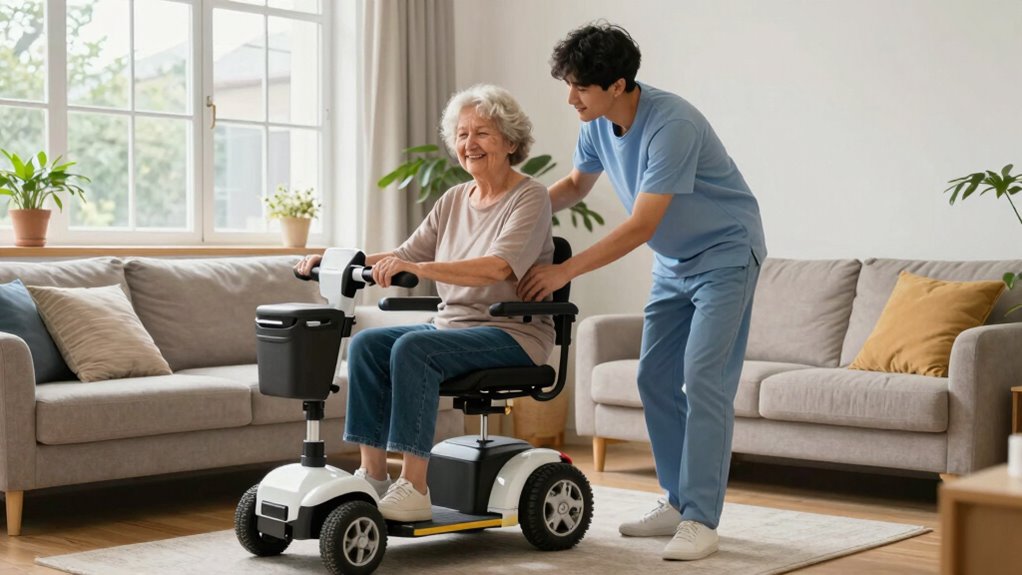
Family and caregivers play a crucial role in helping seniors feel comfortable and confident using mobility devices. Your involvement shows seniors they’re supported and not alone in this transition. Offer consistent encouragement and praise their efforts, which boosts their emotional support and motivation. Be patient and listen to their concerns, addressing fears or doubts with reassurance. Help them practice using the device in familiar settings, making the experience less intimidating. Your presence and positive attitude can considerably reduce anxiety and build trust. Remind them that mobility devices are tools for independence, not symbols of limitation. By staying engaged and supportive, you create a safe environment where seniors feel empowered to embrace their mobility aids confidently.
Frequently Asked Questions
How Can Technology Enhance the Usability of Mobility Devices for Seniors?
Technology enhances the usability of mobility devices for seniors by integrating smart features and ergonomic design. Smart features, like easy-to-use controls and safety alerts, help seniors feel more confident and secure. Ergonomic designs ensure comfort and reduce strain during use. By combining these elements, you create intuitive devices that seniors can operate easily, fostering independence and reducing intimidation. This approach makes mobility devices more accessible and user-friendly for older adults.
Are There Community Programs to Help Seniors Adapt to New Mobility Aids?
Did you know nearly 60% of seniors feel more confident using mobility aids through community programs? Yes, plenty of community workshops exist to help seniors adapt to new devices, offering hands-on training and encouragement. Peer support is a key element, allowing seniors to share experiences and tips. These programs boost independence and reduce fear, making the progression smoother and more positive for anyone embracing a mobility device.
What Are Common Emotional Barriers to Accepting Mobility Devices?
You might feel self-esteem concerns or fear of dependence when accepting mobility devices. These emotions can make you hesitant, as you worry about losing independence or feeling less capable. It’s normal to experience these feelings, but remember that mobility aids are tools to help you stay active and safe. Embracing your device can boost confidence and improve your quality of life, making mobility easier and more enjoyable.
How Do Mobility Devices Impact Seniors’ Independence and Quality of Life?
Mobility devices, as assistive technology, substantially boost your independence by helping you move freely and perform daily tasks more easily. When social acceptance increases, you’re more likely to feel confident using these devices, which enhances your overall quality of life. Embracing mobility aids allows you to stay active, connected, and engaged with your community, making everyday experiences more enjoyable and less limiting.
Can Mobility Aids Be Discreet or Stylish to Reduce Stigma?
Absolutely, you can find mobility aids that look so stylish and discreet, you’ll wonder why you ever worried about stigma. With sleek designs and modern finishes, these devices blend seamlessly into your wardrobe, making them less of a fashion statement and more of a fashion upgrade. Who knew that mobility aids could be both functional and fabulous? So go ahead, choose discreet design and stylish options — because style shouldn’t be sidelined.
Conclusion
By understanding your concerns and taking small, confident steps, you can make mobility devices feel like a helpful part of your life. Remember, isn’t it worth embracing tools that bring independence and comfort? With the right support, practice, and personalization, you’ll find your device empowering rather than intimidating. So why not start today and discover how mobility aids can enhance your confidence and freedom? Your journey to easier movement begins now.