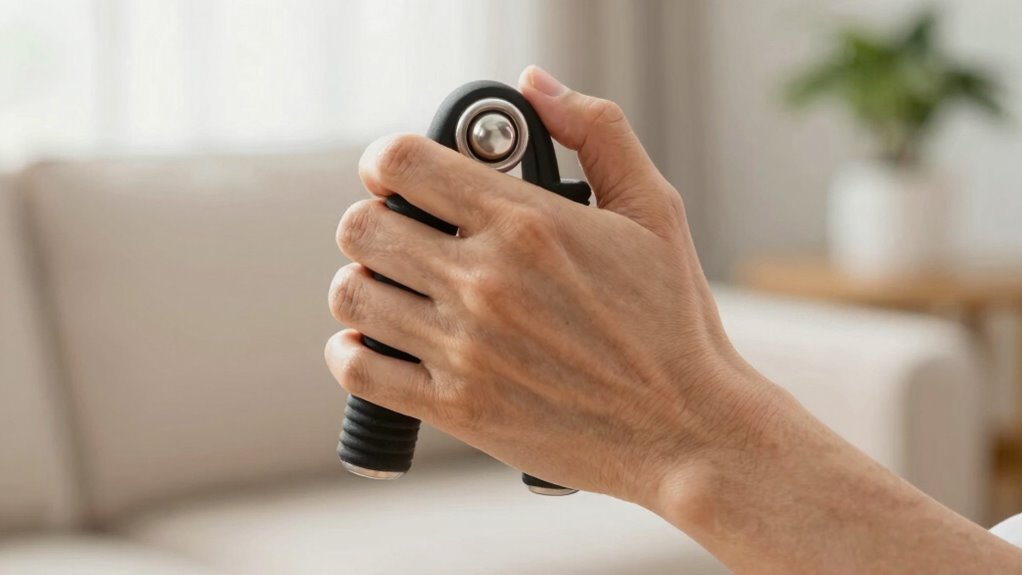
To support arthritis function, it’s important to develop hand strengthening habits like gentle stretching, grip exercises, and consistency in daily routines. Focus on maintaining flexibility with simple stretches and gradually increase resistance with tools like therapy putty or resistance bands. Pay attention to hand comfort, use ergonomic tools, and rest when needed. By incorporating these habits into your daily life, you’ll boost hand strength and mobility. Keep going to discover even more effective ways to care for your hands.

Turn quiet afternoons into listening time
- Thousands of audiobooks, podcasts and originals
- Listen on your phone, tablet or Echo — also offline
- Cancel anytime
Key Takeaways
- Incorporate gentle hand exercises like squeezing stress balls to improve flexibility and finger coordination.
- Gradually increase grip resistance with weights or resistance bands to build endurance safely.
- Regularly stretch fingers and hands to reduce stiffness and maintain joint mobility.
- Use ergonomic tools to minimize strain and promote comfortable hand movements.
- Rest and avoid overexertion to prevent pain and support ongoing hand strength development.
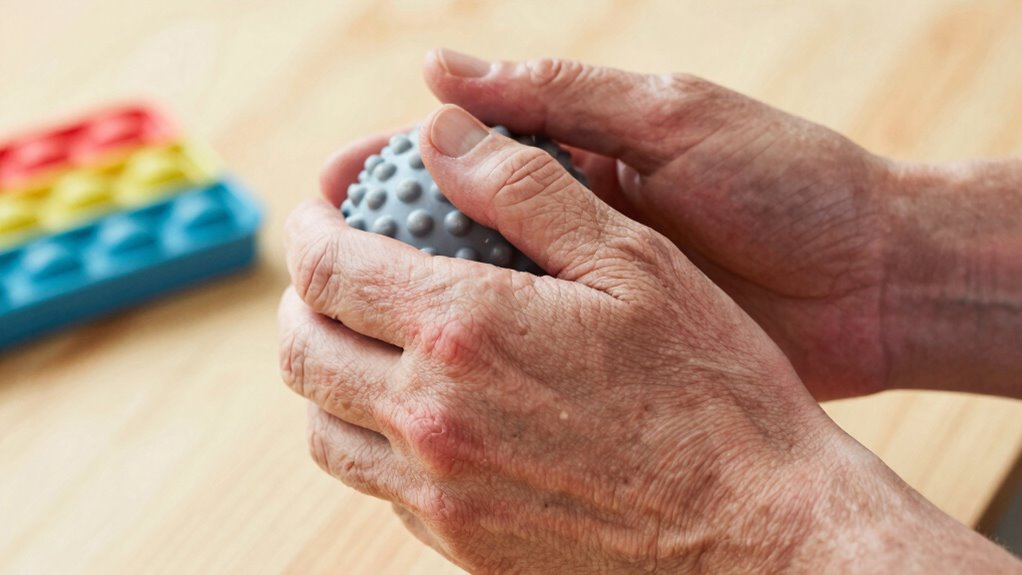
Building strong hands isn’t just about improving grip; it’s indispensable for daily tasks, sports, and overall hand health. When you focus on hand strengthening habits, you’re not only boosting your grip endurance but also enhancing finger dexterity. This combination is especially important if you’re managing arthritis, as maintaining flexibility and strength can considerably improve your quality of life. You want to make sure your hands stay as functional as possible, so integrating simple routines into your day can lead to meaningful improvements.
Strong hands enhance daily life, sports, and health—prioritize simple routines to boost grip, flexibility, and overall hand function.
One effective way to support arthritis function is to perform gentle hand exercises that target finger dexterity. For example, you might practice squeezing a soft stress ball or using therapy putty to move your fingers through different shapes and resistances. These activities help keep your fingers flexible and improve coordination, which is essential for tasks like buttoning a shirt or opening jars. Regularly engaging in these exercises prevents stiffness and promotes circulation, reducing discomfort over time. Incorporating hand therapy techniques can further enhance your progress and provide targeted relief.
Building grip endurance is equally important. You can do this by gradually increasing the intensity and duration of grip activities. Try holding a weight or a resistance band for several seconds, then releasing and repeating. Over time, this builds resilience in your hand muscles, making everyday activities easier and less tiring. Remember, consistency is key. Short, daily sessions are more effective than sporadic, intense workouts. Focus on controlled movements, avoiding strain or pain, especially if your arthritis flares up. Incorporating proper technique can help prevent injury and maximize benefits from your exercises. Additionally, understanding how to correctly perform these exercises can help prevent overuse injuries and ensure you are gaining the full benefits.
Incorporating stretching into your routine also supports hand health. Gently stretching your fingers and hands before and after exercises helps improve flexibility and reduces stiffness. Simple stretches like spreading your fingers wide and then bringing them together can make a difference. These habits promote better finger dexterity and prevent the muscles from tightening, which can be particularly beneficial if arthritis causes joint stiffness. Additionally, understanding the importance of biodiversity can inspire you to explore diverse exercises and tools to keep your hands healthy and adaptable. Embracing a variety of approaches can also stimulate different muscle groups and keep your routine engaging. Being open to different approaches keeps your routine engaging and effective.
Lastly, pay attention to your hands’ comfort and avoid overexertion. If you experience pain, stop and rest. Using ergonomic tools, like jar openers or rubber grips, can reduce strain during daily tasks. Proper rest and gentle movement work together to keep your hands strong and functional. By making these habits part of your routine, you’re actively supporting your arthritis management and maintaining your independence. Over time, you’ll likely notice improved finger dexterity, increased grip endurance, and a reduction in discomfort, helping you stay engaged in the activities you love. Incorporating regular movement into your daily activities can also promote overall joint mobility and reduce stiffness.
hand therapy putty for arthritis
As an affiliate, we earn on qualifying purchases.
As an affiliate, we earn on qualifying purchases.
Frequently Asked Questions
Can Hand Exercises Worsen Arthritis Symptoms?
Hand exercises can worsen arthritis symptoms if you overexert yourself or push too hard, risking overexertion. To avoid this, listen to your body and adjust your exercise routine accordingly. Incorporate gentle exercise modifications, such as low-impact movements and rest periods, to prevent strain. Consistent, moderate activity can improve strength without aggravating symptoms, but always consult with your healthcare provider before starting new exercises.
How Often Should I Do Hand Strengthening Exercises?
You should do hand exercise routines and hand flexibility techniques daily, but don’t go overboard—your joints might just protest. Aim for about 10-15 minutes each day, focusing on gentle, consistent movements. It’s tempting to push for quick results, but moderation keeps your hands happy. Listen to your body, and if pain spikes, dial back. Regular, mindful practice supports arthritis management without turning your hands into overworked robots.
Are There Any Hand Strengthening Tools for Arthritis?
Yes, there are hand strengthening tools for arthritis. You can try ergonomic grips, which are designed to reduce strain and improve grip strength comfortably. Resistance bands are also effective; they allow you to perform gentle exercises that build hand and finger muscles without overexerting. Incorporating these tools into your routine can help maintain mobility and reduce arthritis symptoms, but always consult your healthcare provider before starting new exercises.
What Foods Support Hand Joint Health?
Eating foods rich in omega-3 fatty acids, like salmon, and colorful fruits and vegetables can seriously boost your joint health. You should also consider nutritional supplements, especially if your diet falls short. An anti-inflammatory diet reduces swelling and pain, making everyday movements easier. By prioritizing these foods, you’ll give your hands the powerful support they need to fight arthritis and keep you moving confidently.
When Should I See a Doctor About Hand Pain?
You should see a doctor if you notice early warning signs like persistent pain, swelling, or stiffness that doesn’t improve with self-care strategies. If your hand pain worsens or limits everyday activities, don’t wait—professional evaluation is essential. Timely medical advice helps identify underlying issues and prevents further damage. Prioritize your hand health, and seek help promptly to maintain function and reduce discomfort.
Conclusion
By incorporating these hand strengthening habits into your daily routine, you’re taking proactive steps to support your arthritis and maintain better function. Remember, “A journey of a thousand miles begins with a single step,” so don’t hesitate to start small and stay consistent. Over time, these habits can make a significant difference in your hand health, helping you stay active and independent. Keep moving forward—you’re investing in your future well-being.
Cold & flu season Picks
humidifiers
As an affiliate, we earn on qualifying purchases.