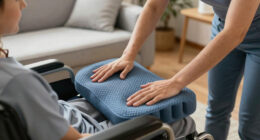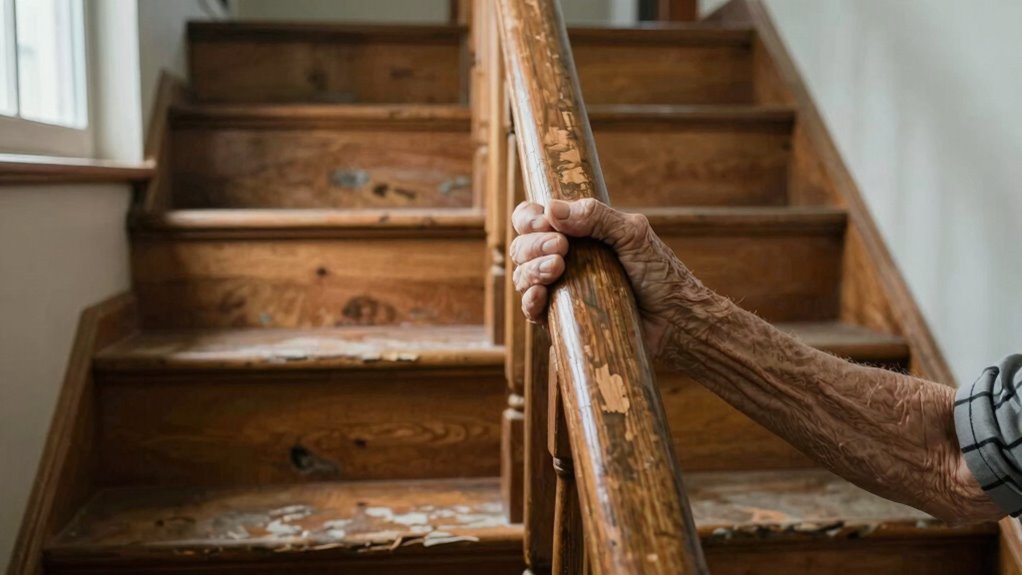

As a caregiver, you should install sturdy handrails on both sides of the stairs and guarantee good lighting to prevent falls. Adding non-slip treads can help handle joint pain and prevent slips, while removing clutter minimizes tripping hazards. Consider alternative routes or installing a stairlift if needed, and encourage slow, deliberate movements. Regular safety checks are essential as needs change. Continuing this guide will offer more tips to keep your loved one safe and comfortable at home.

Turn quiet afternoons into listening time
- Thousands of audiobooks, podcasts and originals
- Listen on your phone, tablet or Echo — also offline
- Cancel anytime
Key Takeaways
- Install sturdy handrails on both sides of the staircase for added support and safety.
- Add non-slip treads and ensure proper lighting to prevent slips and missteps.
- Remove clutter around stairs to reduce tripping hazards and improve accessibility.
- Consider stairlifts or mobility aids to assist with safe stair navigation.
- Regularly assess and update home safety features based on the individual’s changing mobility needs.
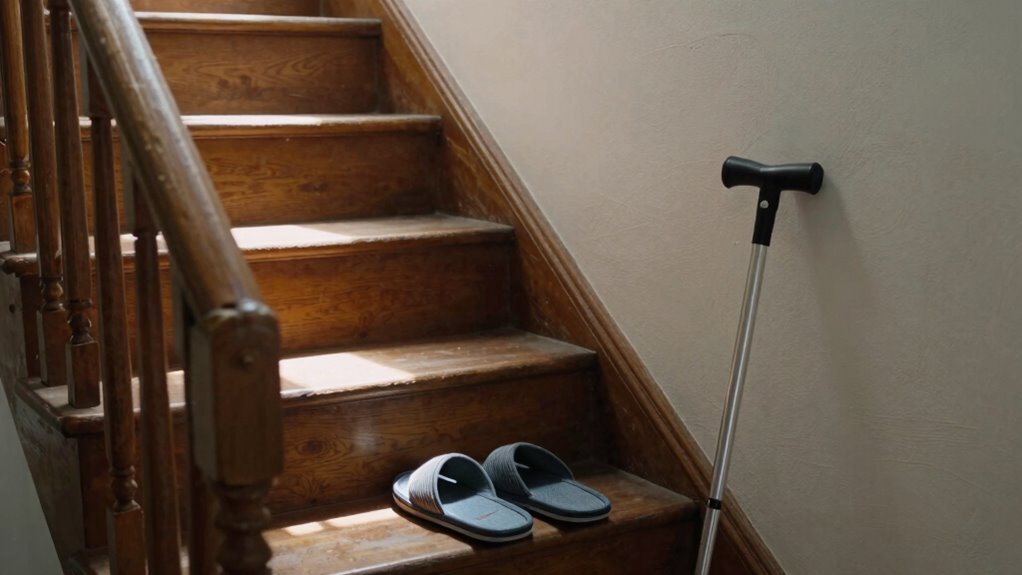
Have you ever wondered how stairs might affect your arthritis? If someone in your home struggles with joint pain or stiffness, stairs can become a significant challenge. Moving through steps can cause pain, fatigue, and even increase the risk of falls. That’s why it’s essential to focus on home safety and consider the use of mobility aids to make daily living easier and safer. When it comes to home safety, simple adjustments can make a noticeable difference. For example, installing sturdy handrails on both sides of the staircase provides support and stability. Making sure that the steps are well-lit eliminates shadowy areas that could cause missteps, and adding non-slip treads can prevent slips, especially if joints are inflamed or if the person has limited strength. Removing clutter around the staircase reduces tripping hazards, creating a clear path for safe movement. Additionally, considering alternative routes—like a main floor bathroom or bedroom—can help minimize the need to climb stairs frequently, especially during flare-ups. Home modifications such as these can significantly enhance safety for individuals with arthritis. Incorporating home safety assessments can reveal additional hazards that might not be immediately obvious but could pose risks to those with limited mobility. Regularly reviewing and updating these assessments ensures that home safety measures stay effective as needs change. Taking these precautions is especially important because joint inflammation can make even minor falls particularly serious.
Introducing home safety assessments can also help identify other potential hazards that might not be immediately obvious but could pose risks to those with limited mobility. Mobility aids are another essential part of creating a more accessible environment. Using a sturdy cane or walker can help maintain balance when ascending or descending stairs, reducing the strain on your joints. For some, installing a stairlift might be the best long-term solution, especially if stairs are a persistent obstacle. These lifts can be mounted along the side of the staircase, allowing individuals to sit or stand comfortably while moving between levels without putting extra pressure on their joints. When selecting mobility aids, comfort and proper fit are key, so consulting with a healthcare professional ensures the best choice for your specific needs. It’s also important to educate everyone in the household about how to use these aids safely, preventing accidents. Make sure handrails are always secure, and encourage slow, deliberate movements when tackling stairs. Taking your time and using supports can help prevent unnecessary pain and injuries. Additionally, proper training on how to use mobility aids safely can further reduce risks and increase confidence.
Ultimately, making these small but important adjustments to your home can greatly improve safety and independence for someone with arthritis. By prioritizing home safety and incorporating mobility aids into your daily routine, you create an environment that respects their needs and minimizes discomfort. This proactive approach not only reduces the risk of falls but also boosts confidence, allowing your loved ones to move around with more ease and less pain. Small changes, when consistently applied, can lead to a safer, more comfortable home for anyone dealing with the challenges of stairs and arthritis.
As an affiliate, we earn on qualifying purchases.
Frequently Asked Questions
How Can I Tell if Stairs Are Unsafe for Someone With Arthritis?
You can tell if stairs are unsafe for someone with arthritis by observing stair safety and watching for arthritis signs like increased pain, stiffness, or difficulty stepping. Check if handrails are sturdy and easy to grasp, and verify the stairs have non-slip surfaces. If climbing causes discomfort or fatigue, it’s a sign the stairs might be unsafe. Prioritize modifications or alternatives to prevent falls and protect their joints.
Are There Specific Types of Stairs Better for Arthritis Sufferers?
Imagine walking up a gentle slope instead of jagged steps—that’s what wider, low-rise stairs with deep stair treads offer. Choose stairs with sturdy handrail designs that run the entire length for better support. These features reduce strain on joints, making movement safer and less painful for arthritis sufferers. Opt for stairs with even, slip-resistant surfaces and wider treads to enhance stability and confidence with each step.
What Is the Average Cost of Installing Stair Modifications?
The average cost of installing stair modifications varies based on the type and complexity, but you can expect installation expenses to range from $1,000 to $5,000. For a precise cost estimation, consider factors like stair type, materials, and labor. Keep in mind that investing in these modifications improves safety and accessibility, making it a valuable expense for your loved one’s comfort and independence at home.
How Do I Motivate an Arthritis Patient to Use Stairs Safely?
You can motivate an arthritis patient to use stairs safely by highlighting the joy of independence while emphasizing pain management benefits. Show them that gentle exercise boosts circulation and reduces stiffness, fostering motivation. Use positive reinforcement and set small, achievable goals, so they feel successful. Remind them that each step taken safely enhances their mobility, making daily activities more manageable and preserving their sense of control and confidence.
Are There Any Legal Considerations for Home Modifications for Disabled Individuals?
You need to make sure your home modifications comply with legal standards and accessibility regulations. Check local building codes and accessibility standards like the ADA to guarantee legal compliance. This not only protects you legally but also makes your space safer and more accessible for disabled individuals. Consulting professionals who understand these standards helps you implement necessary changes correctly, ensuring the environment is both safe and legally compliant for everyone’s needs.
Conclusion
Moving stairs with arthritis can feel like climbing a steep hill, but with small changes, you can make your home safer. Think of your space as a sturdy bridge—strengthening it means fewer worries and more comfort. By installing handrails, adding ramps, and removing obstacles, you’re creating a haven that supports independence. Remember, every step you take to adapt your environment is like planting a seed for a more confident, pain-free future.
Columbus Day / Indigenous Peoples' Day Picks
long weekend sales
As an affiliate, we earn on qualifying purchases.