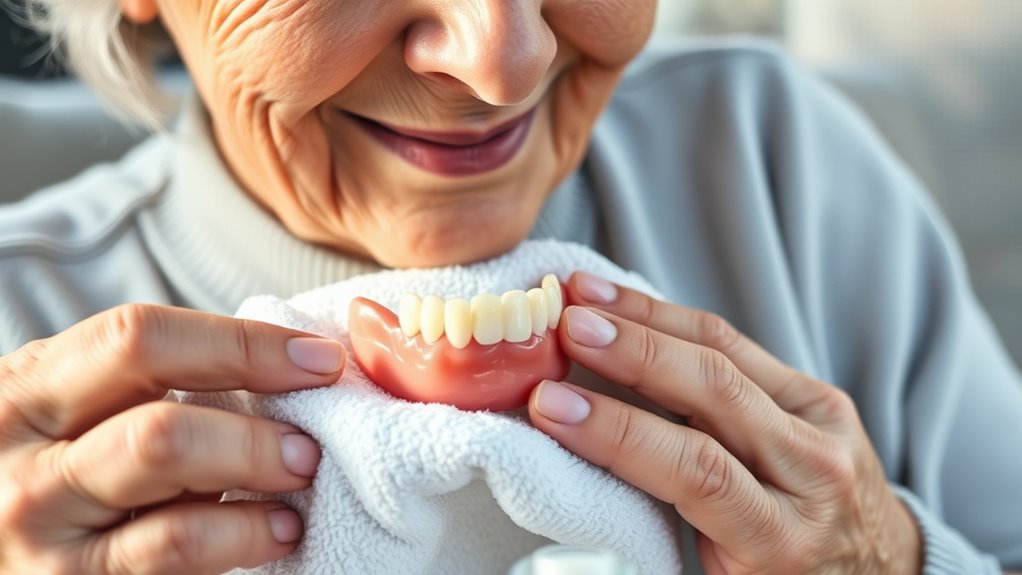

To keep your mouth healthy, clean dentures daily with gentle brushing and soak them regularly. Use a soft-bristled toothbrush and non-abrasive cleaner to prevent irritation. Maintain good oral hygiene by brushing your gums, tongue, and mouth to reduce bacteria. Avoid sticky or hard foods that can damage dentures. Regular dental check-ups ensure proper fit and health. By following these tips, you can improve your oral health—assure to explore more simple practices to stay confident and comfortable.

Turn quiet afternoons into listening time
- Thousands of audiobooks, podcasts and originals
- Listen on your phone, tablet or Echo — also offline
- Cancel anytime
Key Takeaways
- Use gentle, circular motions with a soft-bristled toothbrush to clean natural teeth and dentures daily.
- Incorporate calming music during oral care routines to reduce stress and promote relaxation.
- Remove and clean dentures nightly to prevent infections and maintain oral hygiene.
- Schedule regular dental check-ups and ensure proper fit of dentures for comfort and health.
- Encourage the use of personalized playlists and soothing music to create a calming environment during mouth care.
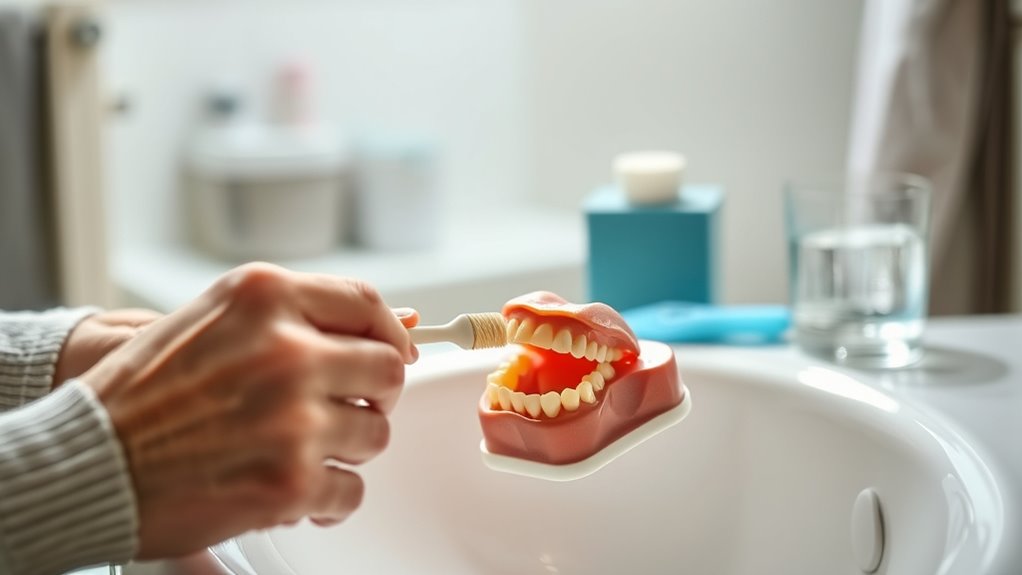
Another helpful strategy is to incorporate music therapy techniques, such as playing calming melodies during dental visits or daily routines, to reduce anxiety and promote a sense of relaxation, making oral care more comfortable.
soft bristled toothbrush for seniors
As an affiliate, we earn on qualifying purchases.
As an affiliate, we earn on qualifying purchases.
Frequently Asked Questions
How Often Should Seniors Visit the Dentist for Checkups?
You should visit the dentist for checkups every six months to maintain good dental hygiene. Regular oral examinations help catch issues early and guarantee your dentures fit comfortably. If you have specific dental concerns or experience oral discomfort, more frequent visits might be necessary. Following this schedule keeps your mouth healthy, prevents problems, and preserves your smile, making it easier to enjoy your daily activities with confidence.
Are There Specific Foods That Promote Better Oral Health in Seniors?
A healthy mouth is a happy mouth, so focus on nutrient-rich foods like fruits, vegetables, and dairy to boost your oral health. Incorporate foods high in calcium and vitamin D, and consider oral health supplements if recommended by your dentist. Avoid sugary treats that can cause decay. Eating well helps keep your gums strong and teeth resilient, supporting your overall oral wellness.
Can Seniors With Diabetes or Other Chronic Conditions Safely Use Denture Adhesives?
Yes, seniors with diabetes or chronic conditions can safely use denture adhesives if they choose the right products. Focus on denture material safety and avoid adhesives with ingredients you’re allergic to, to minimize allergy risks. Always consult your dentist before use, especially if you have sensitivities or health concerns. Properly fitted dentures and gentle cleaning also help prevent irritation, ensuring comfortable, safe denture wear.
What Are Signs of Oral Infections or Problems to Watch For?
You should watch for signs of oral infections or problems like gum swelling and persistent mouth pain. If your gums become tender, red, or swollen, it could indicate infection. Persistent pain that doesn’t go away might signal an issue needing dental attention. Also, look for bleeding gums, sores that won’t heal, or bad taste. Addressing these symptoms early helps prevent serious complications and keeps your mouth healthy.
How Can Caregivers Support Seniors With Limited Mobility in Oral Hygiene?
Imagine guiding a delicate flower to bloom, you can support seniors with limited mobility by using assistive devices like electric toothbrushes and mouth rinses. With proper caregiver training, you’ll learn gentle techniques that make oral hygiene easier and more effective. Your steady hands and patience help maintain their oral health, turning a challenging task into a comforting routine, ensuring they feel cared for and confident in their smile.
Conclusion
Taking good care of your mouth and dentures is crucial for your overall health and well-being. Regular brushing, cleaning, and visits to your dentist can prevent infections and discomfort. Remember, your mouth is an essential part of your daily life—so why not give it the attention it deserves? By staying proactive and attentive, you can enjoy a healthier, more comfortable smile well into your senior years. Isn’t your health worth the effort?
Halloween Picks
halloween
As an affiliate, we earn on qualifying purchases.