
To manage drooling and saliva issues in advanced Parkinson’s, work with your healthcare team to tailor treatments like anticholinergic medications or botulinum toxin injections that can reduce saliva production. Incorporate speech therapy to strengthen swallowing muscles and try practical tips like wearing absorbent pads or maintaining good oral hygiene. Adjusting your lifestyle and monitoring symptoms regularly can help improve comfort and confidence. If you keep exploring, you’ll find more strategies to better control these symptoms and enhance your quality of life.

Turn quiet afternoons into listening time
- Thousands of audiobooks, podcasts and originals
- Listen on your phone, tablet or Echo — also offline
- Cancel anytime
Key Takeaways
- Consult healthcare providers for tailored medication plans to reduce saliva production safely.
- Engage in speech therapy to strengthen swallowing muscles and improve saliva control.
- Use practical tools like bibs and maintain good oral hygiene to manage drooling.
- Regularly monitor symptoms and adjust treatments with professional guidance.
- Incorporate lifestyle modifications and stress management techniques to decrease saliva overproduction.
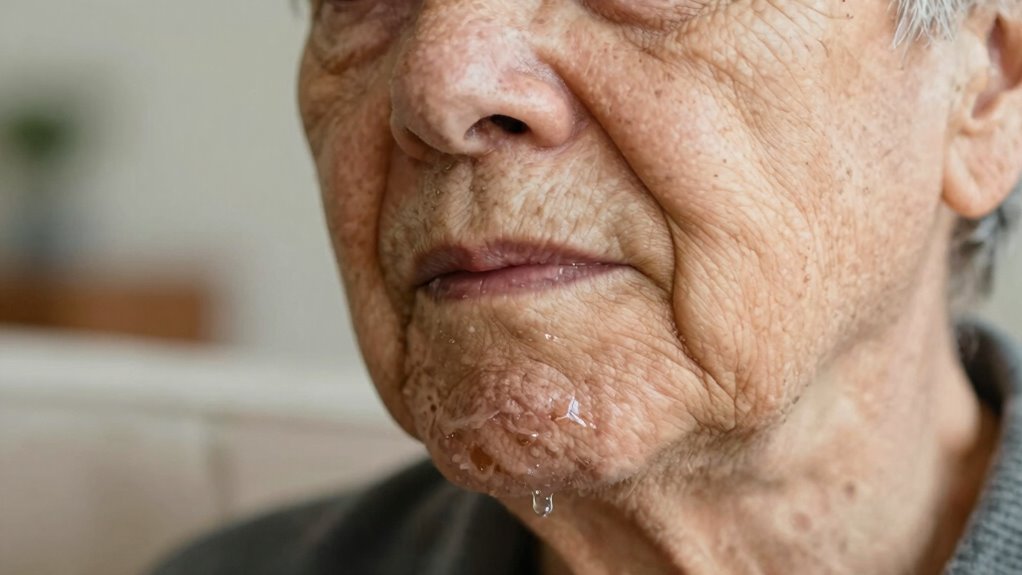
If you have Parkinson’s disease, you might notice that drooling and saliva problems become part of your daily experience. While it might seem like a minor issue, excessive saliva can affect your comfort, confidence, and overall quality of life. The good news is that there are effective ways to manage these symptoms, and understanding your options is key. One of the first steps is exploring medication management, which your healthcare provider can tailor to your specific needs. Certain medications, such as anticholinergics or botulinum toxin injections, can help reduce saliva production. These treatments can be particularly effective when combined with other approaches, but they require careful oversight to minimize side effects like dry mouth or difficulty swallowing. Working closely with your doctor ensures you find the right balance and dosage, making it easier to control saliva without compromising other functions.
Managing saliva with medication, like anticholinergics or botulinum toxin, requires professional guidance for best results.
In addition to medication, speech therapy plays an essential role in managing drooling. Speech-language pathologists are skilled at helping you strengthen muscles involved in swallowing and controlling saliva. They might teach you specific exercises or techniques to improve your ability to swallow more effectively and manage saliva flow. These strategies can make a notable difference, especially when practiced regularly. Speech therapy also offers guidance on posture and positioning, which can reduce drooling during daily activities. It’s important to see a speech therapist early on, as they can develop a personalized plan tailored to your symptoms and progression. Understanding how medications and therapy work together is crucial for effective management, especially as symptoms evolve over time. Incorporating comprehensive care can also help address other interconnected symptoms and improve overall quality of life. Regular monitoring symptoms with your healthcare team can help you adjust your treatment plan promptly as your condition changes. Additionally, embracing holistic approaches, including diet and lifestyle modifications, can further support symptom management and enhance well-being.
Beyond medication and speech therapy, practical tips can also help. Wearing a bib or using absorbent pads can keep you more comfortable and protect clothing during moments of increased saliva. Staying well-hydrated is important, but avoid excessive fluid intake that might worsen drooling. Maintaining good oral hygiene is equally important, as it prevents discomfort and infections that could complicate symptoms. Additionally, trigger management by avoiding stress or certain foods can help you manage episodes of increased saliva production. For some individuals, exploring lifestyle adjustments and support resources can provide additional relief and guidance.
Dealing with drooling in advanced Parkinson’s can feel overwhelming at times, but with a holistic approach that includes medication management and speech therapy, you can regain some control over this symptom. Regular consultations with your healthcare team ensure your treatment plan adapts to your changing needs. Remember, you’re not alone in this—support is available, and with the right strategies, you can improve your comfort and confidence in daily life.
anticholinergic medication for drooling Parkinson's
As an affiliate, we earn on qualifying purchases.
As an affiliate, we earn on qualifying purchases.
Frequently Asked Questions
Can Drooling Be a Sign of Parkinson’s Disease Progression?
Yes, drooling can indicate Parkinson’s progression. As your condition advances, you may notice increased saliva and difficulty swallowing. You can try diet modifications, like thickening liquids, to manage saliva control. Cognitive strategies, such as mindful swallowing exercises, can also help. These approaches may reduce drooling, but it’s important to consult your healthcare provider for personalized advice and to explore additional treatments tailored to your needs.
Are There Natural Remedies to Reduce Excessive Saliva?
Yes, you can try natural remedies like diet modifications and herbal supplements to reduce excessive saliva. Incorporate foods that promote saliva control, such as those rich in fiber, and avoid spicy or acidic foods that may worsen saliva production. Herbal supplements like chamomile, sage, or licorice may help calm salivary glands. Always consult your healthcare provider before starting any new remedies to make certain they’re safe and appropriate for your condition.
How Does Medication Affect Saliva Production in Parkinson’s?
Medication side effects can influence saliva production in Parkinson’s, often leading to either increased or decreased saliva. Some drugs may impair saliva regulation, causing drooling or dry mouth. You might notice changes as your body adapts to treatment, so it’s essential to communicate any new or worsening symptoms with your healthcare provider. They can adjust your medication to help manage saliva issues effectively, improving comfort and quality of life.
Is Drooling More Common in Certain Parkinson’s Subtypes?
Yes, drooling is more common in certain Parkinson’s subtypes, like the postural instability and gait difficulty (PIGD) subtype. You can manage this by making diet adjustments, such as avoiding sticky foods that worsen saliva buildup, and engaging in speech therapy to improve swallowing and control saliva flow. Regular exercises and medication adjustments also help, but combining these strategies offers the best chance to reduce drooling effectively.
Can Physical Therapy Help Manage Saliva Control?
Yes, physical therapy, especially speech therapy, can help manage saliva control. You might do oral exercises that strengthen your mouth muscles and improve swallowing. Speech therapists can teach you techniques to reduce drooling, such as controlled swallowing and lip exercises. Regular practice of these exercises can help you gain better control over saliva, making daily activities more comfortable and reducing embarrassment caused by drooling.
Conclusion
Imagine your mouth as a gentle stream, flowing smoothly without hesitation. By understanding the causes of drooling in Parkinson’s and adopting the right strategies, you can help this stream find its natural course. With patience and the right support, you’ll regain control, letting your confidence flow as freely as a calm river. Remember, each small step you take is like guiding the current, bringing relief and comfort to your daily life.
Cold & flu season Picks
humidifiers
As an affiliate, we earn on qualifying purchases.